

The 3-2-1 backup rule is your safety net against data loss. It means keeping three copies of your files: one primary and two backups. You should store those backups on two different media types, like an external hard drive and cloud storage, to reduce risks. Finally, one backup should be kept off-site to protect against physical disasters. This strategy not only keeps your data safe but also simplifies recovery. There’s more to learn about optimizing your backups!

Get the little things that make your day delivered free with Prime
- Fast, free delivery on millions of items
- Prime Video, Amazon Music and more included
- Member-only deals all year
Key Takeaways
- The 3-2-1 backup rule recommends keeping three copies of your data: one primary and two backups for enhanced protection against loss.
- Backups should be stored on two different media types, like external drives and cloud storage, to prevent hardware failure risks.
- Off-site backups safeguard data against physical disasters and ensure compliance with data storage regulations, enhancing overall disaster recovery plans.
- Regularly test your backups for accessibility and integrity to ensure successful restoration when needed, avoiding surprises during recovery.
- Utilize reliable tools like Acronis True Image, Google Drive, and external hard drives to implement the 3-2-1 strategy effectively.
external hard drive for data backup
As an affiliate, we earn on qualifying purchases.
As an affiliate, we earn on qualifying purchases.
What’s the 3-2-1 Backup Rule and Why Should You Care?
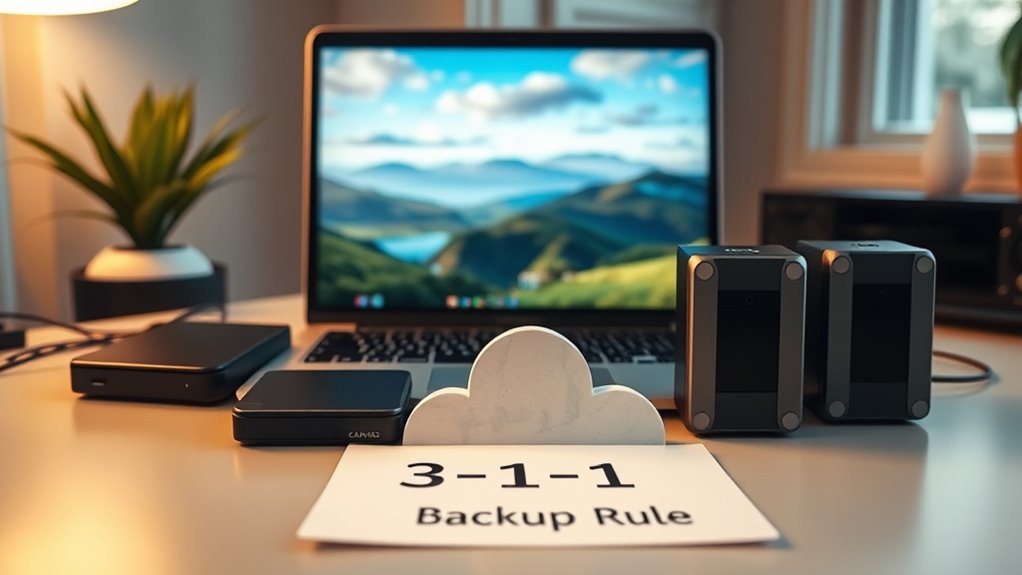
The 3-2-1 Backup Rule is a straightforward strategy that can save your valuable data from unexpected disasters. This method emphasizes data management by recommending you maintain three total copies of your files: one primary and two backups. You should store the backups on two different types of media, like an external hard drive and cloud storage. This diversification helps mitigate risks associated with hardware failure or cyber threats. The backup importance can’t be overstated—having multiple copies guarantees you can recover your data when it matters most. By following this simple rule, you’ll create a reliable safety net, giving you peace of mind knowing your information is secure and easily retrievable in times of need.
cloud storage service for backups
As an affiliate, we earn on qualifying purchases.
As an affiliate, we earn on qualifying purchases.
The Importance of Having Three Backup Copies

Having three backup copies of your data is essential for minimizing the risk of loss. Redundancy guarantees that even if one copy fails due to hardware issues, you still have other options to rely on. This simple strategy can save you from significant headaches down the line.
Redundancy Minimizes Data Loss
While you might think one backup is enough, relying on a single copy of your data can lead to disaster. Redundancy is essential for minimizing data loss and guaranteeing effective data recovery. Here’s why you need three backups:
- Multiple Copies: Having more than one backup means you’re covered if one copy fails. If you only have one, and it’s corrupted or lost, you’re out of luck.
- Varied Locations: Storing backups in different locations protects against physical disasters. You wouldn’t want a fire or flood to wipe out all copies. Additionally, geographical diversity helps ensure availability even during regional outages.
- Increased Backup Frequency: Regularly updating all three backups guarantees you capture the latest data, reducing the risk of losing critical information. Implementing automated backup processes further enhances your data security. Moreover, understanding disaster recovery planning is vital for designing an effective backup strategy. Incorporating risk management principles can help you anticipate and mitigate potential data threats.
- Understanding Data Retention Laws: Adhering to data retention regulations ensures your backup strategy complies with legal requirements and minimizes potential penalties.
Embrace redundancy and safeguard your data effectively!
Protect Against Hardware Failure
Relying solely on one backup leaves you vulnerable to hardware failures, which can strike at any moment. Imagine your primary drive crashing unexpectedly; without a second or third backup, you could lose precious data forever. By adhering to the 3-2-1 backup rule, you can enhance your data recovery process and protect against such disasters. This strategy involves maintaining three copies of your important files: one primary copy and two backups stored on different devices or locations. While hardware longevity can vary, having multiple backups guarantees you’re not solely dependent on a single piece of equipment. Understanding storage & backup basics helps ensure your data remains safe even if one device fails. Additionally, diversifying backup locations reduces the risk of single point of failure, further securing your data. Don’t take chances with your data—implementing this simple strategy can save you time, stress, and potential heartbreak in the event of a hardware failure.
off-site backup storage solutions
As an affiliate, we earn on qualifying purchases.
As an affiliate, we earn on qualifying purchases.
Media Variety: Choosing Two Different Types of Storage

When it comes to backing up your data, using two different types of storage is essential. You can choose from cloud storage options that offer accessibility and convenience, along with physical media like external hard drives for added security. This combination guarantees your data is safe and retrievable, no matter what happens. Incorporating local automation can also help streamline your backup routines and ensure consistency.
Cloud Storage Options
As you consider cloud storage options, it is essential to choose the right types that meet your needs. When exploring your choices, keep in mind these factors:
- Backup Security Features: Look for services that offer encryption and two-factor authentication to protect your data from unauthorized access. Additionally, assessing the filter maintenance capabilities of your storage provider can help ensure ongoing data integrity. Understanding the extension cord standards that underpin secure power setups can also inform your overall approach to safe data management. Incorporating security best practices can further strengthen your data protection strategies.
- Cloud Service Comparisons: Compare various providers based on storage limits, pricing plans, and user reviews to find the best fit for you.
- Accessibility: Verify your chosen service allows easy access to your files from multiple devices, so you can retrieve information anytime, anywhere.
- Privacy and Security Practices: Ensure the provider has transparent privacy policies and adheres to robust security standards to safeguard your information.
Physical Media Choices
While cloud storage offers flexibility and convenience, physical media can provide tangible options for backing up your data. You should consider using a combination of external drives and USB flash drives for quick access and portability. External drives are excellent for large files, while USB flash drives are perfect for transporting smaller amounts of data. Additionally, don’t overlook optical media like DVDs or Blu-rays for long-term storage. If you’re looking for something more robust, tape storage is a reliable choice for archiving large datasets. Network-attached storage (NAS) systems can also serve as a centralized hub, allowing multiple users access to magnetic disks. Implementing media variety by mixing these media types can guarantee a thorough backup strategy. Furthermore, appliance maintenance plans can help ensure your backup devices remain in optimal condition, preventing data loss due to hardware failure. Incorporating media management tools can further streamline your data organization across different storage options.
As an affiliate, we earn on qualifying purchases.
Why You Should Keep One Backup Off-Site?

Many people overlook the importance of keeping one backup off-site, but doing so can be a game-changer for data security. Off-site backups provide crucial benefits that enhance your disaster recovery plan. Here are three reasons to take into account:
Keeping a backup off-site is crucial for data security and disaster recovery. Don’t overlook its importance.
- Protection Against Physical Damage: If a disaster strikes your home or office, having a backup stored elsewhere guarantees your data remains safe.
- Mitigating Theft Risks: In the unfortunate event of theft, an off-site backup can save you from losing important files.
- Easier Compliance: Many industries require data storage regulations; keeping a backup off-site can help meet these compliance standards.
Investing in an off-site backup isn’t just smart; it’s essential for safeguarding your data effectively.
Top Mistakes to Avoid in Your 3-2-1 Backup Strategy
Implementing a solid 3-2-1 backup strategy is vital, but it’s easy to make mistakes that could compromise your data security. One common misconception is thinking that just one backup is enough. You need multiple copies across different mediums. Also, neglecting backup frequency can leave you vulnerable. Regular updates guarantee your data remains current.
Here’s a quick reference to avoid these pitfalls:
| Mistake | Consequence |
|---|---|
| Relying on one backup | Increased data loss risk |
| Infrequent backups | Outdated information recovery |
| Ignoring off-site storage | Vulnerability to local disasters |
| Not testing backups | Uncertainty in data restoration |
Best Tools for Effective Implementation of the 3-2-1 Backup Strategy

To effectively implement the 3-2-1 backup strategy, you’ll need a combination of reliable tools that streamline the process. Here are some of the best software and hardware solutions to take into account:
- Backup Software: Look for user-friendly options like Acronis True Image or Backblaze. These can automate your backups and guarantee your data’s safety. Additionally, choosing software that supports encrypted data transfer ensures your sensitive information remains protected during backups.
- External Hard Drives: Invest in high-capacity external drives, such as those from Western Digital or Seagate, to store your offline backups securely.
- Cloud Storage: Services like Google Drive or Dropbox offer excellent online storage solutions, providing easy access and additional redundancy for your files. Employing cloud redundancy strategies can further safeguard your data against hardware failures.
Testing Your Backups for Reliability

While you might have set up your 3-2-1 backup strategy, it’s crucial to regularly test your backups to verify they’re reliable when you need them most. Start with backup verification; check that all your files are present and accessible. This process guarantees your data is intact and not corrupted. Next, perform restore testing by selecting random files and restoring them to their original locations. This step confirms that your backups can be effectively restored without issues. Don’t wait for a crisis to find out your backups aren’t working. By routinely conducting these tests, you’ll gain peace of mind knowing your data is safe and recoverable, making sure you’re prepared for any unexpected data loss.
Real-Life Success Stories of the 3-2-1 Backup Rule in Action

Many individuals and businesses have experienced the benefits of the 3-2-1 backup rule firsthand. Here are a few success stories that illustrate this:
- A small marketing firm lost critical client data due to a server crash. Thanks to their 3-2-1 strategy, they quickly restored everything from their off-site backup, saving a major client relationship.
- An independent photographer avoided disaster when a hard drive failed. With copies stored in two different formats and an additional cloud backup, they retrieved all their cherished photos.
- A local restaurant faced a ransomware attack. Their 3-2-1 setup allowed them to restore their POS system seamlessly, minimizing downtime and financial loss.
These real-life examples show just how effective the 3-2-1 backup rule can be in protecting your valuable data.
Frequently Asked Questions
How Often Should I Update My Backups?
You should update your backups regularly, ideally every week or even daily, depending on how frequently you create or modify important files. Setting specific update intervals helps guarantee you don’t lose crucial data. If you work on critical projects, consider backing up after each significant change. Consistency is key to maintaining your backup frequency, so find a schedule that fits your routine and stick to it for peace of mind.
Can I Use Cloud Storage for Off-Site Backups?
Absolutely, you can use cloud storage for off-site backups. Think of it as your digital Ark, safeguarding your data from unforeseen floods. With numerous cloud service options available, you can choose one that fits your needs. Incorporating cloud storage into your backup strategies not only enhances security but also guarantees your files are accessible from anywhere. Just remember to regularly review and update your backups to keep everything current and safe.
What Happens if My Backup Fails?
If your backup fails, don’t panic; you can still recover your data. Start by checking your backup system for issues or errors. If that doesn’t work, explore data recovery services that specialize in retrieving lost files. You should also consider backup alternatives like external hard drives or additional cloud services for redundancy. By diversifying your backup strategy, you increase your chances of successful data recovery in the future.
How Secure Is My Data With the 3-2-1 Rule?
Your data’s security greatly improves with the 3-2-1 rule. By maintaining three copies of your data, using two different storage types, and keeping one off-site, you enhance data integrity and guarantee reliable backup recovery. This approach minimizes risks of loss from hardware failures, accidental deletions, or disasters. While no system is foolproof, following this strategy gives you peace of mind, knowing your data’s protected against various threats.
Is the 3-2-1 Rule Applicable for Personal Use?
Absolutely, the 3-2-1 rule is perfect for personal use! Did you know that 1 in 3 people lose their data due to unexpected events? By implementing a personal backup strategy with this rule, you can greatly enhance your data safety. It involves keeping three copies of your data, using two different storage mediums, and one copy offsite. This method not only protects your memories but also gives you peace of mind.
Conclusion
In a world where data loss lurks around every corner, the 3-2-1 backup rule isn’t just a guideline—it’s your safety net. By keeping three copies of your data on two different storage types and one off-site, you’re not just protecting files; you’re safeguarding memories, projects, and peace of mind. So, why gamble with your valuable information? Embrace this strategy and turn potential disaster into a story of resilience and preparedness. Your future self will thank you!
Halloween Picks
halloween
As an affiliate, we earn on qualifying purchases.