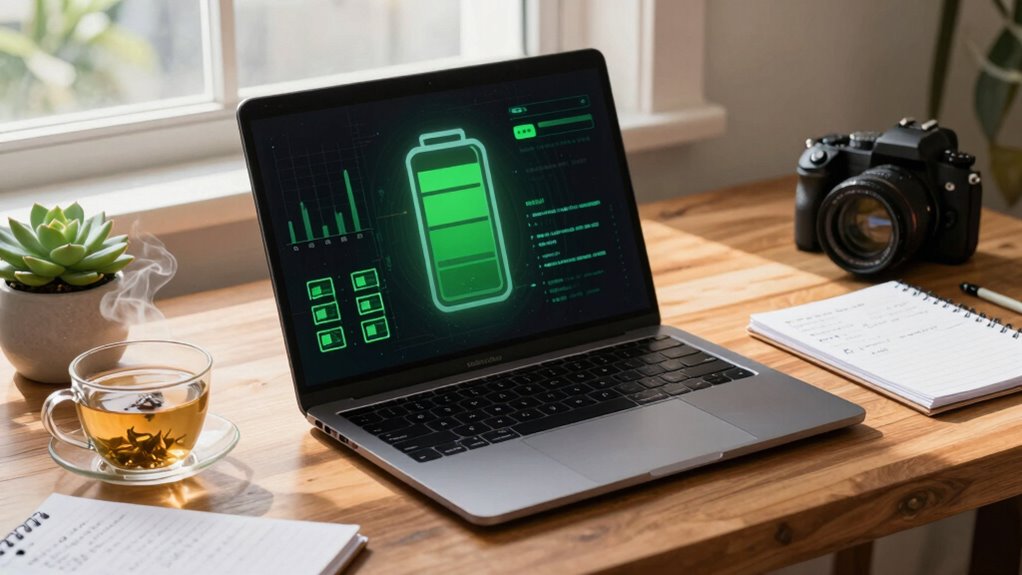

To keep your laptop battery healthy and make it last longer, charge it between 20% and 80%, and avoid complete discharges. Adjust screen brightness to save energy and keep your laptop cool. Also, monitor background applications to reduce strain on the battery. Watch for signs of degradation, like sudden shutdowns or longer charging times. By following these practices, you can enhance your battery life considerably. You’ll discover even more tips to maximize your battery’s potential.

Get the little things that make your day delivered free with Prime
- Fast, free delivery on millions of items
- Prime Video, Amazon Music and more included
- Member-only deals all year
Key Takeaways
- Keep your battery charge between 20% and 80% to optimize its lifespan and health.
- Avoid complete discharges and charging to 100% to prevent wear on the battery.
- Adjust screen brightness and use adaptive brightness to conserve energy during use.
- Regularly monitor battery health using built-in tools or third-party apps for early detection of issues.
- Maintain proper ventilation and avoid extreme temperatures to protect battery performance.
As an affiliate, we earn on qualifying purchases.
Types of Laptop Batteries and Their Lifespan

When it comes to laptop batteries, understanding the different types and their lifespans can help you make informed decisions about your device. Most modern laptops use lithium-ion batteries due to their numerous advantages, such as higher energy density and longer lifespan compared to older technologies. With proper battery chemistry, lithium-ion batteries can last anywhere from 3 to 5 years, depending on usage and care. Nickel-metal hydride batteries, while less common now, have shorter lifespans and are bulkier. It’s crucial to know these differences so you can choose the right battery for your needs. By being aware of these types, you’ll not only enhance your laptop experience but also guarantee you’re making the most out of your investment in technology.
lithium-ion laptop battery replacement
As an affiliate, we earn on qualifying purchases.
As an affiliate, we earn on qualifying purchases.
Best Practices for Charging Your Laptop Battery

To guarantee your laptop battery lasts as long as possible, it’s essential to adopt effective charging practices. Start by monitoring your charging frequency; try to keep your battery between 20% and 80% for ideal health. Avoid letting it drain completely and then charging it to 100%, as this can shorten its lifespan. Additionally, adjust your power settings to use the battery-saving mode when you’re not plugged in. This can help reduce unnecessary strain on your battery. If you’re using your laptop for long periods, consider removing the battery if it’s detachable and you’re plugged in consistently. By following these tips, you’ll maintain your battery’s health and guarantee your laptop runs efficiently for longer.
battery saving laptop screen brightness
As an affiliate, we earn on qualifying purchases.
As an affiliate, we earn on qualifying purchases.
Managing Screen Brightness to Save Battery

Managing your screen brightness is one of the simplest yet most effective ways to extend your laptop’s battery life. By adjusting your display’s brightness, you can greatly reduce energy consumption. Screen dimming is an easy way to achieve this; lower your brightness when you don’t need a vibrant display. Most laptops also feature adaptive brightness, which automatically adjusts your screen based on ambient light conditions. This not only saves battery but also enhances your viewing experience. If you’re working in a dim room, let the adaptive brightness feature do the work for you. Remember, every little adjustment counts, so take control of your screen settings to maximize your laptop’s battery performance. Display calibration can help optimize your screen settings for both visual comfort and energy efficiency.
laptop cooling pad for battery health
As an affiliate, we earn on qualifying purchases.
As an affiliate, we earn on qualifying purchases.
Why Temperature Matters for Your Laptop Battery

Temperature plays an essential role in your laptop battery’s performance and lifespan. Keeping your device within the ideal temperature range helps prevent damage, while extreme heat can lead to rapid wear and cold weather can hinder efficiency. Understanding these factors will help you protect your battery and maximize its longevity.
Optimal Temperature Range
While you might not think about it often, the temperature at which your laptop operates plays a crucial role in battery health. Keeping your laptop within the ideal temperature range, typically between 50°F to 95°F (10°C to 35°C), is essential for effective thermal management. When your laptop stays cool, the battery can perform better and last longer. Smart home devices can help monitor and maintain optimal environmental conditions around your workspace. Additionally, maintaining ideal humidity levels—ideally between 30% and 50%—can further enhance battery longevity. High humidity can lead to condensation and corrosion, while low humidity might cause static electricity issues. By monitoring both temperature and humidity, you’re not just protecting your laptop; you’re ensuring that your battery remains healthy and efficient for years to come.
Effects of Extreme Heat
Extreme heat can severely impact your laptop battery’s performance and lifespan. When temperatures soar, heat damage becomes a real threat, leading to reduced battery capacity and even permanent harm. You might notice your laptop slowing down due to thermal throttling, a protective measure that reduces performance to prevent overheating. This process is similar to power backup systems reducing output during overloads to prevent damage, emphasizing the importance of keeping devices within safe temperature ranges. This can hinder your productivity and overall experience. To mitigate these effects, avoid using your laptop in direct sunlight or hot environments, and guarantee proper ventilation. Regularly clean vents to prevent dust buildup, which can trap heat. By keeping your laptop cool, you’ll not only enhance its performance but also extend the life of your battery, guaranteeing it stays reliable when you need it most.
Cold Weather Precautions
When the weather turns cold, it’s essential to pay attention to how it affects your laptop battery. Cold weather can greatly impact battery performance, so proper battery care is vital. Here are three tips to keep your laptop battery healthy in chilly conditions:
- Avoid extreme temperatures: Don’t leave your laptop in an unheated car or outdoors for long periods.
- Keep it warm: If you’re working in a cold environment, consider using a laptop sleeve to retain heat.
- Charge regularly: Cold temperatures can drain the battery faster, so keep it charged to around 50% when not in use.
Reducing Background Applications to Improve Battery Life
To extend your laptop’s battery life, reducing background applications is essential. Background tasks can drain your battery without you even realizing it. Start by checking your application settings to identify which programs are running in the background. Close any unnecessary applications that you’re not actively using. Many applications have options to minimize their background activity, so adjust those settings to limit their impact on battery life. Additionally, consider using the Task Manager to monitor and manage these tasks effectively. By cutting down on background processes, you’ll not only save battery but also improve your laptop’s overall performance. This simple step can lead to longer usage times, making your laptop more efficient for your daily needs.
Calibrating Your Laptop Battery for Best Performance

Calibrating your laptop battery is essential for maximizing its performance and longevity. Regular calibration guarantees that your battery accurately reports its charge level, preventing unexpected shutdowns. Here are three effective battery calibration techniques:
- Full Charge and Discharge: Charge your battery to 100%, then let it drain completely before charging it back up again.
- Reset Power Settings: Change your power settings to prevent your laptop from sleeping during the calibration process.
- Do It Periodically: Aim for an ideal calibration frequency of every 3-4 months to maintain accuracy.
Signs Your Laptop Battery Needs Replacement

Keeping your battery calibrated helps it perform better, but even with regular maintenance, there comes a time when it needs replacing. Be on the lookout for battery lifespan indicators like sudden shutdowns, reduced charge capacity, or excessive heat during use. If your laptop struggles to hold a charge, it might be time for a replacement. Another sign is if your device shows a significant drop in battery health percentage, indicating it’s worn out. For replacement timing tips, consider replacing your battery every 2-3 years or sooner if you notice these warning signs. Staying aware of these indicators will keep your laptop running smoothly and guarantee you’re not caught off guard during important tasks.
What to Do When Your Battery Shows Signs of Degradation?

As your laptop battery starts to show signs of degradation, it is essential to take action before the situation worsens. Here are three effective steps you can take:
As your laptop battery degrades, proactive measures are crucial to maintain performance and extend its lifespan.
- Conduct Performance Monitoring: Regularly check your battery’s health using built-in tools or third-party apps. This helps track capacity and performance over time.
- Implement Battery Maintenance: Adjust your charging habits by avoiding full discharges and keeping the battery between 20% to 80% when possible.
- Consider Replacement: If your battery’s performance considerably declines, it may be time to invest in a new one to guarantee your laptop runs efficiently.
Frequently Asked Questions
Can I Use My Laptop While It’s Charging?
Yes, you can use your laptop while it’s charging. In fact, many people do this regularly without any issues. However, your charging habits can impact your battery lifespan. To maintain ideal health, avoid letting your battery stay at 100% for long periods and try to unplug it occasionally. That way, you’ll help extend its life while enjoying the convenience of using your laptop whenever you need it.
Does Using Battery Saver Mode Affect Performance?
Think of battery saver mode as a gentle rain, nourishing your laptop’s battery performance while slowing the rush of power. When you turn it on, you’re embracing smart power management. Sure, you might notice a dip in performance, like a river flowing more slowly, but it helps extend your battery life. So, if you’re not gaming or demanding high performance, using battery saver mode can be a wise choice for longevity.
How Often Should I Fully Discharge My Laptop Battery?
You should fully discharge your laptop battery every 1 to 3 months for ideal cycles. This practice helps recalibrate the battery and maintain its accuracy in reporting charge levels. However, frequent full discharges can stress the battery, so don’t overdo it. Instead, aim for partial discharges and keep it between 20% and 80% for daily use. Balancing these practices will help you get the most out of your laptop’s battery life.
Can I Replace My Laptop Battery With a Third-Party One?
Sure, you can replace your laptop battery with a third-party one, but tread carefully! Not all third-party batteries guarantee compatibility, and using one could void your battery warranty. It’s like a dance; you need to ascertain the partner fits your rhythm. Always check reviews and specifications before diving in. A reliable third-party battery can breathe new life into your device, but make certain it’s a match made in tech heaven!
What Should I Do if My Battery Overheats?
If your battery overheats, first unplug your laptop and shut it down. Look for overheating signs like excessive heat or a swollen battery. Allow it to cool down on a flat, hard surface. Consider using cooling solutions like a laptop stand or cooling pad to improve airflow. If the problem persists, it might be time to replace the battery. Always handle potential hazards carefully and consult a professional if needed.
Conclusion
By taking care of your laptop battery, you can enjoy the freedom of mobility and productivity without the constant worry of running out of power. Imagine working on a project, fully engaged, only to be interrupted by a dying battery. It’s a frustrating reality that can be avoided. Embrace these tips, and you’ll extend your battery’s life, ensuring you stay connected when it matters most. Don’t let a fading battery hold you back from your potential!
Columbus Day / Indigenous Peoples' Day Picks
long weekend sales
As an affiliate, we earn on qualifying purchases.