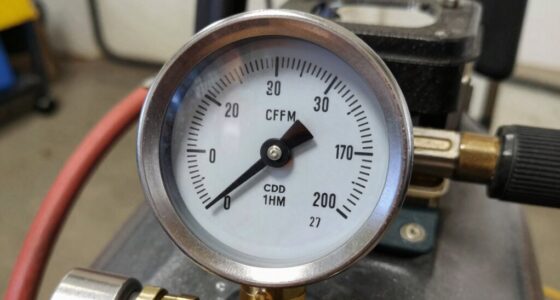

CFM, or cubic feet per minute, measures airflow rate from your air compressor. It’s essential for selecting the right compressor to match your tools’ requirements. Higher CFM means more air, while PSI indicates pressure—balancing both is key for efficiency. Remember, not all tools need high CFM. Factors like duty cycle and environmental conditions also play a role. Want to understand more about optimizing your compressor’s performance and troubleshooting low CFM? Keep exploring!
Key Takeaways
- CFM, or cubic feet per minute, measures the airflow rate of an air compressor, crucial for tool efficiency and performance.
- The relationship between CFM and PSI is vital; higher PSI can reduce CFM output, impacting tool functionality.
- Accurate CFM calculations ensure the compressor matches the airflow needs of demanding tools, preventing underperformance.
- Regular maintenance, including cleaning filters and checking for leaks, is essential to maintain optimal CFM output from your compressor.
- Emerging trends include smart technology for monitoring CFM and a focus on sustainability and energy efficiency in compressor design.

AstroAI Tire Pressure Gauge with Inflator, 100 PSI-ANSI B40.1 Accurate, Large 2.5" Easy Read Glow Dial, Heavy Duty Air Chuck and Compressor Accessories with Rubber Hose and Quick Connect Coupler
Advanced accuracy: Professionally calibrated tire pressure gauges for cars. Accurately measures from 0-100 PSI with a resolution of…
As an affiliate, we earn on qualifying purchases.
As an affiliate, we earn on qualifying purchases.
What Is CFM and Why Does It Matter?
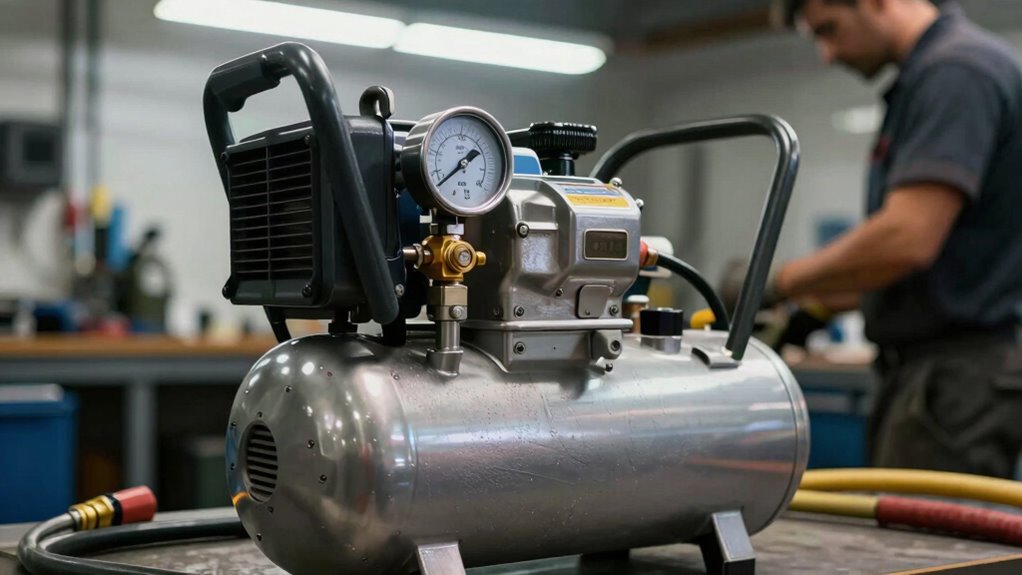
When you’re choosing an air compressor, understanding CFM—cubic feet per minute—is essential. CFM measures the airflow rate, indicating how much air your compressor can deliver. This figure is significant for evaluating CFM applications, ensuring you have enough power for tools like nail guns, spray painters, or sanders. If you underestimate required CFM, you might find your tools underperforming or even stalling. You can perform CFM calculations based on the specific requirements of your tools, factoring in both the average CFM needed and any peak demands. Knowing your CFM needs helps you select the right compressor, ensuring it meets your project’s demands efficiently. So, always prioritize CFM when making your choice; it could make all the difference in your work.

WYNNsky 1/4 Inch NPT Air Accessory Kit – 20 Piece, Air Compressor Hose Tool Kit with Coil PU Hose/Blow Gun/Tire Gauge/Storage Case
Double 1/4" MNPT 15 ft PU recoil hose with max working pressue of 120Psi
As an affiliate, we earn on qualifying purchases.
As an affiliate, we earn on qualifying purchases.
Measuring CFM: A Guide for Air Compressors
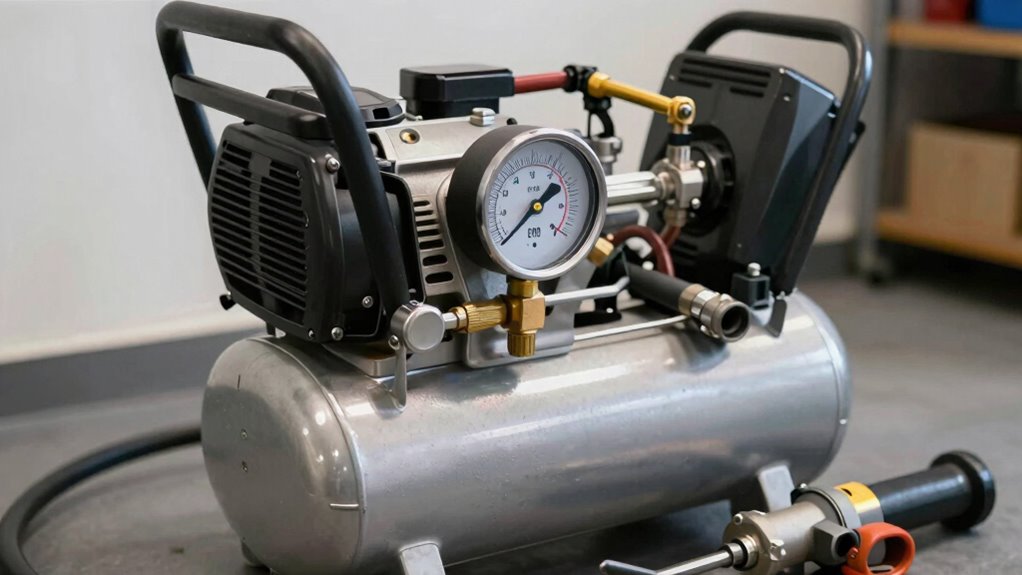
Measuring CFM is essential for ensuring your air compressor meets your project needs. You’ll want to grasp the basics of CFM and why accurate measurements matter. Let’s explore the tools that can help you measure CFM effectively.
Understanding CFM Basics
Understanding CFM, or cubic feet per minute, is essential for selecting the right air compressor for your needs. CFM calculations help you determine the airflow required for various tools and applications. Knowing the CFM applications can greatly enhance your efficiency and performance. Here are key points to take into account:
- Identify your tools’ CFM requirements
- Match compressor CFM to your most demanding tool
- Account for additional airflow needs in multi-tool setups
- Take into account the duty cycle of your compressor
- Evaluate how altitude and temperature affect CFM output
Importance of Accurate Measurement
Accurate measurement of CFM is essential for ensuring your air compressor meets the demands of your tools. Without measurement accuracy, you risk underperforming equipment, inefficient operation, and potential damage to your tools. Understanding CFM significance helps you match your compressor to your project needs effectively.
| Tool Type | Required CFM | Compressor Recommendation |
|---|---|---|
| Air Nail Gun | 2-4 CFM | 6-10 Gallon |
| Spray Gun | 8-12 CFM | 20 Gallon |
| Impact Wrench | 4-6 CFM | 10-15 Gallon |
| Sander | 5-7 CFM | 10-15 Gallon |
| Tire Inflator | 1-3 CFM | 2-5 Gallon |
Tools for Measuring CFM
To guarantee your air compressor meets the CFM requirements of your tools, you’ll need reliable tools for measuring it effectively. Here are some essential CFM measurement tools and CFM testing methods you can use:
- Flow Meter: Measures the air flow directly, giving you accurate CFM readings.
- Manometer: Monitors air pressure, which can help estimate CFM when combined with other data.
- Digital CFM Meter: Offers precise measurements and easy readability for quick checks.
- Pitot Tube: Ideal for larger systems, it measures air velocity to calculate CFM.
- Anemometer: Useful for checking airflow at various points, guaranteeing your system’s efficiency.
Using these tools, you can ascertain your compressor operates effectively, meeting the demands of your projects.

BTMETER BT-100 Handheld Anemometer, Digital Wind Speed CFM Meter Gauge Air Flow Velocity Tester for HVAC Shooting Drone, Wind Chill, 14℉-113℉ Wind Temperature
【Multifunction Pro Anemometer】Wind Speed, Wind Temperature, Wind Chill, Low battery indicator on bright backlit LCD screen. BT-100 is…
As an affiliate, we earn on qualifying purchases.
As an affiliate, we earn on qualifying purchases.
How CFM Ratings Affect Your Compressor’s Performance
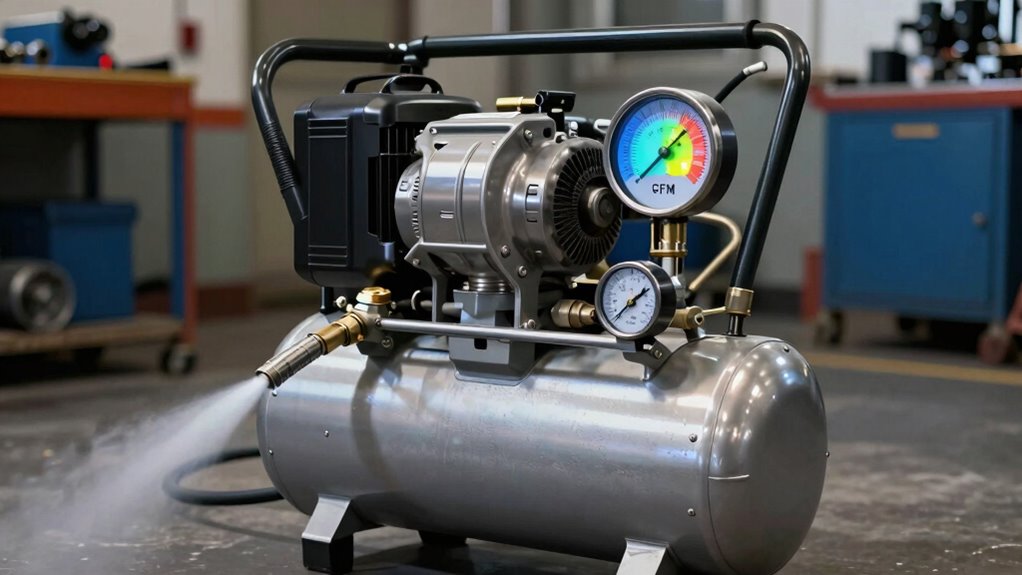
While choosing the right air compressor, you can’t overlook the significance of CFM ratings since they directly influence your compressor’s performance. CFM, or cubic feet per minute, tells you how much air your compressor can deliver to your tools. Higher CFM ratings mean more air, which is essential for running multiple tools simultaneously or heavy-duty equipment. When you consider CFM calculations, you’ll find that the efficiency of your compressor plays a critical role. If your compressor’s CFM efficiency is low, it won’t meet the demands of your tools, leading to underperformance and frustration. Always match your compressor’s CFM rating with the requirements of your tools to guarantee peak performance and productivity in your projects.

JASTIND Industrial Air Blow Gun with Brass Adjustable Air Flow Nozzle and 2 Steel Extension, Pneumatic Air Compressor Accessory Tool Dust Cleaning and Blower Gun
Powerful air flow,new design inner supercharging construction and tapered air flow nozzle for high volume powerful blow-off.
As an affiliate, we earn on qualifying purchases.
As an affiliate, we earn on qualifying purchases.
CFM and PSI: Understanding Their Relationship
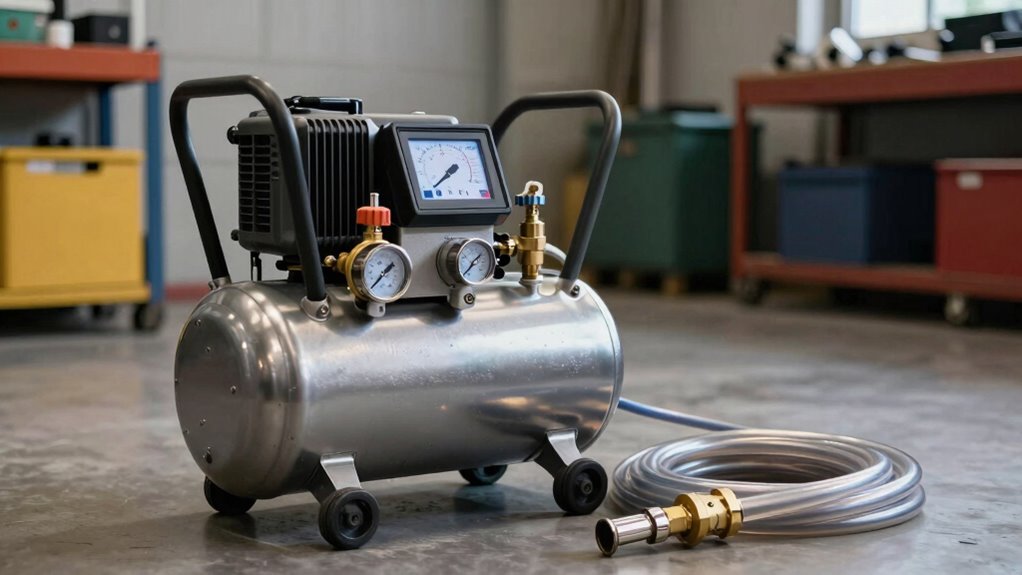
When you think about air compressors, understanding CFM and PSI is essential for peak performance. CFM, or cubic feet per minute, measures airflow, while PSI, or pounds per square inch, indicates pressure. The relationship between these two factors directly impacts how effectively your compressor can power tools and equipment.
CFM Explained in Detail
Understanding CFM (Cubic Feet per Minute) and its relationship with PSI (Pounds per Square Inch) is essential for maximizing your air compressor’s performance. Knowing how to balance these two factors can greatly enhance your efficiency. Here are some key points to reflect on:
- CFM measures airflow volume; higher CFM means more air delivered.
- PSI indicates pressure; higher PSI can reduce CFM output.
- Different CFM applications require varying PSI levels for ideal function.
- Accurate CFM calculations help you choose the right compressor for your needs.
- Always match your tools’ CFM requirements with your compressor’s output.
PSI Impact on CFM
Balancing CFM and PSI is essential for optimizing your air compressor’s performance, as they directly influence each other. When you increase PSI, it can lead to a decrease in CFM, which means you’ll have less air volume available for your tools. Understanding the psi effects on CFM helps you make informed decisions during cfm calculations. For instance, if you need higher pressure for a specific task, you might have to compromise on the air volume, affecting efficiency. Conversely, if you lower the PSI, you can boost the CFM, giving you more airflow but potentially sacrificing pressure. Finding the right balance guarantees your air compressor meets your needs, providing both power and efficiency for your projects.
Choosing the Right CFM for Your Air Tools
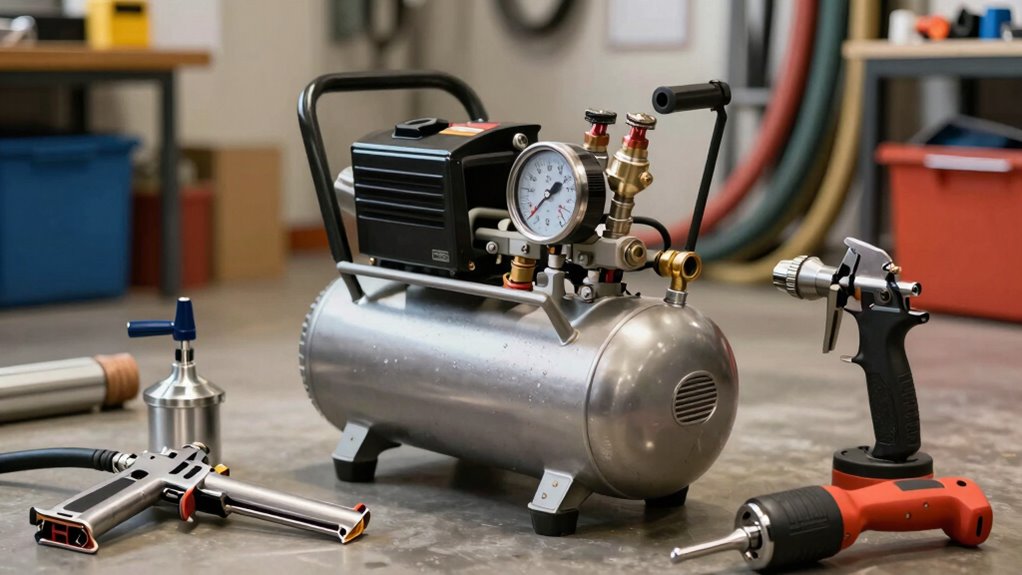
Choosing the right CFM (Cubic Feet per Minute) for your air tools is crucial to guaranteeing they operate efficiently and effectively. To achieve ideal air consumption, consider the following factors:
- Air Tool Requirements: Check the manufacturer’s specifications for CFM needs.
- Air Compressor Rating: Verify your compressor can deliver the required CFM.
- Duty Cycle: Assess how long you’ll use the tool; continuous use may require higher CFM.
- Multiple Tools: If using several tools simultaneously, sum their CFM needs to determine total requirements.
- Tool Compatibility Considerations: Make certain your air tool and compressor are compatible for best performance.
Common Misconceptions About CFM in Air Compressors

While many people assume that a higher CFM always means better performance, this isn’t necessarily true. One common CFM myth is that all tools require maximum airflow to function effectively. In reality, many tools can operate efficiently at lower CFM levels. Another misconception is that CFM ratings are the only factor to take into account when choosing an air compressor. Factors like tank size, pressure, and duty cycle play significant roles too. It’s also important to remember that CFM ratings can vary between manufacturers, making direct comparisons tricky. Understanding these CFM misconceptions can help you make smarter choices and avoid wasting money on equipment that doesn’t fit your needs. Always evaluate your specific requirements before deciding on the right air compressor.
Tips for Applying CFM Knowledge Effectively
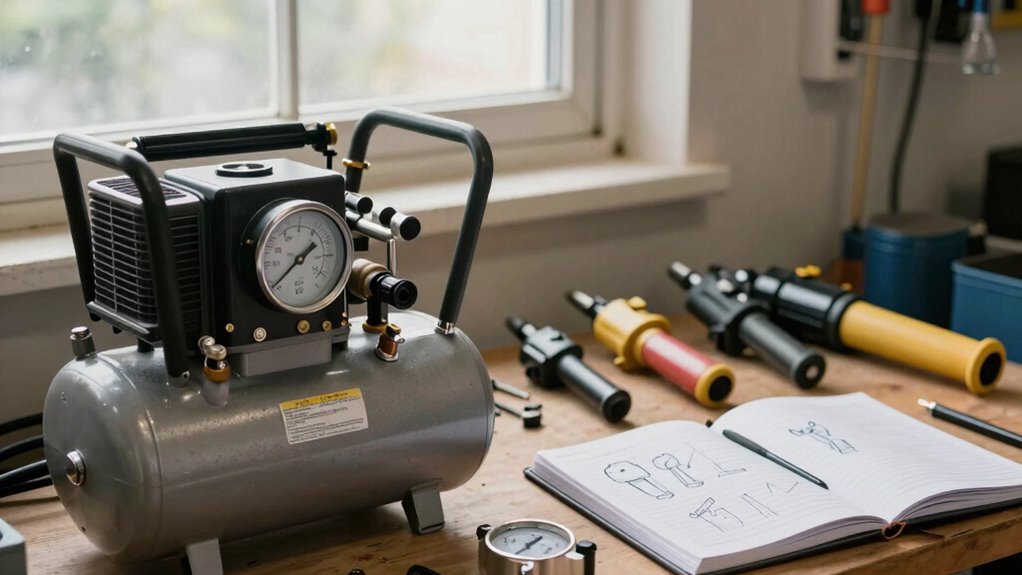
Understanding how to apply your knowledge of CFM effectively can greatly enhance your air compressor experience. To maximize performance, consider these tips:
- Perform accurate CFM calculations to determine your compressor’s needs.
- Match tools to your compressor’s CFM rating for ideal efficiency.
- Monitor air pressure during use to maintain effective applications.
- Adjust your setup based on the specific task, whether it’s painting or inflating tires.
- Regularly maintain your compressor to guarantee it operates at peak CFM levels.
Troubleshooting Low CFM Problems in Your Compressor
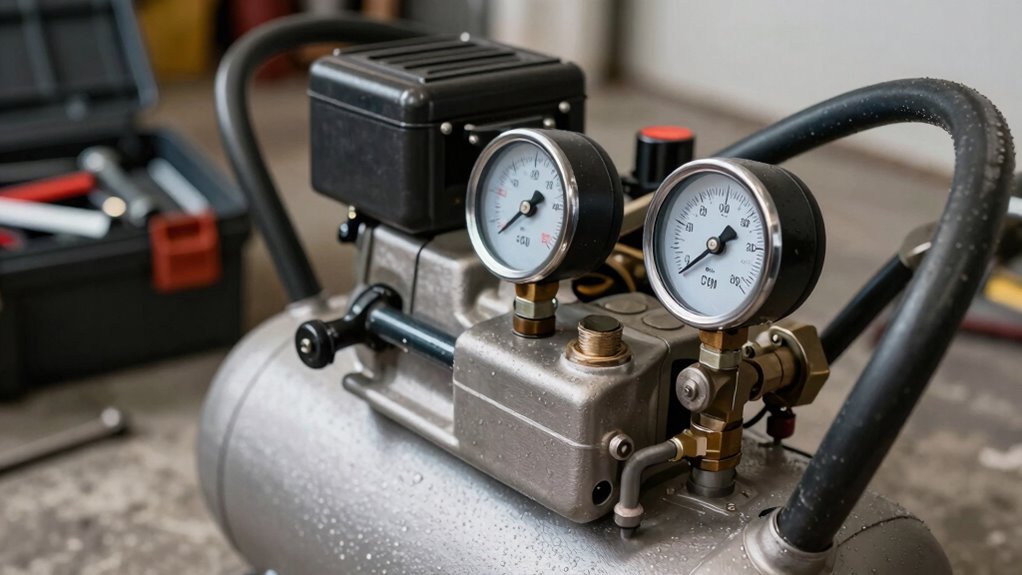
If you’re experiencing low CFM from your air compressor, it can considerably hinder your project’s efficiency and effectiveness. First, check for any airflow restrictions, such as clogged filters or kinked hoses, which can drastically reduce performance. Next, make certain your compressor maintenance is up to date; regular checks can prevent issues before they escalate. Inspect for leaks in hoses and fittings as these can also contribute to low CFM. Additionally, verify that your compressor is correctly sized for your specific needs; an underpowered unit may struggle to deliver adequate airflow. By systematically addressing these factors, you can often resolve low CFM problems and get your compressor back to peak performance. Don’t let low CFM slow you down!
Emerging Trends in CFM Standards for Air Compressors
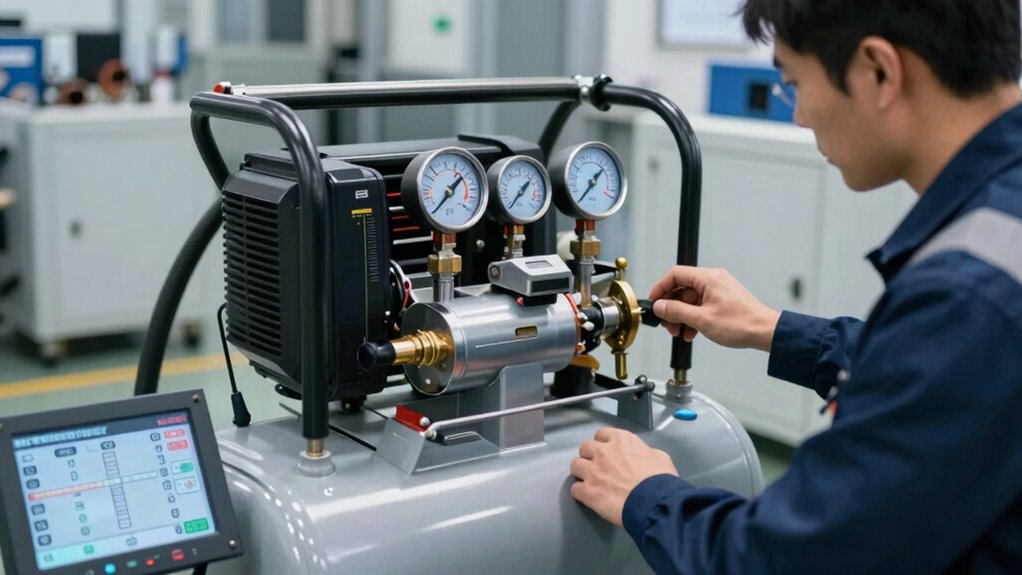
As you work to improve your air compressor’s performance, staying informed about emerging trends in CFM standards can be just as important as addressing low airflow issues. The landscape of air compressor technology is evolving, driven by emerging technologies and regulatory changes. Here are some trends to keep an eye on:
Staying updated on CFM standards is crucial for enhancing air compressor performance alongside resolving airflow challenges.
- Increased efficiency standards for energy consumption
- Adoption of smart technology for real-time monitoring
- Enhanced materials for lighter, more durable compressors
- Growing emphasis on sustainability and reduced emissions
- Expansion of modular designs for adaptability
Frequently Asked Questions
Can CFM Ratings Vary Between Different Air Compressor Brands?
Yes, CFM ratings can definitely vary between different air compressor brands. When you look at brand comparison, it’s important to take into account that each manufacturer might use different testing methods, impacting rating accuracy. This means one brand’s CFM rating might not be directly comparable to another’s. Always check the specifications closely and evaluate user reviews to guarantee you’re choosing the right compressor for your needs, as CFM performance can greatly affect your projects.
How Does Temperature Affect CFM Performance in Air Compressors?
Temperature affects CFM performance in air compressors considerably. As temperatures rise, the air becomes less dense, which can reduce your compressor’s efficiency and overall CFM output. Conversely, cooler air is denser, allowing for better compression and higher CFM ratings. So, if you’re working in a hotter environment, you might notice decreased performance. Keeping your compressor cool can help maintain ideal efficiency and better airflow for your needs.
Is There a Standard CFM Measurement for All Air Tools?
There’s no one-size-fits-all CFM measurement for air tools. Picture your favorite tool, its gears spinning, but it needs the right airflow to perform. Each air tool has its own specifications, and CFM requirements vary greatly. For instance, a nail gun might require less than a spray gun. Always check the manufacturer’s guidelines to verify your compressor meets those specifications; it’ll keep your tools running smoothly and efficiently, releasing their true potential.
Can I Increase CFM by Modifying My Air Compressor?
Yes, you can increase CFM by modifying your air compressor. By focusing on compressor tuning and implementing airflow enhancements, you can boost performance. Consider upgrading components like the intake filter or adding a larger tank to improve airflow. Regular maintenance also plays an essential role; clean or replace parts that might be restricting airflow. Just remember, any modifications should align with your compressor’s specifications to avoid damaging the unit.
What Is the Difference Between Free Air CFM and Standard CFM?
Ever wondered why some air compressors seem more powerful than others? The difference between free air CFM and standard CFM lies in the conditions under which the measurements are taken. Free air CFM measures airflow at atmospheric pressure, while standard CFM accounts for specific temperature and pressure conditions. This means free air CFM can be higher, but standard CFM gives you a more accurate representation of your compressor’s performance in real-world scenarios.
Conclusion
In the grand circus of air compressors, CFM is your ringmaster, orchestrating the performance of every tool you own. Without a solid grasp of CFM, you might as well be juggling flaming torches blindfolded! By understanding CFM and its nuances, you’ll elevate your compressor game to dizzying heights, ensuring you’re never left in the dust of subpar performance. So, embrace the power of CFM, and watch your projects soar like an eagle on a thermal updraft!