When choosing a tool chest, it’s essential to focus on durability and organization, but you might overlook how layout impacts efficiency. Don’t forget to prioritize size and mobility features to fit your workspace. Budget wisely to avoid overspending, and steer clear of common mistakes, like ignoring material quality. Remember, a well-organized tool chest streamlines your workflow and boosts productivity. Discover more insights that can help you make the right choice for your tool storage needs.

Get the little things that make your day delivered free with Prime
- Fast, free delivery on millions of items
- Prime Video, Amazon Music and more included
- Member-only deals all year
Key Takeaways
- Many overlook the importance of weatherproof materials, which are essential for protecting tools from environmental damage over time.
- Choosing a tool chest with adjustable drawers allows for customization as your tool collection evolves, enhancing organization and accessibility.
- The size of the tool chest should be aligned with your workspace constraints to prevent overcrowding and ensure efficient workflow.
- Investing in durable materials and anti-corrosion properties can save you from frequent replacements and long-term costs.
- Proper organization systems, like labeled compartments and dividers, are crucial for minimizing clutter and improving tool accessibility during projects.
As an affiliate, we earn on qualifying purchases.
What Do You Need in a Tool Chest?
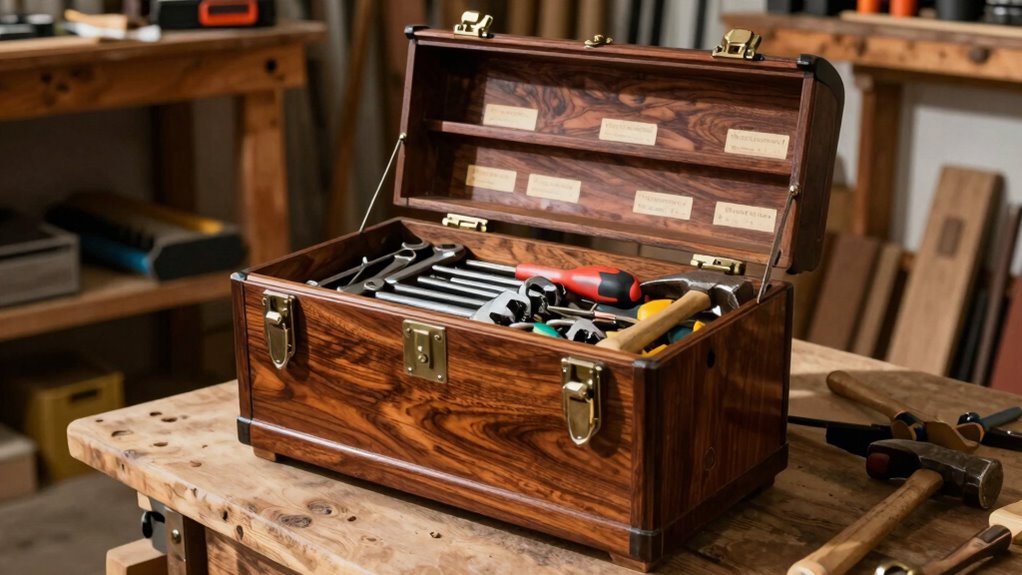
What do you really need in a tool chest? To start, consider the tool types you own and how to organize them effectively. You’ll want compartments for hand tools like wrenches and screwdrivers, plus dedicated spaces for power tools and accessories. Think about your storage solutions; a combination of drawers and open shelving can keep everything accessible yet tidy. Incorporating proper maintenance practices can also extend the lifespan of your tools and keep your tool chest in top condition. Using appropriate storage solutions like dividers and labeled compartments can further improve organization. Magnetic strips or pegboards can also help you display frequently-used tools, making them easy to grab. If you work on specific projects often, you might need specialized storage for unique items. Ultimately, your tool chest should cater to your workflow, ensuring you can find what you need when you need it, without any hassle. Additionally, considering tool protection techniques can prevent damage and ensure your tools remain in optimal condition over time.
As an affiliate, we earn on qualifying purchases.
Choosing Durable Materials for Longevity
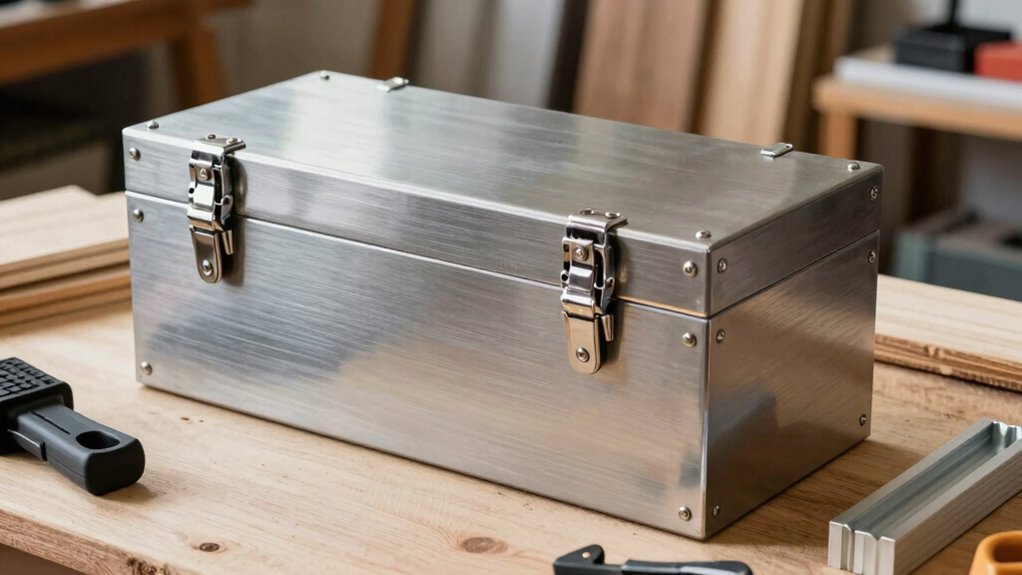
When selecting a tool chest, considering the materials used is essential for ensuring longevity and durability. The right material types can greatly impact how well your tool chest withstands wear and tear. Look for options that offer robust protection against everyday use. Additionally, choosing materials with weatherproof qualities can help prevent damage from environmental factors such as moisture and temperature fluctuations. Evaluate longevity factors like resistance to temperature changes, moisture, and physical stress. By prioritizing durable materials, you’ll invest in a tool chest that not only meets your needs today but also stands the test of time.
heavy-duty metal tool chest with anti-corrosion coating
As an affiliate, we earn on qualifying purchases.
As an affiliate, we earn on qualifying purchases.
How Layout and Organization Improve Efficiency
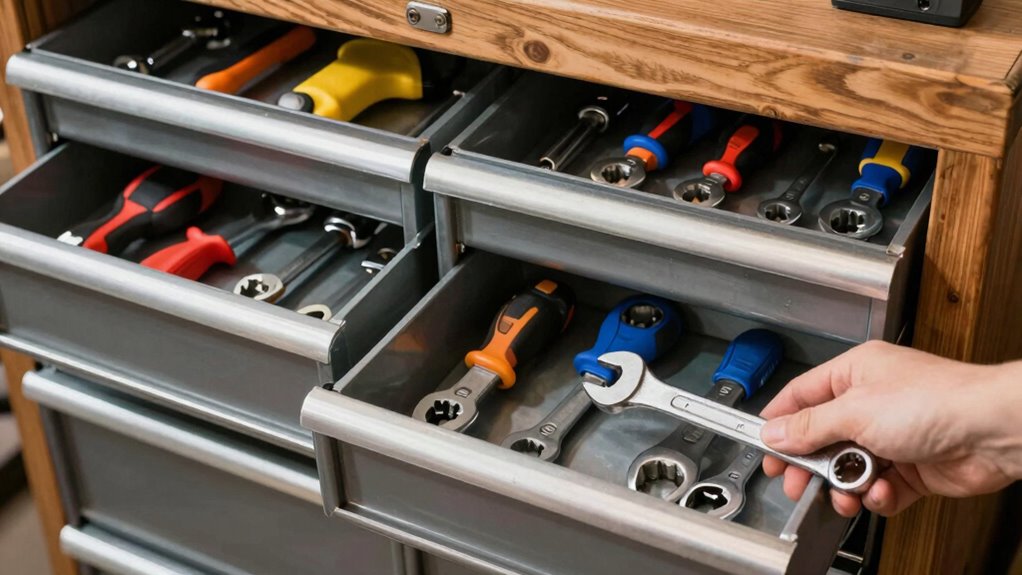
While a sturdy tool chest is essential, its layout and organization can greatly enhance your efficiency. By implementing effective layout strategies, you can guarantee that each tool has its designated spot, allowing for quick access and minimal searching. Organizing your tools by category or frequency of use streamlines your workflow, so you’re not wasting time digging through a cluttered mess. Additionally, considering home organization techniques can help optimize your tool storage for even better accessibility. Incorporating storage solutions designed specifically for tool chests can further improve organization and ease of use. The organization benefits extend beyond just saving time; they also reduce frustration and promote a safer work environment. When you know where everything is, you minimize the risk of accidents caused by misplaced tools. Using principles of smart storage organization can help you create a layout that adapts as your collection of tools grows. Implementing modular storage systems allows for flexible reconfiguration as your needs change. And don’t forget that tool accessibility is crucial for maintaining a smooth workflow. So, take the time to design a thoughtful layout—your efficiency and productivity will thank you for it!
tool storage dividers and labeled compartments
As an affiliate, we earn on qualifying purchases.
As an affiliate, we earn on qualifying purchases.
How to Choose the Right Size and Mobility Features
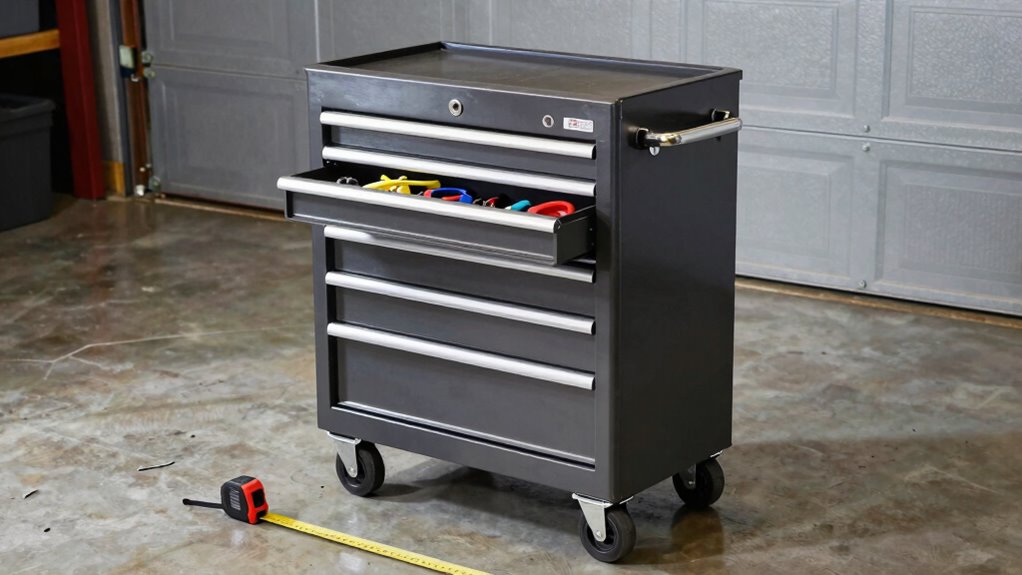
Choosing the right size and mobility features for your tool chest is essential, especially if you often move between job sites or work in tight spaces. Start by evaluating your size considerations; think about the tools you need to store and how much space you have available. A compact chest might be ideal for smaller areas, while a larger one can accommodate more tools.
Selecting the appropriate size and mobility features for your tool chest is crucial for efficient workspace organization.
Consider these mobility options:
- Wheeled designs for easy transport across various surfaces
- Foldable handles that save space when not in use
- Lightweight materials that make lifting and moving a breeze
Budgeting Wisely for Your Tool Chest
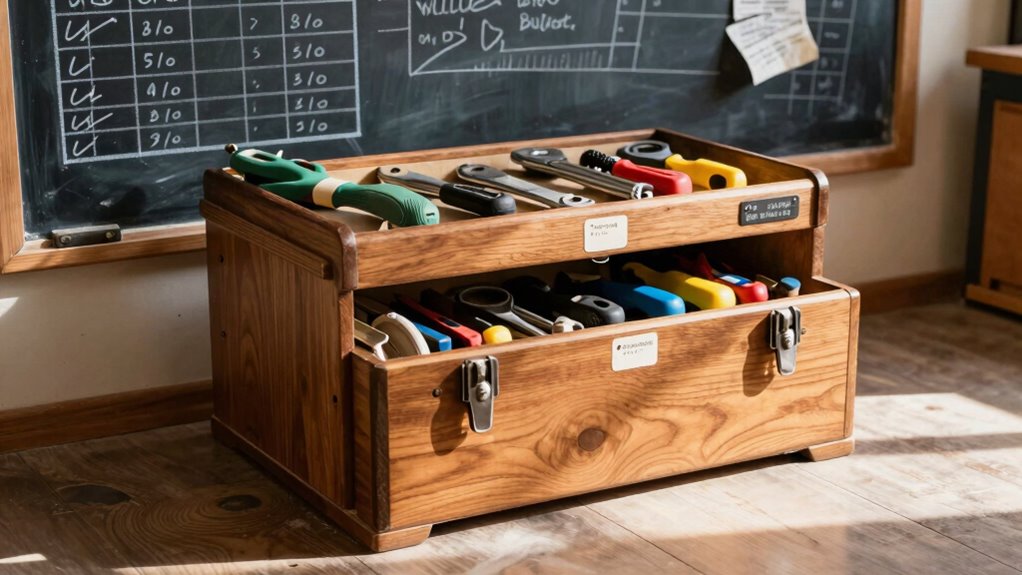
After determining the right size and mobility features for your tool chest, it’s time to focus on budgeting wisely. Start by identifying your budget constraints. Think about how much you can realistically spend without compromising on quality. Make a list of the essential features you need, then research various brands and models. Conducting cost comparisons will help you see where you can save while still getting a sturdy and functional tool chest. Don’t forget to evaluate long-term value; sometimes spending a little more upfront means fewer replacements down the line. By planning your budget carefully and comparing costs, you’ll find a tool chest that meets your needs without breaking the bank.
Common Mistakes to Avoid When Buying a Tool Chest
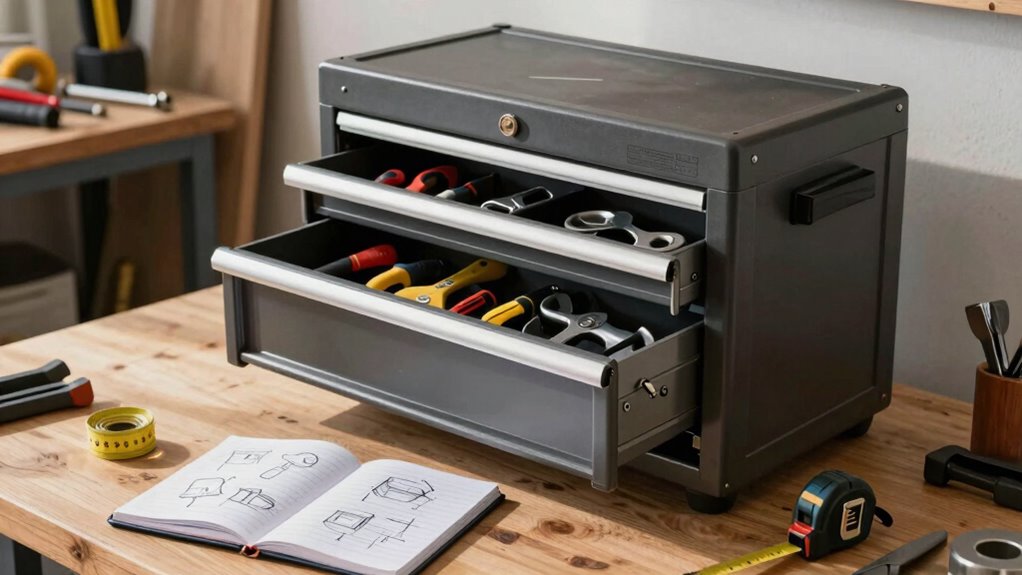
When buying a tool chest, it’s easy to make some common mistakes that can lead to frustration down the line. You might overlook size requirements, material quality, or essential organization features. Let’s explore these pitfalls so you can choose the right tool chest for your needs.
Ignoring Size Requirements
One of the biggest mistakes you can make while buying a tool chest is ignoring size requirements. Before you make a purchase, consider your size limitations and how the chest will fit within your workspace constraints. A tool chest that’s too large can overwhelm your area, while one that’s too small might not accommodate your tools effectively.
- Measure your available space carefully.
- Consider the height, width, and depth of the tool chest.
- Think about how you’ll access tools and drawers.
Overlooking Material Quality
Size considerations are just the beginning; material quality plays a significant role in the longevity and functionality of your tool chest. When you’re evaluating options, don’t just focus on size or price. Perform a thorough material comparison to guarantee you’re choosing a chest that withstands wear and tear. Look for sturdy steel or heavy-duty plastic, as these materials often indicate better build quality. Cheaper alternatives may save you money upfront, but they can lead to costly replacements down the line. Remember, a well-constructed tool chest will protect your tools and keep them organized. Investing in high-quality materials now will pay off in the long run, guaranteeing your tool chest remains reliable for years to come. Additionally, selecting a chest made from durable materials can significantly impact its resistance to rust and corrosion over time. Choosing materials with anti-corrosion properties can further extend the lifespan of your tool storage solution. Furthermore, inspecting the material thickness can help assess the overall strength and durability of the chest. Incorporating corrosion-resistant coatings during manufacturing can also enhance the longevity of your investment. Being aware of material composition is crucial for ensuring your tool chest can handle the environment in which it will be used.
Neglecting Organization Features
While it’s easy to get caught up in the aesthetics and price of a tool chest, overlooking organization features can lead to frustration and inefficiency. You don’t want to waste time searching for tools when you could be working on your projects. Pay attention to the organization systems and drawer configurations that suit your needs. Additionally, consider storage customization options that allow you to adapt the chest as your collection of tools grows or changes. Selecting a tool chest with modular storage features can help you easily reconfigure compartments for different tools and projects. Choosing a tool chest with the right organization features helps streamline your workflow. It keeps tools accessible and minimizes clutter, so you can focus on what really matters—getting the job done efficiently. Don’t underestimate the importance of organization!
Frequently Asked Questions
How Do I Maintain My Tool Chest for Longevity?
To maintain your tool chest for longevity, start by regularly cleaning it with a damp cloth to remove dust and debris. Use mild soap for stubborn stains. Implement storage solutions like drawer organizers to keep tools in order, reducing wear and tear. Check for rust and apply a protective coating if necessary. Keep your tool chest in a dry area to prevent moisture damage, ensuring it lasts for years to come.
Can I Customize My Tool Chest After Purchase?
Absolutely, you can customize your tool chest after purchase! Many manufacturers offer a variety of customization options, allowing you to tailor it to your needs. You can add aftermarket accessories like drawer organizers, wheels for mobility, or even additional shelving. These enhancements not only improve functionality but also help keep your tools organized. So, plunge into the world of customization and make your tool chest work for you!
What Brands Are Most Reliable for Tool Chests?
When you think of reliable tool chests, brands like Craftsman or Snap-on often come to mind. For instance, a mechanic named Jake swears by his Snap-on chest, praising its craftsmanship quality and durability. These brands have built strong reputations over the years, ensuring you get a product that withstands the test of time. Investing in a reliable tool chest means you can trust it to keep your tools organized and protected.
How Do I Secure My Tool Chest From Theft?
To secure your tool chest from theft, consider investing in robust lock options, like combination or keyed locks, that enhance security. You can also add security accessories, such as cable locks or anchor kits, to fasten your chest to a stationary object. Make certain to store your tool chest in a well-lit area and consider using motion-sensor lights for added protection. Regularly check your locks to guarantee they’re functioning properly, keeping your tools safe.
Are There Eco-Friendly Tool Chest Options Available?
Yes, there are eco-friendly tool chest options available! You can find models made from sustainable materials, like bamboo or FSC-certified wood, ensuring you’re supporting responsible forestry. Additionally, some brands offer tool chests made from recycled options, reducing waste and environmental impact. When shopping, look for certifications or labels that highlight these features. By choosing an eco-friendly tool chest, you’re not just organizing your tools but also contributing to a healthier planet.
Conclusion
When it comes to choosing a tool chest, remember it’s not just a box—it’s your hardworking partner. By knowing what you need, prioritizing durability, and ensuring the right organization, you can set yourself up for success. Don’t forget to factor in size and budget, so you’re not left scrambling. Avoid common pitfalls, and you’ll find a tool chest that’s a perfect fit for your projects. Now, go out there and make your workspace shine!
Halloween Picks
halloween
As an affiliate, we earn on qualifying purchases.