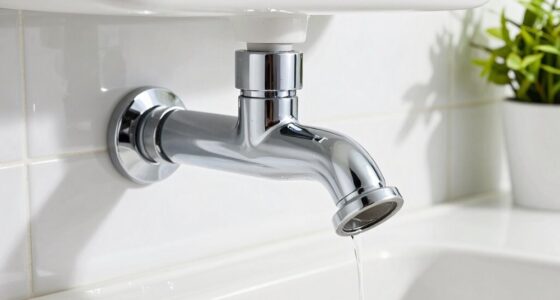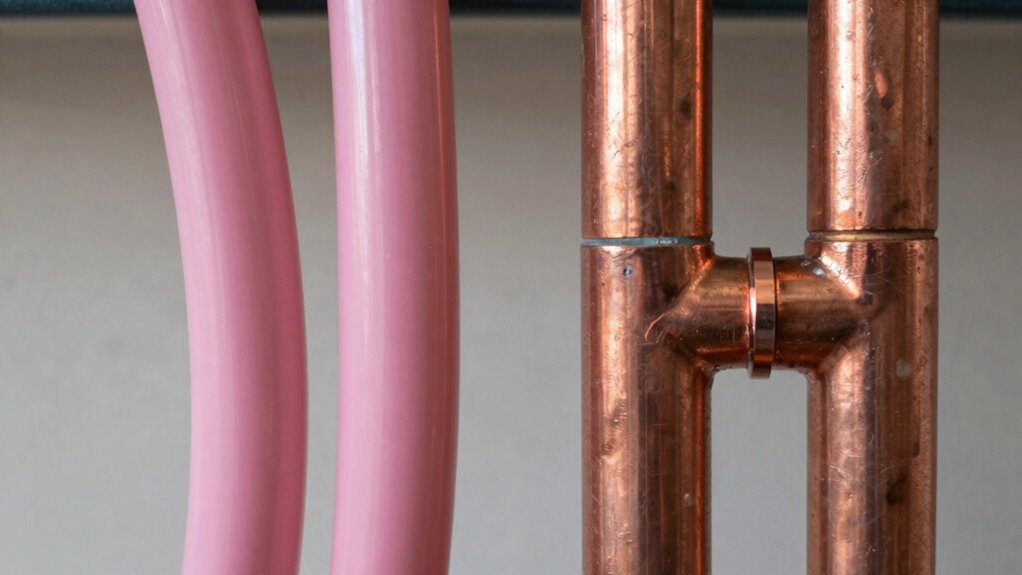

When choosing between PEX and copper pipes, you’ll find that PEX is flexible, easy to install, and more affordable, making it ideal for modern homes. Copper offers a traditional, durable, and corrosion-resistant option but requires more labor and higher upfront costs. PEX tends to reduce leaks and water waste, while copper provides long-lasting reliability. Want to discover which material best suits your home’s needs? Keep exploring to get the full picture.

Get the little things that make your day delivered free with Prime
- Fast, free delivery on millions of items
- Prime Video, Amazon Music and more included
- Member-only deals all year
Key Takeaways
- PEX is flexible, easier to install, and requires fewer fittings compared to rigid copper pipes.
- Copper offers a traditional aesthetic and high durability but involves more complex installation procedures.
- PEX resists corrosion and environmental damage better, making it suitable for challenging conditions.
- Copper typically has higher upfront costs due to materials and labor, while PEX is more budget-friendly and quicker to install.
- Both materials are durable, but PEX’s flexibility reduces stress and leak risks over time.
As an affiliate, we earn on qualifying purchases.
What You Need to Know About PEX and Copper Pipes
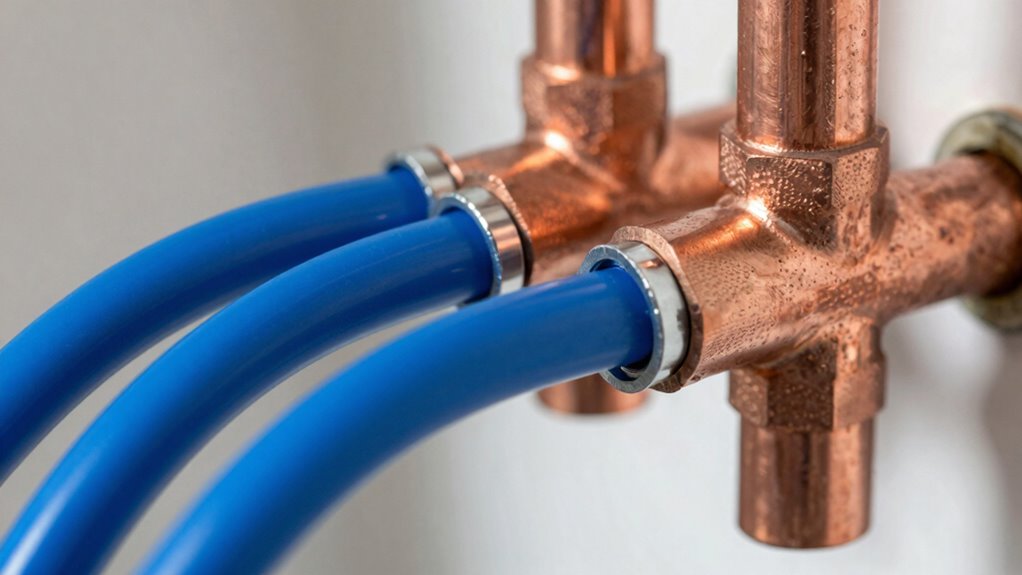
When choosing between PEX and copper pipes, understanding their key differences is essential. Pipe flexibility is a major factor—you’ll find PEX much easier to bend around corners, reducing the need for fittings and making installations quicker. Copper pipes, on the other hand, are rigid and require precise measurements and fittings, which can increase installation time. Aesthetic appeal also plays a role; copper has a classic, polished look that many find attractive and timeless. PEX pipes tend to be hidden behind walls or cabinetry, so their appearance doesn’t matter as much. Overall, if you want a flexible, easy-to-install option with a traditional look, copper might suit you. But if convenience and adaptability are priorities, PEX offers significant advantages. Additionally, understanding regional flavor profiles can influence the choice of materials in certain areas, especially where water chemistry can affect pipe longevity.
As an affiliate, we earn on qualifying purchases.
How Durable Are PEX and Copper Over Time?
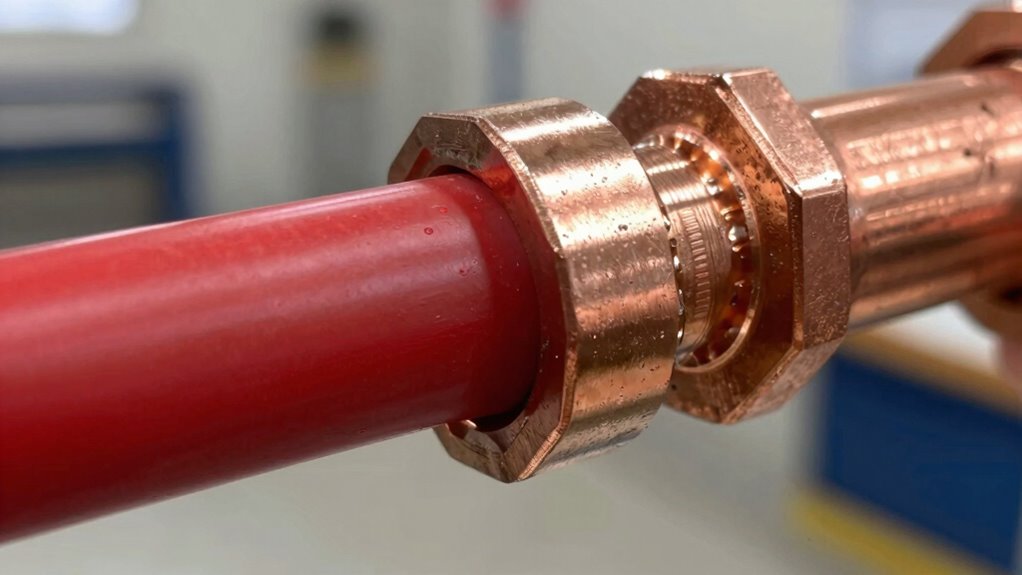
Both PEX and copper pipes are designed to last for many years, but their durability can vary depending on conditions and usage. PEX’s pipe flexibility allows it to bend around obstacles, reducing stress and the likelihood of cracks over time. Its flexibility also makes repairs easier, often requiring simple pipe replacement or coupling repairs. Copper, on the other hand, is more rigid but highly durable if protected from corrosion. Copper pipes can develop pinhole leaks or cracks when exposed to certain environmental factors, making repair methods more involved. Over time, both materials can withstand normal wear, but PEX’s flexibility may give it an edge in long-term durability in environments prone to shifting or movement. Proper installation and maintenance are key to maximizing their lifespan. Understanding material properties can help in choosing the best option for specific plumbing needs.
As an affiliate, we earn on qualifying purchases.
How Do PEX and Copper Resist Corrosion and Environmental Damage?

Both PEX and copper have unique ways of resisting corrosion and environmental damage. PEX’s plastic material naturally resists rust, while copper relies on its chemical properties to prevent deterioration. Understanding their vulnerabilities helps you choose the right plumbing for your environment.
Corrosion Resistance Properties
Understanding how PEX and copper resist corrosion and environmental damage is essential for choosing the right plumbing material. Copper naturally resists corrosion thanks to its chemical resistance, forming a protective oxide layer that prevents further decay. However, it can be vulnerable to galvanic corrosion when in contact with dissimilar metals. PEX, on the other hand, is inherently resistant to chemical reactions and corrosion because it’s made from plastic. Imagine:
- Copper’s oxide layer shielding it from environmental elements
- PEX’s smooth interior preventing buildup
- Copper’s vulnerability to galvanic corrosion with certain metals
- PEX’s resilience in chemically harsh environments
- Copper’s susceptibility to pitting in aggressive water conditions
Both materials offer good corrosion resistance, but PEX generally withstands harsher chemicals and environments better, making it a durable choice for many applications. Additionally, material composition influences how each material handles environmental stressors over time.
Environmental Damage Vulnerability
Copper’s natural oxide layer offers some protection against environmental damage, but it remains vulnerable to factors like moisture, UV exposure, and chemical pollutants. Over time, corrosion can develop, leading to leaks or failure. Copper pipes are also susceptible to chemical leaching, which can contaminate water and harm health. Additionally, copper mining and pipe installation can cause habitat disruption, impacting local ecosystems. In contrast, PEX is highly resistant to corrosion and environmental factors, making it less prone to damage from moisture or chemicals. PEX’s flexibility reduces stress points that often lead to damage, and it doesn’t contribute to habitat disturbance during installation. Overall, PEX offers better resilience against environmental damage, ensuring longer-lasting, safer plumbing in diverse conditions. Environmental resilience is a key advantage of PEX compared to copper.
As an affiliate, we earn on qualifying purchases.
What Are the Costs of PEX vs Copper Pipes?
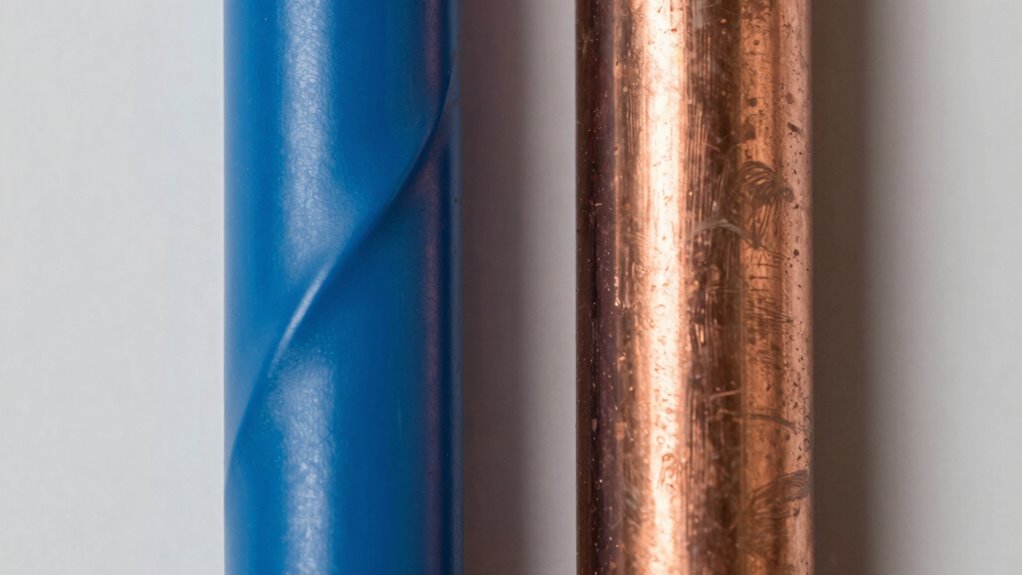
When comparing PEX and copper pipes, you’ll notice differences in material costs, installation expenses, and how long-term savings can add up. PEX typically costs less upfront and is quicker to install, saving you time and labor. Considering the long-term financial benefits can help you decide which option offers better value for your budget. Additionally, PEX’s flexibility and adaptability can make it easier to work with in complex plumbing layouts.
Material Costs Comparison
Although the initial purchase price varies, PEX piping generally costs less than copper pipes. When considering a pricing comparison, PEX tends to be more budget-friendly due to its lower material pricing. You can expect PEX to be substantially cheaper per foot, saving you money upfront. Visualize the savings as you budget for your project, with PEX rolls stacked easily in your garage. Think about:
- Lower material costs per linear foot
- Fewer fittings needed
- Less labor expense during installation
- Reduced waste and excess material
- Overall affordability for large-scale projects
These factors make PEX a cost-effective choice, especially if you’re watching your budget. Comparing material pricing helps you make smarter decisions, ensuring you get quality plumbing without overspending. Additionally, free floating installation techniques can reduce labor costs further and simplify the process.
Installation Expenses and Time
Installing PEX piping typically takes less time and costs less in labor compared to copper because it’s lighter, more flexible, and easier to work with. Its flexibility reduces installation complexity, allowing you to bend pipes around obstacles without extra fittings. PEX also requires fewer connections, which means less pipe insulation and fewer potential leak points. Copper installation involves more fittings, joints, and precise cutting, increasing both time and labor costs. Additionally, copper pipes are heavier and more rigid, making installation more physically demanding. Overall, with PEX, you save on labor hours and reduce the need for extensive pipe insulation, leading to a quicker, more straightforward setup. This efficiency makes PEX a cost-effective choice for many plumbing projects.
Long-Term Financial Benefits
Over the long run, PEX piping generally offers more cost savings than copper due to its lower material and maintenance expenses. When you consider the cost comparison, PEX’s affordability is clear, especially since it’s less prone to corrosion or leaks that require repairs. Plus, PEX has a smaller environmental impact during manufacturing and disposal, making it a greener choice. Imagine:
- Reduced energy costs thanks to easier installation
- Fewer repairs and replacements over time
- Less waste generated during installation
- Lower labor costs due to faster setup
- Smaller carbon footprint from production and disposal
- Additionally, PEX’s flexibility reduces the risk of pipe damage, further lowering maintenance costs.
These factors contribute to significant savings, making PEX a smarter investment for your long-term plumbing needs. The overall financial benefits extend beyond initial costs, impacting your wallet and the environment alike.
Installing PEX and Copper: Which Is Easier?
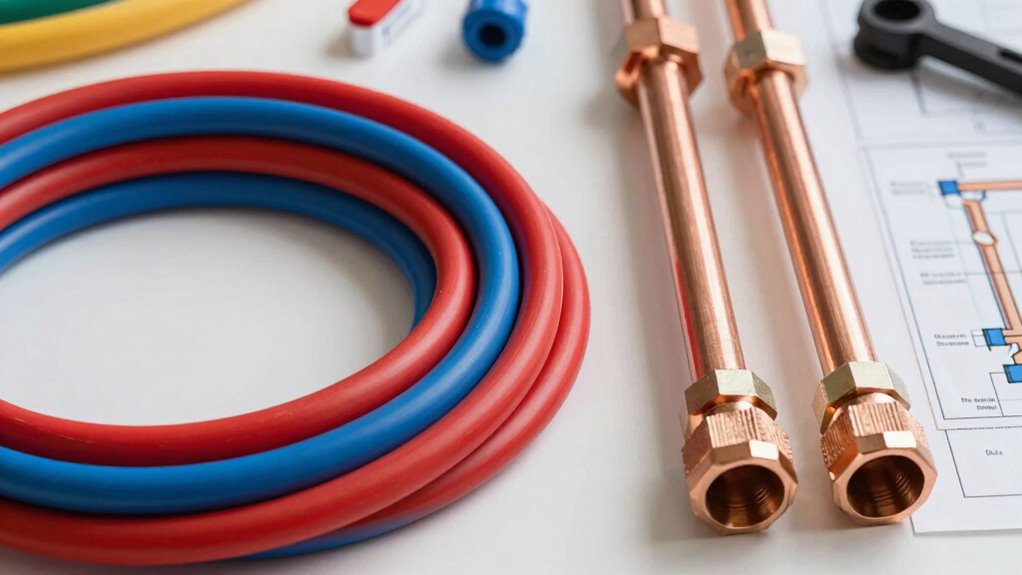
When comparing the installation process of PEX and copper piping, many find PEX to be the simpler choice due to its flexibility and ease of handling. PEX’s pipe flexibility allows you to bend it around obstacles without additional fittings, reducing installation time. It’s lightweight and easier to cut, which means fewer tools and less effort. Copper, on the other hand, requires precise measurements, soldering, and specialized fittings, making the process more labor-intensive. Additionally, repair methods differ; PEX repairs are straightforward, often involving simple pipe replacements or couplings. Copper repairs can be more involved, requiring soldering and longer downtimes. Overall, PEX offers a more user-friendly experience for DIYers and professionals alike, streamlining the installation process considerably. Understanding plumbing materials helps ensure proper selection and installation techniques.
Which Plumbing Material Fits Your Home’s Needs?
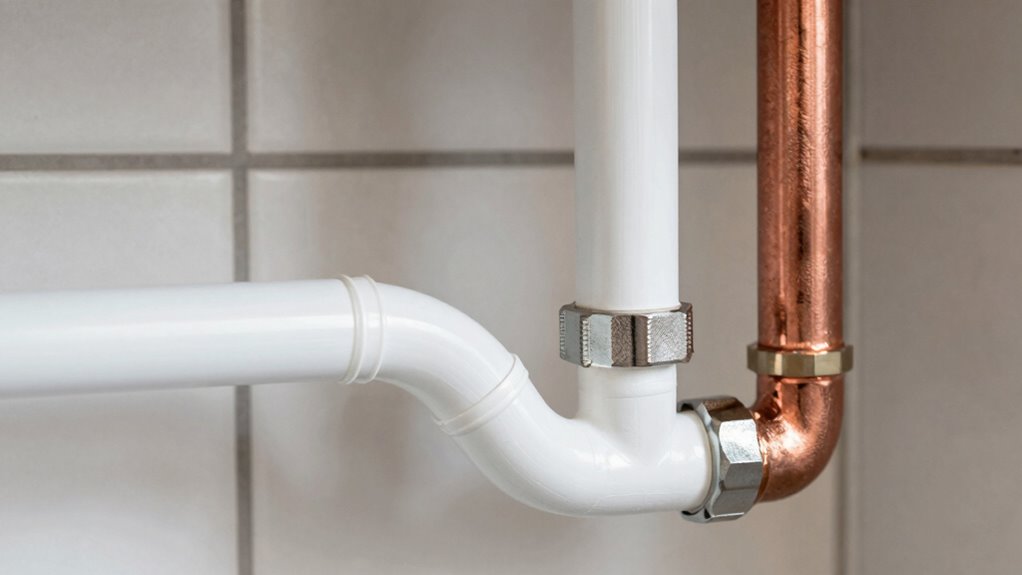
Choosing the right plumbing material depends on your home’s specific needs and priorities. Consider factors like pipe flexibility, aesthetic appeal, durability, cost, and ease of installation. If you prefer a versatile option that bends easily around corners, PEX offers superior pipe flexibility, reducing the need for fittings. Its modern look can blend seamlessly with contemporary interiors, enhancing aesthetic appeal. Copper, on the other hand, provides a classic appearance and proven longevity, ideal for those valuing durability. Ask yourself: Do you need quick, flexible installation? Is visual appeal important? Do you want a material that withstands high temperatures? Reflect on these questions to determine whether PEX or copper best aligns with your home’s requirements. Both options have unique strengths suited to different priorities. Additionally, understanding the installation process can help you weigh the benefits of each material more effectively.
Making the Right Choice: PEX or Copper for Your Plumbing Project
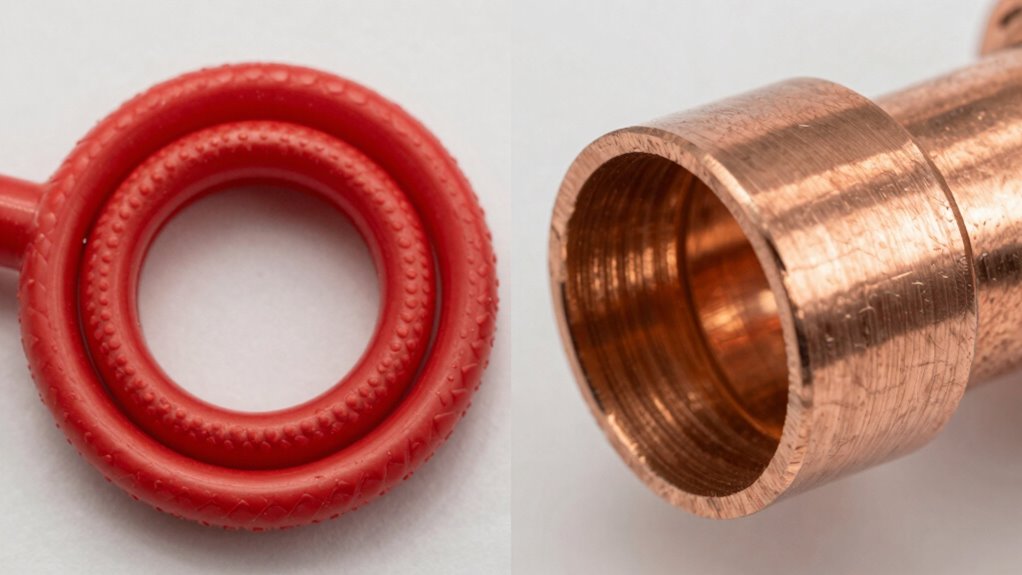
Deciding between PEX and copper for your plumbing project requires weighing your home’s specific needs and your priorities. If water conservation is important, PEX’s flexibility and fewer fittings can reduce leaks and waste, helping you save water over time. Copper, though durable, may require more fittings, which can increase water loss. When considering aesthetic appeal, copper pipes often have a classic, polished look that enhances certain styles. PEX, on the other hand, is less visible once installed, offering a clean, modern appearance. Your choice depends on whether you prefer the traditional look and proven longevity of copper or the cost-effectiveness and ease of installation of PEX. Additionally, understanding the installation process and local building codes can influence your decision. Ultimately, balancing water conservation, aesthetic appeal, and budget will guide you to the best material for your project.
Frequently Asked Questions
Which Plumbing Material Is More Eco-Friendly: PEX or Copper?
You’ll find PEX more eco-friendly than copper because of its lower environmental impact during production and disposal. PEX uses fewer resources and generates less waste, and recycling options are improving for it. Copper, while recyclable, requires more energy to produce and extract. Choosing PEX can help reduce your home’s environmental footprint, making it a smarter choice if you’re concerned about sustainability and reducing overall ecological impact.
How Does PEX Perform in Extreme Cold Temperatures?
When the weather turns harsh, PEX holds its own with impressive freeze resistance, making it a smart choice in cold climates. Its flexible nature allows for expansion, so it won’t crack or burst if water freezes inside. Thanks to its expansion properties, PEX can handle extreme cold temperatures better than rigid pipes, giving you peace of mind during the chilliest months. Don’t put all your eggs in one basket—trust PEX for cold resilience.
Can PEX or Copper Be Recycled or Reused After Installation?
You can recycle copper pipes easily after installation, making it a sustainable choice. Copper is highly recyclable and retains value, so you can sell or repurpose it. PEX, on the other hand, isn’t typically reused or recycled easily because of its plastic composition. However, some recycling centers accept PEX for recycling, but generally, it’s less reusable than copper. Consider recycling copper pipes to reduce waste and maximize your investment.
Are There Any Health Concerns Associated With PEX or Copper Pipes?
You might wonder about health implications when choosing between PEX and copper pipes. Generally, copper is considered safe but can pose concerns about material toxicity if corrosion occurs or if high levels of copper leach into water. PEX, on the other hand, has minimal health risks, though some worry about potential chemical leaching from its plastic material. Overall, both are safe if installed correctly, but it’s wise to consult local health standards.
How Do Installation Times Compare Between PEX and Copper?
Imagine a race where PEX wins easily—installation speed is much faster than copper. You’ll find PEX’s flexibility and fewer fittings boost labor efficiency, allowing you to complete projects quicker. Copper’s rigid pipes require more precise measurements, soldering, and fittings, extending installation times. If speed matters, PEX offers a clear advantage, saving you time and effort with straightforward, efficient installation.
Conclusion
Choosing between PEX and copper is like picking the right tool for a job—you want durability, affordability, and ease of installation. PEX is flexible and quick to install, while copper offers unmatched longevity. Think of your plumbing system as the heartbeat of your home—selecting the right material keeps it beating strong. Ultimately, your choice depends on your needs and budget, but both options can keep your home flowing smoothly for years to come.
Fall Picks
fall essentials
As an affiliate, we earn on qualifying purchases.