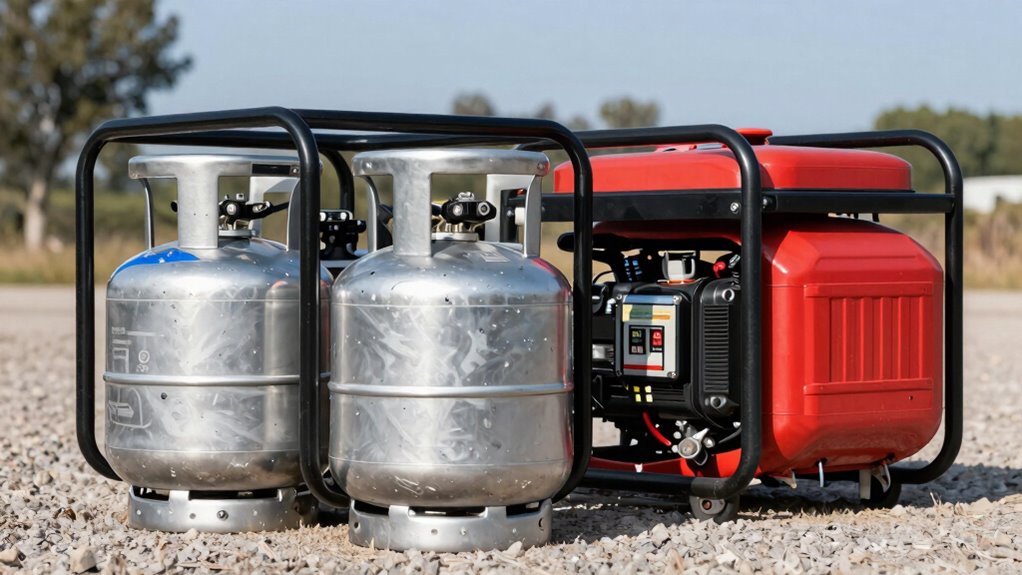

When choosing between propane and gasoline for your dual fuel generator, consider your power needs and storage preferences. Propane is ideal for long-term backup power because it stores safely longer and burns cleaner, making it better for sustainability. Gasoline offers quick-start power and easy refueling, which is perfect for short-term or heavy-duty use. To discover which option suits your situation best, keep exploring how each fuel type matches your specific needs and plans.
Key Takeaways
- Propane is ideal for long-term storage and backup power, due to its longer shelf life and stable storage conditions.
- Gasoline provides quick-start power and is suitable for short-term, heavy-duty applications.
- Propane burns cleaner, making it more environmentally friendly and aligned with sustainable energy practices.
- Gasoline is more readily available and easier to refuel, suitable for immediate, portable power needs.
- Dual fuel generators offer flexibility, allowing users to choose based on environmental priorities, storage capacity, and usage duration.
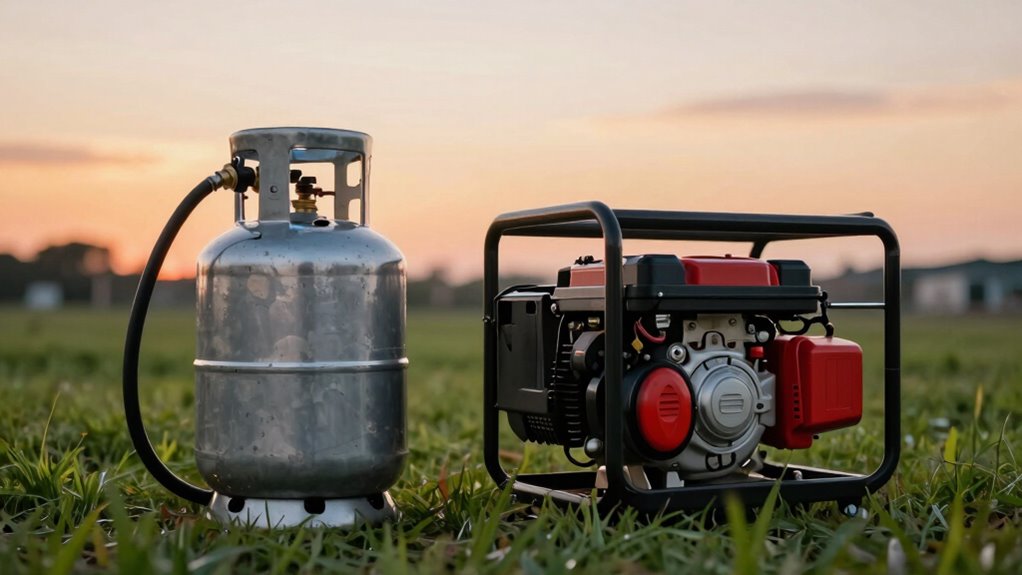
Have you ever wondered which fuel type is best for your dual fuel generator? Choosing between propane and gasoline depends on your specific needs, especially when considering renewable options and storage solutions. Propane offers a cleaner-burning fuel, which makes it a more environmentally friendly choice. It produces fewer emissions, and if you’re interested in sustainable energy practices, propane aligns better with renewable options because it can be stored longer without degrading. You might find that propane’s longer shelf life makes it more convenient for backup power during emergencies or long-term outages, as it doesn’t spoil like gasoline can over time. When it comes to storage solutions, propane tanks are generally safer and more stable. They’re sealed, reducing the risk of spills and evaporation, and can be stored outdoors in various weather conditions without losing fuel quality. This makes propane a reliable option if you’re concerned about safely storing fuel for extended periods. Additionally, propane’s ability to be stored in a stable, sealed container makes it more suitable for long-term storage.
Gasoline, on the other hand, is historically the most common fuel used in portable generators. It’s readily available and easy to refuel, especially if you already keep gasoline for your lawnmower or other equipment. However, gasoline has a shorter shelf life and can degrade over time, which means you’ll need to use fuel stabilizers or replace it regularly to keep your generator ready. This could complicate storage solutions if you plan to keep fuel on hand for emergencies. Additionally, gasoline produces higher emissions and can be more harmful to the environment, which might be a concern if you’re aiming for greener energy options. That said, gasoline generators often deliver quick-start power and can run at higher speeds, making them suitable for certain use cases, like heavy-duty or short-term power needs. Moreover, gasoline’s ease of refueling makes it a practical choice for many users.
When weighing these options, think about your long-term energy goals. If you aim to incorporate renewable options and prioritize safer, longer-term storage, propane might be your better choice. It’s easier to store and keeps longer without losing quality. But if portability and quick refueling are more important, gasoline offers convenience despite its drawbacks. Ultimately, your decision should match your intended use, storage capabilities, and environmental considerations. A dual fuel generator gives you flexibility, but understanding these fuel differences ensures you make the most efficient choice for your power needs.
dual fuel generator propane gasoline
As an affiliate, we earn on qualifying purchases.
As an affiliate, we earn on qualifying purchases.
Frequently Asked Questions
How Long Does Each Fuel Type Last During Continuous Use?
Propane typically lasts longer during continuous use because of its better fuel efficiency, often providing 8-12 hours at half load. Gasoline, on the other hand, usually runs for 4-8 hours. Storage safety favors propane, as it’s less volatile and safer to store long-term. Your generator’s runtime depends on fuel tank size and load, but propane’s longer burn time makes it ideal for extended use.
Are Dual Fuel Generators More Environmentally Friendly Than Single Fuel Ones?
A dual fuel generator is like a chameleon, adapting better for the environment. You’ll find that they generally produce fewer emissions, meeting stricter emission standards, making them more environmentally friendly than single fuel models. Propane burns cleaner than gasoline, reducing your carbon footprint. So, if you’re mindful of environmental impact, dual fuel generators give you the flexibility to choose a greener option while still enjoying reliable power.
Can Propane Tanks Be Safely Stored for Long Periods?
Propane tanks can be safely stored for long periods if you follow proper storage safety guidelines. Guarantee tanks are kept in a cool, well-ventilated area, away from heat sources and open flames. Regularly check for leaks or corrosion to address longevity concerns. Properly securing the tank prevents accidents, and using a regulator maintains safe pressure. With careful maintenance, propane tanks remain safe for extended storage periods.
What Is the Initial Cost Difference Between Propane and Gasoline Models?
You’ll find propane models often cost more upfront than gasoline ones, mainly because of their fuel efficiency and storage safety benefits. While gasoline generators might seem cheaper initially, propane tanks are safer to store long-term due to lower flammability risks. Investing in a propane generator can save you money over time, thanks to better fuel efficiency and reduced safety concerns, making it a smarter choice for reliable power.
How Does Fuel Choice Affect Generator Maintenance Requirements?
Choosing propane often means less maintenance because it produces cleaner emissions and burns more consistently, reducing engine wear. Propane’s stable fuel storage extends its shelf life, so you won’t need to worry about stale fuel. Gasoline, however, requires regular maintenance and fuel stabilization due to its shorter shelf life and higher emissions. Both types must meet emission standards, but propane generally keeps your generator running smoother with less upkeep.
portable dual fuel generator with long shelf life
As an affiliate, we earn on qualifying purchases.
As an affiliate, we earn on qualifying purchases.
Conclusion
Choosing between propane and gasoline for your dual fuel generator depends on your needs. For instance, if you’re preparing for long power outages, propane’s cleaner burn and longer storage make it ideal. Imagine a homeowner in a remote area using propane for months without fuel degradation, ensuring continuous power. By understanding your specific use case, you can select the best fuel type to keep your home running smoothly in any situation.
best propane generator for backup power
As an affiliate, we earn on qualifying purchases.
As an affiliate, we earn on qualifying purchases.
gasoline portable generator heavy-duty
As an affiliate, we earn on qualifying purchases.
As an affiliate, we earn on qualifying purchases.