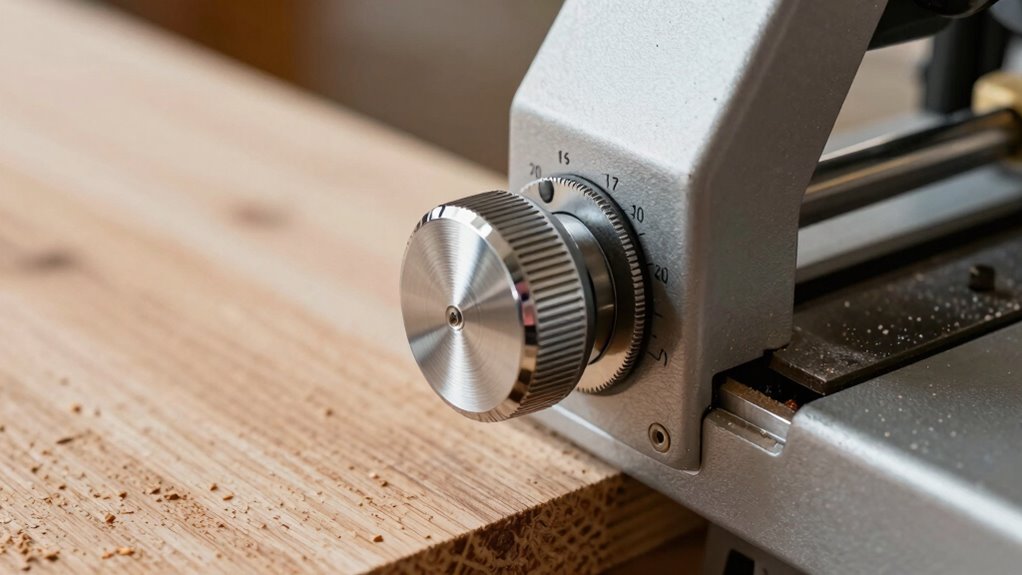

To set the depth of cut on your thickness planer, start with a shallow pass of about 1/32 inch and avoid forcing the machine. Gradually increase the depth if needed, checking your work after each pass to prevent uneven surfaces or blade wear. Properly adjusting the depth guarantees smooth cuts and prolongs the machine’s life. Keep in mind that balancing the right depth can improve your results—stay tuned to discover more tips.

Get the little things that make your day delivered free — and shop member deals
- Fast, free delivery on millions of items
- Access to Prime Big Deal Days deals on October 6–7
- Prime Video, Amazon Music and more included
Key Takeaways
- Start with a shallow cut (~1/32 inch) and increase gradually, checking the finish after each pass.
- Proper depth prevents motor strain, uneven surfaces, and blade wear, ensuring smooth cuts.
- Deep cuts can cause blade damage and rough finishes; shallow cuts require multiple passes.
- Regularly check and maintain blade sharpness for optimal cutting performance and minimal tear-out.
- Align blades correctly and maintain machine components to ensure consistent, precise cuts.
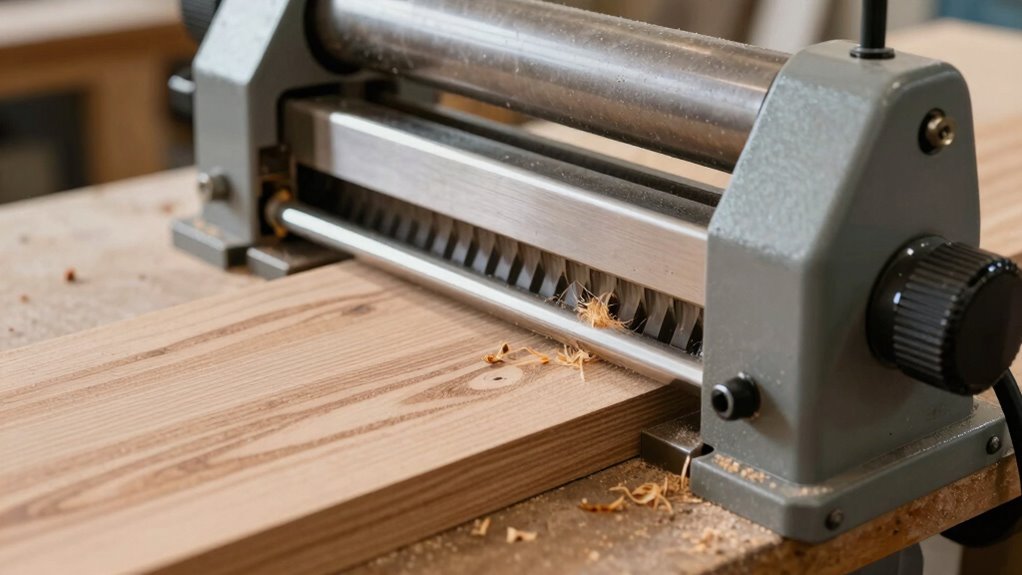
Understanding the proper depth of cut on a thickness planer is essential for achieving smooth, accurate results without damaging your material or the machine. When you set the correct depth, you guarantee that each pass removes just enough material to achieve the desired thickness while keeping the blades sharp and the machine functioning properly. If you set the cut too deep, you might strain the motor, cause uneven cuts, or put excessive wear on the blades. Conversely, setting it too shallow can lead to multiple passes, wasting time and increasing the risk of tear-out or rough surfaces. To find the right balance, start with a shallow cut—around 1/32 inch—and gradually increase if needed, checking your work after each pass. Regularly checking your machine’s blade sharpness ensures optimal performance and quality results. Blade sharpening plays a pivotal role in maintaining clean cuts and smooth finishes. Dull blades tend to tear the wood fibers rather than cut them cleanly, resulting in a rough surface and increased strain on the machine. When you notice uneven or rough cuts, it’s time to sharpen or replace the blades. Regular blade sharpening keeps your planer running efficiently and extends the life of your blades. Many planers have replaceable blades, so you can easily swap them out or sharpen them as needed. Sharp blades also help in reducing splintering and tear-out, especially when working with delicate woods or detailed projects. Proper blade maintenance is crucial for consistent results and extending your equipment’s lifespan. Properly aligning the blades and maintaining the machine’s components ensures that your cuts remain precise and reduces unnecessary wear. Additionally, understanding cutting techniques can help optimize your workflow and prevent damage to both your workpiece and your planer. Dust collection is another vital aspect of using a thickness planer effectively. As you cut, a significant amount of sawdust and wood shavings are generated, which can clog the machine and reduce its efficiency. Proper dust collection not only keeps your workspace cleaner but also minimizes the risk of fire hazards and improves air quality. Make sure your planer is connected to a dust collection system or shop vacuum capable of handling the volume of debris produced. Regularly emptying the dust bag or container prevents blockages and maintains peak airflow. Good dust management also helps you better see your work, ensuring consistent cuts and preventing unnecessary wear on the machine.
thickness planer blade sharpening kit
As an affiliate, we earn on qualifying purchases.
As an affiliate, we earn on qualifying purchases.
Frequently Asked Questions
How Often Should I Replace the Planer Blades?
You should replace your planer blades when they become dull, which usually happens after several uses, but it depends on the wood’s hardness. Regular blade sharpening can extend their life, so sharpen blades before replacing them if possible. Keep dust collection systems in check, as a clean workspace helps you notice dull blades or uneven cuts early. Replace blades promptly to maintain smooth cuts and avoid damage to your planer.
Can I Use a Thickness Planer on Hardwoods?
Yes, you can use a thickness planer on hardwoods, but you need to pay attention to grain direction to avoid tear-out. Always guarantee your blades are sharp; dull blades cause rough cuts and strain the machine. Regular blade sharpening maintains smooth operation, especially with dense woods. Adjust the depth of cut to prevent splintering, and work slowly to achieve a clean, professional finish on hardwoods.
What Safety Precautions Are Necessary When Adjusting Depth?
When adjusting the depth of your thickness planer, you need to prioritize safety. Always wear safety equipment like goggles and ear protection before starting. Follow proper adjustment procedures carefully, making certain the machine is unplugged before making any changes. Double-check your settings after adjustments and keep your hands clear of blades. These precautions help prevent accidents, protect your safety, and ensure precise cuts every time you operate or modify the machine’s depth.
How Do Temperature and Humidity Affect Planing Results?
Temperature and humidity influence your planing results by affecting the wood’s moisture content. When the environment is humid, the wood absorbs moisture, making it harder to plane smoothly and possibly causing ripples or tear-out. Conversely, dry conditions reduce moisture, leading to softer, more flexible wood that cuts easily but may result in uneven thickness. Maintaining consistent environmental conditions helps you achieve more accurate, smooth planed surfaces.
Is There a Maximum Depth Cut for Softwoods?
Yes, there’s a maximum depth cut for softwoods, typically around 1/8 inch per pass. You should always consider the grain direction to avoid tear-out and guarantee a smooth finish. Additionally, keeping your blades sharp is vital; dull blades require deeper cuts to remove material, which can damage the wood. Taking multiple shallow passes is best for softwoods, protecting both your planer and the quality of your project.
woodworking thickness planer blades
As an affiliate, we earn on qualifying purchases.
As an affiliate, we earn on qualifying purchases.
Conclusion
Mastering the depth of cut on your thickness planer is like tuning a fine instrument—you’ll get smoother, more precise results over time. I once adjusted my planer just a hair too deep, only to realize I’d warped a board. It’s a reminder that even small changes matter. By understanding and controlling your cuts, you turn each project into a symphony of craftsmanship, where precision transforms raw wood into something truly remarkable.
dust collection system for planer
As an affiliate, we earn on qualifying purchases.
As an affiliate, we earn on qualifying purchases.
As an affiliate, we earn on qualifying purchases.
Fall Picks
fall essentials
As an affiliate, we earn on qualifying purchases.