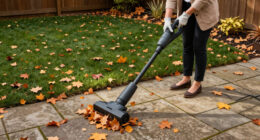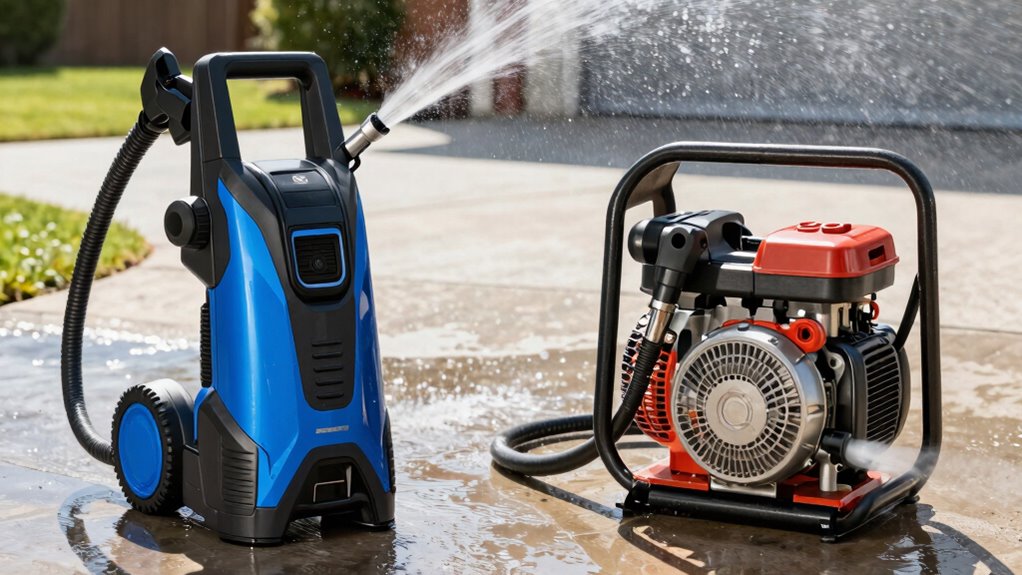
When choosing between electric and gas pressure washers for your home, consider the tasks you’ll tackle. Electric washers are great for light to medium jobs like patios and siding—they’re easy to handle, quiet, and require less maintenance. Gas models are better for heavy-duty tasks like driveways or fences but are heavier, noisier, and need more care. To find out which fits your needs best, keep exploring the details ahead.

Get the little things that make your day delivered free — and shop member deals
- Fast, free delivery on millions of items
- Access to Prime Big Deal Days deals on October 6–7
- Prime Video, Amazon Music and more included
Key Takeaways
- Electric pressure washers are ideal for light to medium tasks like patios and siding; gas models excel for heavy-duty cleaning.
- Electric washers are more portable, quieter, and easier to maintain, making them suitable for most homeowners.
- Gas pressure washers are heavier, require fuel handling, and are better for large, stubborn cleaning jobs.
- Electric units prevent fumes, making them safer for indoor or enclosed space use.
- Choose based on project scope, frequency, and whether portability or power is the priority.
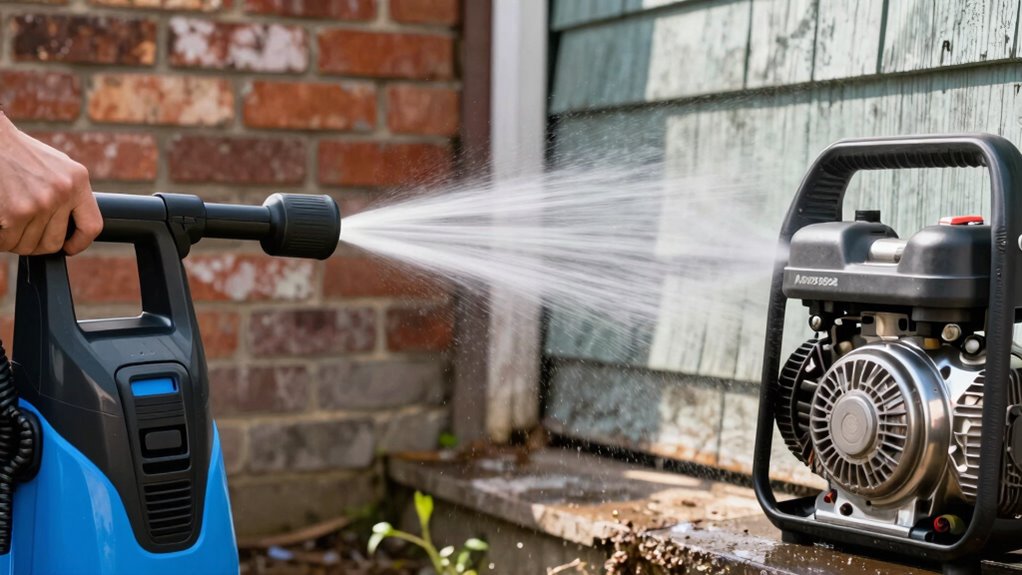
Have you ever wondered how to effortlessly restore the curb appeal of your home? Choosing between electric and gas pressure washers is a key step in that process. Both options have their advantages, but understanding their differences helps you make an informed decision. Electric pressure washers are typically more compact, lightweight, and easier to operate. They’re perfect for light to medium tasks like cleaning patios, decks, or siding. Gas pressure washers, on the other hand, pack more power, making them ideal for heavy-duty cleaning jobs such as removing stubborn grime from driveways or large fences. Your specific needs, the size of your projects, and storage space will guide your choice.
When considering electric models, you don’t need to worry much about maintenance or safety precautions related to fuel. They tend to be quieter and emit no fumes, which makes them safer for use in enclosed spaces. However, it’s important to pay attention to detergent compatibility with your electric pressure washer. Not all models handle the same cleaning solutions, and using incompatible detergents can damage the internal components or reduce cleaning effectiveness. Always check the manufacturer’s instructions to guarantee you’re using the right cleaning agents. Additionally, safety precautions such as wearing protective eyewear and gloves are essential regardless of the pressure washer type. Keep a safe distance from delicate surfaces to prevent damage and avoid directing the jet at yourself or others.
Furthermore, understanding the safety precautions for each type of pressure washer ensures safe operation and extends the lifespan of your equipment. Gas pressure washers require a bit more attention to safety precautions. Since they run on gasoline, you should operate them outdoors in well-ventilated areas to prevent buildup of dangerous fumes. Handling fuel safely is imperative—never refuel a hot engine, and store gasoline in approved containers away from heat sources. They also tend to be noisier and heavier, so you’ll want to be cautious about lifting and maneuvering them. Properly maintaining the fuel system and vital components can prevent many common issues and ensure reliable operation. Additionally, it’s advisable to familiarize yourself with proper handling techniques to minimize the risk of accidents and damage. Using the right detergent compatibility and following safety protocols can significantly reduce the risk of injury or equipment failure.
electric pressure washer for patios
As an affiliate, we earn on qualifying purchases.
As an affiliate, we earn on qualifying purchases.
Frequently Asked Questions
What’s the Environmental Impact of Electric Vs Gas Pressure Washers?
Electric pressure washers have a lower environmental impact because they produce eco-friendly emissions and consume less energy overall. Gas washers, on the other hand, emit more pollutants, including greenhouse gases, and typically use more fuel, increasing their carbon footprint. If you’re concerned about your environmental impact, opting for an electric pressure washer helps reduce your energy consumption and minimizes harmful emissions, making it a greener choice for your cleaning needs.
Can Electric Pressure Washers Handle Commercial Cleaning Tasks?
Electric pressure washers can handle some commercial cleaning tasks, especially smaller jobs, thanks to their decent power capacity. However, they might struggle with larger, more demanding jobs due to limited power output. You’ll also notice they operate with lower noise levels, making them more suitable for environments where noise is a concern. For heavy-duty commercial cleaning, gas pressure washers often provide the higher power and durability needed.
How Long Do Electric Pressure Washers Typically Last?
Electric pressure washers typically last between 3 to 5 years, depending on usage and maintenance. Durability concerns may arise if you neglect regular upkeep, like cleaning filters and checking hoses. Proper maintenance requirements—such as storing it in a dry place and avoiding overuse—can extend its lifespan. If you follow these steps, your electric pressure washer can stay reliable longer, making it a worthwhile investment for your home cleaning needs.
Are Gas Pressure Washers More Portable Than Electric Models?
Gas pressure washers are generally more portable than electric models due to their fuel-powered design. This allows you to move around without being tethered to an outlet, making them ideal for large or outdoor cleaning projects. While they might be less fuel-efficient, their portable design and ability to cover bigger areas quickly give you more flexibility and convenience compared to electric washers, especially when working away from power sources.
What Safety Precautions Are Necessary for Gas Pressure Washers?
You should always prioritize fuel safety when handling gas pressure washers by keeping fuel away from heat sources and storing it in approved containers. Guarantee proper storage considerations by keeping the machine outdoors or in well-ventilated areas, and disconnect the spark plug before maintenance. Always wear protective gear, read the manual, and check for leaks or damage before use. These precautions keep you safe and prevent accidents.
gas pressure washer for driveway cleaning
As an affiliate, we earn on qualifying purchases.
As an affiliate, we earn on qualifying purchases.
Conclusion
Choosing between electric and gas pressure washers might seem tough, but honestly, the right one can transform your cleaning game so dramatically, you’ll wonder how you ever managed without it! Whether you opt for the eco-friendly, whisper-quiet electric model or the powerhouse gas version, you’re stepping into a world where dirt vanishes like magic. Get ready to conquer grime and make your home shine brighter than a diamond—this tool will turn you into a legendary cleaning superhero!
compact electric pressure washer
As an affiliate, we earn on qualifying purchases.
As an affiliate, we earn on qualifying purchases.
As an affiliate, we earn on qualifying purchases.
NFL season / tailgating Picks
team gear
As an affiliate, we earn on qualifying purchases.