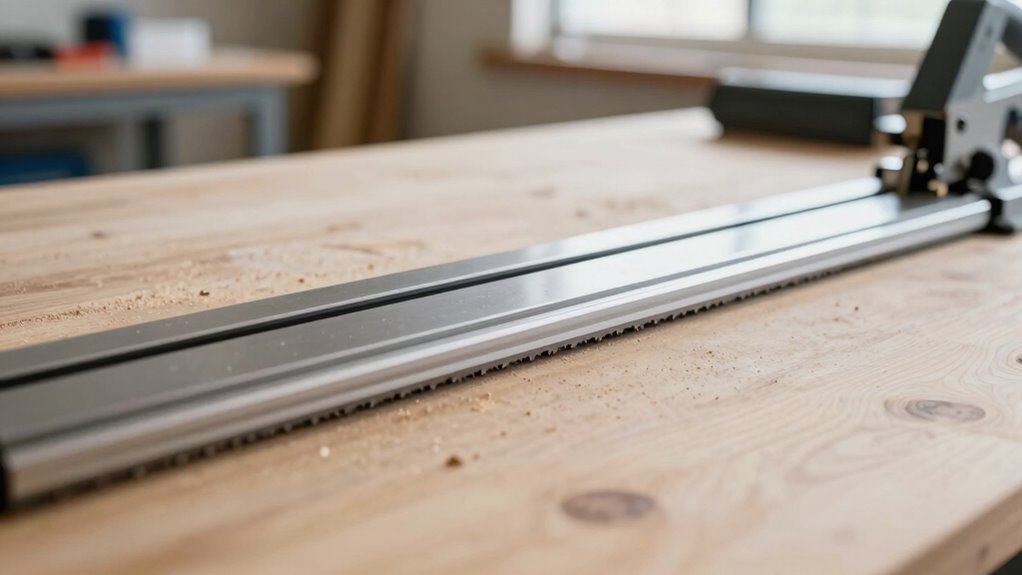

Using track saw rails helps you make precise, straight cuts every time by guiding the saw along a straight line. They improve accuracy, guarantee consistency, and reduce errors compared to freehand cutting. Regularly maintaining the rails and aligning them properly is essential for best results. Keep blades sharp for safety and quality. Proper setup and safety precautions are key. If you keep exploring, you’ll discover more tips to perfect your cuts.
Key Takeaways
- Track saw rails guide the saw for straight, precise cuts and ensure repeatability across multiple cuts.
- Proper setup and alignment of rails are essential for achieving accurate, clean, straight cuts.
- Regular maintenance of blades and rails prevents errors and enhances cutting safety and quality.
- Securing rails firmly and using guides or clamps minimizes movement and improves cut precision.
- Safety precautions, including PPE and workspace organization, are crucial during cutting with track saws.
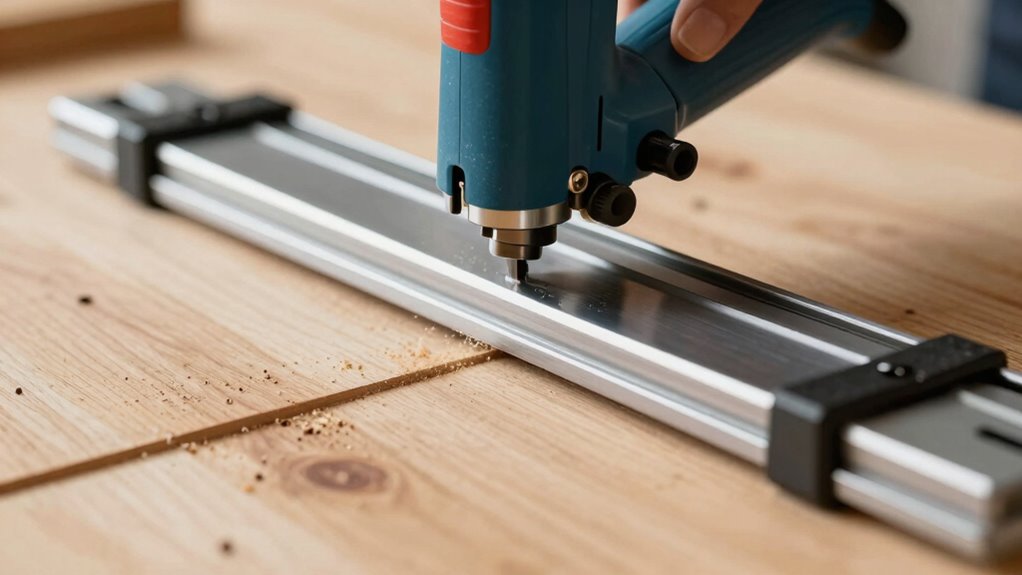
When you need precise, straight cuts in your woodworking projects, track saw rails are an essential tool to contemplate. These rails guide your saw along a straight line, ensuring accuracy and repeatability that’s hard to match with freehand cuts. To get the best results, you must pay attention to blade maintenance. A sharp, clean blade cuts more smoothly and reduces splintering, which is fundamental for clean edges and professional-looking finishes. Regularly inspect your blade for dullness, buildup, or damage, and replace or sharpen it as needed. Keeping your blade in top condition not only improves cut quality but also extends the lifespan of your tools. Remember, a dull blade requires more force, increasing the risk of slipping or losing control, which can be dangerous. Properly maintaining your blade condition is essential for safe and precise cuts. Safety precautions are essential whenever you’re working with power tools and track saws. Always wear appropriate personal protective equipment, such as safety glasses and hearing protection. Before you start, double-check that the track is securely clamped or held in place. Unplug the saw when changing blades or making adjustments, and never bypass safety features. Keep your workspace clear of debris and distractions, and never force the saw through a cut. Let the blade do the work at a steady, controlled pace to prevent kickback or loss of control. Also, make sure your hands are kept away from the blade and cutting path at all times. Using push sticks or guides can help maintain a safe distance from the blade, especially on longer or more complex cuts. Properly maintaining your track saw rails is equally important. Keep the rails clean and free of dust and debris, which can cause the saw to drift or jump off course. Use a soft cloth and mild cleaner to wipe them down regularly, and check for any warping or damage that could compromise your cuts. When setting up, verify the rails are aligned precisely and securely clamped to your workpiece, as even minor misalignments can result in uneven cuts. Ensuring your rail setup is accurate can greatly improve your overall project quality. Additionally, understanding the precision offered by properly maintained rails can significantly enhance your overall project quality. Regularly reviewing your setup and alignment techniques can help prevent errors and ensure consistent results. Ensuring your tools are well-maintained and properly calibrated is a fundamental aspect of achieving consistent accuracy in woodworking.
As an affiliate, we earn on qualifying purchases.
Frequently Asked Questions
How Do I Choose the Right Track Saw Rail Length?
To select the appropriate track saw rail length, consider your typical project size and the level of cutting precision you need. Longer rails offer more stability and smooth cuts for large sheets, while shorter rails are easier to maneuver for smaller tasks. Make sure your rail is compatible with your saw and offers enough length for your cuts. This way, you guarantee ideal rail compatibility and cutting precision every time.
Can Track Saw Rails Be Used on Uneven Surfaces?
Using a track saw on uneven surfaces is like trying to draw a straight line over shifting sand; it’s tricky. Surface stability is essential for accurate cuts, so you’ll need to guarantee your rail is compatible with the surface. Consider using shims or a flat, stable base to support the rail. Proper rail compatibility and added support help maintain straight cuts, even on less-than-ideal surfaces.
How Do I Prevent Kickback During Cutting?
To prevent kickback, make sure your blade is properly aligned, as misalignment can cause the saw to bind and kick back. Keep your workpiece steady and supported, avoiding pinching the blade. Use dust extraction to keep the cut area clear, reducing debris that can affect blade movement. Always hold the saw firmly, cut at a steady speed, and follow safety guidelines to minimize the risk of kickback during cutting.
Are There Safety Tips for Using Track Saws?
When using a track saw, always wear proper safety gear like goggles and ear protection. Keep your hands away from the blade safety features and make sure the saw is properly secured to the track before cutting. Check the blade for sharpness and damage to prevent kickback. Follow manufacturer instructions, maintain a firm grip, and never force the saw. These safety tips help reduce accidents and guarantee cleaner, safer cuts.
How Do I Store and Maintain Track Saw Rails?
You should treat your track saw rails like gold—carefully storing and maintaining them guarantees longevity. Use proper storage solutions, such as wall-mounted racks or dedicated cases, to prevent warping or damage. Keep rail accessories clean and free of debris, and periodically check for wear or dents. By doing so, you’ll keep your rails in top shape, making your cuts precise and your work smoother every time.
As an affiliate, we earn on qualifying purchases.
Conclusion
Using track saw rails makes straight cuts easier and more precise, turning a challenging task into a straightforward one. With the right setup, you’ll gain confidence and efficiency in your woodworking projects. Remember, “A stitch in time saves nine”—investing a little effort upfront guarantees cleaner, faster results later. So, keep practicing with your track saw, and you’ll master perfect cuts in no time. Happy cutting!
As an affiliate, we earn on qualifying purchases.
As an affiliate, we earn on qualifying purchases.