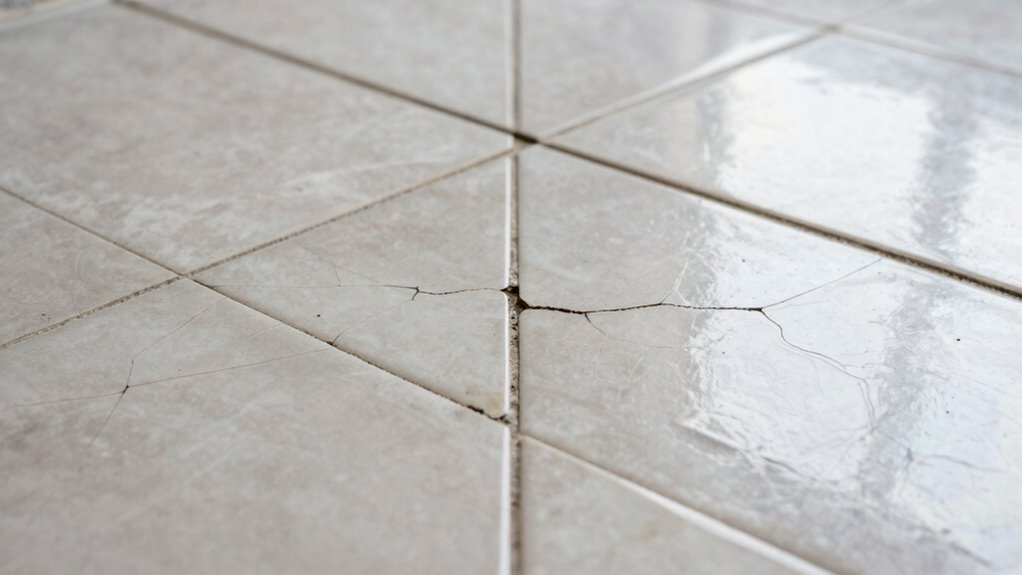

Your tiles are cracking because the subfloor beneath them isn’t stable enough. If it’s weak, uneven, or moves over time, it causes your tiles to crack from the below. Moisture intrusion can weaken the foundation and lead to warping or rot, especially in wood floors. Poor preparation or inadequate reinforcement can also contribute to the problem. To fix this and prevent future cracks, understanding the hidden issues is essential—and you’ll find out more soon.
Key Takeaways
- Uneven or weak subfloor movement can cause tile cracks over time.
- Poor subfloor preparation increases stress, leading to tile damage.
- Moisture intrusion weakens the subfloor, resulting in foundation settling and cracking.
- Aging or shifting subfloors can loosen tiles and cause cracks to develop.
- Hidden structural issues or inadequate reinforcement are often overlooked causes of tile cracking.
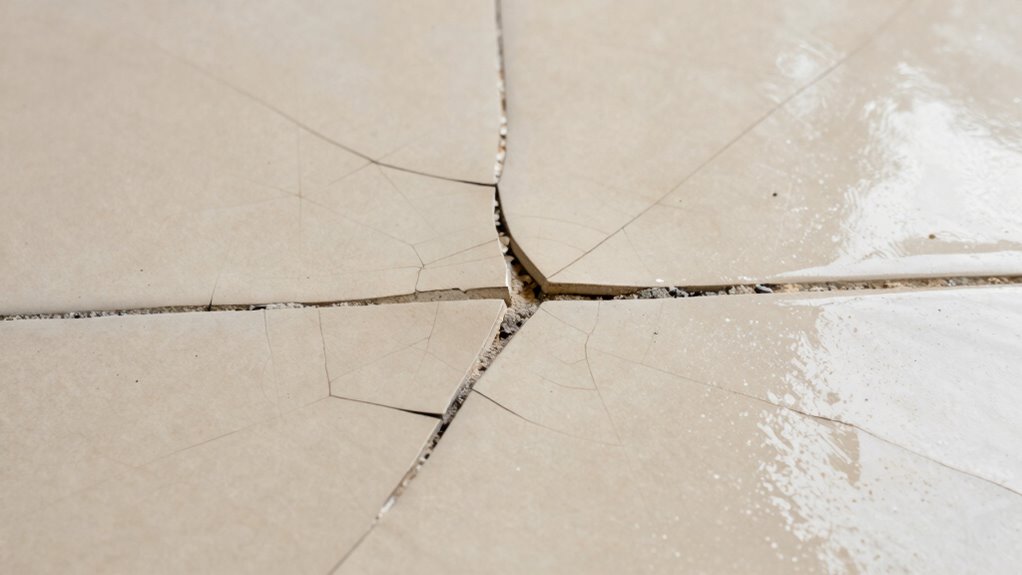
Have you ever wondered why your tiles keep cracking despite careful installation? The answer might lie beneath the surface, in the hidden state of your subfloor. Even if you’ve spent hours laying tiles perfectly, issues with subfloor stability or moisture intrusion can cause persistent problems. These hidden factors often go unnoticed but play a critical role in the longevity of your tiled surfaces.
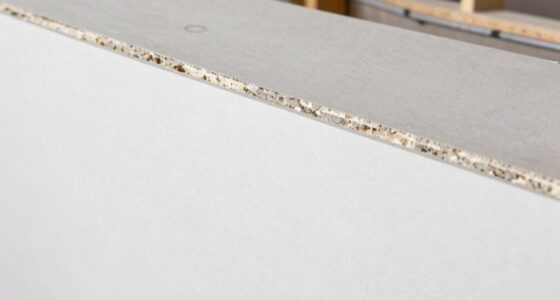
First, consider subfloor stability. A solid, even subfloor provides the foundation your tiles need to stay intact. If your subfloor is weak, uneven, or flexes under weight, it creates movement that can crack tiles over time. Think of it like building a house on shifting sand—no matter how well you construct the visible parts, the foundation’s instability will eventually cause problems. If the subfloor isn’t properly prepared—whether it’s not adequately reinforced or has inconsistencies—you’re setting yourself up for cracked tiles. Proper subfloor inspection and reinforcement are essential before laying down any tile. Ensuring that the subfloor is level, sturdy, and capable of supporting the weight helps prevent these cracks from forming. Regular subfloor maintenance can also help identify potential issues early before tiling begins. Additionally, understanding the material properties of your subfloor can aid in selecting the right reinforcement methods. Furthermore, assessing the subfloor’s age and condition can reveal vulnerabilities that may not be immediately visible but could impact tile durability. An additional consideration is the impact of subfloor movement over time, which can gradually loosen tiles and cause cracks.
A stable, level subfloor is essential to prevent tile cracks and ensure long-lasting durability.
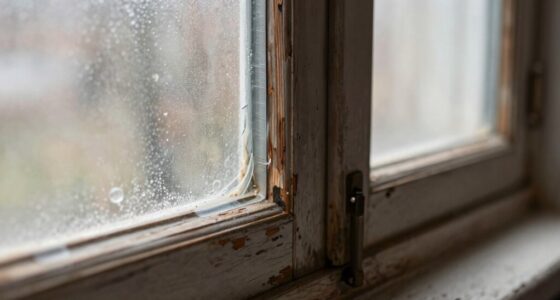
Moisture intrusion is another silent culprit. When moisture seeps into the subfloor, it can compromise its integrity. Wood subfloors, in particular, are vulnerable to swelling, warping, or rotting when exposed to excess moisture. This expansion creates movement beneath the tiles, which can lead to cracking. Even concrete subfloors aren’t immune—if they aren’t properly sealed or if moisture seeps through cracks or porous surfaces, the foundation becomes unstable. Over time, this instability causes tiles to crack as they cannot accommodate the shifting or expanding substrate. Addressing moisture intrusion involves sealing the subfloor, installing a moisture barrier, and controlling indoor humidity levels. These steps help keep the subfloor dry and stable, thereby protecting your tiles.
Additionally, subfloor preparation plays a crucial role in preventing these issues from occurring in the first place. Ultimately, if your tiles keep cracking, it’s worth looking beneath the surface. A stable, moisture-free subfloor is the backbone of a durable tiled surface. You might have followed all the best installation practices, but if the foundation isn’t solid and dry, cracks will inevitably follow. Investing time and effort into ensuring subfloor stability and preventing moisture intrusion can save you from costly repairs in the future. Remember, a well-prepared subfloor is your best defense against cracked tiles, and addressing these hidden issues early on can prolong the life and look of your tiled surfaces.

ARDEX TL 2000 Fiber Reinforced Self-Leveling Floor Underlayment, Cement-Based Polymer-Modified Compound for Interior Concrete, Wood, Tile, 50 Lbs Bag, 38119
- Reinforced for durability: Fiber-reinforced self-leveling underlayment
- Versatile surface compatibility: Smooths concrete, plywood, OSB, tile, and more
- Interior use only: Suitable for residential, commercial, and institutional floors
As an affiliate, we earn on qualifying purchases.
As an affiliate, we earn on qualifying purchases.
Frequently Asked Questions
Can Temperature Fluctuations Cause Tile Cracking?
Yes, temperature fluctuations can cause tile cracking. When temperatures change, thermal expansion occurs, making tiles expand or contract. If the surface stress from this movement isn’t properly accommodated—like with adequate grout joints or a flexible adhesive—it can lead to cracks. Continuous or rapid temperature shifts intensify this stress, weakening the tiles over time. Proper installation and temperature control help prevent this kind of damage, safeguarding your tiles.
Do Underlayment Issues Lead to Tile Cracks?
A shaky foundation is like a house on sand—underlayment issues can definitely lead to tile cracks. If your underlayment isn’t properly installed or deteriorates over time, it can cause uneven movement, stressing your tiles. Regular tile maintenance and grout sealing help prevent moisture damage that worsens these problems. Addressing underlayment issues early keeps your tiles stable and looking good longer, so don’t wait until cracks appear to take action.
How Does Improper Installation Affect Tile Durability?
Improper installation greatly affects tile durability. If you neglect proper grout application, tiles won’t be sealed correctly, leading to cracks and water damage. Using low-quality adhesive also weakens the bond, making tiles more prone to shifting or breaking under pressure. When you guarantee proper grout application and select high-quality adhesive, you create a strong, stable surface that resists cracking and lasts longer.
Are Certain Tile Materials More Prone to Cracking?
Like a delicate song, certain tile materials are more prone to cracking, especially those with softer surfaces or irregular surface textures. For example, ceramic tiles with vibrant color or glazed finishes may be more fragile, while natural stone tends to be sturdier. Your choice of tile color and surface texture influences durability, so select materials wisely to prevent cracks, ensuring your space remains beautiful and resilient over time.
Can Water Damage Cause Tiles to Crack Over Time?
Yes, water damage can cause tiles to crack over time. When you neglect proper tile sealing and grout maintenance, water seeps through the tiny gaps, weakening the adhesive beneath. This gradual process leads to cracks and even tile lifting. To prevent this, regularly reseal your tiles and maintain the grout. These steps guarantee water stays out and your tiles stay intact, saving you from costly repairs later.

Moisture/Vapor Barrier Underlayment for Laminate Engineered Hardwood Floors (.006 Mil Thick Polyethylene Film) – 100 Sq Ft Roll
- Self-sealing adhesive tape: Easy installation with tape
- Barrier thickness: .006 Mil polyethylene film
- Simple installation: Roll out and tape seams
As an affiliate, we earn on qualifying purchases.
As an affiliate, we earn on qualifying purchases.
Conclusion
So, now you know the hidden reason behind your cracking tiles—it’s not just about the surface. It’s about understanding the foundation, addressing the unseen, and taking action before damage spreads. Don’t ignore the signs, don’t dismiss the small cracks, and don’t settle for temporary fixes. Because when you catch the problem early, you protect your space, preserve your investment, and restore peace of mind. Take control, fix the root, and keep your tiles cracking-free.

Tile Leveling System Kit with 200pcs Tile Leveler
- Rotating Thread Design: No jamming during rotation
- Changeable T-Needles: Made of durable manganese steel
- Adjustable Grout Width: Supports 2mm to 6mm grout
As an affiliate, we earn on qualifying purchases.
As an affiliate, we earn on qualifying purchases.

Loctite PL Premium Polyurethane Construction Adhesive, 10 fl oz Cartridge, 12 Pack – Versatile Construction Glue for Wood, Concrete, Stone, Metal & More
- All-Purpose Adhesive: Bonds to most materials for various projects
- Three Times Stronger: Offers 3x the strength of standard adhesives
- Versatile Use: Suitable for wood, concrete, metal, and more
As an affiliate, we earn on qualifying purchases.
As an affiliate, we earn on qualifying purchases.