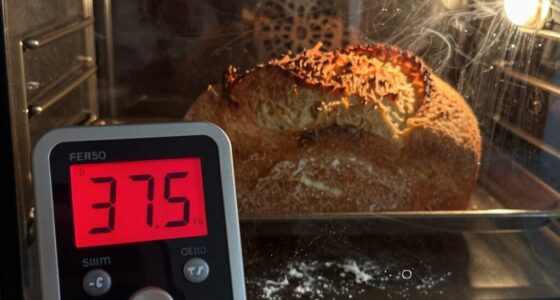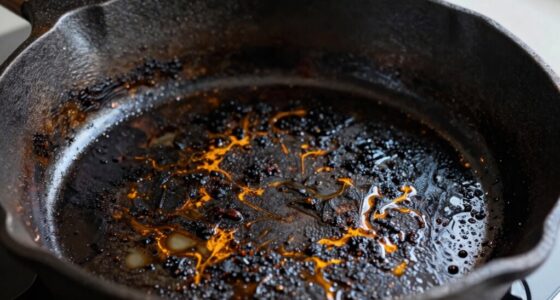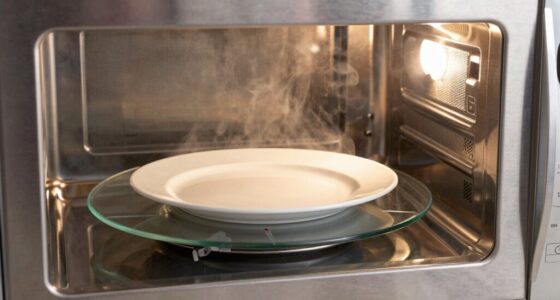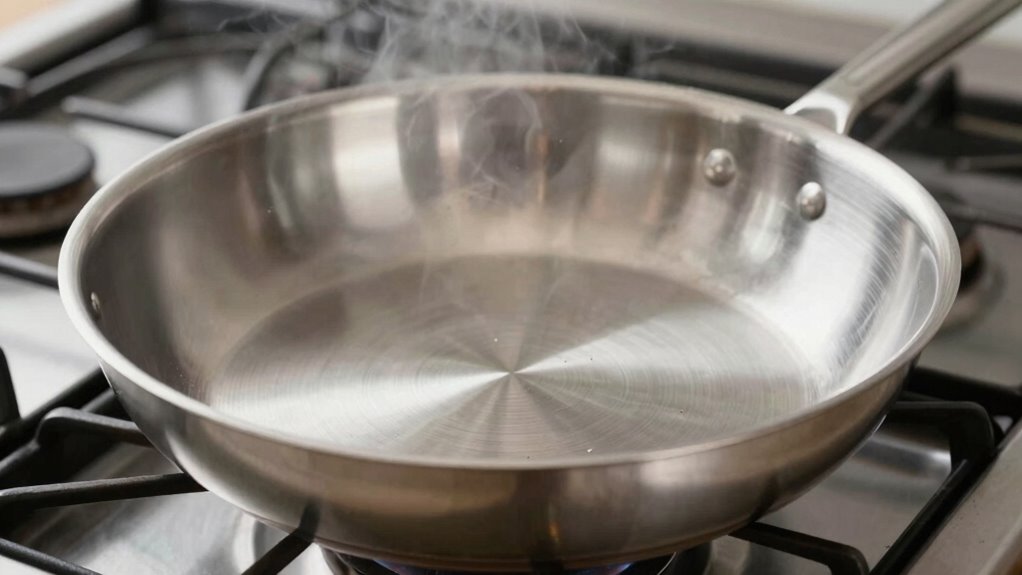

Preheating your pan the right way guarantees even cooking, reduces sticking, and keeps you safe. For stainless steel or cast iron, heat over medium for a few minutes; for non-stick, use low to medium to protect the coating. Proper preheating helps oil distribute evenly and prevents burn spots or splatters. Mastering these techniques can improve your cooking results and safety. If you keep going, you’ll discover even more tips to perfect your preheating skills.

Get the little things that make your day delivered free — and shop member deals
- Fast, free delivery on millions of items
- Access to Prime Big Deal Days deals on October 6–7
- Prime Video, Amazon Music and more included
Key Takeaways
- Proper preheating ensures even heat distribution, preventing sticking and burning while improving food texture.
- Use medium heat for stainless steel and cast iron, and low to medium for non-stick pans to avoid damage.
- Overheating oils during preheating can cause smoke, fire hazards, and damage to cookware.
- Monitoring pan temperature helps maintain safety and optimal cooking conditions.
- Correct preheating practices lead to better culinary results, safer cooking, and longer-lasting cookware.
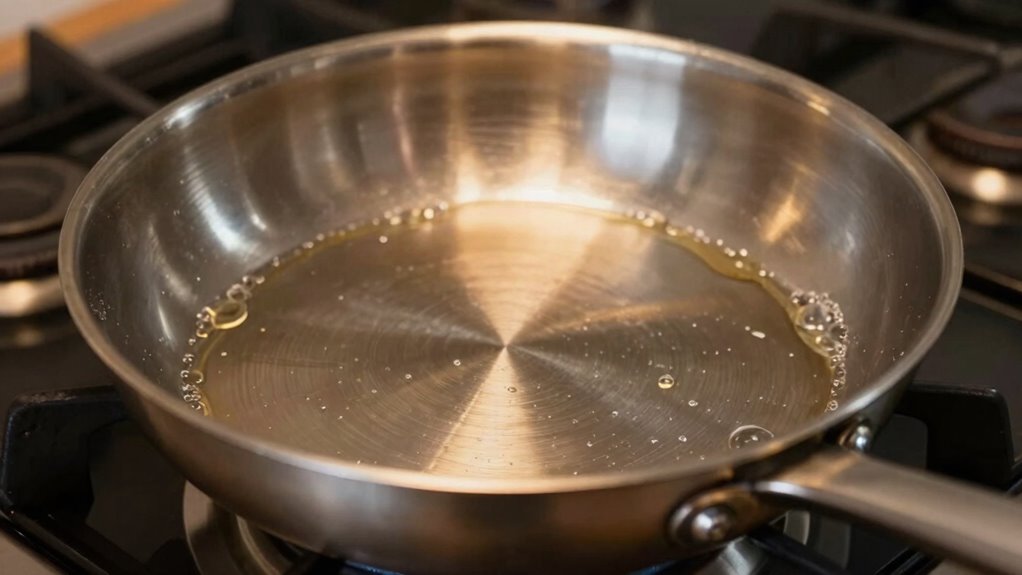
Preheating your pans might seem like a small step, but it plays an essential role in achieving perfectly cooked dishes. When you start with a hot pan, you set the stage for better cooking techniques, guaranteeing your food cooks evenly and develops the right texture. Skipping this step can lead to food sticking, uneven cooking, or even burning, which ruins both the dish and your kitchen safety. Proper preheating helps you control the temperature more precisely, giving you better results and reducing the risk of accidents caused by hot spots or sudden flare-ups.
Preheating pans ensures even cooking, improves texture, and enhances kitchen safety.
As you preheat your pan, you’re engaging in a fundamental cooking technique that enhances the quality of your dishes. For example, when searing meat or sautéing vegetables, a hot pan creates a quick, flavorful crust while sealing in juices. This not only improves taste but also minimizes the chance of sticking. However, it’s important to know when to preheat and how long to do it. For stainless steel and cast iron pans, a few minutes over medium heat usually suffices. Non-stick pans, on the other hand, require a gentler approach—preheating at low to medium heat to prevent damaging the coating. When you understand these nuances, you’re practicing proper kitchen safety, too. Overheated oil or burning food can cause smoke, which might lead to fires or respiratory irritation. So, always monitor your pan and avoid leaving it unattended while preheating.
Preheating also plays an essential role in kitchen safety. When you heat your pan properly, you reduce the chances of food sticking and splattering, which can cause burns or spills. For example, if you add oil to a cold pan, it can stick and bubble over when hot, creating a mess and potential hazard. By warming the pan first, the oil spreads smoothly, sticking less and reducing splatter. Additionally, a properly preheated pan allows you to cook at the right temperature from the start, preventing the need for adjustments that could lead to accidents. It’s important to use the right heat level, especially when working with oils or fats, because overheating can produce smoke or ignite, posing fire risks. Understanding how cookware heats up helps you better manage heat levels to ensure safety and quality. Using appropriate heat levels also extends the lifespan of your cookware and maintains its performance over time. Moreover, knowing the best preheating practices for different cookware types can help optimize your cooking process and prevent damage to your pots and pans. Additionally, understanding thermal transfer can help you better control heat distribution, ensuring even cooking and preventing thermal shock.
In the end, mastering the art of preheating your pans isn’t just about getting better results; it’s about cooking smarter and safer. By paying attention to how your pans heat up and understanding the proper techniques for different types of cookware, you’re investing in kitchen safety and improving your cooking skills. This small step, when done correctly, can make a significant difference in your culinary outcomes. So next time you start cooking, remember that a little patience in preheating can save you time, guarantee safety, and elevate your dishes to the next level.
stainless steel pan preheating guide
As an affiliate, we earn on qualifying purchases.
As an affiliate, we earn on qualifying purchases.
Frequently Asked Questions
How Long Should I Preheat My Pan for Optimal Results?
Preheat your pan for about 1-3 minutes on medium heat to guarantee ideal heat distribution and maintain pan safety. This timeframe allows the pan to heat evenly without risking warping or damage. Proper preheating helps prevent sticking, ensures even cooking, and prolongs your pan’s lifespan. Always monitor the heat and avoid overheating, which can compromise pan safety and lead to uneven cooking results.
Can I Preheat a Pan Without Oil or Fat?
Yes, you can preheat a pan without oil or fat. Remarkably, oil-free cooking is gaining popularity for healthier meals. Preheating without oil helps preserve non-stick coatings longer, as excess oil can degrade them over time. Just heat your pan on medium heat for a few minutes, then add your ingredients. This method maintains non-stick preservation and reduces mess, making your cooking cleaner and more efficient.
Does Preheating Affect Non-Stick Coating Longevity?
Preheating can impact non-stick durability if done improperly. Using the right preheating techniques, like heating the pan gradually and avoiding high heat initially, helps preserve the non-stick coating. When you preheat your pan correctly, you reduce the risk of warping or damaging the coating. Avoid overheating, as extreme temperatures can break down the non-stick surface over time, ensuring your pan stays non-stick longer and performs better.
What Temperature Should I Set for Preheating Different Pans?
Imagine a gentle sunrise warming your kitchen—set your pan’s temperature accordingly. For non-stick pans, preheat at medium heat to protect delicate coatings, ensuring even heat distribution. Cast iron or stainless steel pans benefit from a slightly higher preheat, around medium-high, to optimize heat transfer. Always monitor the temperature, as different pan materials respond uniquely, helping you achieve perfect cooking results without risking damage or uneven cooking.
Is It Necessary to Preheat Cast Iron Pans Differently?
Yes, you should preheat cast iron pans differently to guarantee cooking safety and ideal results. Cast iron retains heat well, so start preheating on medium or low heat and gradually increase it. This prevents warping and avoids hot spots that could cause accidents or uneven cooking. Always allow your cast iron to heat slowly and evenly, which helps maintain its longevity and assures safe, efficient cooking.
cast iron skillet preheating tools
As an affiliate, we earn on qualifying purchases.
As an affiliate, we earn on qualifying purchases.
Conclusion
Mastering the art of preheating your pan transforms cooking from a gamble into a symphony of flavors. When you give your pan a proper warm-up, it’s like tuning an instrument—every ingredient sings in harmony. Don’t rush this step; instead, let your pan warm slowly, setting the stage for perfect searing, crisping, and browning. With a little patience, you’ll turn everyday ingredients into culinary masterpieces, proving that great dishes start with a hot, ready pan.
non-stick pan preheating technique
As an affiliate, we earn on qualifying purchases.
As an affiliate, we earn on qualifying purchases.
As an affiliate, we earn on qualifying purchases.
Halloween Picks
halloween
As an affiliate, we earn on qualifying purchases.