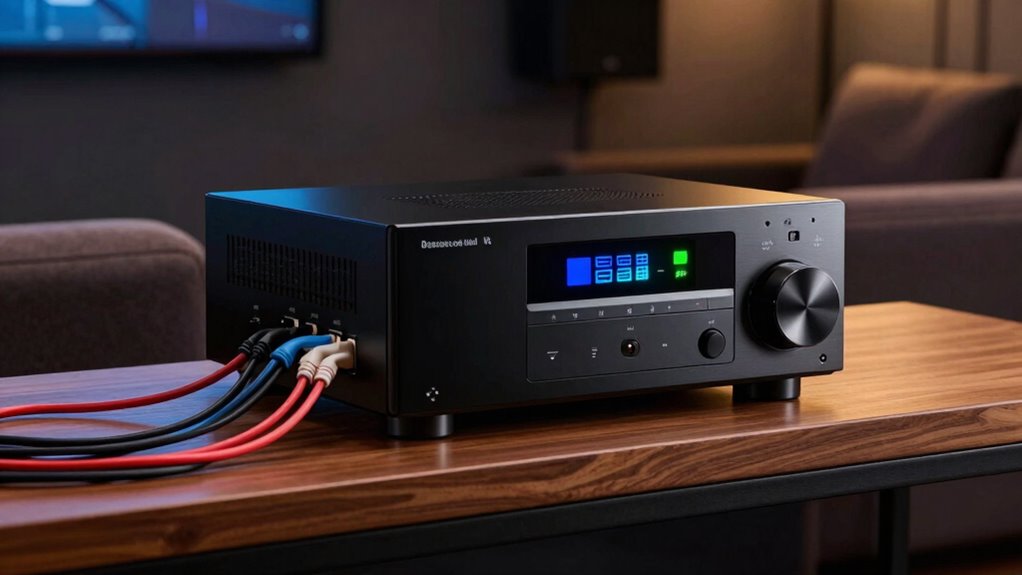

AV receiver channel counts determine how many speakers you can support, impacting your home theater’s immersion and sound quality. For example, a 5.1 setup includes five speakers plus a subwoofer, while higher counts like 7.1 or 9.1.2 add rear and height channels for a more realistic experience. Advanced models offer features like automatic calibration and support for formats like Dolby Atmos. Keep exploring to discover how these features can optimize your sound setup.
Key Takeaways
- Channel count indicates the number of speakers an AV receiver can support for surround sound.
- Higher channel counts enable immersive formats like Dolby Atmos and DTS:X with height and rear channels.
- The number of channels influences speaker placement, calibration, and future upgrade options.
- Advanced decoding features in higher-channel receivers support richer, multi-dimensional audio experiences.
- Understanding channel count helps plan systems that match room size, desired sound quality, and compatibility needs.

When selecting an AV receiver, understanding its channel count is essential because it directly impacts your home theater experience. The channel count determines how many speakers the receiver can support and how immersive your audio environment will be. For example, a 5.1 setup includes five speakers and one subwoofer, providing a basic surround sound experience. If you’re aiming for more immersive sound, a 7.1 or even a 9.1.2 system might be better, supporting additional speakers for height effects or rear surround channels. Knowing your channel needs helps you choose a receiver that can handle your desired speaker configuration and future upgrades.
Speaker calibration is another key aspect to consider. A receiver with good calibration features makes it easier to fine-tune each speaker’s volume, distance, and crossover points, ensuring clear, balanced sound across your setup. The more channels your receiver supports, the more complex the calibration process becomes, but many modern models include automatic room calibration technologies. These systems use microphones to analyze speaker placement and room acoustics, adjusting settings for optimal sound. This calibration process is especially important when working with multiple channels, as it ensures each speaker contributes to a cohesive soundstage without overpowering or underperforming. Additionally, audio calibration features can help simplify this process, especially for those new to home theater setups. Improving your calibration skills can greatly enhance overall sound quality and listening experience.
Audio decoding is equally crucial in understanding an AV receiver’s capabilities. Higher channel counts often come with advanced audio decoding abilities, supporting formats like Dolby Atmos and DTS:X, which add height and object-based sound to your system. These formats require specific decoding processes to deliver immersive, three-dimensional audio. When you opt for a receiver with more channels, it generally means better support for these high-end formats, enhancing your movie-watching and gaming experiences. Additionally, audio processing capabilities influence how well the receiver can handle multiple audio streams at once, providing richer, more detailed sound. Keep in mind that the number of channels also influences how well the receiver can process multiple audio streams simultaneously, allowing for richer, more detailed sound.
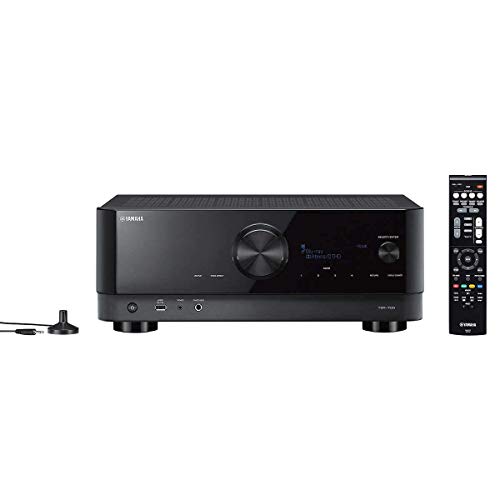
Yamaha TSR-700 7.1 Channel AV Receiver with 8K HDMI and MusicCast (Renewed)
- Channel Configuration: 7.1-channel surround sound with Zone 2
- Power Output: 100 Watts per channel
- Dolby Atmos Support: Supports 5.1 system with overhead speakers
As an affiliate, we earn on qualifying purchases.
As an affiliate, we earn on qualifying purchases.
Frequently Asked Questions
How Do Channel Counts Affect Audio Quality?
Higher channel counts can enhance your audio experience, but they also demand careful speaker placement and acoustic treatment. With more channels, you get surround sound that creates a more immersive environment. Proper speaker placement ensures each channel delivers clear audio, while acoustic treatment minimizes reflections and echoes. Together, these factors maximize the benefits of higher channel counts, resulting in richer, more precise sound that truly fills your space.
Can I Upgrade My AV Receiver’s Channels Later?
Yes, you can upgrade your AV receiver’s channels later, but it’s like trying to fit a square peg into a round hole. You’ll need to take into account speaker placement and room acoustics to guarantee everything syncs perfectly. Upgrading might require additional cables or adapters, and some receivers may have limited expansion options. Planning ahead helps, but with careful adjustments, you can enhance your home theater experience over time.
What Is the Difference Between 5.1 and 7.1 Channels?
A 5.1 system has five speakers and one subwoofer, ideal for basic sound immersion, while a 7.1 setup adds two extra speakers for increased speaker placement options. The extra channels enhance sound immersion, especially during immersive scenes. If you want a more surround experience, 7.1 offers better coverage, filling your space more completely. Choose based on your room size and how immersive you want your audio experience to be.
Do Higher Channel Counts Require More Power?
Higher channel counts are like a sprawling city skyline—more buildings, more power needed. When you increase channels, your AV receiver’s power consumption rises to meet the speaker demands, especially for larger or more powerful speakers. This means your receiver works harder to deliver clear sound across all channels, requiring a stronger power supply. So, yes, more channels typically mean your system needs more power to perform at its best.
Are More Channels Necessary for Small Rooms?
For small rooms, more channels aren’t usually necessary. The room size and speaker placement matter most. A simple 2.1 or 5.1 setup often provides enough sound for smaller spaces, avoiding clutter and sound muddiness. Adding more channels can create a more immersive experience, but only if your room size and speaker placement support it. Focus on positioning your speakers correctly to maximize sound quality, rather than just increasing the channel count.

Yamaha RX300A 5.2-Channel Home Theater AV Receiver with Dolby Atmos, 4K120/8K HDMI and Bluetooth Multipoint (Black)
- Power Output: 70W per channel
- Speaker Configuration: Supports 3.1.2 channels with up-firing or in-ceiling speakers
- Dolby Atmos: Lifelike immersive sound
As an affiliate, we earn on qualifying purchases.
As an affiliate, we earn on qualifying purchases.
Conclusion
Understanding AV receiver channel counts helps you choose the right system for your space. For example, if you have a large living room and want immersive sound, a 7.2-channel receiver can deliver a theater-like experience. Think of it like building a soundscape—more channels mean richer, more detailed audio. By matching your needs with the right channel count, you’ll enjoy movies and music more fully, creating an audio experience that truly surrounds you.

Calibration Microphone for Onkyo Receiver Series TX- RZ TX- SR TX- NR HT- R Other High Precision Measurement Audio Home Theater Studio Systems
- Condition: Brand new calibration microphone
- Compatibility: Compatible with Onkyo receiver series
- Purpose: Optimizes home theater audio settings
As an affiliate, we earn on qualifying purchases.
As an affiliate, we earn on qualifying purchases.
Yamaha RX300A 5.2-Channel Home Theater AV Receiver with Dolby Atmos, 4K120/8K HDMI and Bluetooth Multipoint (Black)
- Power Output: 70W per channel
- Speaker Configuration: Supports 3.1.2 channels with up-firing or in-ceiling speakers
- Dolby Atmos: Lifelike immersive sound
As an affiliate, we earn on qualifying purchases.
As an affiliate, we earn on qualifying purchases.