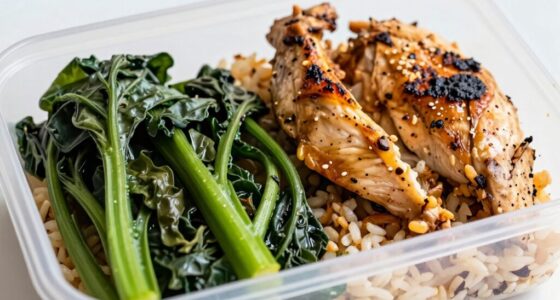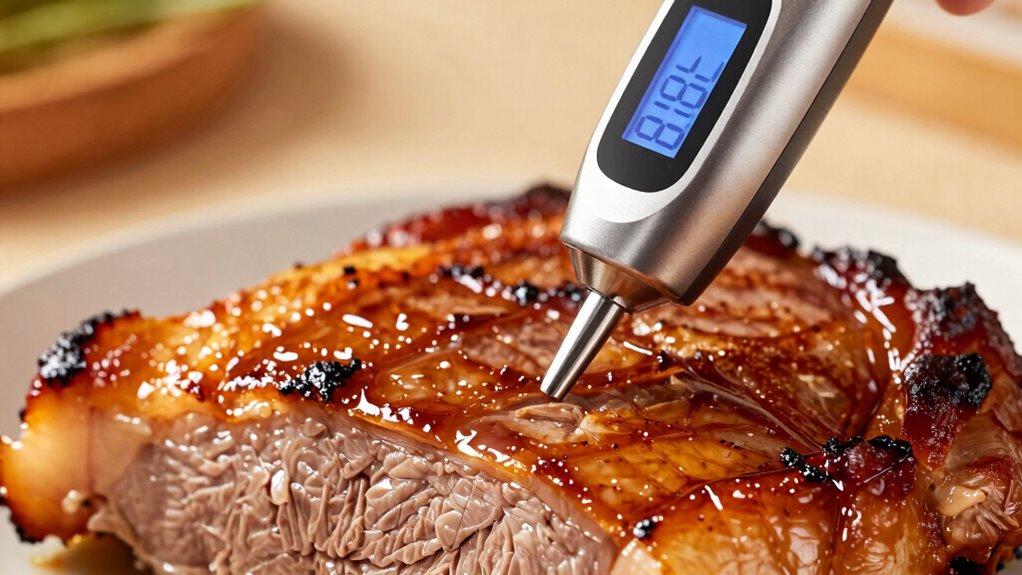
Food probe temperatures tell you the exact internal temperature of your meat or food, ensuring it’s cooked safely and to your preference. They confirm if harmful bacteria like Salmonella are eliminated and help prevent undercooking or overcooking. Knowing these precise temperatures allows you to achieve the perfect texture and flavor. If you keep exploring, you’ll discover how using the right tools and techniques can boost your confidence in safe, delicious cooking.

Get the little things that make your day delivered free with Prime
- Fast, free delivery on millions of items
- Prime Video, Amazon Music and more included
- Member-only deals all year
Key Takeaways
- The internal temperature indicates if the food has reached a safe level to eliminate harmful bacteria.
- It reveals the actual doneness and consistency of the dish, ensuring proper cooking.
- It helps prevent overcooking or undercooking, preserving texture and flavor.
- The temperature confirms the food is cooked evenly throughout the thickest part.
- It provides confidence in food safety compliance and quality control.
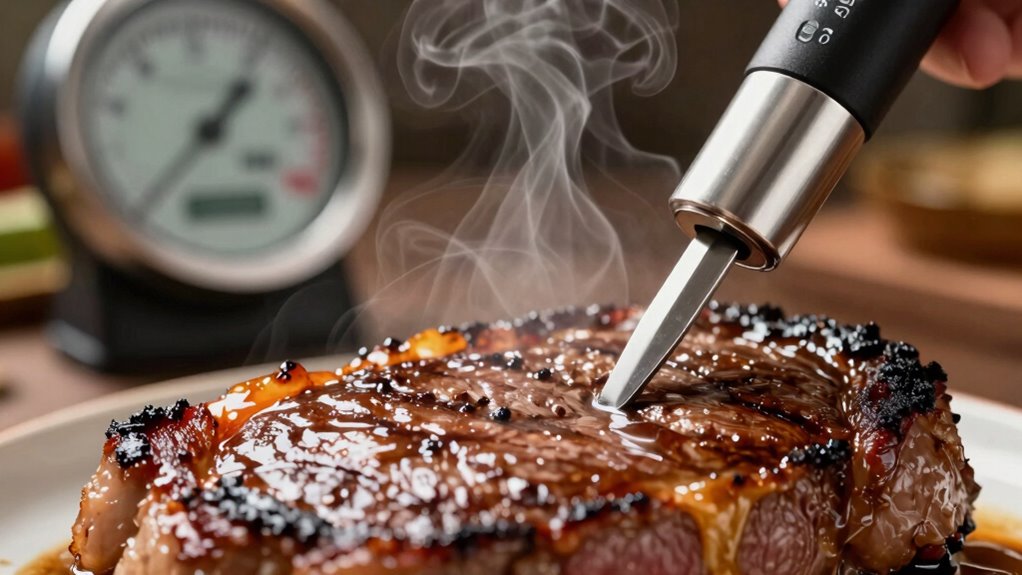
Using a food probe to check temperatures is one of the most reliable ways to guarantee your cooked foods are safe to eat. When you rely on a probe, you’re taking a direct measurement of the internal temperature, which is vital for ensuring proper cooking techniques and maintaining food safety. Unlike guessing or timing based on experience alone, a probe gives you objective, precise data that helps you avoid undercooking or overcooking your dishes.
Understanding what food probe temperatures tell you starts with knowing the target temperatures for different foods. For example, poultry should reach an internal temperature of 165°F (74°C) to eliminate harmful bacteria, while beef steaks are often cooked to a range of 130°F (54°C) for medium-rare up to 160°F (71°C) for well-done. When you insert the probe into the thickest part of the meat, you get an accurate reading of its core temperature. This information helps you execute proper cooking techniques, ensuring the food is evenly cooked and safe to consume.
Food safety is your top priority, and the right temperatures are key to preventing foodborne illnesses. Bacteria like Salmonella and Listeria can survive if food isn’t cooked to the proper internal temperature, which is why a food probe is essential. It allows you to verify that the heat has penetrated deeply enough to kill these pathogens. Proper thermometer calibration is also important to ensure measurements are accurate, so your food is both safe and properly cooked. Regularly checking your equipment for accuracy can help maintain consistent results and avoid potential health risks. This level of precision is especially important when cooking large cuts of meat or preparing food for others, where the risk of illness is higher if food isn’t cooked correctly.
Using a food probe also helps you avoid the common mistake of overcooking, which can ruin textures and flavors. By monitoring the temperature in real-time, you can remove food from heat exactly when it reaches the desired temperature, preserving moisture and tenderness. This precision supports good cooking techniques, ensuring you get consistently delicious results without sacrificing food safety. Additionally, knowing the correct target temperatures for various foods can help you better plan your cooking process and prevent guesswork.
In addition, a food probe can serve as a valuable tool in managing multiple dishes with different cooking requirements simultaneously. You can monitor each item’s internal temperature without constantly opening the oven or grill, maintaining steady heat and reducing the risk of contamination. Incorporating proper thermometer use into your cooking routine enhances both safety and consistency, giving you greater confidence in your culinary results. Overall, a food probe provides clarity and confidence, making it easier to follow proper cooking techniques and uphold food safety standards every time you cook.
digital meat thermometer for grilling
As an affiliate, we earn on qualifying purchases.
As an affiliate, we earn on qualifying purchases.
Frequently Asked Questions
Can Food Probe Temperatures Vary Between Different Types of Probes?
Yes, food probe temperatures can vary between different types of probes. Probe material influences measurement consistency, with stainless steel and thermistor probes often providing more accurate readings. Cheaper or poorly calibrated probes might give inconsistent results, affecting your food safety. To guarantee precise measurements, always choose probes made from high-quality materials and regularly calibrate them. This way, you get reliable readings and maintain proper food temperatures.
How Often Should I Calibrate My Food Probe for Accuracy?
Think of your food probe like a trusted compass—it needs regular check-ups. You should calibrate your probe at least once a month to guarantee accuracy, especially if you use it frequently. Remember to clean it properly between uses, including probe cleaning, to prevent contamination. More frequent calibration is wise if you notice inconsistent readings or after dropping the probe. Consistent calibration keeps your cooking precise and safe.
Do Ambient Temperatures Affect Food Probe Readings?
Yes, ambient temperatures can affect food probe readings, especially if the probe isn’t properly calibrated or stored. In food storage, maintaining a consistent environment prevents temperature fluctuations that could skew readings. Good kitchen hygiene includes regularly checking and calibrating your probe, especially after exposure to extreme temperatures. Always store your probe in a clean, stable environment to guarantee accurate measurements, which helps you keep food safe and maintain proper food storage standards.
Are There Safety Concerns With Using Digital vs. Analog Probes?
You don’t need to worry too much about safety concerns when choosing digital versus analog probes. Both types are safe when used properly with good equipment maintenance. Digital probes often provide faster readings, helping you perfect your cooking techniques, while analog probes are durable and simple. Just make certain your probes are clean, calibrated, and stored correctly to maintain accuracy and safety during food preparation.
How Long Should I Wait for a Food Probe to Stabilize?
Waiting for your food probe to stabilize is like waiting for paint to dry—usually around 3 to 5 seconds. You should give it this time after inserting, especially when trying to guarantee perfect cooking techniques or verifying food storage safety. If you rush, the reading might be inaccurate, leading to undercooked or unsafe food. Patience ensures your probe gives reliable temperatures to keep your meals safe and delicious.
instant-read food probe thermometer
As an affiliate, we earn on qualifying purchases.
As an affiliate, we earn on qualifying purchases.
Conclusion
Understanding what food probe temperatures tell you helps you cook safely, cook perfectly, and enjoy your meals with confidence. By knowing when to trust the numbers, when to trust your instincts, and when to check again, you become a more skilled and mindful cook. Temperatures guide you, but your judgment completes the picture. So, measure accurately, monitor carefully, and cook confidently—because great food is about precision, patience, and passion working together.
wireless meat temperature monitor
As an affiliate, we earn on qualifying purchases.
As an affiliate, we earn on qualifying purchases.
As an affiliate, we earn on qualifying purchases.
Halloween Picks
halloween
As an affiliate, we earn on qualifying purchases.