
For home use, your infrared sauna typically requires between 1.0 to 2.5 kW of power per hour, depending on its size and heater wattage. Most models need a dedicated 20-amp circuit, with larger ones possibly needing 30 amps or more, and proper wiring is essential for safety. Ensuring your electrical system matches these requirements and includes safety features like GFCI can prevent hazards. Want to understand the best setup and safety tips? Keep exploring to get all the details.

Get the little things that make your day delivered free with Prime
- Fast, free delivery on millions of items
- Prime Video, Amazon Music and more included
- Member-only deals all year
Key Takeaways
- Infrared saunas typically require 1.0 to 2.5 kW power per hour of operation.
- Most models need a dedicated 20-amp circuit; larger ones may require 30 amps or more.
- Proper grounding and GFCI protection are essential for safety in humid environments.
- Wiring should be short, direct, and protected from heat and moisture for optimal performance.
- Consult a qualified electrician to assess existing electrical capacity and upgrade if necessary.
Ever wondered what it takes to power an infrared sauna safely and efficiently? When setting up a sauna at home, understanding its power requirements is essential. Your first consideration should be energy consumption, which directly impacts your electricity bill and the overall efficiency of your setup. Infrared saunas typically use electric heaters, and their energy consumption varies based on size, heater wattage, and usage duration. A common model might use between 1.0 to 2.5 kilowatts per hour of operation. Knowing this, you can estimate your monthly energy costs and determine whether your electrical system can handle the load comfortably.
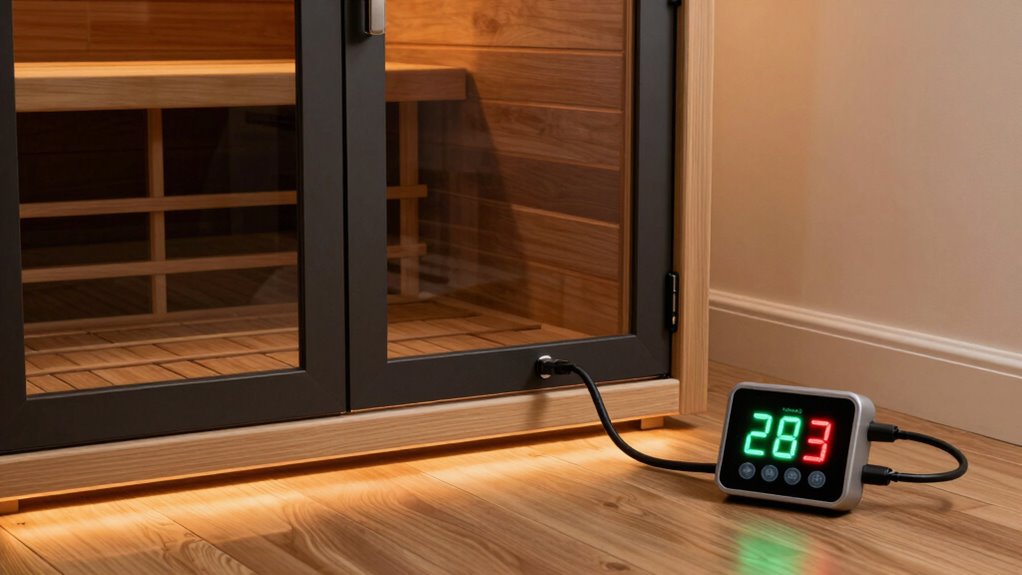
Equally important is the electrical wiring that supplies power to your sauna. You can’t just plug an infrared sauna into a standard household outlet—most models require a dedicated circuit. This guarantees the sauna receives sufficient power without overloading your home’s wiring, which could lead to tripped breakers or, worse, electrical hazards. Before installation, you should consult a qualified electrician to evaluate your electrical system. They’ll determine if your existing wiring and circuit breaker are adequate or if upgrades are necessary. Typically, a sauna of this size and power needs a 20-amp circuit, but larger models or those with higher wattage may require 30 amps or more.
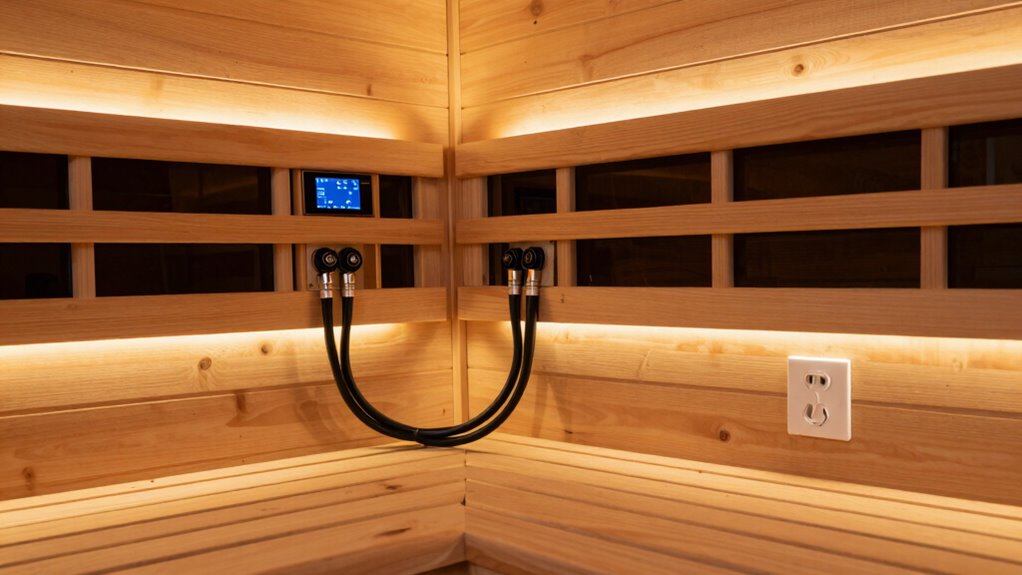
Proper electrical wiring isn’t just about capacity; it’s also about safety. The electrician will ensure that the wiring is properly grounded and that the circuit has the necessary safety features, such as GFCI (Ground Fault Circuit Interrupter) protection. This reduces the risk of electric shock, especially in a humid environment like a sauna. Additionally, understanding the power requirements of your sauna can help you plan for energy efficiency and cost savings over time. Choosing the right electrical components is crucial for maintaining safety standards and ensuring long-term durability of your setup. The wiring should be run in a way that minimizes exposure to heat and moisture, both of which can degrade wiring over time. Incorporating appropriate electrical safety measures is essential for preventing potential hazards and ensuring compliance with local electrical codes. It’s also wise to consider energy-efficient wiring practices to further enhance safety and performance.
In addition to the technical aspects, you should plan for the placement of your sauna in relation to your electrical system. Keep the wiring as direct and short as possible to reduce voltage drop and improve efficiency. Proper installation not only ensures safety but also maximizes the longevity of your sauna and its components. So, when preparing your home for an infrared sauna, take the time to understand your energy consumption and invest in appropriate, quality electrical wiring. Doing so guarantees you a safe, effective, and enjoyable experience every time you heat up.
As an affiliate, we earn on qualifying purchases.
Frequently Asked Questions
Can I Run an Infrared Sauna on a Standard Household Outlet?
Yes, you can usually run an infrared sauna on a standard household outlet, but it depends on the sauna’s power needs. Infrared technology often requires a dedicated circuit to prevent overloads. Check the sauna’s specifications and guarantee proper sauna maintenance by avoiding extension cords and overloading outlets. This way, your sauna operates safely and efficiently, providing a relaxing experience without electrical issues.
What Is the Typical Amperage Draw for Home Infrared Saunas?
You’ll be thrilled to know that most home infrared saunas draw between 15 to 20 amps, making them pretty energy-efficient marvels of infrared technology. They won’t fry your circuit or turn your house into a power plant. Instead, they gently warm your body while sipping energy like a sophisticated tea party. So, rest assured, your sauna’s amperage isn’t a power-hungry beast—just a cozy, efficient retreat.
Do I Need a Dedicated Circuit for My Infrared Sauna?
Yes, you need a dedicated circuit for your infrared sauna to guarantee safety and proper operation. You should have the electrical wiring connected to a dedicated circuit breaker that matches the sauna’s amperage needs. This prevents overloads and electrical hazards. Installing a dedicated circuit ensures your sauna operates efficiently and safely, avoiding interruptions or damage caused by shared circuits. Always consult a licensed electrician to evaluate your home’s electrical system before installation.
How Does Insulation Affect the Sauna’s Power Consumption?
Insulation considerably impacts your sauna’s power consumption by improving insulation efficiency and heat retention. When your sauna is well-insulated, it retains heat longer, reducing the need for the heating elements to work constantly. This means lower energy use and more efficient operation. Proper insulation minimizes heat loss through walls and doors, keeping the sauna warm with less power, saving you money and enhancing your overall experience.
Are There Safety Concerns With High-Power Infrared Saunas?
High-power infrared saunas can pose safety concerns if not used properly. You should guarantee proper ventilation, follow manufacturer guidelines, and avoid prolonged sessions to prevent overheating or dehydration. While they offer luxury benefits like enhanced relaxation and skin health, always approach health claims with caution. Using your sauna responsibly minimizes risks, allowing you to enjoy its benefits safely while maximizing health and wellness benefits.
20 amp dedicated circuit breaker
As an affiliate, we earn on qualifying purchases.
As an affiliate, we earn on qualifying purchases.
Conclusion
Understanding the power needs of your infrared sauna helps guarantee safe, efficient operation in your home. Did you know that most infrared saunas typically draw between 1,200 to 2,000 watts? This means you’ll need a dedicated circuit and proper wiring to handle the load. By planning ahead, you can enjoy the therapeutic benefits without electrical issues. Confirm your home’s electrical system is up to the task—your relaxation oasis depends on it!
As an affiliate, we earn on qualifying purchases.
As an affiliate, we earn on qualifying purchases.
Halloween Picks
halloween
As an affiliate, we earn on qualifying purchases.