
When choosing binoculars, your ideal magnification (like 8x or 10x) determines how much closer objects seem, but higher power can cause shakiness. The objective lens size affects image brightness and clarity, especially in low light, but larger lenses add weight. Balancing these factors—stability, brightness, and comfort—is key for activities like birdwatching or stargazing. If you want to understand how these elements work together for the best experience, explore further to find the perfect match.

Get the little things that make your day delivered free — and shop member deals
- Fast, free delivery on millions of items
- Access to Prime Big Deal Days deals on October 6–7
- Prime Video, Amazon Music and more included
Key Takeaways
- Magnification (e.g., 8x, 10x) shows how much closer objects appear through binoculars.
- Larger objective lenses (measured in mm) gather more light, producing brighter images in low-light conditions.
- Higher magnification increases detail but may cause shakiness, requiring steadier handling or stabilization.
- Bigger objective lenses improve image brightness but add weight, affecting portability and ease of use.
- Optimal binoculars balance magnification, objective size, and eye relief for clear, comfortable viewing.
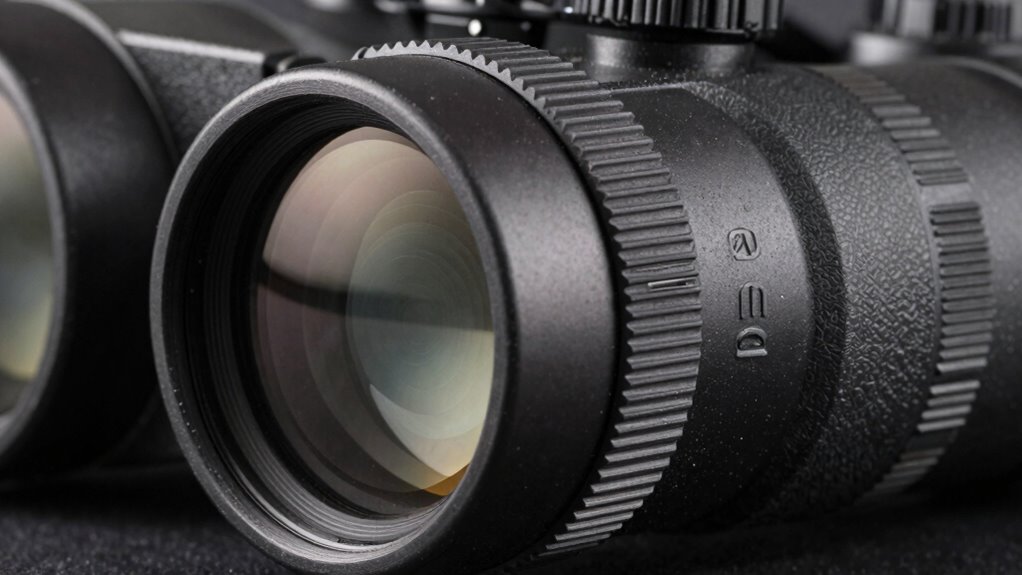
Ever wondered how binoculars bring distant objects into clear view? It all comes down to the combination of magnification and the objective lens. When you look through binoculars, you’re fundamentally enlarging the scene, making it easier to see details that would otherwise be hidden by distance. The magnification power, usually indicated by a number like 8x or 10x, tells you how much larger the object appears compared to unaided eye viewing. For instance, 8x magnification means the object looks eight times closer. But higher magnification isn’t always better; it can make the image shakier and require steadier hands or a tripod for a clear view.
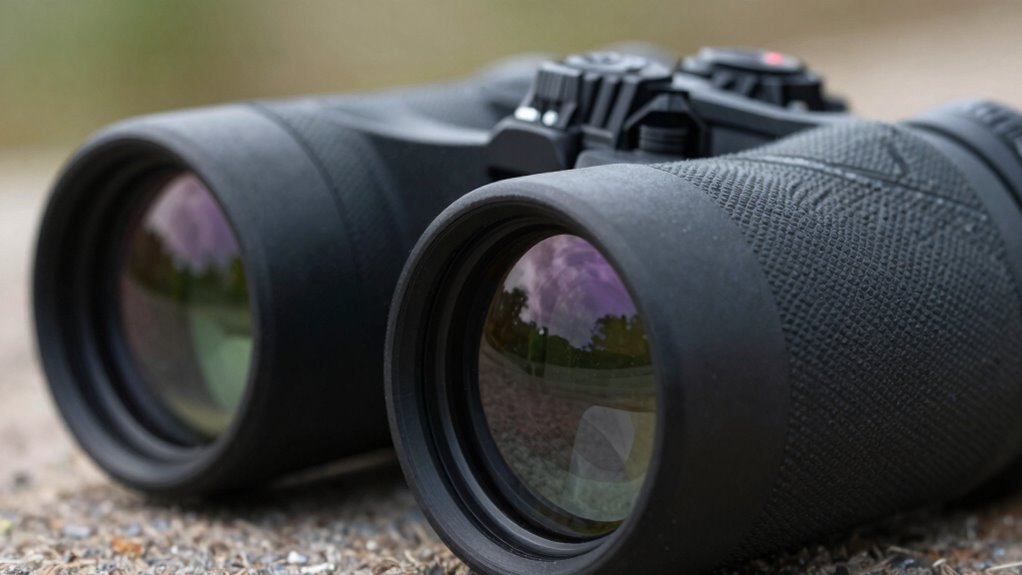
The objective lens, the large lens at the front of the binoculars, plays a crucial role in image clarity. Its size, measured in millimeters, determines how much light enters the binoculars. A larger objective lens gathers more light, producing brighter and sharper images, especially in low-light conditions like dawn or dusk. This is why binoculars with bigger objective lenses tend to be better for wildlife observation or stargazing. However, larger lenses also mean heavier binoculars, so you’ll want to balance size and portability based on your activity. Objective lens size is a key factor in overall image brightness and clarity. Additionally, field of view can vary depending on the design and specifications, affecting how much of the scene you can see at once. Understanding how lens design influences image quality can help you select binoculars that perform well in different environments. Properly considering lens coatings can also improve light transmission and reduce glare, further enhancing image quality.
Eye relief is another critical factor to take into account. It refers to the distance from your eye to the eyepiece lens at which you can see the full field of view comfortably. If eye relief is too short, you might struggle to see the entire scene without repositioning the binoculars or removing your glasses. For those who wear glasses, longer eye relief—around 15 mm or more—is preferable, allowing you to enjoy a full, unobstructed view without needing to press your eyes against the lenses. Proper eye relief ensures that your viewing experience is comfortable and that you get the most out of your binoculars, especially during extended use. Additionally, understanding the relationship between magnification and objective lens size can help you select the most suitable binoculars for your specific needs. Balancing these factors ensures that your binoculars are comfortable to use over long periods and in various conditions.
In essence, understanding how magnification, objective lens size, and eye relief work together helps you choose the right binoculars for your needs. Higher magnification offers more detail but can compromise stability and image clarity if not paired with a suitable objective lens. Larger lenses improve brightness but add weight. And comfortable eye relief guarantees you can enjoy the view without strain. By balancing these factors, you’ll find the perfect binoculars to enhance your outdoor adventures, birdwatching, or stargazing sessions.
8×42 binoculars for birdwatching
As an affiliate, we earn on qualifying purchases.
As an affiliate, we earn on qualifying purchases.
Frequently Asked Questions
How Do Environmental Conditions Affect Binocular Performance?
Environmental factors like rain, dust, and extreme temperatures can impact your binocular performance by causing lens fogging, dirt buildup, or damage. These conditions may reduce clarity or make focusing difficult. To maintain peak performance, guarantee your lenses are durable and well-protected with waterproof and fog-proof features. Regular cleaning and proper storage help prevent damage, so your binoculars stay reliable in any environment.
What Is the Best Magnification for Birdwatching?
For birdwatching, the best magnification is typically 8x or 10x. This range offers a perfect balance between detail and stability, making it ideal for birding techniques. Higher magnification, like 12x or more, might reveal more detail but can be harder to stabilize and use comfortably. The magnification advantages lie in helping you spot distant birds clearly, enhancing your overall experience without sacrificing ease of use.
How Do I Clean and Maintain My Binoculars Effectively?
To clean and maintain your binoculars effectively, start with lens cleaning using a soft, lint-free cloth and a gentle lens cleaner. Avoid harsh chemicals that could damage coatings. Store your binoculars in a protective case, preferably in a dry, cool place, and keep them covered when not in use. Regularly check for dirt or moisture, and clean the lenses gently to preserve clarity and performance.
Are There Different Lens Coatings for Better Clarity?
Think of your binoculars as a vintage telescope—modern lens coatings considerably boost optical clarity. Yes, there are different lens coatings like fully multi-coated or multi-coated lenses, designed to reduce glare and improve light transmission. These coatings enhance image quality and clarity, so you get sharper, brighter views. When choosing binoculars, look for models with high-quality coatings, ensuring you enjoy the best possible vision, even in challenging lighting conditions.
Can Binoculars Be Waterproof and Fog-Proof Simultaneously?
Yes, binoculars can be both waterproof and fog-proof at the same time. Waterproof features protect against rain and splashes, while fog proof technology prevents internal fogging caused by temperature changes. You’ll want models with sealed O-rings and nitrogen or argon purging to guarantee durability and clarity in all conditions. This combination allows you to enjoy clear, sharp views whether you’re in wet, humid, or cold environments.
stargazing binoculars with image stabilization
As an affiliate, we earn on qualifying purchases.
As an affiliate, we earn on qualifying purchases.
Conclusion
Now that you understand how binocular magnification and objective lenses work, you’re practically a superhero with x-ray vision! Imagine zooming in on a tiny ant or scanning the horizon like a hawk—all with just a pair of binoculars in your hands. Mastering these basics reveal a world so vivid and detailed, it’s like stepping into a whole new universe. Get ready to see everything clearer, closer, and more amazing than you ever thought possible!
compact binoculars with long eye relief
As an affiliate, we earn on qualifying purchases.
As an affiliate, we earn on qualifying purchases.
high brightness binoculars for low light
As an affiliate, we earn on qualifying purchases.
As an affiliate, we earn on qualifying purchases.
Fall Picks
fall essentials
As an affiliate, we earn on qualifying purchases.