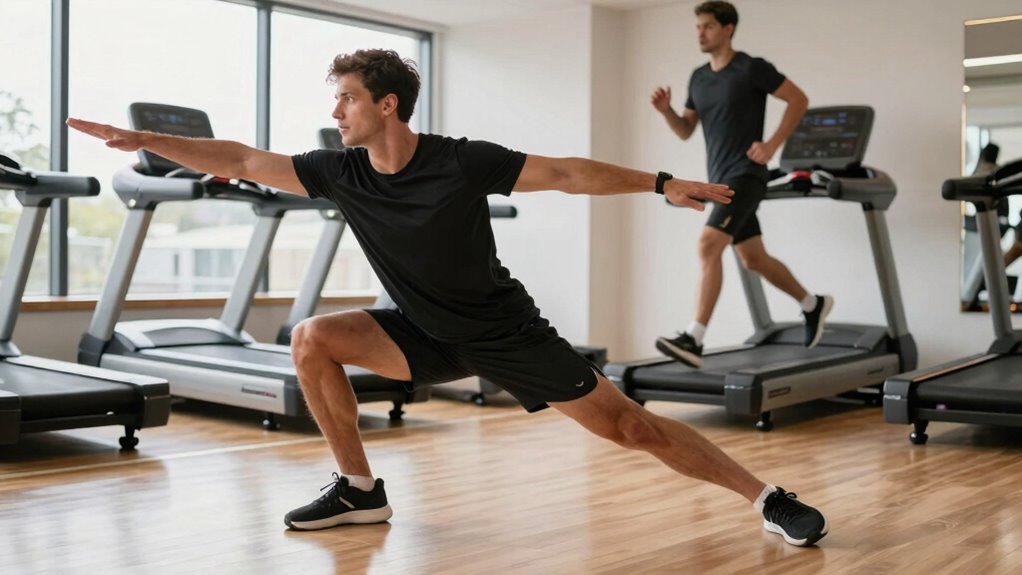

Warmups are about preparing your body for activity by increasing blood flow, raising core temperature, and loosening muscles through light cardio and dynamic stretches. Mobility work, on the other hand, targets improving joint and soft tissue flexibility with controlled movements and specific stretches. While warmups set the stage for brief, intense efforts, mobility exercises focus on long-term movement freedom and injury prevention. Keep exploring to understand how combining both can elevate your performance and protect your joints.

Get the little things that make your day delivered free with Prime
- Fast, free delivery on millions of items
- Prime Video, Amazon Music and more included
- Member-only deals all year
Key Takeaways
- Warmups use light cardio and dynamic stretches to prepare muscles and cardiovascular systems, while mobility work targets joint and soft tissue flexibility.
- Warmups focus on immediate readiness for activity; mobility exercises aim to improve long-term joint function and movement quality.
- Warmups increase blood flow and core temperature; mobility work involves controlled movements to enhance range of motion.
- Warmups set the foundation for performance; mobility work addresses specific restrictions and tightness for better movement patterns.
- Combining both enhances overall performance, reduces injury risk, and supports joint health for sustained training.
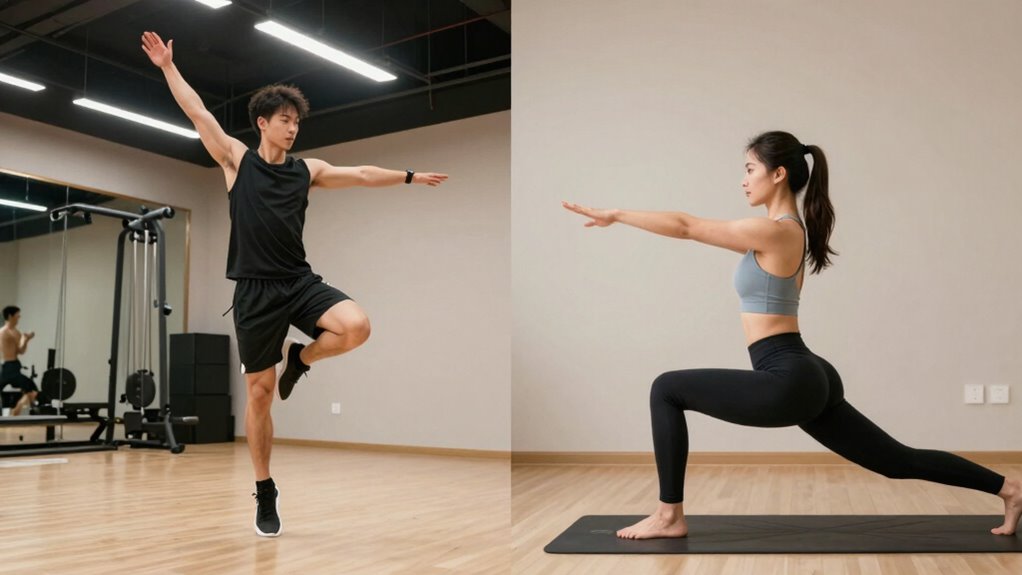
Before diving into your workout, understanding the difference between mobility work and warmups can make a significant impact on your performance and injury prevention. While they often get grouped together, they serve distinct purposes that can greatly influence your training outcomes. Warmups are primarily designed to prepare your body for activity by increasing blood flow, raising your core temperature, and loosening muscles. They typically involve light cardio and dynamic stretches that get your heart rate up and muscles ready to move. The main goal here is to reduce the risk of injury by making your muscles more pliable and your joints more mobile, setting a foundation for safe and effective movement. When done correctly, warmups enhance your performance by improving coordination and responsiveness, helping you perform at a higher level during your main workout.
Mobility work, on the other hand, focuses on actively improving the range of motion in your joints and soft tissues. Instead of just warming up muscles, mobility exercises target specific areas that might be restricted or tight, often through controlled movements and stretches. By enhancing joint mobility, you allow your body to move more freely and efficiently, which can lead to better technique and more powerful movement patterns. This aspect is essential for injury prevention because limited mobility can cause compensations and awkward movements that put stress on vulnerable tissues. When you incorporate mobility work into your routine, you’re not only preventing injuries but also enabling your muscles and joints to perform at their best over the long term. It’s especially beneficial if you’re recovering from an injury or dealing with persistent tightness. Incorporating mobility exercises into your routine can also improve your overall movement quality, making your workouts more effective. Understanding the difference between warmup and mobility can help you develop a more balanced and effective training plan. Recognizing the importance of joint health can further optimize your approach and longevity in training.
Understanding these differences means you can tailor your warmup and mobility routines to best support your goals. Use a warmup to get your blood pumping and muscles ready for the upcoming strain, then incorporate mobility exercises to release tight areas and improve joint function. This combination boosts your overall performance by ensuring your body moves efficiently and safely. It also minimizes the risk of overuse injuries caused by limited mobility or improper movement patterns. In addition, focusing on joint health can contribute to better long-term movement quality and reduce the likelihood of chronic issues. In essence, warmups set the stage for your workout, while mobility work ensures your body can move freely and with proper alignment. Taking the time to distinguish between the two will help you train smarter, reducing injury risk and maximizing your athletic potential.
As an affiliate, we earn on qualifying purchases.
Frequently Asked Questions
Can Mobility Work Replace Traditional Warmups Entirely?
Mobility work can’t fully replace traditional warmups because it primarily focuses on dynamic stretching and muscle activation, which prepare your body for activity. Warmups also increase your heart rate and blood flow, reducing injury risk. While mobility work is excellent for improving joint movement and flexibility, combining it with a proper warmup guarantees your muscles are ready, making your workout safer and more effective.
How Often Should I Incorporate Mobility Work Into My Routine?
You should incorporate mobility work into your routine daily or at least several times a week. Use stretching routines that target key joints and muscles to improve flexibility and range of motion. Regular mobility work helps prevent injuries and prepares your body for activity. By consistently integrating these exercises, you’ll enhance performance and maintain joint health, making injury prevention more effective and your workouts safer and more productive.
Are There Specific Exercises Better for Mobility Versus Warmup?
While some exercises blend mobility work and warmup, dynamic stretching excels for warming up, increasing blood flow, and preparing joints quickly. In contrast, specific mobility drills focus on joint preparation, improving range of motion over time. For instance, leg swings are ideal for dynamic stretching, while hip circles target joint mobility. Use dynamic stretches to activate muscles before activity, and incorporate mobility exercises for sustained joint health and flexibility.
Do I Need Different Techniques for Different Sports or Activities?
Yes, you do need different techniques for various sports or activities. Sport-specific techniques adapt your warmup and mobility routines to target muscles and movements unique to each activity. For example, a runner focuses on leg and hip mobility, while a swimmer emphasizes shoulder flexibility. Incorporating activity adaptations guarantees your body prepares effectively, reduces injury risk, and enhances performance tailored to the specific demands of your sport or activity.
How Long Should a Typical Mobility or Warmup Session Last?
Think of your warmup as your engine starting up before a race. Usually, 10 to 15 minutes is enough, blending stretching routines with dynamic movements. This time warms up your muscles, increases blood flow, and prepares your body for activity. If you’re pressing for time, even 5 minutes of targeted mobility work can boost performance. Just make certain your session leaves you feeling ready, not exhausted.
As an affiliate, we earn on qualifying purchases.
Conclusion
So, next time you’re prepping for a workout, remember that mobility work and warmups serve different purposes—mobility improves joint function, while warmups elevate your heart rate. Some believe mobility work is a secret weapon for injury prevention, and there’s truth to it—enhancing your range of motion can keep you safer. Incorporate both into your routine, and you’ll not only move better but also perform at your best. That’s the real game-changer.
joint mobility drills for athletes
As an affiliate, we earn on qualifying purchases.
As an affiliate, we earn on qualifying purchases.
As an affiliate, we earn on qualifying purchases.
Halloween Picks
halloween
As an affiliate, we earn on qualifying purchases.