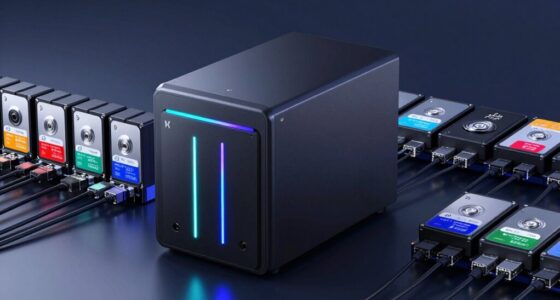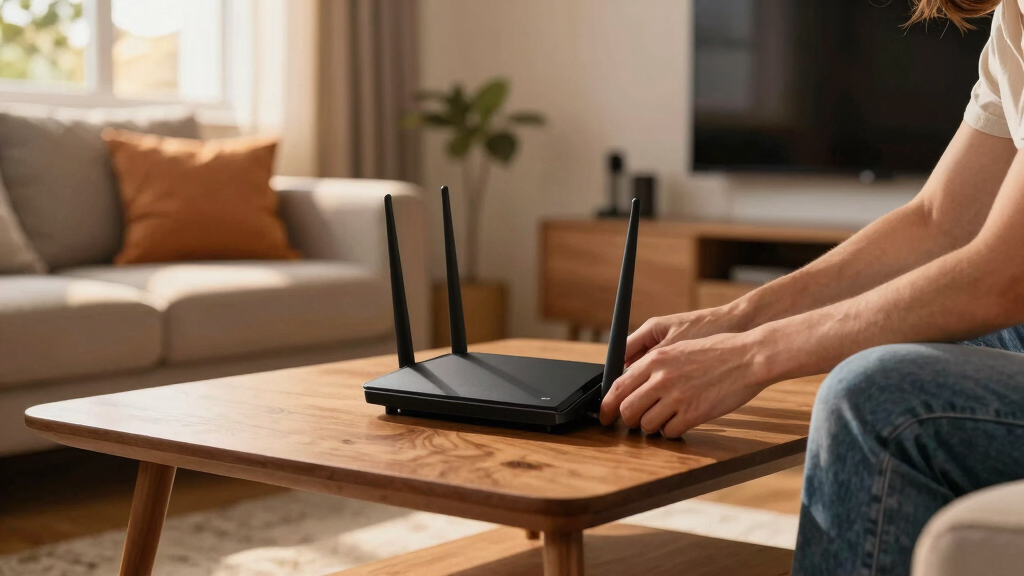

Finding the best gaming wifi router in 2026 means balancing raw speed, stable connections, and ease of setup. The TP-Link BE6500 stands out as the overall top choice for its robust coverage and device handling. For gamers seeking high-end performance, the NETGEAR Nighthawk RS300 offers blazing speeds and extensive coverage, while the ASUS ROG Rapture GT-BE98 PRO provides advanced features tailored for competitive gaming. Every option involves tradeoffs—some prioritize speed, others focus on ease of use or coverage. Continue reading for a detailed breakdown of each model’s strengths and weaknesses.
Key Takeaways
- High-speed tri-band routers like the NETGEAR Nighthawk RS300 excel in supporting multiple devices simultaneously in large gaming setups.
- Gaming-specific routers such as the ASUS ROG Rapture provide advanced features like game acceleration and multiple Ethernet ports for wired stability.
- WiFi 6E and WiFi 7 models offer future-proofing with faster speeds but often come at a higher price point compared to WiFi 6 or WiFi 5 options.
- Coverage area and device capacity are critical; larger homes or setups with many gamers need routers with extensive coverage and high device handling.
- Ease of setup and security features remain important—more complex routers may require technical know-how but offer more customization options.




More Details on Our Top Picks
TP-Link BE6500 Dual-Band WiFi 7 Router (BE400) – Dual 2.5Gbps Ports, USB 3.0, Covers up to 2,400 sq. ft., 90 Devices, Quad-Core CPU, HomeShield, Private IoT, Free Expert Support
The TP-Link BE400 stands out for its cutting-edge Wi-Fi 7 technology, including Multi-Link Operation (MLO) and 4K-QAM, delivering blazing speeds of up to 5764 Mbps on the 5GHz band. Compared with the NETGEAR RS300, it offers more advanced security and better multi-device handling, making it ideal for large households or smart homes with many gadgets. While its coverage of 2,400 sq. ft. is impressive, it’s less suited for very large properties where a mesh system might be better. The dual 2.5 Gbps ports and USB 3.0 make wired connections highly capable, but the setup, while straightforward, could be complex for complete novices. Tradeoffs include a higher price point and more advanced features that may be unnecessary for casual users.
Pros:- Supports Wi-Fi 7 with multi-link operation and 6.5 Gbps speeds
- Strong coverage of up to 2,400 sq. ft. with reliable multi-device support
- Advanced security features including HomeShield and Private IoT
Cons:- Premium price may be beyond casual user budgets
- Complex setup process for less tech-savvy users
Best for: Tech enthusiasts and smart home owners seeking future-proof, high-speed Wi-Fi 7 coverage for up to 90 devices.
Not ideal for: Small apartments or users with basic internet needs who won’t utilize Wi-Fi 7’s full capabilities.
- Wi-Fi Technology:Wi-Fi 7
- Max Speed:5764 Mbps
- Coverage Area:2400 sq. ft.
- Number of Ports:2.5 Gbps WAN, 2.5 Gbps LAN, USB 3.0
- Device Capacity:90 devices
- Processor:Quad-Core CPU
Bottom line: This router makes the most sense for users who need top-tier Wi-Fi 7 performance and extensive device capacity today and into the future.
TP-Link AX1800 WiFi 6 Router (Archer AX21 V5) – Dual Band Wireless Internet, Gigabit, Easy Mesh, Works with Alexa – A Certified for Humans Device, Free Expert Support
The TP-Link Archer AX1800 offers a solid Wi-Fi 6 experience with speeds up to 1.8 Gbps, making it suitable for most homes that don’t yet need Wi-Fi 7’s blistering speeds. Compared with the NETGEAR RS140, it provides better coverage and more device support thanks to Beamforming and OFDMA technology, ideal for busy households with multiple devices. Its coverage of around 1,200 sq. ft. is adequate for small to medium homes but less suited for larger spaces without extenders. The setup process is straightforward, especially with the TP-Link Tether app, but it lacks the ultra-low latency features of Wi-Fi 7 routers. Tradeoffs involve slower top speeds and less future-proofing than Wi-Fi 7 options.
Pros:- Supports Wi-Fi 6 with speeds up to 1.8 Gbps
- Easy setup with the Tether app and reliable coverage for up to 1,200 sq. ft.
- Works seamlessly with Alexa for voice control
Cons:- Limited to Wi-Fi 6, not future-proof for Wi-Fi 7 devices
- Coverage may require extenders for larger homes
Best for: Families and small offices looking for reliable, fast Wi-Fi 6 performance at a reasonable price.
Not ideal for: Gamers or streamers who need ultra-fast speeds or extensive future-proofing for high-end devices.
- Wi-Fi Technology:Wi-Fi 6 (802.11ax)
- Max Speed:1.8 Gbps
- Coverage Area:1200 sq. ft.
- Number of Ports:Gigabit Ethernet
- Device Capacity:Up to 20 devices
- Security:WPA3
Bottom line: This router is best for users seeking dependable Wi-Fi 6 connectivity at a good value for typical home use.
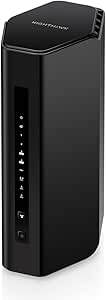
NETGEAR Nighthawk Tri-Band WiFi 7 Router (RS300) – Router Only, BE9300 Wireless Speed (up to 9.3 Gbps) – Covers up to 2,500 sq. ft., 100 Devices – Universally Compatible with ISPs – Free Expert Help
The NETGEAR RS300 delivers exceptional Wi-Fi 7 speeds up to 9.3 Gbps and extensive coverage of 2,500 sq. ft., making it ideal for large homes or small businesses with many devices. Compared with the TP-Link BE400, it offers a broader coverage area and supports more devices simultaneously, but at a higher cost. Its tri-band setup with a dedicated 6 GHz band provides ultra-low latency for gaming and streaming, although the router is a standalone device and requires a separate modem. Its sleek design and user-friendly app make management easy, but some users might find the multiple bands unnecessary for smaller households. Tradeoffs include a premium price and the need for a compatible modem for internet access.
Pros:- Supports Wi-Fi 7 with speeds up to 9.3 Gbps
- Large coverage area of 2,500 sq. ft. with tri-band technology
- Supports up to 100 devices with advanced security
Cons:- Requires a separate modem, adding to setup complexity and cost
- Higher price point may be unnecessary for casual users
Best for: Large households, gamers, and small businesses needing high-speed Wi-Fi 7 with extensive device capacity and coverage.
Not ideal for: Users with modest internet needs or those on a tight budget, since it’s a premium device.
- Wi-Fi Technology:Wi-Fi 7
- Max Speed:9.3 Gbps
- Coverage Area:2500 sq. ft.
- Number of Ports:4 Ethernet ports
- Device Capacity:Up to 100 devices
- Security:WPA3
Bottom line: Ideal for those who need top-tier Wi-Fi 7 speeds and coverage for demanding household or small office environments.
GL.iNet GL-BE6500 (Flint 3e) WiFi 7 Router, High-Speed WiFi Router for Wireless Internet w/VPN, 5 x 2.5G Ethernet Port for Fiber Optic Modem, Long Range Large Home, Business & Gaming Computer Routers
The GL.iNet FLINT 3e is a versatile Wi-Fi 7 router that combines high-speed connectivity up to 6.5 Gbps with built-in VPN support, making it perfect for security-focused users. Its 5 x 2.5G Ethernet ports provide flexible wired options, especially useful with fiber optic modems. Compared with the NETGEAR RS300, it offers more comprehensive VPN features and longer-range coverage of up to 2,500 sq. ft., suitable for large homes or small offices. Its support for advanced MLO and OFDMA technologies ensures low latency and reliable multi-device handling. However, its complex feature set can be overwhelming for casual users, and its premium price reflects its advanced capabilities. Tradeoffs include a steeper learning curve and higher cost for VPN and security features.
Pros:- Supports Wi-Fi 7 with speeds up to 6.5 Gbps
- Includes built-in VPN support (OpenVPN & Wireguard)
- Long-range coverage up to 2,500 sq. ft. with multiple Ethernet ports
Cons:- More complex setup with advanced features requiring technical knowledge
- Higher price point compared to basic routers
Best for: Security-conscious households, remote workers, and gaming enthusiasts who need reliable, VPN-ready Wi-Fi 7 coverage.
Not ideal for: Basic internet users or those seeking a simple setup without advanced security features.
- Wi-Fi Technology:Wi-Fi 7
- Max Speed:6.5 Gbps
- Coverage Area:2500 sq. ft.
- Number of Ports:5 x 2.5G Ethernet
- Device Capacity:Suitable for large homes
- Security:Built-in VPN, WPA3
Bottom line: Best suited for users prioritizing security, VPN capabilities, and high-speed Wi-Fi 7 coverage for large spaces.
NETGEAR Nighthawk Dual-Band WiFi 7 Router (RS140) – Router Only, BE5000 Wireless Speed (up to 5.0 Gbps) – Covers up to 2,250 sq. ft., 80 Devices – 2.5 Gig Internet Port – Free Expert Help
The NETGEAR RS140 offers dependable Wi-Fi 7 speeds up to 5.0 Gbps with coverage of approximately 2,250 sq. ft., making it a strong choice for mid-sized homes. It surpasses most Wi-Fi 6 routers in speed and device support, especially with its dual-band setup and 2.5 Gbps LAN port. Compared to the tri-band NETGEAR RS300, it’s more compact and easier to fit into smaller spaces, but it doesn’t provide the ultra-low latency of tri-band systems and has slightly lower maximum speeds. Its sleek design and simple app interface make it accessible for most users, but it may struggle in larger, heavily congested environments. Tradeoffs include slightly reduced speed and coverage compared to larger, tri-band options.
Pros:- Supports Wi-Fi 7 with speeds up to 5.0 Gbps
- Compact design suitable for smaller spaces
- Supports up to 80 devices with WPA3 security
Cons:- Limited to dual-band Wi-Fi 7, not tri-band
- Coverage may be insufficient for very large homes
Best for: Small to medium households needing reliable Wi-Fi 7 with good speed and coverage without extra complexity.
Not ideal for: Large households or those with many high-demand devices requiring maximum coverage and speed.
- Wi-Fi Technology:Wi-Fi 7
- Max Speed:5.0 Gbps
- Coverage Area:2250 sq. ft.
- Number of Ports:2.5 Gbps Ethernet
- Device Capacity:Up to 80 devices
- Security:WPA3
Bottom line: A solid choice for users wanting fast, reliable Wi-Fi 7 in a smaller, easier-to-place device.
ASUS ROG Rapture GT-BE98 PRO First Quad-Band WiFi 7 Gaming Router supports 320MHz, Dual 10G Port, Triple-level Game Acceleration, Mobile Game Mode, Subscription-Free Security, AiMesh, and VPN features
This ASUS ROG Rapture GT-BE98 Pro stands out for its WiFi 7 capabilities with multi-link operation and 30 Gbps speeds, making it a top choice for serious gamers. Compared to the NETGEAR Nighthawk BE9300, it offers quad-band support and dual 10G ports, which are ideal for ultra-high-speed wired connections. However, its complexity and premium price make it less suitable for casual users. Pros: Exceptional speed with WiFi 7, dual 10G ports for high-speed wired links, triple-level game acceleration, AiMesh support for mesh networks. Cons: High cost and potentially overwhelming setup for non-technical users, large size may be cumbersome for small spaces.
Verdict: Best suited for dedicated gamers and tech enthusiasts who demand maximum speed and advanced features.Pros:- Exceptional WiFi 7 speeds up to 30 Gbps
- Dual 10G ports for wired connections
- Triple-level game acceleration for latency reduction
- AiMesh support for mesh network expansion
Cons:- High price point limits accessibility
- Large footprint may not fit in small spaces
- Complex setup process for average users
Best for: High-end gamers and power users needing top-tier speed and extensive network customization
Not ideal for: Casual users or those with limited space who prefer simple, plug-and-play routers
- WiFi Standard:WiFi 7 (802.11be)
- Maximum Data Transfer Rate:30 Gbps
- Ports:2 x 10G, 4 x 2.5G
- Antenna Count:8
- Tri-Band Support:Yes
- Mesh Compatibility:AiMesh
Bottom line: This router offers unparalleled speed and features for serious gamers willing to invest in premium networking gear.
GL.iNet GL-MT6000 (Flint 2) WiFi 6 High Speed Gaming Routers for Wireless Internet, 2 x 2.5G Ethernet Ports for Fiber Optic Modem, Long Range Computer VPN WiFi Router, Home & Business
This GL.iNet Flint 2 delivers impressive WiFi 6 speeds up to 6 Gbps and robust VPN support, making it ideal for tech-savvy users and small offices. Unlike the NETGEAR BE9300, it features dual 2.5G Ethernet ports for true multi-gigabit wired connections, with significant emphasis on VPN and privacy features. Its user-friendly setup and VPN compatibility make it accessible, though it’s not tailored for large household coverage. Pros: Fast WiFi 6 speeds, dual 2.5G Ethernet ports, built-in VPN support, long-range coverage. Cons: Slightly lower maximum wireless speed compared to WiFi 7 routers, limited to medium-sized spaces, less future-proof with WiFi 6 technology.
Verdict: Excellent choice for power users and small businesses prioritizing speed, VPN, and ease of management.Pros:- WiFi 6 speeds up to 6 Gbps
- Dual 2.5G Ethernet ports for fiber connections
- Built-in VPN and ad blocker support
- Long-range coverage with strong signal integrity
Cons:- WiFi 6 may become outdated as WiFi 7 matures
- Limited coverage for very large homes
- Not the best for casual or non-technical users
Best for: Tech enthusiasts and small office users who need fast, secure WiFi with fiber compatibility
Not ideal for: Large households or streamers requiring WiFi 7 or broader coverage
- WiFi Standard:WiFi 6 (802.11ax)
- Maximum Data Rate:6 Gbps
- Ports:2 x 2.5G Ethernet
- Antenna Count:8
- Coverage:Long-range
- VPN Support:Yes
Bottom line: Ideal for tech-savvy users who want high-speed WiFi and robust security features in a manageable form factor.
NETGEAR Nighthawk WiFi 7 Router (BE9300) – Router Only, 9.3Gbps Wireless Speed, 2.5 Gigabit Internet Port, Tri-Band for Gaming, Covers 2,500 sq. ft., 100 Devices, VPN – Free Expert Help
The NETGEAR Nighthawk BE9300 offers WiFi 7 speeds up to 9.3 Gbps with tri-band support, making it a prime option for large households with many devices. Compared to the ASUS GT-BE98 Pro, it emphasizes coverage and device capacity rather than the highest raw speed, supporting up to 100 devices over 2,500 sq. ft. for seamless streaming and gaming. Its user-friendly app and free expert support make it accessible, though it requires a compatible modem for internet access. Pros: Extremely fast WiFi 7, extensive coverage, supports many devices, user-friendly management app. Cons: Expensive, requires a separate modem, may be overkill for smaller households.
Verdict: Best for large homes with many connected devices needing reliable, fast WiFi across a broad area.Pros:- WiFi 7 speeds up to 9.3 Gbps
- Supports up to 100 devices
- Excellent coverage of 2,500 sq. ft.
- User-friendly app with free expert support
Cons:- High price point
- Requires separate modem
- Overpowered for small spaces or light users
Best for: Families with extensive device networks and large living spaces needing high-speed WiFi
Not ideal for: Small apartments or users on a tight budget who don’t need extensive coverage
- WiFi Standard:WiFi 7 (802.11be)
- Maximum Data Rate:9.3 Gbps
- Ports:2.5G Ethernet
- Coverage:Up to 2500 sq ft
- Device Support:Up to 100 devices
- VPN:Yes
Bottom line: A top-tier choice for large households demanding high-speed, broad coverage, and device support.
TP-Link AXE5400 Tri-Band WiFi 6E Router (Archer AXE75), 2025 PCMag Editors’ Choice, Gigabit Internet for Gaming & Streaming, New 6GHz Band, 160MHz, OneMesh, Quad-Core CPU, VPN & WPA3 Security
This TP-Link Archer AXE75 stands out with its WiFi 6E tri-band support and 6 GHz band for ultra-fast, low-latency gaming and streaming. Compared to the ASUS GT-BE98 Pro, it offers more balanced performance with a quad-core CPU and 160 MHz channels, making it ideal for future-proofing. While it doesn’t reach the same peak speeds as WiFi 7 routers, it provides excellent coverage and security with WPA3 and VPN features. Its design is sleek, fitting well into most homes, but it might not support as many devices simultaneously as some higher-end options. Pros: WiFi 6E with 6 GHz band, fast gigabit speeds, WPA3 and VPN security, OneMesh support. Cons: Slightly lower max speeds than WiFi 7, still requires compatible internet plan, limited to medium-sized homes.
Verdict: Perfect for those wanting a future-ready router with robust security and excellent performance for gaming and streaming.Pros:- WiFi 6E with 6 GHz band
- Supports gigabit internet speeds
- WPA3 security and VPN support
- Supports OneMesh for coverage extension
Cons:- Not as fast as WiFi 7 routers
- Requires compatible devices and plans
- Moderate device capacity
Best for: Gamers and streamers seeking high speed and future-proof wireless technology
Not ideal for: Users in small apartments or on a tight budget, as WiFi 6E devices are more expensive
- WiFi Standard:WiFi 6E (802.11ax with 6 GHz)
- Maximum Data Rate:Up to 5400 Mbps
- Ports:1 Gbps WAN, 4 x 1 Gbps LAN
- Coverage:Suitable for medium-sized homes
- Security:WPA3, VPN
- Additional Features:OneMesh, 160MHz channels
Bottom line: An excellent choice for gamers and future-proofing households prioritizing speed and security.
TP-Link Tri-Band BE11000 Wi-Fi 7 Gaming Router Archer GE650
This router stands out for its impressive Wi-Fi 7 support, offering speeds exceeding 10 Gbps across three bands, which surpasses the capabilities of the TP-Link AX1800 or NETGEAR RS300 options. Its tri-band setup with a dedicated 5GHz gaming band ensures minimal interference, ideal for gamers who demand lag-free online play, especially when using multi-gigabit ISPs. The inclusion of Multi-Link Operation (MLO) technology allows simultaneous use of all three bands for seamless data transfer, a feature not available in dual-band models like the BE6500. However, this high-speed performance comes with a tradeoff in complexity and price—it’s a hefty investment and may be overkill for casual users. The router’s 6 GHz band alone provides significant bandwidth for hardcore gaming, streaming, and smart home devices, making it future-ready. The multi-gig ports support extensive wired connections, and advanced security features like HomeShield add peace of mind. Its RGB lighting and game acceleration suite cater to serious gamers looking for both performance and style. Compared with the NETGEAR RS300, the GE650 offers higher speeds but at a higher cost and setup complexity.
Pros:- Supports Wi-Fi 7 with speeds over 10 Gbps, ideal for future-proofing
- Dedicated 5GHz gaming band minimizes interference for lag-free gameplay
- Multi-Link Operation (MLO) enables simultaneous multi-band use for stability
- Multiple multi-gig ports support extensive wired device connections
Cons:- High price point may be prohibitive for casual or budget-conscious users
- Complex setup and management could be overwhelming for non-technical users
Best for: Gamers and tech enthusiasts who want the latest Wi-Fi 7 speeds and extensive device support for a high-end, future-proof setup.
Not ideal for: Casual users or small households with basic internet needs, as its advanced features and price are unnecessary for simple browsing or streaming.
- Wi-Fi Speed:up to 11 Gbps
- Bands:Tri-Band (6 GHz, 5 GHz, 2.4 GHz)
- Ports:2×5G WAN, 3×2.5G LAN, USB 3.0
- Processor:1.5 GHz quad-core
- Coverage:up to 2000 sq ft
- Security:HomeShield with WPA3
- Features:Game acceleration, RGB lighting, Multi-Link Operation
Bottom line: This router makes the most sense for gamers and power users seeking top-tier speeds and future-ready features, despite the higher cost.
How We Picked
These routers were selected based on a combination of performance benchmarks, user reviews, and feature sets that specifically benefit gamers. Speed, stability, and device capacity are primary factors, as gaming demands low latency and reliable connections. We also prioritized build quality, security features, and ease of use, ensuring that both casual and advanced gamers find suitable options. The ranking reflects a balance between raw performance, future-proofing with the latest WiFi standards, and value for money. Devices that excelled in multiple categories earned higher positions, while those with notable tradeoffs were placed accordingly.
Factors to Consider When Choosing Best Gaming Wifi Router
Choosing the best gaming wifi router involves understanding several key factors that influence performance and usability. It’s essential to balance speed, coverage, and device capacity to match your specific gaming setup. Beyond specs, consider how user-friendly the router is and whether it offers features like QoS, security, or dedicated gaming modes. Making a wrong choice can lead to lag, disconnections, or insufficient coverage during intense gaming sessions. Here are the main factors to evaluate before purchasing.
Speed and WiFi Standards
High speeds are vital for gaming, especially if you stream or download large files simultaneously. Look for routers supporting WiFi 6 or WiFi 6E for future-proofing and faster data transfer. These standards reduce latency, which is critical for competitive gaming. While WiFi 7 offers even faster speeds, it may come at a premium and isn’t yet universally supported by all devices. Prioritize speed ratings that match your internet plan and gaming needs.
Coverage Area and Device Capacity
Evaluate your home’s size and device load. Larger households or gamers with multiple consoles and PCs need routers with extensive coverage and high device handling. Mesh capabilities or multiple bands help distribute connections evenly, reducing lag. Overloading a router with too many devices can cause slowdowns; therefore, selecting a model with sufficient capacity ensures a smooth gaming experience across all devices.
Wired vs Wireless Connections
While WiFi is convenient, wired Ethernet connections generally provide lower latency and more stability—crucial for competitive gaming. Many high-end routers offer multiple Ethernet ports or support for multi-gig connections, enabling direct links to consoles or PCs. Consider your setup: if you want the lowest possible latency, prioritize routers with ample wired options or plan for a hybrid setup.
Security and Additional Features
Gaming routers often include security features like WPA3 encryption, VPN support, and parental controls. These protect your network from external threats and keep your gaming sessions private. Advanced QoS (Quality of Service) settings are also beneficial, allowing prioritization of gaming traffic over other network activities. Overlooking these features can lead to security gaps or subpar traffic management during intense sessions.
Ease of Setup and User Interface
Ease of installation is key, especially for gamers who prefer straightforward setup without complex configurations. User-friendly apps and clear menus can save time and reduce frustration. Additionally, firmware updates and customer support influence long-term usability. A router with a steep learning curve might be less appealing unless you need advanced customization features.
Frequently Asked Questions
Does a gaming router need to be WiFi 6 or WiFi 7?
While WiFi 6 and WiFi 7 routers offer faster speeds and lower latency, they are not strictly necessary for gaming if your current setup meets your speed and stability needs. WiFi 6 is widely supported and provides a noticeable improvement over WiFi 5, especially in congested environments. WiFi 7 is the latest standard, promising future-proofing, but most gaming devices currently support WiFi 6. Consider your existing devices and future plans when choosing between these standards.
Should I prioritize wired connections over WiFi for gaming?
Yes, wired Ethernet connections generally provide the lowest latency and most reliable stability, making them ideal for competitive gaming. If possible, connect your gaming consoles or PCs directly to the router using Ethernet cables. High-quality routers with multiple Ethernet ports or support for multi-gig connections make this easier. Relying solely on WiFi might introduce lag or disconnections, especially in busy network environments.
How important is a router’s device capacity for gaming?
Device capacity is critical if you have many gadgets connected simultaneously, as this can impact gaming performance. Overloaded routers may experience slower speeds and increased latency. Choose models that specify support for high numbers of devices, and consider routers with QoS features to prioritize gaming traffic. Proper capacity planning helps maintain smooth gameplay even during peak network usage.
Are gaming routers worth the extra cost?
Gaming routers often include features like game-optimized QoS, multiple Ethernet ports, and enhanced security, which can significantly improve your experience if you play regularly or have a complex setup. However, if your internet connection is slower or your gaming is casual, a standard high-quality router might suffice at a lower price. Evaluate your gaming needs and budget before investing in a specialized gaming router.
What should I look for in a router if I stream while gaming?
If streaming and gaming happen simultaneously, prioritize routers with high speeds, strong coverage, and good device handling. Features like QoS to prioritize gaming or streaming traffic can help reduce lag. Dual or tri-band configurations are beneficial, as they allow separate channels for different activities, minimizing interference. Ensuring your internet plan supports sufficient bandwidth is also essential for a smooth experience.
Conclusion
For most gamers seeking all-around performance, the TP-Link BE6500 offers a balanced blend of speed, coverage, and device handling, making it the best overall choice. Those on a budget or with simpler setups may find the TP-Link AX1800 sufficient, providing solid WiFi 6 performance at a lower price. For serious competitive gamers or large households, the NETGEAR Nighthawk RS300 or ASUS ROG Rapture GT-BE98 PRO deliver top-tier speeds and features. Beginners or casual players should prioritize ease of setup and reliability, while advanced users might focus on future-proofing with WiFi 6E or WiFi 7 models. Select based on your specific gaming habits and network demands.