
To get the most accurate tire pressure readings, check your tires when they’re cold, ideally before driving or after parking for at least three hours. Hot tires can give false high readings, leading you to underinflate. Regularly checking at consistent times, especially during seasonal changes, helps prevent uneven wear and unsafe conditions. Keep these tips in mind to maintain best pressure—if you want to learn more, you’ll find useful details ahead.

Get the little things that make your day delivered free with Prime
- Fast, free delivery on millions of items
- Prime Video, Amazon Music and more included
- Member-only deals all year
Key Takeaways
- Check tire pressure when tires are cold, ideally before driving or after parked for 3+ hours.
- Avoid measuring pressure immediately after driving, as heat can cause falsely high readings.
- Regularly check pressure at consistent times, especially during seasonal changes.
- Monitor tire pressure more frequently in extreme weather to prevent under- or over-inflation.
- Proper timing ensures accurate readings, prolongs tire life, and maintains safe driving conditions.
Have you ever wondered when the best time is to check your tire pressure? If so, you’re not alone. Many drivers assume there’s a perfect moment, but the truth is, understanding the right timing can save you from unnecessary worries and keep your vehicle running smoothly. It’s easy to fall for tire pressure myths—like the idea that you only need to check pressure once a year or that your tires stay properly inflated regardless of weather. However, these misconceptions can lead to unsafe driving conditions and decreased fuel efficiency. The reality is, seasonal adjustments matter, and knowing when to check your tires is key to maintaining optimal pressure year-round.
Tire pressure myths often cause confusion. Some believe that checking pressure when tires are hot isn’t accurate, but in fact, it’s best to check when tires are cold. Hot tires, especially after a drive, can give falsely high readings due to heat buildup. This myth can lead you to think your tires are overinflated when they’re actually at the right pressure when cold. Conversely, waiting until the tires are cold ensures you get a true measurement. It’s recommended to check your tire pressure before driving or after your vehicle has been parked for at least three hours. Doing this regularly, at consistent times, helps maintain correct pressure and prevents uneven wear or blowouts. Additionally, understanding how seasonal fluctuations affect tire pressure can help you adjust your maintenance routine accordingly. Regularly inspecting your tires and understanding these factors can prevent costly repairs and enhance safety.
Seasonal adjustments are also crucial. As temperatures fluctuate, so does the air pressure inside your tires. During colder months, the air contracts, leading to lower pressure. This is why you might notice your tires appear underinflated in winter, even if you haven’t changed anything. Conversely, warmer weather causes the air to expand, which can overinflate your tires if you don’t adjust. To keep your tires at the optimal pressure, check them more frequently when seasons change, especially during the transition from winter to spring and summer to fall. Being aware of how temperature changes impact tire pressure can help you stay proactive and avoid unexpected issues. This proactive approach, combined with proper maintenance routines, ensures you won’t be caught off guard by temperature-related pressure drops or increases. It’s also helpful to have a reliable tire pressure gauge to ensure accurate readings during these checks. Remember that proper tire care includes understanding these seasonal effects and adjusting your check routine accordingly.
Ultimately, the best time to check your tire pressure is when your tires are cold, ideally before you start driving for the day or after the vehicle has been parked for several hours. Keep a consistent schedule, especially during seasonal shifts, to avoid the pitfalls of tire pressure myths and seasonal fluctuations. By doing so, you’ll improve safety, extend tire life, and even save money on fuel. Remember, maintaining proper tire pressure isn’t just about following rules; it’s about making smart decisions that keep you safe on the road. Don’t guess—check your tires at the right times and enjoy the peace of mind that comes with knowing your vehicle is in top shape.
As an affiliate, we earn on qualifying purchases.
Frequently Asked Questions
How Often Should I Check My Tire Pressure?
You should check your tire pressure at least once a month to guarantee safety and peak performance. Don’t fall for tire pressure myths that suggest only checking before long trips—regular checks are essential. Seasonal tire maintenance is also critical; temperatures fluctuate, affecting pressure. In colder months, air contracts, decreasing pressure, so frequent checks help prevent unsafe driving conditions. Make it a habit for safer, more efficient driving year-round.
Can Temperature Changes Affect Tire Pressure Readings?
Temperature fluctuations can turn your tire pressure readings into a rollercoaster ride. As temperatures drop or rise, the air inside your tires expands or contracts, affecting pressure stability. You might think your tires are fine, but the truth is, they could be underinflated or overinflated due to these changes. To keep things smooth, check your tire pressure when temperatures are stable, ideally in the morning or after the car has been parked.
Is It Better to Check Tire Pressure Before or After Driving?
It’s better to check your tire pressure before driving, especially during seasonal tire maintenance. Many Tire pressure myths suggest checking after driving, but temperature changes from driving can give inaccurate readings. When you check cold tires, you get a more precise measure, helping you maintain proper inflation. Doing this regularly ensures safety, fuel efficiency, and prolongs tire life, so don’t rely on myths—check before you hit the road.
Do Different Tires Require Different Pressure Checks?
Yes, different tires require different pressure checks because tire wear and pressure maintenance vary based on tire type and usage. For example, performance tires often need higher pressures than all-season tires. Always refer to your vehicle’s manufacturer guidelines or the tire’s sidewall to determine the correct pressure. Regularly checking and adjusting pressure helps prevent uneven tire wear, improves safety, and maximizes fuel efficiency.
What Tools Are Best for Measuring Tire Pressure Accurately?
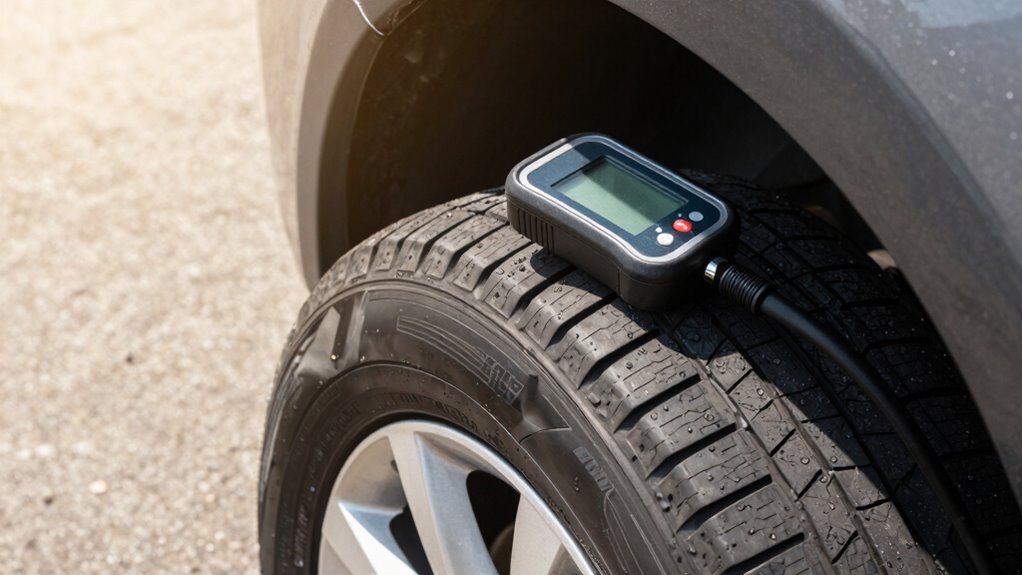
Ever wondered how to guarantee your tires are perfectly inflated? A reliable tire gauge is your best tool. Digital gauges often offer superior Tire gauge accuracy and are easier to read, making them ideal for quick, precise checks. Analog gauges, however, are durable and straightforward. Both types work well if they’re calibrated correctly. Choose one based on your preference, but always prioritize accuracy to keep your ride safe and efficient.
As an affiliate, we earn on qualifying purchases.
Conclusion
Remember, checking your tire pressure is like tending to a garden—regular care keeps everything thriving. The best time to do it is when your tires are cold, before you hit the road or after they’ve cooled down from driving. Think of it as catching a whisper before it turns into a shout—small adjustments now prevent big issues later. Stay vigilant, and your tires will thank you with a smooth, safe journey every time.
tire inflator with pressure gauge
As an affiliate, we earn on qualifying purchases.
As an affiliate, we earn on qualifying purchases.
As an affiliate, we earn on qualifying purchases.
NFL season / tailgating Picks
team gear
As an affiliate, we earn on qualifying purchases.