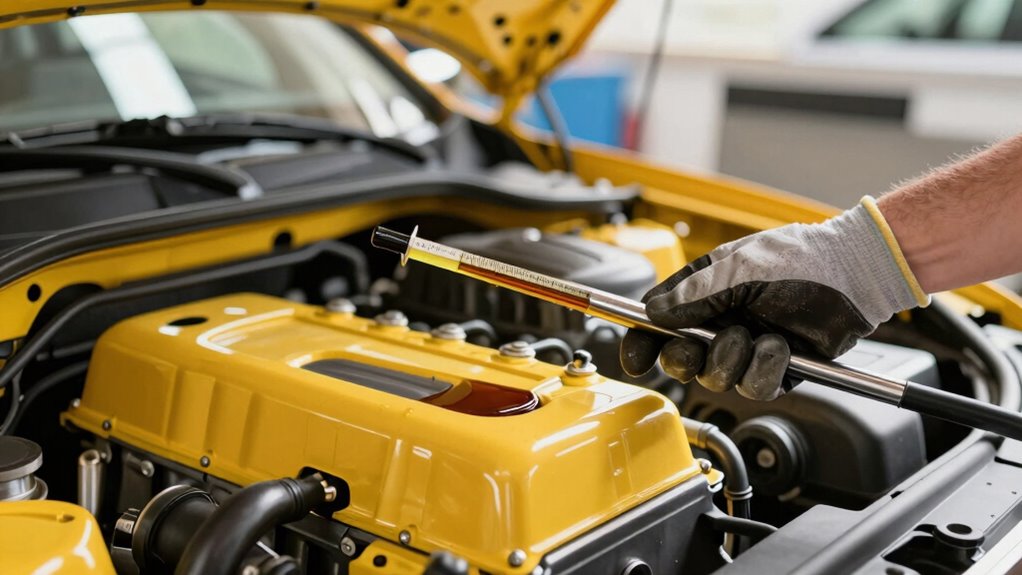

To check your engine oil level properly, park your vehicle on a level surface and turn off the engine. Wait a few minutes for the oil to settle, then locate the dipstick. Pull it out, wipe it clean, reinsert it, and check the level against the markings. If it’s low, add the appropriate oil. Regular checks keep your engine healthy and prevent costly repairs. There’s more to learn about how to maintain your engine oil effectively.

Get the little things that make your day delivered free — and shop member deals
- Fast, free delivery on millions of items
- Access to Prime Big Deal Days deals on October 6–7
- Prime Video, Amazon Music and more included
Key Takeaways
- Park the vehicle on a level surface and turn off the engine to ensure an accurate oil level reading.
- Wait a few minutes for the oil to settle before locating and pulling out the dipstick.
- Wipe the dipstick clean with a cloth, then reinsert it fully before pulling it out again to check oil level.
- Compare the oil level on the dipstick against the markings to determine if oil needs to be added.
- If the level is low, use a funnel to add the appropriate oil type, ensuring to avoid spills.
As an affiliate, we earn on qualifying purchases.
Common Problems From Low Engine Oil Levels
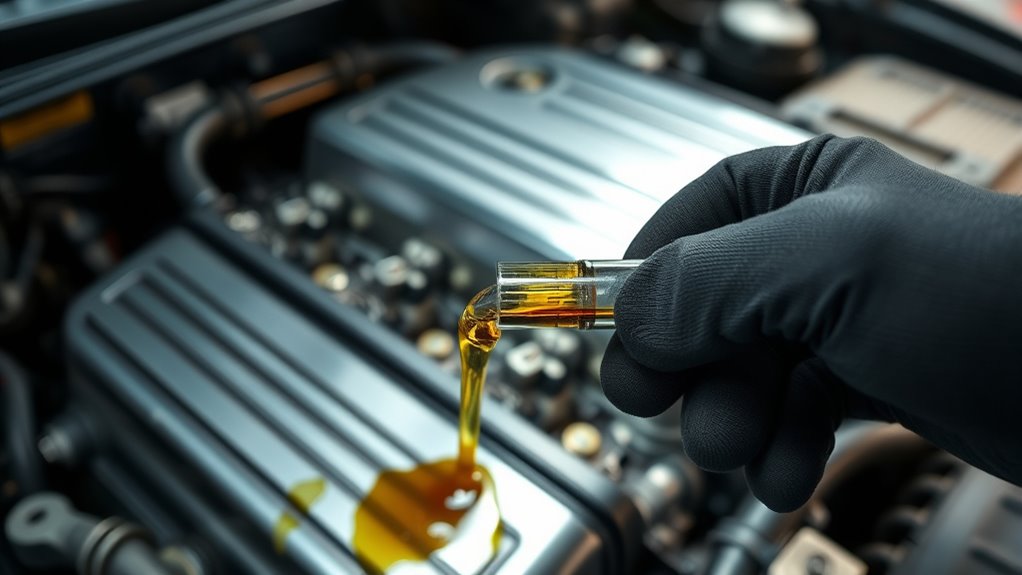
When you ignore low engine oil levels, you risk facing several serious problems that can jeopardize your vehicle’s performance. First and foremost, insufficient oil can lead to engine damage. Without proper lubrication, moving parts create friction, causing wear and tear. This can result in costly repairs or even engine failure. Additionally, low oil levels can cause oil sludge to form, which clogs crucial engine components. This sludge reduces efficiency and can lead to overheating, further stressing your engine. You may notice a decrease in performance or strange noises, signaling that something’s wrong. To avoid these issues, regularly check your oil levels and top off as needed. Taking these simple steps can save you time and money in the long run.
As an affiliate, we earn on qualifying purchases.
Why Checking Your Engine Oil Level Matters
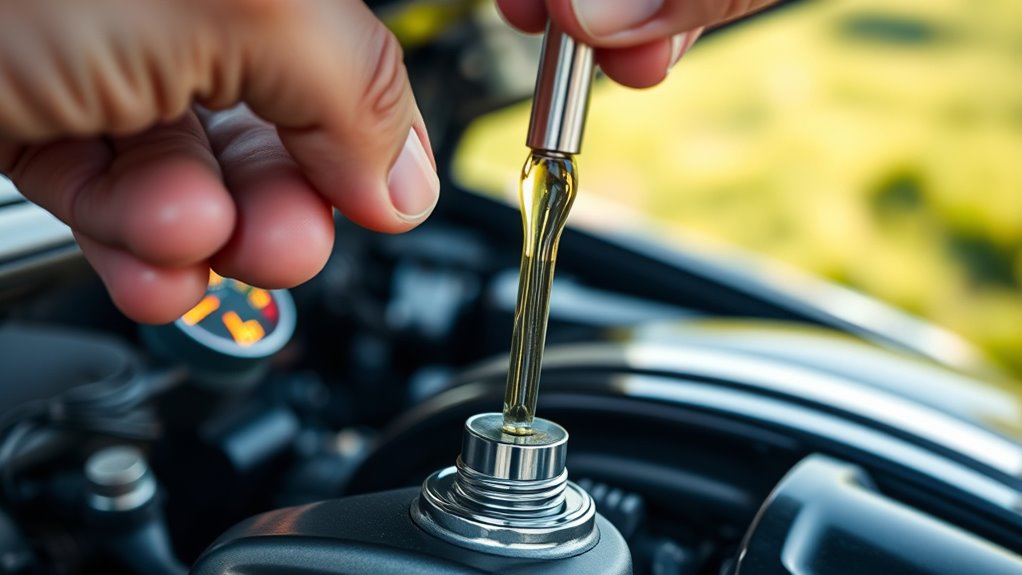
Checking your engine oil level is essential for maintaining ideal engine performance and avoiding costly repairs down the line. Regularly monitoring your oil helps enhance your engine’s longevity, ensuring it runs smoothly for years. Don’t underestimate the impact of a simple oil check—it can save you time and money in the long run.
Engine Performance Maintenance
Regularly monitoring your engine oil level is essential for maintaining optimal engine performance. When your oil level is ideal, it helps regulate engine temperature, preventing overheating and guaranteeing smooth operation. Low oil levels can lead to increased friction and wear, which negatively affects oil viscosity. If the oil becomes too thin, it won’t protect your engine components effectively, leading to potential damage. By checking your oil level frequently, you can guarantee that it maintains the right viscosity, allowing for better lubrication and efficiency. This proactive approach not only enhances performance but also contributes to your vehicle’s overall reliability. So make it a habit to check your engine oil consistently—your engine will thank you for it!
Preventing Costly Repairs
Neglecting to check your engine oil level can lead to costly repairs down the line. When your oil level is low, it can result in decreased oil pressure, which can damage critical engine components. Regularly monitoring your oil level helps you maintain proper lubrication, preventing engine wear and tear that’s expensive to fix. By developing good maintenance habits, such as checking your oil every month or before long trips, you can catch potential issues early. Ignoring this simple task may lead to overheating or complete engine failure, which can drain your wallet. So, take a few minutes to check your oil level; it’s a small effort that can save you significant repair costs in the long run.
Enhancing Engine Longevity
While you might think of engine oil as just another maintenance task, keeping it at the proper level is essential for enhancing your engine’s longevity. Regularly checking your oil helps prevent engine wear and guarantees ideal oil viscosity. Here’s why it matters:
- Reduces Friction: Proper oil levels minimize friction between engine parts, cutting down wear.
- Maintains Oil Viscosity: Adequate oil helps maintain the right viscosity, guaranteeing smooth engine operation.
- Prevents Overheating: Sufficient oil levels help dissipate heat, preventing engine overheating.
- Extends Engine Life: Regular checks contribute to overall engine health, extending its lifespan.
As an affiliate, we earn on qualifying purchases.
Tools You Need for Checking Engine Oil
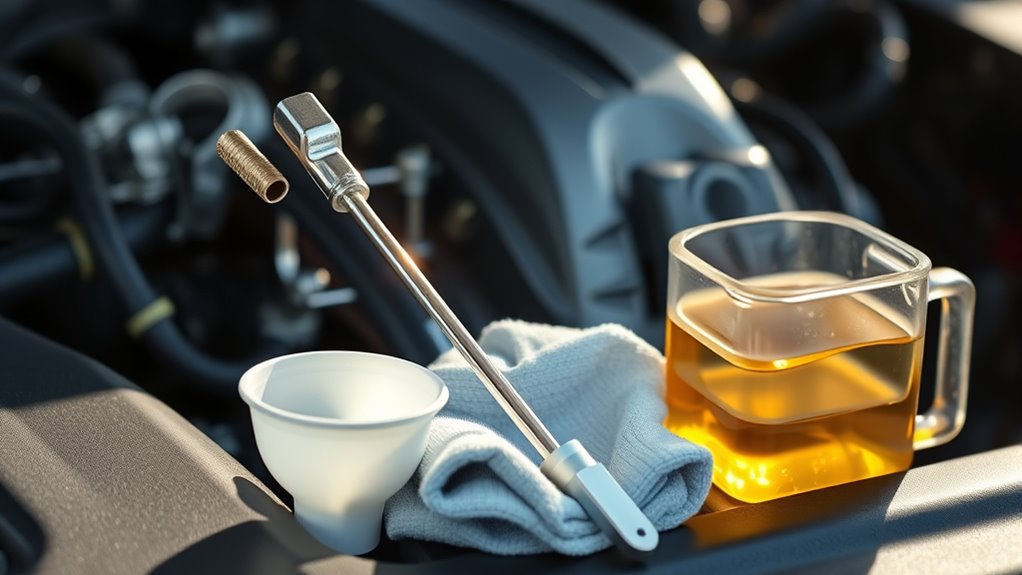
Checking your engine oil level requires a few essential tools to guarantee accuracy and ease. First, you’ll need an oil dipstick to measure the oil level. Make sure it’s clean before you take a reading. Familiarizing yourself with oil dipstick usage is vital; it allows you to check the level effectively and identify any issues. Next, have a funnel handy if you need to add oil, ensuring you don’t spill any. It’s also important to know your engine oil types; not all engines use the same oil, so consult your owner’s manual. Finally, keep a clean rag nearby for wiping the dipstick and any spills. With these tools, you’re set to check your engine oil level accurately.
As an affiliate, we earn on qualifying purchases.
Check Your Engine Oil Level in These Steps
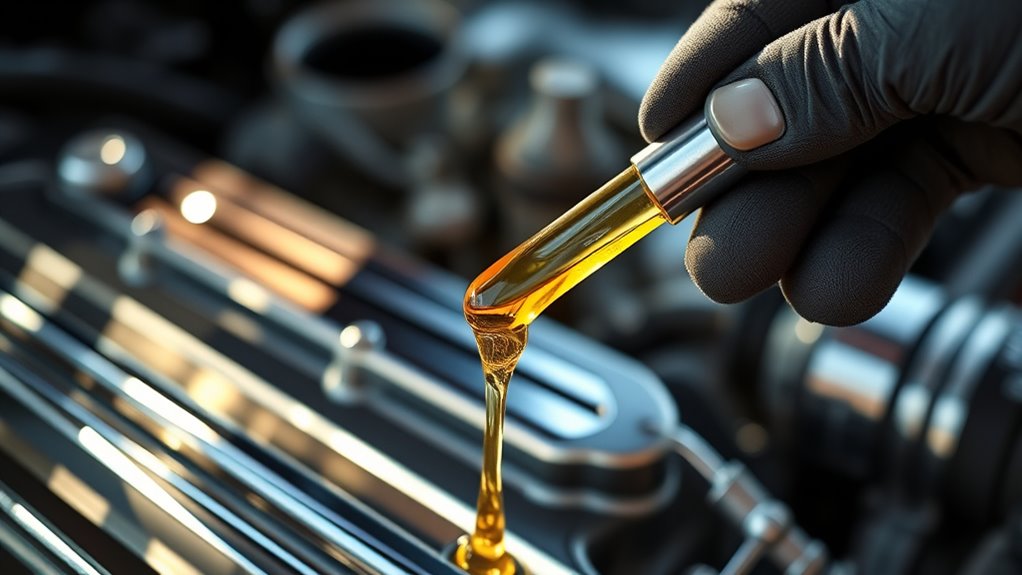
To check your engine oil level, follow these simple steps to guarantee your engine runs smoothly.
- Park your vehicle on a level surface and turn off the engine.
- Wait a few minutes for the oil to settle, then locate the oil dipstick.
- Pull out the dipstick and wipe it clean with a cloth. This is part of the oil dipstick technique.
- Reinsert the dipstick, pull it out again, and check the oil level against the markings. Make sure to identify the correct engine oil types for your vehicle.
If the oil level is low, add the appropriate oil until it reaches the recommended level. Regular checks help maintain your engine’s health and performance.
What Oil Level Readings Mean?
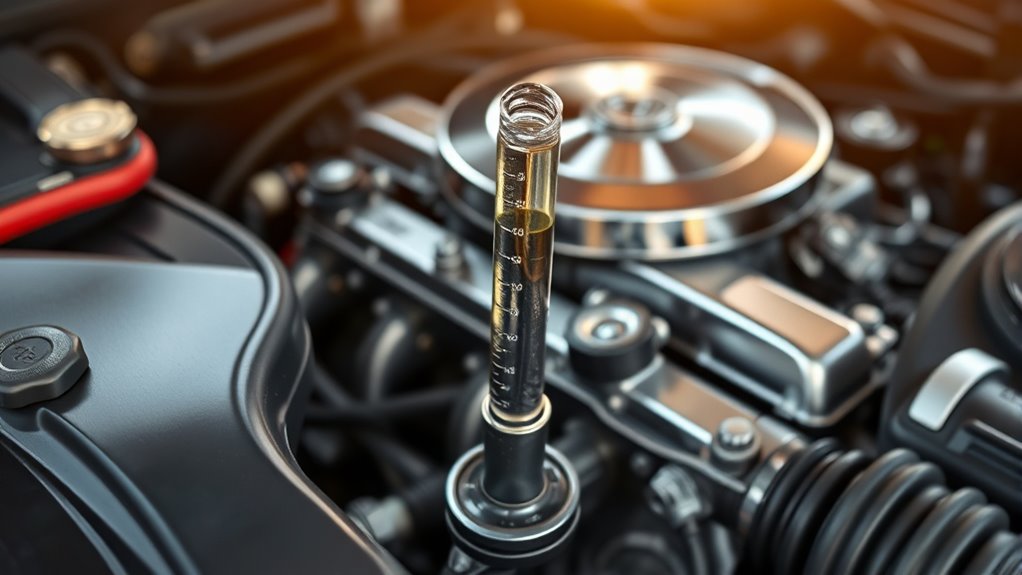
Understanding what your oil level readings mean is essential for maintaining your engine’s health. When you pull out the dipstick, check the oil level against the markings. If the oil sits between the minimum and maximum marks, you’re good to go. However, if it’s below the minimum mark, you need to add oil. Different oil types can affect your readings, so make certain you’re using the recommended oil for your vehicle. A clean dipstick reading shows your oil is in good condition, while a dark or gritty appearance indicates it’s time for a change. Regularly monitoring these readings helps you catch potential issues early, making sure your engine runs smoothly and efficiently.
Indicators for Oil Change or Top-Up Needed
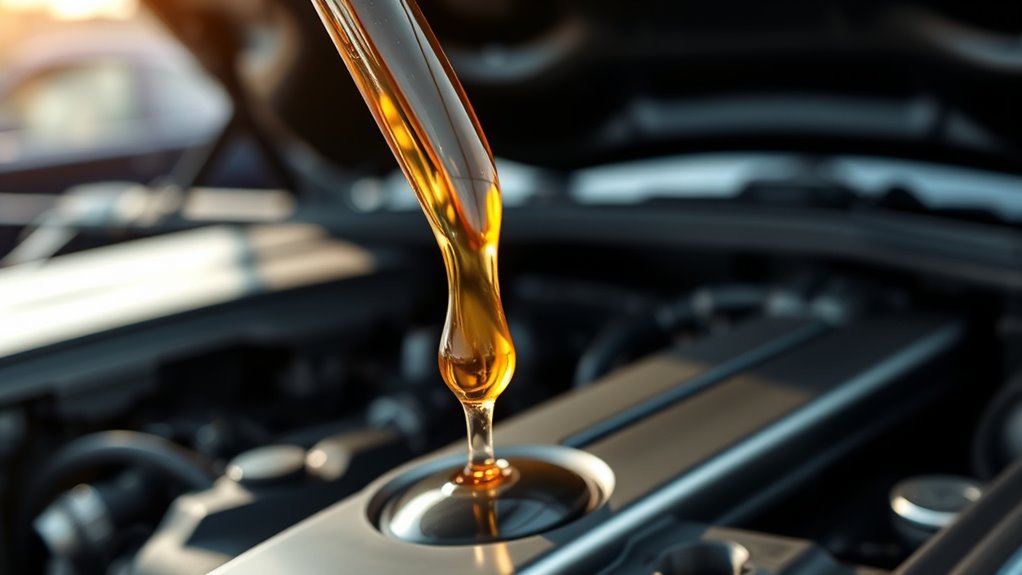
Recognizing when your engine oil needs changing or topping up is key to keeping your vehicle running smoothly. Here are some common oil change indicators and top-up signs to watch for:
Being aware of your engine oil’s condition is crucial for smooth vehicle performance. Watch for key indicators to ensure your engine’s health.
- Oil Warning Light: If this light illuminates on your dashboard, it’s time to check your oil level.
- Dark or Gritty Oil: Fresh oil is usually amber. If it’s dark or has debris, consider an oil change.
- Frequent Top-Ups: If you find yourself adding oil regularly, it could indicate a leak or that it’s time for a change.
- Unusual Engine Noises: If your engine sounds louder than usual, it may be due to low oil levels.
Stay vigilant to keep your engine healthy!
Common Mistakes to Avoid When Checking Oil
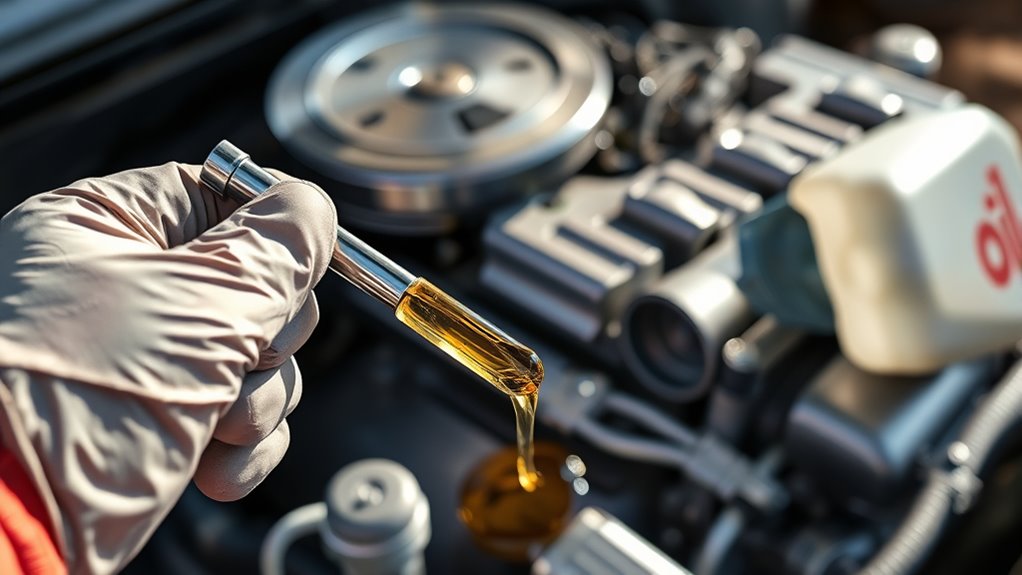
When checking your engine oil, it’s easy to overlook some common mistakes that can lead to inaccurate readings or even engine damage. Here are vital errors to avoid:
| Mistake | Impact | Solution |
|---|---|---|
| Ignoring oil contamination | Can lead to engine wear | Always check oil condition |
| Not parking on level ground | Causes incorrect readings | Make sure your car is level |
| Wiping dipstick incorrectly | Risks oil residue misreading | Use a clean, lint-free cloth |
How Often Should You Check Your Engine Oil?

Checking your engine oil regularly is just as important as avoiding mistakes during the process. To maintain your engine’s health, follow these frequency guidelines for routine checks:
- Every Month: Check oil levels at least once a month.
- Before Long Trips: Inspect oil before any extended road trips to avoid surprises.
- After Oil Change: Recheck your oil level a few days after an oil change to guarantee proper levels.
- Mileage Milestones: For older vehicles, check oil every 1,000 miles to catch issues early.
Sticking to these routine checks will keep your engine in prime condition and help you avoid costly repairs down the line. Remember, consistent monitoring is key to engine longevity!
Frequently Asked Questions
Can I Check Engine Oil Level When the Engine Is Hot?
You can check the engine oil level when the engine’s hot, but it’s not the best practice. A hot engine affects oil viscosity, making it thinner and possibly giving you an inaccurate reading. For a reliable measurement, let the engine cool down for a bit. Once it’s warm but not hot, you’ll get a clearer idea of your oil level, ensuring your engine runs smoothly and efficiently.
What Is the Best Time of Day to Check Engine Oil?
The best time to check your engine oil is during your morning routine, right after the car’s been parked overnight. This way, the oil settles, giving you an accurate reading. You wouldn’t want to miss this vital step in your daily drive—it’s as essential as coffee for your engine! If you can’t do it in the morning, consider evening maintenance when the engine’s cooled down. Just make sure it’s parked on level ground for the best results!
How Long Should I Wait After Turning off the Engine?
You should wait at least 10-15 minutes after turning off the engine. This allows the engine to cool down and gives the oil time to settle back into the oil pan. If you check it too soon, the oil might still be circulating, leading to an inaccurate reading. Taking this time guarantees you get a precise measurement of your oil level, which is essential for maintaining your engine’s health.
Does the Type of Oil Affect the Level Readings?
Yes, the type of oil can affect your level readings. Different oil viscosities can change how the oil settles in the pan. For instance, synthetic oils often have better flow characteristics, which might lead to more accurate readings in certain conditions. If you’re using a thicker oil, it might take longer to drain back, potentially showing a higher level initially. Always check your oil level after the engine sits for a bit for the most accurate reading.
Is It Necessary to Clean the Dipstick Before Checking?
Yes, it’s necessary to clean the dipstick before checking. Imagine you’re driving an older car; if you’ve neglected dipstick maintenance, dirt can skew your oil viscosity readings. Wiping the dipstick removes debris or old oil, giving you a clear view of your engine’s oil level. This simple step guarantees you get an accurate measurement, helping you maintain your engine’s health and avoid potential issues down the road.
Conclusion
So, there you have it—checking your engine oil level isn’t just a chore; it’s a rite of passage into the world of responsible car ownership. Remember, ignoring those dips in oil can lead to a dramatic engine meltdown, which is, let’s be honest, not the plot twist you want in your daily commute. So, grab that dipstick, channel your inner mechanic, and let’s keep your car running smoothly—because who doesn’t love a good oil drama?
NFL season / tailgating Picks
team gear
As an affiliate, we earn on qualifying purchases.