
When choosing a dash cam, opt for at least 1080p resolution for clear footage, especially for details like license plates and signs. A higher bitrate enhances video quality, making complex scenes sharper, but it increases storage needs. Night vision is essential for dark conditions and isn’t just about infrared LEDs—sensor quality and software matter too. Understanding these features helps you select the best dash cam, and staying informed will show you how to get the most out of your device.

Get the little things that make your day delivered free with Prime
- Fast, free delivery on millions of items
- Prime Video, Amazon Music and more included
- Member-only deals all year
Key Takeaways
- Higher resolution (1080p, 2K, 4K) provides clearer footage, aiding in license plate and sign recognition.
- Adjustable bitrate affects video clarity; higher bitrate captures more detail but requires more storage.
- Night vision capabilities depend on sensor quality, infrared LEDs, and software features like WDR for effective low-light recording.
- Advanced sensors improve image quality in low-light conditions, enhancing overall footage clarity during nighttime driving.
- Balancing resolution, bitrate, and sensor features ensures detailed, reliable footage across various lighting environments.
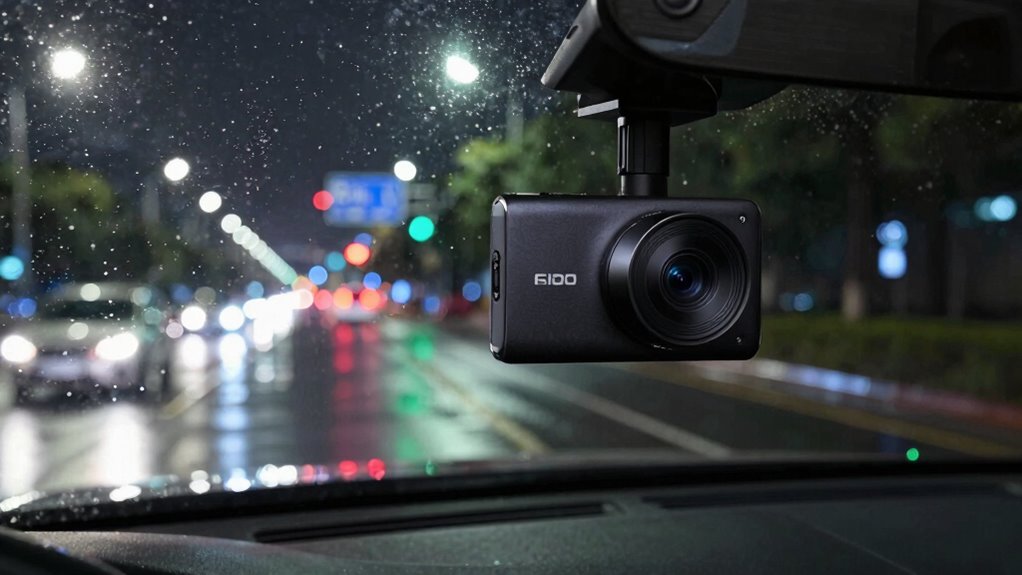
When choosing a dash cam, understanding its resolution, bitrate, and night vision capabilities is fundamental for capturing clear, detailed footage in all driving conditions. High resolution ensures that every detail on the road is sharp, which is essential if you need to review footage for traffic safety or provide evidence after an incident. Look for a dash cam with at least 1080p resolution; this level offers a good balance between image clarity and file size. Higher resolutions, like 2K or 4K, provide even crisper footage, making it easier to identify license plates, road signs, or other important details. But remember, higher resolution videos require greater storage capacity and may demand more from your dash cam’s processing power.
Choose a dash cam with at least 1080p resolution for clear, detailed footage in all driving conditions.
Bitrate, which determines how much data is transmitted per second, plays a key role in video quality. A higher bitrate generally results in more detailed footage, which is especially important in complex driving environments with lots of movement or lights. If the bitrate is too low, your videos might be blurry or pixelated, reducing their usefulness as evidence. When shopping for a dash cam, check the manufacturer’s specifications to guarantee it offers a high enough bitrate to capture the details you need. Many dash cams include adjustable bitrate settings, giving you control over video quality and file size, which can be useful when managing storage or uploading footage.
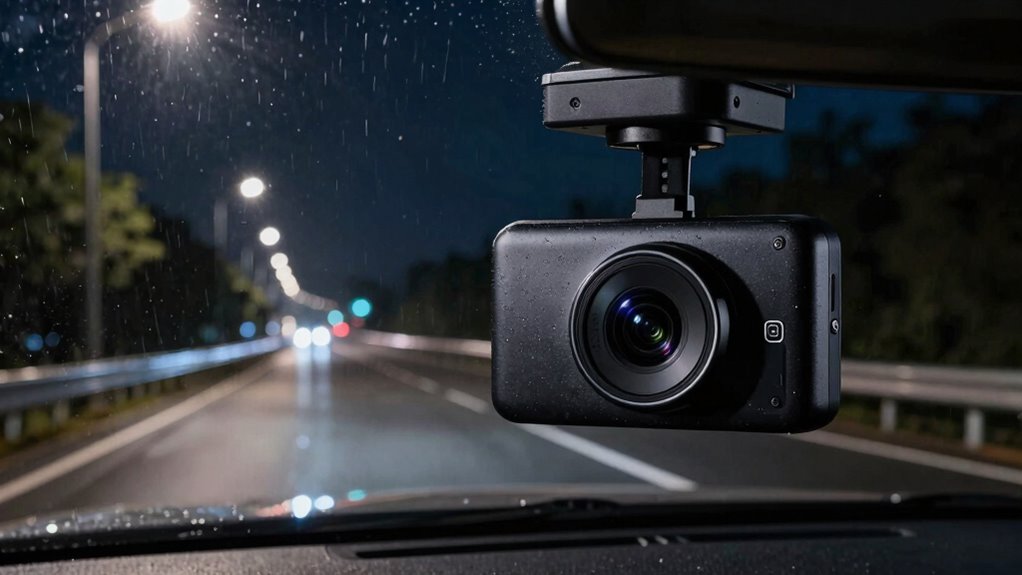
Night vision capabilities are just as essential, especially if you drive often in low-light or nighttime conditions. Good night vision isn’t just about having infrared LEDs; it also involves sensor quality and software algorithms that enhance visibility in dark environments. Look for models with advanced night vision features, such as wide dynamic range (WDR) or low-light sensors, which improve image clarity without overexposing bright lights or underexposing dark areas. The right night vision technology ensures you’re capturing essential details during nighttime drives, contributing to traffic safety and providing reliable footage in case of incidents. Additionally, sensor quality plays a crucial role in ensuring the effectiveness of night vision, as better sensors can produce clearer images in low-light conditions. Improving sensor technology can significantly enhance your dash cam’s ability to record in challenging lighting environments.
1080p dash cam with night vision
As an affiliate, we earn on qualifying purchases.
As an affiliate, we earn on qualifying purchases.
Frequently Asked Questions
How Does Dash Cam Resolution Affect Storage Space?
Higher dash cam resolution increases file size because it captures more detail, requiring more storage space. Video compression helps manage this by reducing file size without losing essential quality, aiding in storage optimization. When you choose a higher resolution, expect larger files, so make certain your memory card has enough capacity. Balancing resolution and compression settings allows you to record clear footage while maintaining efficient storage use.
What Is the Ideal Bitrate for Clear Footage?
You should aim for a bitrate of around 12-20 Mbps for clear footage. This range balances video compression and sensor sensitivity, ensuring detailed images without excessive file sizes. Higher bitrates improve clarity, especially in low light, but use more storage. Adjust based on your dash cam’s capabilities and your storage limits, prioritizing a good mix of sharpness and efficiency for reliable, high-quality recordings.
Can Night Vision Cameras Record in Color?
Yes, some night vision cameras can record in color, thanks to advanced technology like color night vision. These cameras use infrared illumination combined with special sensors to capture more detailed and colorful images even in low light conditions. This feature helps you see clearer details at night, making it easier to identify objects or faces. Keep in mind, though, that not all night vision cameras have this capability, so check specifications carefully.
How Long Does Night Vision Battery Last?
Imagine your night vision dash cam as a flashlight on a camping trip—its battery life depends on how much power it consumes. Typically, these cameras last between 2 to 8 hours, depending on battery capacity and power consumption. If you want longer recording, look for models with larger batteries or energy-efficient features. Always check the manufacturer’s specs for real-world battery longevity to guarantee it meets your needs.
Are Higher Resolutions Always Better for Dash Cams?
Higher resolutions aren’t always better for dash cams because they can raise privacy concerns and have legal implications, especially if footage captures others without consent. While clearer images help in identifying details, they also increase data storage needs and may lead to misuse. You should balance resolution with privacy considerations and legal requirements in your area, ensuring your dash cam usage remains responsible while still capturing useful footage.
4K dashboard camera with adjustable bitrate
As an affiliate, we earn on qualifying purchases.
As an affiliate, we earn on qualifying purchases.
Conclusion
When choosing a dash cam, it’s no coincidence that resolution, bitrate, and night vision all come together to guarantee you capture every detail clearly—day or night. Higher resolution and bitrate often mean sharper images, while good night vision can turn a dark road into a well-lit scene. Ultimately, finding the right balance makes your footage more reliable, turning what seems like a simple device into an essential ally on your journeys.
night vision car dash cam with WDR
As an affiliate, we earn on qualifying purchases.
As an affiliate, we earn on qualifying purchases.
dual lens dash cam for night driving
As an affiliate, we earn on qualifying purchases.
As an affiliate, we earn on qualifying purchases.
NFL season / tailgating Picks
team gear
As an affiliate, we earn on qualifying purchases.