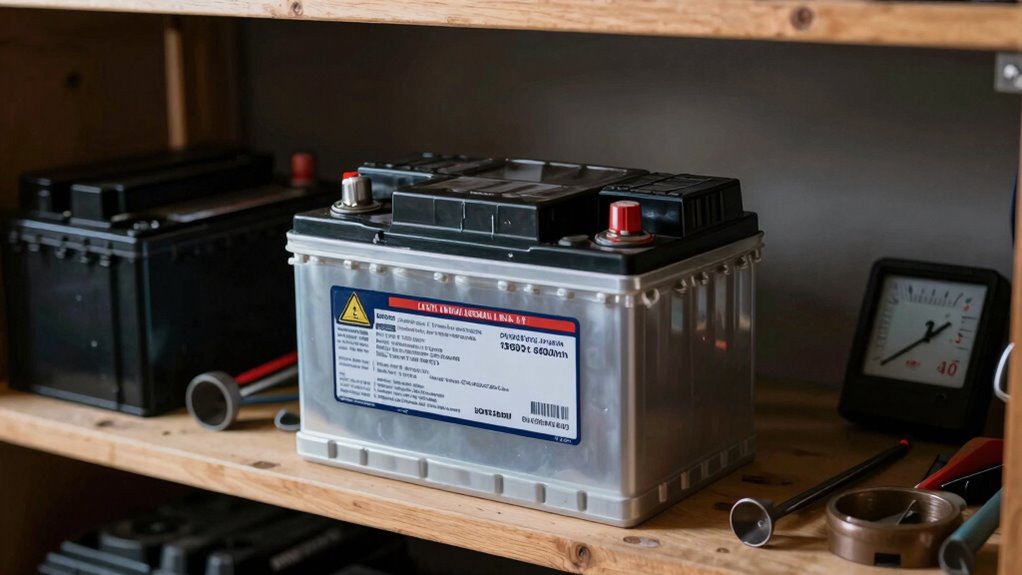

To store your car battery without ruining it, clean the terminals and check fluid levels. Store it in a cool, dry place away from sunlight, ideally at temperatures between 32°F and 80°F. Keep the battery upright, secure, and away from moisture. Regularly check the charge and avoid placing heavy objects on it. If you’re unsure about its condition, stick around to discover tips on maintenance and when to think about replacing your battery.

Get the little things that make your day delivered free with Prime
- Fast, free delivery on millions of items
- Prime Video, Amazon Music and more included
- Member-only deals all year
Key Takeaways
- Store the battery in a cool, dry location with temperatures between 32°F and 80°F to prevent damage and self-discharge.
- Clean terminals to avoid corrosion and ensure good connections during storage and when reusing the battery.
- Keep the battery upright in a secure position and away from direct sunlight and moisture to prevent leaks and deterioration.
- Regularly check the battery’s charge and fluid levels, adding distilled water if necessary to maintain health.
- Use wooden or plastic surfaces for storage, as concrete can cause discharge; avoid placing heavy objects on the battery.
As an affiliate, we earn on qualifying purchases.
Why Proper Storage Is Essential for Your Car Battery
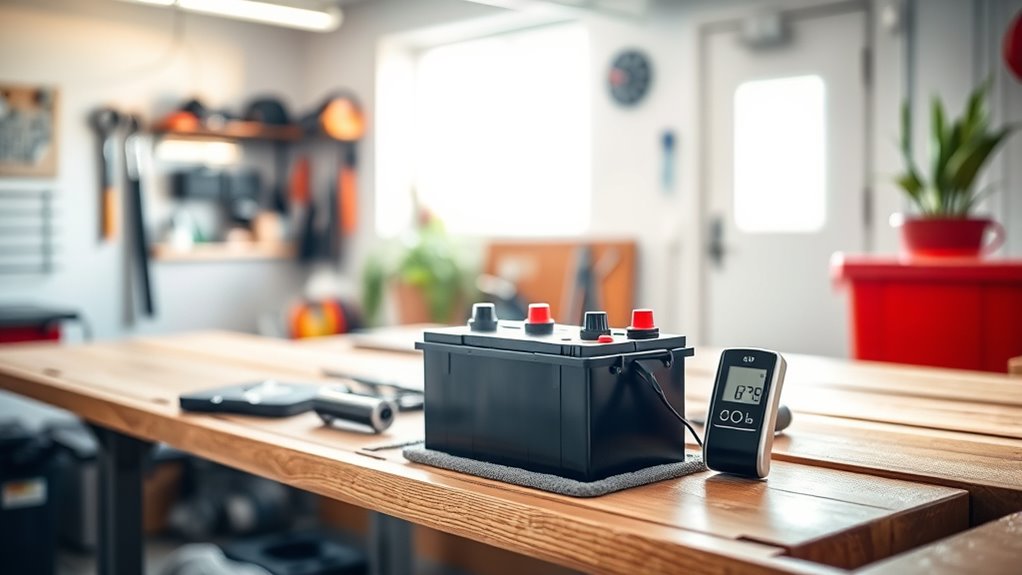
While you might think any storage method will do, proper car battery storage is essential for maintaining its performance and lifespan. A battery stored in the right conditions can last considerably longer, saving you time and money. Aim for a cool, dry location with a stable storage temperature, ideally between 32°F and 80°F. Extreme temperatures can lead to faster self-discharge and damage internal components, reducing your battery lifespan. Additionally, avoid exposing the battery to direct sunlight or moisture, as these factors can accelerate deterioration. By taking the time to store your battery correctly, you guarantee it remains reliable and ready for use when you need it most. Prioritize these best practices, and your battery will thank you later.
As an affiliate, we earn on qualifying purchases.
Preparing Your Battery: Cleaning and Maintenance

Before storing your battery, make sure to clean the terminals to prevent corrosion. Regularly checking the fluid levels is also essential for maintaining battery health. These simple maintenance steps can extend your battery’s lifespan considerably.
Clean Battery Terminals Regularly
To guarantee your car battery operates efficiently, it is essential to clean the battery terminals regularly. Neglecting this simple task can lead to battery corrosion, which can shorten your battery’s life and cause unexpected breakdowns. Use effective terminal cleaning techniques to keep your battery in top shape.
- Enjoy peace of mind knowing your car’s ready to go when you are.
- Save money on premature battery replacements and repairs.
- Experience the satisfaction of a well-maintained vehicle.
Check Fluid Levels Consistently
Checking your fluid levels consistently is essential for maintaining your car battery’s health. Regular fluid maintenance guarantees that your battery operates efficiently and lasts longer. When you store your battery, check the electrolyte levels; they should be above the lead plates. If they’re low, add distilled water to replenish them.
Keep an eye on your storage environment too. Extreme temperatures can cause fluid evaporation or freezing, which can damage your battery. Ideally, store your battery in a cool, dry place to mitigate these risks. By being proactive about fluid levels and the storage environment, you’ll prevent issues that could lead to battery failure. Remember, a little attention now can save you from bigger problems later!
As an affiliate, we earn on qualifying purchases.
Best Ways to Store Your Battery Safely

When you need to store your car battery, ensuring its safety and longevity should be your top priority. To achieve ideal storage conditions and promote battery lifespan extension, follow these tips:
Ensure your car battery’s safety and longevity by storing it in a cool, dry place and checking its charge regularly.
- Keep the battery in a cool, dry place away from direct sunlight.
- Store the battery upright to prevent leaks and damage.
- Regularly check the battery’s charge and maintain it to avoid deterioration.
distilled water for car batteries
As an affiliate, we earn on qualifying purchases.
As an affiliate, we earn on qualifying purchases.
Safely Disconnecting Your Battery From the Vehicle
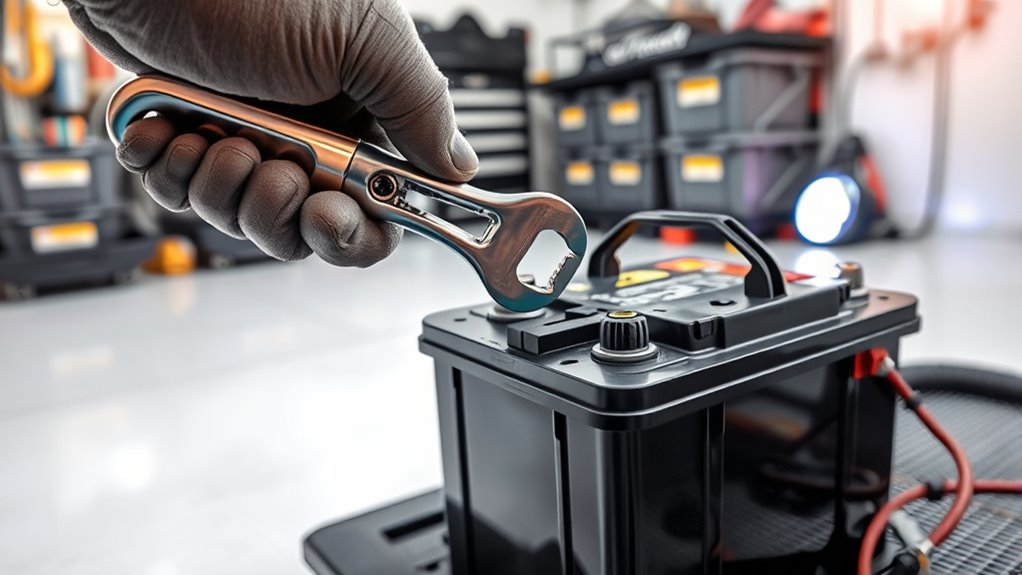
Before you start storing your car battery, it’s important to safely disconnect it from the vehicle to prevent any electrical issues or accidental short circuits. First, make sure you’ve got the right tools, like a wrench, and wear safety goggles and gloves as safety precautions. Begin by turning off your vehicle and removing the key from the ignition. Use battery disconnection techniques by loosening the negative terminal first, followed by the positive terminal. This order minimizes the risk of sparks. After disconnecting, store the terminals safely to avoid contact. Double-check that the battery’s secure and out of direct sunlight or moisture. Following these steps will help you safely disconnect your battery, making certain it’s ready for storage without any complications.
Best Practices for Car Battery Storage
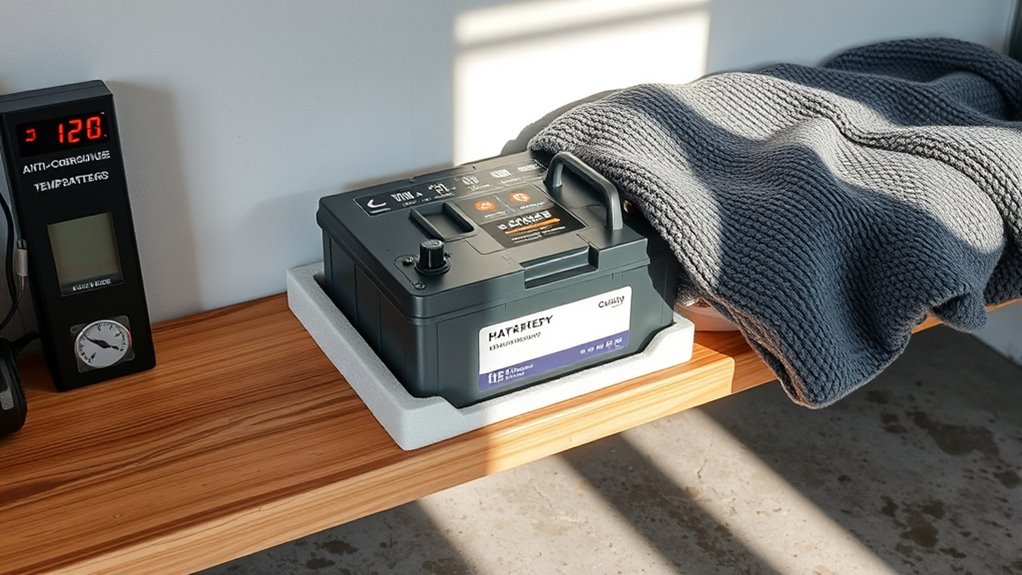
To guarantee your car battery stays in good condition during storage, choose a cool, dry location away from direct sunlight and extreme temperatures. This approach helps maximize your battery lifespan and minimizes temperature effects that can lead to deterioration.
- Imagine the relief of having a fully functional battery when you need it most.
- Picture the frustration of a dead battery after neglecting proper storage.
- Consider the savings on replacement costs by preserving your battery’s health.
Additionally, avoid placing heavy objects on the battery and make certain it’s stored upright. Regularly check on its condition to catch any potential issues early. Following these best practices will ensure your battery remains ready for action when you return.
How to Check and Maintain Battery Health While Stored
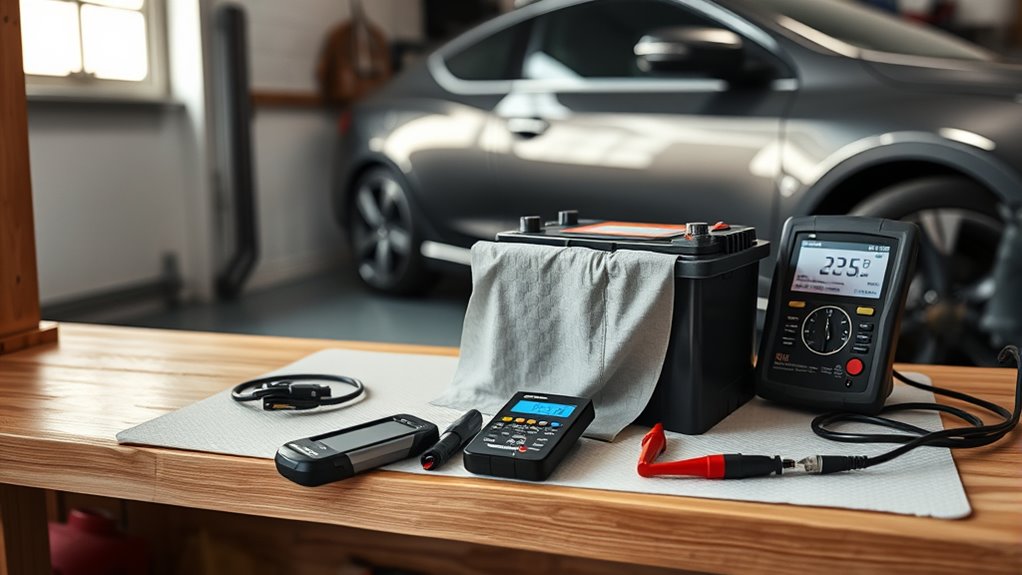
While your car battery is in storage, checking and maintaining its health is essential to guarantee it’s ready for use when you need it. Start with a regular maintenance schedule; every month, check the battery’s voltage using a multimeter. Ideally, the voltage should be around 12.6 volts. If it drops below 12.4 volts, it’s time for battery testing. Make certain to charge it fully before storing again. Additionally, clean the terminals to prevent corrosion, and ascertain it’s stored in a cool, dry place. If you notice any swelling or leaks, it’s best to replace the battery. To ensure long-term performance, consider using a LiFePO4 battery charger that is compatible with your battery type. By following these steps, you’ll keep your battery in top shape, ready for action when you need it most.
Common Battery Storage Mistakes
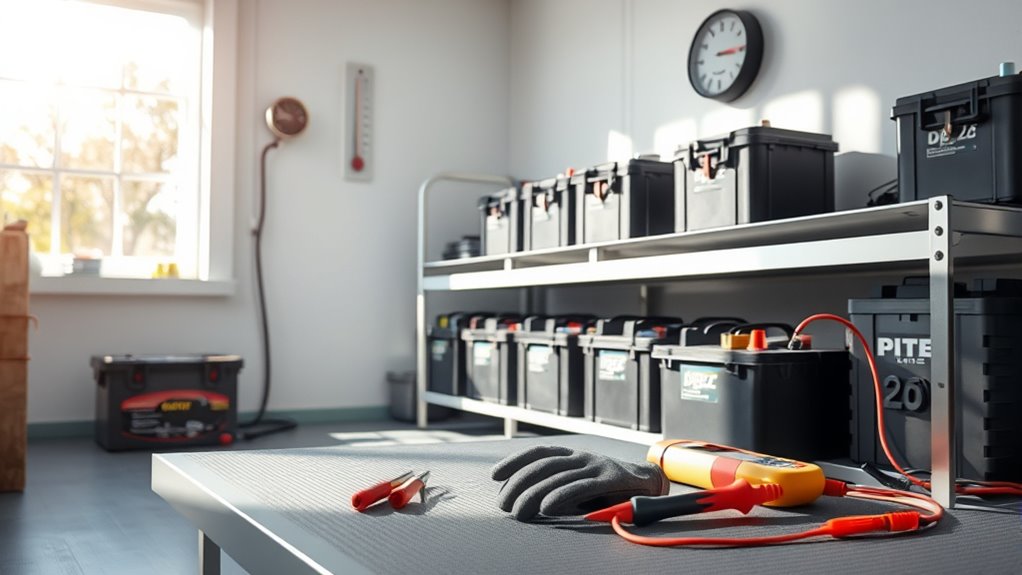
Many people overlook simple mistakes when storing a car battery, which can lead to premature failure or reduced performance. To guarantee you maintain battery life, pay attention to these common pitfalls:
- Ignoring temperature control: Extreme heat or cold can drain your battery quickly.
- Not cleaning the terminals: Corrosion can create poor connections and affect performance.
- Storing it on a concrete floor: This can cause a discharge; always use a wooden or plastic surface.
When to Reinstall or Replace Your Stored Battery?
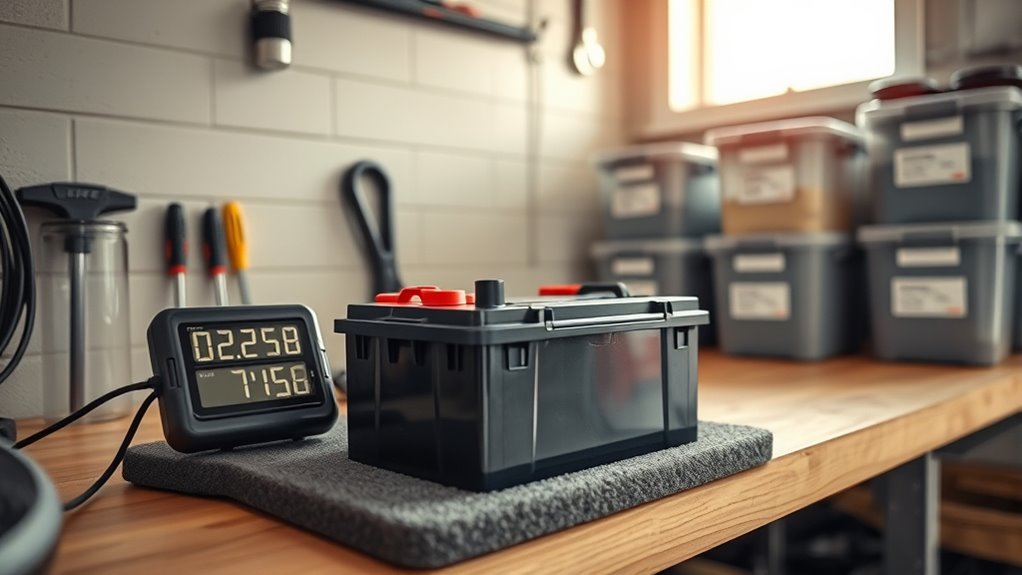
When should you consider reinstalling or replacing your stored battery? If it’s been sitting for more than six months, it’s time to check its condition. Batteries naturally lose charge over time, even in ideal conditions. If you notice any corrosion, swelling, or leaking, replace it immediately. Additionally, keep an eye on the battery lifespan; most batteries last around three to five years. Before reinstalling, verify it’s fully charged and test it for performance. If it struggles to hold a charge or shows any signs of weakness, don’t hesitate to replace it. Ultimately, staying proactive about your battery’s health will save you from unexpected breakdowns and keep your vehicle running smoothly.
Frequently Asked Questions
Can I Store a Battery in a Garage or Shed?
Yes, you can store a battery in a garage or shed, but you need to take into account the garage conditions. Extreme temperatures can affect battery performance and safety, so make sure the area isn’t too hot or cold. Ideally, keep it in a dry, temperature-controlled space. Using a battery maintainer can help, too. Always follow safety guidelines to prevent leaks or damage, ensuring your battery stays in good shape while stored.
What Temperature Is Ideal for Battery Storage?
The ideal temperature for battery storage is between 50°F and 80°F. You might think any cool place will do, but extreme temperatures can harm your battery’s lifespan. High heat accelerates degradation, while freezing temperatures can cause internal damage. Storing your battery within this suitable range protects it from those harsh temperature effects, ensuring it’s ready when you need it. Keep it in a climate-controlled space for the best results!
Is It Safe to Store a Battery Near Metal Objects?
It’s not safe to store a battery near metal objects. The risks include potential short circuits and battery corrosion, which can lead to leaks or even explosions. You want to prioritize battery corrosion prevention by keeping it in a dry, well-ventilated area, away from anything conductive. Secure the battery in a dedicated container, ensuring it’s isolated from metal objects to maintain its integrity and longevity. Your battery will thank you for it!
How Long Can I Store a Car Battery?
If you’re looking to store a car battery, you’ve got to be mindful of its lifespan. You can typically store a fully charged battery for up to six months without any major issues. To keep it in tip-top shape, make sure you check the charge regularly and follow some maintenance tips, like cleaning the terminals and ensuring it’s in a cool, dry place. Remember, a little care goes a long way!
Should I Cover the Battery During Storage?
Yes, you should cover the battery during storage. A proper cover provides battery insulation and protects against extreme weather conditions. If you’re storing it in a garage or shed, use a breathable cover to prevent moisture buildup while ensuring airflow. This helps maintain the battery’s performance and lifespan. Just make sure the cover doesn’t trap heat, as excess warmth can be detrimental. Keep your battery safe and ready for use when you need it!
Conclusion
Storing your car battery properly is like tucking it in for a long winter’s nap—do it right, and it’ll wake up ready to go. Neglect it, and you could end up with a dead battery when you need it most. By following the steps outlined, you guarantee your battery stays healthy and reliable. So, treat it with care, and it’ll serve you well when it’s time to hit the road again.
NFL season / tailgating Picks
team gear
As an affiliate, we earn on qualifying purchases.