
Understanding mechanic tool set sizes and socket types helps you choose the right tools for any job. You’ll find common sizes like metric and SAE, each fitting specific fasteners to prevent damage. Six-point sockets offer durability, while twelve-point sockets are easier to align. Organizing your sockets with trays or cases makes work faster and safer. Staying familiar with these varieties guarantees you select the best tools every time—there’s plenty more to discover for your toolbox!

Get the little things that make your day delivered free — and shop member deals
- Fast, free delivery on millions of items
- Access to Prime Big Deal Days deals on October 6–7
- Prime Video, Amazon Music and more included
Key Takeaways
- Socket sizes include metric (mm) and SAE (inch), matching specific fastener dimensions for proper fit.
- Six-point sockets offer durability, while twelve-point sockets provide easier alignment but wear faster.
- Deep-well sockets reach recessed fasteners, and impact sockets handle high-torque applications.
- Organize sockets using trays or labeled cases to improve accessibility and workspace efficiency.
- Compatibility between socket types and fasteners prevents damage and ensures effective, safe repairs.
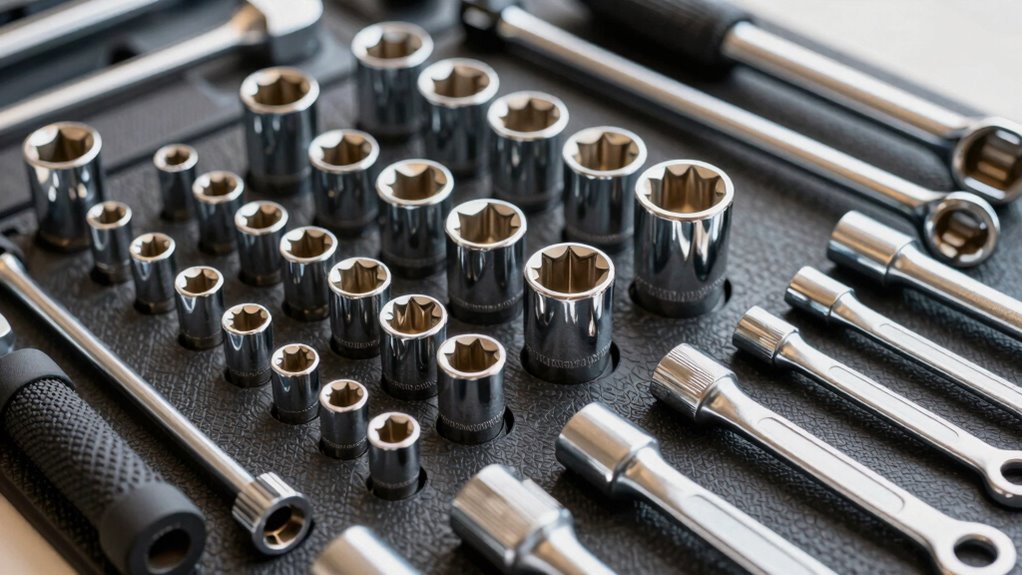
When choosing a mechanic tool set, understanding the different sizes and socket types is vital for tackling a variety of repair tasks. Whether you’re working on your vehicle or assisting others, knowing the right tools to use makes automotive repair more efficient and less frustrating. Sockets come in a range of sizes, designed to fit nuts and bolts of various dimensions, so having an extensive set helps you handle most jobs. Common sizes include metric measurements, like 8mm, 10mm, 13mm, and 17mm, as well as standard SAE sizes such as 1/4 inch, 3/8 inch, and 1/2 inch drive sockets. Each size corresponds to specific fastener dimensions, and using the correct socket size prevents stripping or damaging those fasteners. Understanding socket dimensions and types is crucial for selecting the appropriate tools for different tasks. Socket types also vary, with popular options including six-point, twelve-point, and specialty designs. Six-point sockets are the most durable and grip fasteners more securely, making them ideal for automotive repair where high torque or repeated use is common. Twelve-point sockets, while easier to align on fasteners, tend to wear faster and provide less grip, so they’re better suited for lighter tasks. Specialty sockets, like deep-well or impact sockets, serve specific purposes, such as reaching deep or handling high-torque applications. Choosing the right type of socket guarantees you don’t waste time struggling or risking damage during repairs. Proper tool organization plays an essential role in maintaining efficiency and safety. When your tools are well-organized, you can quickly find the right socket, reducing downtime and preventing the frustration that often comes with searching through clutter. Proper organization also helps prevent tool wear, ensuring your sockets and other tools stay in good condition for longer. Additionally, understanding socket storage solutions can help you optimize your workspace and improve accessibility. Implementing organized storage solutions can make a significant difference in your workshop or toolbox. Using socket trays or labeled storage cases helps you keep track of different sizes and types, so you’re always prepared for any task. Proper organization also prolongs the life of your tools by preventing unnecessary wear and tear. To further enhance your efficiency, consider learning about socket compatibility to ensure your sockets fit various fasteners and tools seamlessly.
mechanic socket set with metric and SAE sizes
As an affiliate, we earn on qualifying purchases.
As an affiliate, we earn on qualifying purchases.
Frequently Asked Questions
What Is the Most Versatile Tool Set Size for Beginners?
For beginners, a 75-100 piece mechanic tool set is the most versatile choice. It offers a good mix of socket sizes, wrenches, and screwdrivers, making it ideal for various projects. Focus on tool organization and storage solutions to keep your set accessible and neat. A well-organized kit helps you quickly find the right tool, saving time and improving efficiency during repairs or maintenance tasks.
How Do I Choose the Right Socket Type for My Car?
Imagine opening your tool storage, selecting a socket that fits snugly over your car’s bolt—no slipping or stripping. To choose the right socket type, check your car’s manual for socket compatibility, noting the size and drive type. Match it with your tools, ensuring a secure fit. This way, your socket set becomes a reliable extension of your hand, making repairs smoother and more efficient.
Are Metric or SAE Sizes Better for General Use?
For general use, metric sizes are often better because they offer precise socket compatibility across most vehicles worldwide. They’re versatile and widely compatible, making tool storage easier with fewer mismatched sockets. SAE sizes are mainly used for older American cars. Choosing metric sizes guarantees you’re prepared for diverse projects, avoiding frustration and saving space in your tool storage. Ultimately, metric sockets provide more flexibility for everyday repairs.
Can I Mix Different Socket Types on the Same Ratchet?
Yes, you can mix different socket types on the same ratchet, but you should check socket compatibility first. Confirm the sockets fit securely onto the ratchet’s drive size. Using compatible sockets maintains ratchet durability and prevents slipping or damage. Always match socket drive sizes to your ratchet, and avoid forcing incompatible types, as this can reduce the tool’s lifespan and compromise safety during use.
What Safety Precautions Should I Take With Socket Tools?
To stay safe with socket tools, always wear personal protective equipment like gloves and safety glasses. Use proper storage to keep tools organized and prevent accidents. Inspect sockets and ratchets for damage before use, and avoid forcing tools into tight spots. Keep your workspace clean and well-lit. When working with high-torque or risky tasks, take extra precautions to prevent slips and injuries. Proper safety habits protect you and extend your tools’ lifespan.
As an affiliate, we earn on qualifying purchases.
Conclusion
Now that you understand the different sizes and socket types, you’re better equipped to tackle any repair with confidence. Recognize the importance of matching the tool to the task, selecting the right size for grip and leverage, and choosing the correct socket type for the job. By mastering these basics, you’ll work more efficiently, avoid frustration, and guarantee your tools serve you well. Keep practicing, keep learning, and enjoy the satisfaction of a job well done.
six-point vs twelve-point socket set
As an affiliate, we earn on qualifying purchases.
As an affiliate, we earn on qualifying purchases.
As an affiliate, we earn on qualifying purchases.
Fall Picks
fall essentials
As an affiliate, we earn on qualifying purchases.