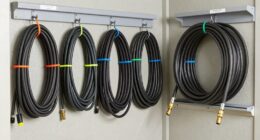
When shopping for air hoses and fittings, you need to understand what connects to what for ideal performance. Your air tool connects to the hose via quick connectors or couplers, while adapters help with different fitting sizes. Remember, the hose material affects durability, and size impacts airflow and pressure. Regularly check for compatibility and leaks to guarantee a secure connection. Keep exploring for tips on selecting the right hose and avoiding common mistakes in your setup.

Get the little things that make your day delivered free with Prime
- Fast, free delivery on millions of items
- Prime Video, Amazon Music and more included
- Member-only deals all year
Key Takeaways
- Choose air hoses made from rubber, PVC, or polyurethane based on project needs and temperature conditions.
- Ensure hose diameter matches tool requirements for optimal airflow and pressure delivery.
- Use quick connectors for fast tool changes and couplers for multiple tool connections to one air source.
- Regularly inspect all fittings for compatibility and leaks to maintain secure connections.
- Always verify pressure ratings of hoses and tools to prevent blowouts and ensure efficient operation.
Products Worth Considering

Levoit Core 400S-P Smart Air Purifier for Large Rooms

Coway Airmega 250 Air Purifier for Large Rooms

Levoit Eleva 300X HEPA Air Purifier for Home and Bedroom
As an affiliate, we earn on qualifying purchases.
The Basics of Air Hoses: Types and Uses

When you’re choosing an air hose, it’s crucial to understand the different types available and their specific uses. Air hoses come in various hose materials, such as rubber, PVC, and polyurethane, each offering unique benefits. Rubber hoses are durable and flexible, ideal for high-pressure applications, while PVC hoses are lightweight and resistant to abrasion. Polyurethane hoses are known for their flexibility in cold temperatures.
Additionally, you’ll want to pay attention to pressure ratings. Higher pressure ratings mean the hose can handle more demanding tasks, such as powering heavy-duty tools. Selecting the right combination of hose material and pressure rating guarantees you get the performance and longevity you need for your projects. Knowing these basics will help you make an informed choice.
Selecting the Right Hose Size for Optimal Performance

Choosing the right hose size is essential for peak performance in your air-powered tools and equipment. When selecting a hose, consider the hose diameter, as it directly affects airflow and pressure delivery. A larger diameter can enhance air flow but may reduce pressure, while a smaller diameter can restrict flow and increase pressure drop. It’s all about finding the balance that suits your specific tools.
Additionally, don’t overlook the pressure rating importance. Verify that your hose can handle the pressure generated by your compressor and tools to prevent blowouts or leaks. By carefully evaluating hose diameter considerations and pressure ratings, you can optimize your system’s efficiency and verify reliable operation, ultimately enhancing your work experience.
Essential Fittings for Air Tools: Types and Functions

Fittings are the unsung heroes of your air tool setup, playing an essential role in connecting hoses and tools while ensuring a secure and leak-free system. Understanding fitting compatibility is vital for a successful tool connection. Here are three essential types of fittings you should know:
- Quick Connectors: These allow for fast and easy tool changes, minimizing downtime.
- Couplers: Couplers enable multiple tool connections to a single air source, increasing versatility.
- Adapters: These are necessary when connecting different fitting sizes or styles, ensuring everything works together seamlessly.
Why Hose Length and Material Matter

While you might be tempted to overlook hose length and material, these factors greatly impact your air tool’s performance. The right hose length guarantees you can reach your work area without excessive pressure loss. If the hose is too long, you risk a drop in pressure that can hinder your tool’s efficiency. Additionally, the material affects hose durability; some materials withstand wear and tear better than others. For instance, rubber hoses typically offer greater flexibility and resilience compared to PVC. Always check the pressure rating of your hose, as using one that can’t handle your tool’s requirements can lead to ruptures or leaks. Investing in the right length and material pays off in the long run, enhancing both safety and efficiency.
Avoiding Common Mistakes With Air Hoses and Fittings

Many users overlook common mistakes when using air hoses and fittings, which can lead to frustrating and costly issues. To avoid these pitfalls, keep these tips in mind:
- Check air pressure: Always verify your air compressor’s pressure settings match the requirements of your tools to prevent damage and inefficiency.
- Inspect for wear: Regular hose maintenance is essential. Look for cracks, kinks, or leaks that can compromise functionality.
- Use compatible fittings: Mismatched fittings can cause air loss and reduce efficiency. Make sure all components are designed to work together.
What Are Common Mistakes When Connecting Air Hoses and Fittings?

Connecting air hoses and fittings requires attention to detail to guarantee a secure and efficient setup. One common mistake you might make is overlooking hose compatibility issues. Always verify that the hose matches the fittings in size and type; otherwise, you risk leaks or even damage to your equipment. Another frequent error is improper fittings selection. Choosing the wrong fitting can lead to weak connections and inefficiency. Be sure to check the specifications of both the hose and fittings before making a purchase. Additionally, neglecting to tighten connections adequately can cause air loss and reduce performance. By avoiding these mistakes, you’ll create a reliable air system that functions effectively and lasts longer.
Frequently Asked Questions
What Is the Maximum Pressure Rating for Air Hoses?
The maximum pressure rating for air hoses typically ranges from 90 to 300 PSI, depending on the hose material and construction. You should always check the hose ratings specified by the manufacturer to guarantee safety and compatibility with your air tools. Using hoses with adequate pressure ratings is vital, as exceeding them can lead to potential hazards like bursts or leaks. So, make certain you’re using the right hose for your needs!
Can I Use PVC Hoses for High-Temperature Applications?
PVC hoses aren’t typically suited for high-temperature applications. They may melt or deform under intense heat, compromising their integrity and performance. For reliable high-temperature resistance, consider alternatives like rubber or silicone hoses that can withstand extreme conditions without breaking down. Always check the specifications to guarantee your chosen hose matches the demands of your PVC hose applications. Keeping this in mind will help you maintain safety and efficiency in your projects.
How Often Should I Replace My Air Hose?
You should replace your air hose every few years, but pay attention to replacement indicators like cracks, leaks, or reduced air flow. Regularly inspect your hose for signs of wear and tear, as these can affect air hose longevity. If you notice any issues, it’s best to replace it sooner rather than later to avoid potential damage to your equipment. Keeping an eye on your hose guarantees safe and efficient operation.
Are There Specific Fittings for Different Air Compressor Brands?
Yes, there are specific fittings for different air compressor brands. You need to take into account fitting compatibility with your compressor’s specifications. Each brand may have unique designs, sizes, or connection styles, so it’s essential to check your compressor’s manual or manufacturer’s guidelines. Using the right fittings guarantees a secure connection and peak performance, preventing leaks and enhancing efficiency. Always match your fittings to your air hose and compressor for the best results.
What Safety Precautions Should I Take When Using Air Hoses?
When you’re handling air hoses, think of them as a wild stallion—powerful but needing control. Always inspect for wear and tear, ensuring proper hose maintenance before use. Keep your work area tidy to avoid tripping hazards, and wear safety goggles to shield your eyes from debris. Monitor the air pressure closely; too much can lead to bursts. By taking these precautions, you’ll ride the wave of safety and efficiency with every project.
Conclusion
In the world of air hoses and fittings, knowing your gear can transform your workspace. Picture yourself effortlessly connecting the right hose, feeling the smooth flow of air powering your tools. By choosing the right size and avoiding common pitfalls, you create a seamless setup that enhances your projects. So, as you plunge into your next task, remember: every connection counts, and with the right knowledge, you can breathe easy and work efficiently.