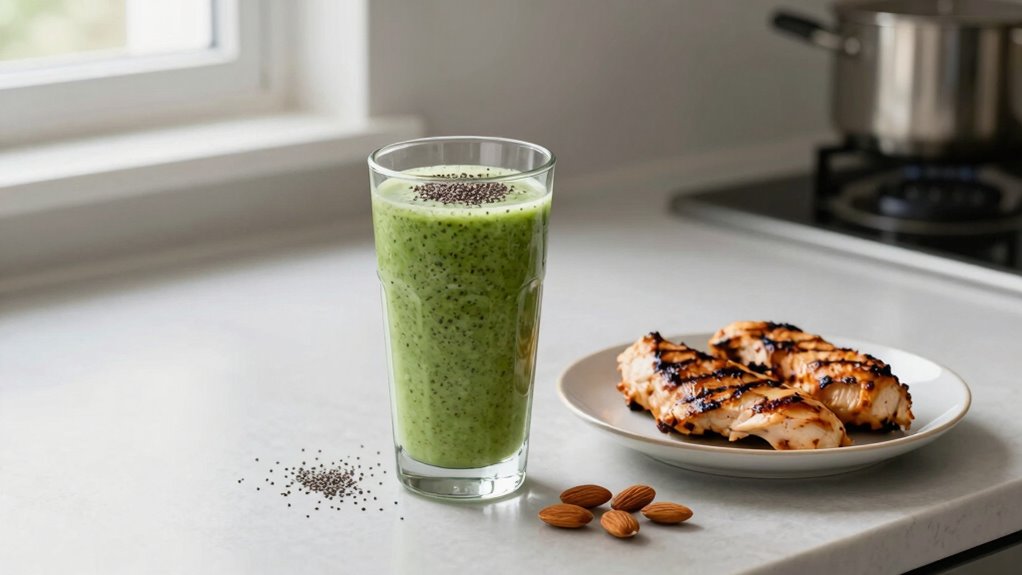

For effective muscle recovery and appetite control, spread your protein intake evenly throughout the day with regular meals or snacks. Focus on consistent, manageable amounts rather than obsessing over exact timing or post-workout windows. Staying attuned to your body signals and maintaining a steady protein supply helps maximize benefits without unnecessary rules or hype. Keep these principles in mind, and you’ll learn how to optimize your intake for better results and sustained progress.

Get the little things that make your day delivered free with Prime
- Fast, free delivery on millions of items
- Prime Video, Amazon Music and more included
- Member-only deals all year
Key Takeaways
- Regular protein intake throughout the day supports muscle repair more effectively than infrequent, large doses.
- Consuming protein within an hour post-workout can boost recovery, but overall daily intake matters more.
- Spreading protein evenly across meals enhances satiety and appetite control, aiding weight management.
- Focus on consistent, manageable meals and snacks rather than strict timing or windows.
- Prioritize overall protein intake aligned with your routine for optimal muscle recovery and health.
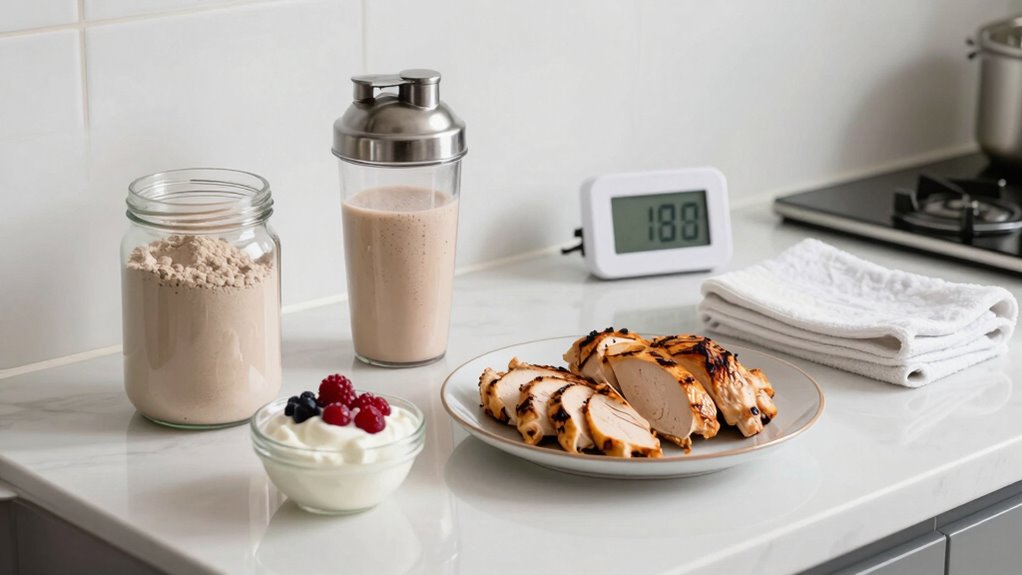
Timing your protein intake might seem complicated, but the truth is, it doesn’t have to be. When you understand the basics, you can make smarter choices without overthinking every meal. Protein plays a crucial role in muscle recovery, helping your muscles repair and grow stronger after workouts. It also influences appetite control, making it easier to stick to your nutrition goals and avoid overeating. Instead of obsessing over perfect timing, focus on consistent intake throughout the day, which is more effective and manageable.
Research shows that spreading your protein intake evenly across meals can support muscle recovery better than consuming a large amount all at once. When you eat protein regularly, your body has a steady supply of amino acids to repair tissues and build new muscle. This doesn’t mean you need to eat protein at exact intervals, but aiming for balanced servings every few hours can make a real difference. For example, a source of protein in each meal or snack helps keep your muscles fed and promotes ongoing recovery, especially if you’re active regularly. Additionally, understanding the importance of protein timing can help optimize your efforts and results. Incorporating sufficient protein intake also supports overall health and immune function, which are vital for long-term well-being.
Beyond muscle recovery, protein timing also impacts appetite control. Eating protein-rich foods at regular intervals can help you feel fuller longer, reducing the likelihood of snacking on less nutritious options. This is particularly helpful if you’re trying to lose weight or maintain a healthy body composition. When your meals contain adequate protein, your hunger signals become more manageable, and you’re less likely to experience those mid-morning or late-afternoon cravings. As a result, you maintain better control over your overall calorie intake without feeling deprived. Furthermore, meal spacing can influence how your body utilizes nutrients and manages energy levels throughout the day.
It’s also worth noting that post-workout protein consumption isn’t a strict rule, but it can be beneficial. Consuming a moderate amount of protein within an hour after exercise can enhance muscle recovery, especially after intense sessions. However, if that timing doesn’t work for you, just ensure you’re getting enough protein spread throughout your day. The key is consistency, not perfection. Your body doesn’t require a precise window; it benefits most from a regular supply of protein.
In the end, the best approach to protein timing is one that fits your lifestyle and preferences. Focus on regular, balanced meals and snacks, and don’t stress about hitting exact windows. By doing so, you support muscle recovery effectively and improve appetite control naturally. That way, you keep your nutrition simple, sustainable, and aligned with your fitness goals. Remember, nutrient absorption can vary based on individual factors, so listening to your body is also important.
high protein meal prep containers
As an affiliate, we earn on qualifying purchases.
As an affiliate, we earn on qualifying purchases.
Frequently Asked Questions
Does Protein Timing Affect Muscle Growth in Beginners?
Protein timing does impact muscle growth, especially for beginners. You should focus on meal frequency to guarantee your muscles get enough amino acids throughout the day. Proper supplement timing, like consuming protein shortly after workouts, can enhance recovery and growth. While it’s not the only factor, paying attention to when you eat and supplement helps optimize your progress and maximizes the benefits of your training efforts.
Is There an Ideal Protein Source for Timing Purposes?
You don’t need a perfect protein source for timing, but focus on high-quality options like whey, eggs, or lean meats, which digest quickly and support muscle repair. For meal planning and supplement timing, include protein within 30-60 minutes post-workout to maximize benefits. Consistency matters more than obsessing over the exact source, so choose options you enjoy and can regularly incorporate into your routine.
How Does Protein Timing Influence Recovery After Workouts?
Protein timing plays a key role in your workout recovery by optimizing muscle repair. When you consume protein shortly after exercise, it supports faster recovery and muscle growth. Meal frequency matters too; spreading intake evenly throughout the day guarantees consistent amino acid supply. Supplement timing, such as taking protein right after workouts, boosts recovery. Together, these strategies help you maximize muscle repair and reduce soreness, keeping you prepared for your next session.
Can Protein Timing Help With Weight Loss?
Ever wonder if timing your protein intake can boost weight loss? Yes, it can. Focusing on meal frequency helps regulate hunger and maintain energy, while supplement timing guarantees your body gets protein when it needs it most. By spreading your protein intake throughout the day and aligning it with workouts, you support muscle preservation and fat loss. This strategic approach makes your weight loss efforts more effective and sustainable.
Do Athletes Need Different Protein Timing Strategies?
Yes, athletes often need different protein timing strategies. You should focus on meal frequency, spreading your protein intake evenly throughout the day to optimize muscle repair and growth. Additionally, supplement timing matters—consuming protein shortly after workouts helps maximize recovery. By tailoring your intake around training sessions and maintaining consistent protein levels, you support your athletic performance and muscle development more effectively.
protein powder for muscle recovery
As an affiliate, we earn on qualifying purchases.
As an affiliate, we earn on qualifying purchases.
Conclusion
So, don’t get lost in the hype or chase the perfect moment. Remember, protein timing is just one piece of your fitness puzzle—what truly matters is consistency and overall nutrition. Think of it as a symphony, where every note counts but no single one defines the masterpiece. Focus on steady progress, enjoy your journey, and trust that your efforts will compose a stronger, healthier you. After all, the tune of success is played over time.
protein snacks for weight management
As an affiliate, we earn on qualifying purchases.
As an affiliate, we earn on qualifying purchases.
As an affiliate, we earn on qualifying purchases.
NFL season / tailgating Picks
team gear
As an affiliate, we earn on qualifying purchases.