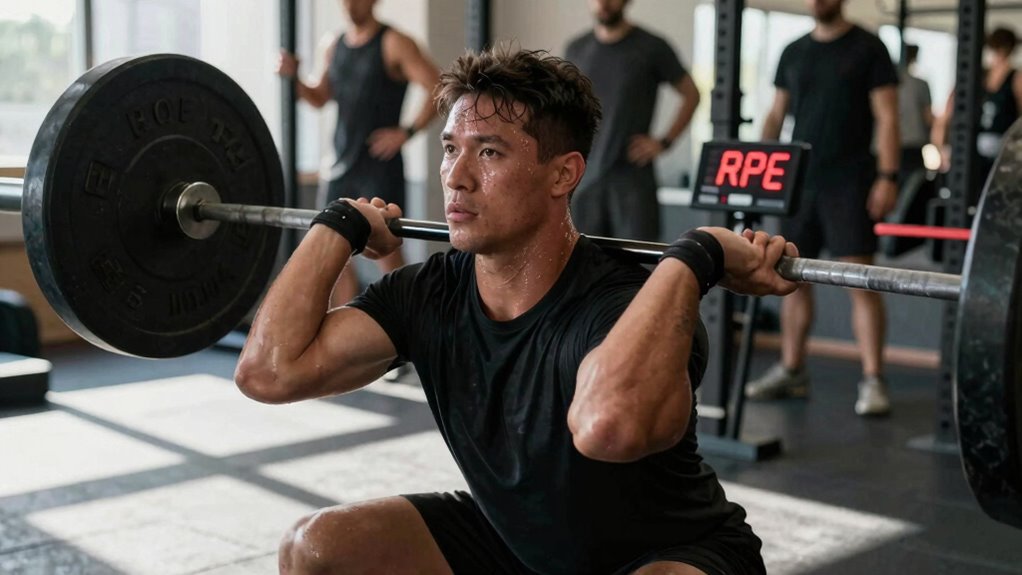

RPE, or Rate of Perceived Exertion, is your go-to tool for gauging workout intensity without the guesswork. It uses a simple 1-10 scale, letting you assess how hard you’re pushing yourself based on how you feel. This means you can adjust workouts to fit your energy levels and avoid overexertion or injury. Plus, it’s beneficial for everyone, no matter your fitness level. Stick around to discover more ways to make the most of RPE in your training!

Get the little things that make your day delivered free with Prime
- Fast, free delivery on millions of items
- Prime Video, Amazon Music and more included
- Member-only deals all year
Key Takeaways
- RPE, or Rate of Perceived Exertion, is a 1-10 scale to measure workout intensity based on personal feelings.
- It helps individuals gauge their effort levels, allowing for customized training without the need for complex metrics.
- Utilizing RPE can optimize workouts by ensuring intensity matches one’s daily energy levels and fitness goals.
- This subjective tool promotes injury prevention through awareness of exertion, making it accessible to all fitness levels.
- RPE also aids in tracking progress over time, enhancing workout effectiveness and recovery management.
fitness tracker with RPE monitoring
As an affiliate, we earn on qualifying purchases.
As an affiliate, we earn on qualifying purchases.
What Is RPE and How Does It Work?

When you engage in physical training, understanding RPE, or Rate of Perceived Exertion, can greatly enhance your workout experience. RPE is a subjective scale that helps you gauge your effort during exercise, ranging typically from 1 to 10. This tool allows you to adjust your intensity based on how you’re feeling, which is particularly useful for making the most of your training sessions. Many people have RPE misconceptions, believing it requires complex calculations or is only for elite athletes. In reality, RPE applications are accessible to everyone. By tuning into your body and recognizing your exertion levels, you can optimize your workouts, avoid injury, and improve performance without the guesswork. Embrace RPE, and transform your training approach!
As an affiliate, we earn on qualifying purchases.
Understanding the RPE Scale: A Breakdown
To truly grasp the effectiveness of RPE, it’s essential to break down the scale itself. The Rate of Perceived Exertion (RPE) scale typically ranges from 1 to 10, each number representing a different intensity level. Here’s a quick overview of its application:
- 1-2: Very light activity; you could easily hold a conversation.
- 3-4: Moderate effort; you’re breathing a bit harder but still comfortable.
- 5-6: Challenging; you can talk but it’s more difficult.
- 7-10: Intense to maximal effort; speaking is tough, and you’re pushing your limits.
Understanding these categories not only enhances your RPE applications but also highlights RPE advantages, enabling you to train effectively without second-guessing your intensity. For example, integrating performance fundamentals from consumer tech can help optimize your workout data and monitor progress more accurately.
As an affiliate, we earn on qualifying purchases.
How to Use RPE Effectively in Your Workouts

To use RPE effectively in your workouts, start by understanding the RPE scale and how it reflects your effort. Incorporate RPE into your training sessions to gauge your intensity and adjust accordingly. This approach helps you tailor your workouts for ideal performance and recovery.
Understanding RPE Scale
Understanding the RPE (Rate of Perceived Exertion) scale can greatly enhance your workouts, as it provides a simple yet effective way to gauge your effort levels. With roots in the 1960s, RPE history shows how this tool evolved for better training outcomes. You can use the RPE scale in various ways for peak performance. Consider these applications:
- Warm-ups: Start at a low RPE to prepare your body.
- Main sets: Target a specific RPE to hit your training goals.
- Recovery: Use a lower RPE to guarantee proper rest and adaptation.
- Progress tracking: Monitor changes in your RPE over time to assess improvements.
Incorporating RPE into your workouts can lead to more tailored and effective training.
Incorporating RPE in Sessions
While incorporating RPE into your workout sessions, you’ll find that it becomes an invaluable tool for optimizing your performance. To effectively use RPE, consider these integration strategies. First, establish a baseline by evaluating your current fitness level. Then, apply RPE session examples to guide your intensity. Remember, understanding training concepts can help you tailor your effort levels more precisely for better results. Additionally, paying attention to off-road gear and ensuring proper equipment setup can help maintain consistent effort levels during training. Being mindful of workout structure can also help you design routines that fit your goals and lifestyle, making your training more effective and enjoyable. Incorporating home comfort & air quality considerations can further support your recovery and overall performance. Furthermore, recognizing the importance of metabolic health can motivate you to balance strength training and cardio to optimize your overall well-being.
Adjusting Intensity Based On RPE
Adjusting your workout intensity based on RPE can greatly enhance your training effectiveness, as it allows you to tailor your efforts to your current state. Here’s how to effectively use RPE for adjusting workouts:
- Assess your energy level: Before starting, determine how you feel that day, considering fatigue and motivation.
- Choose the right RPE: Pick a target RPE that matches your goals, whether it’s endurance or strength.
- Monitor intensity feedback: During your workout, listen to your body and adjust the intensity based on your RPE rating.
- Reflect post-workout: After completing your session, analyze how well you adhered to your RPE and make adjustments for future workouts.
Using this approach guarantees you train effectively while respecting your body’s signals.
As an affiliate, we earn on qualifying purchases.
Why RPE Matters for Your Training?

RPE, or Rate of Perceived Exertion, plays an essential role in optimizing your training. By understanding RPE benefits, you can fine-tune your workouts, ensuring you’re challenging yourself without overdoing it. It helps you gauge your effort level, making your training more effective and personalized. Incorporating training intensity awareness through RPE can help prevent burnout and reduce injury risk. Here’s a quick overview of RPE applications:
| RPE Level | Description |
|---|---|
| 1 | Very light activity |
| 5 | Moderate effort |
| 7 | Hard effort |
| 9 | Very hard effort |
| 10 | Maximum effort |
Using RPE, you can adjust intensity on-the-fly, promoting better recovery and performance. Incorporating RPE into your routine can lead to more efficient training sessions and improved results.
How RPE Benefits All Fitness Levels

No matter your fitness level, understanding your perceived exertion can greatly enhance your workouts. RPE benefits everyone, promoting fitness inclusivity by allowing you to tailor your training to your unique capabilities. Here’s how RPE can help:
- Personalization: You can adjust intensity based on how you feel, ensuring workouts match your current fitness level.
- Injury Prevention: By listening to your body, you can avoid overtraining and reduce the risk of injuries.
- Progress Tracking: Using RPE helps you measure improvements over time, motivating you to push further.
- Confidence Building: As you learn to gauge your effort, you gain confidence in your ability to handle various workouts.
- Awareness of exertion levels: Developing an understanding of perceived exertion can help you better monitor your effort and make informed adjustments during training.
Embrace RPE to elevate your training experience, no matter where you start!
Debunking Common Misconceptions About RPE

When it comes to RPE, many people think it’s just a simple measure of intensity, but that’s not the whole story. It’s important to remember that RPE is subjective and can vary from person to person. Understanding this can help you use RPE more effectively in your training.
RPE Is Subjective
Understanding that RPE is subjective is essential for effectively using it in your training regimen. Your workout intensity isn’t just about numbers; it’s shaped by your personal perceptions and subjective experiences. Here are some key points to reflect upon:
- Physical State: Your energy levels can fluctuate daily, affecting your RPE.
- Mental Focus: Distractions or stress can alter how hard you feel you’re working.
- Fitness Level: Experience and conditioning influence your perception of exertion.
- Environmental Factors: Conditions like temperature and humidity can impact your performance.
RPE Equals Intensity Levels
While many people equate RPE strictly with intensity levels, this oversimplification can lead to misunderstandings about its true purpose. RPE, or Rate of Perceived Exertion, serves as a valuable tool for you to assess your effort across various workouts, not just regarding intensity. It allows for insights into your overall fatigue, motivation, and recovery, highlighting RPE benefits that extend beyond mere numbers. By understanding RPE applications, you can tailor your training to match your physical and mental state, ensuring you’re pushing yourself appropriately without overtraining. Recognizing training adaptability as a core benefit of RPE enables you to modify your workouts dynamically based on how you feel. Incorporating awareness of training variability can further enhance your ability to adjust workouts according to daily fluctuations in your physical and mental readiness. Developing a mindful approach to your training can help you better interpret your perceived exertion and make more informed adjustments. Rather than viewing RPE as a strict measure of intensity, embrace it as a dynamic tool that helps you gauge your performance and adapt your workouts to achieve better results. Additionally, integrating local automation can help optimize your training environment, making your workouts more efficient and personalized. Understanding training flexibility can empower you to listen to your body and make informed adjustments to prevent burnout and injury.
Tips for Accurately Assessing Your RPE

To accurately assess your Rate of Perceived Exertion (RPE), it’s essential to pay attention to how your body feels during exercise. Here are some tips to help you refine your RPE calibration using effective RPE techniques:
- Listen to Your Body: Tune into your heart rate, breathing, and muscle fatigue.
- Use a Scale: Refer to a standardized RPE scale (1-10) to classify your exertion.
- Monitor Consistency: Compare your RPE across workouts to identify patterns and adjust.
- Reflect Post-Workout: Take a moment after your session to evaluate your perceived effort.
RPE vs. Other Training Metrics: What’s the Difference?

How do RPE and other training metrics stack up against each other? RPE, or Rate of Perceived Exertion, offers a unique way for you to gauge your effort during workouts. Unlike heart rate or power output, RPE applications focus on your subjective experience, making it adaptable to various training sessions. However, it has its limitations; your perception can be influenced by factors like mood or fatigue, leading to inconsistencies. Other metrics, like heart rate monitoring, provide objective data but may not capture your overall exertion level. Ultimately, combining RPE with these other metrics can give you a more thorough understanding of your training, helping you push limits while avoiding overtraining or injury.
See RPE in Action: Real-Life Examples

Combining RPE with other metrics can enhance your training strategy, but seeing RPE in action can truly highlight its effectiveness. Here are some RPE examples from real-life experiences:
- Weightlifting: You might rate a set of squats at RPE 8, indicating you could only do 2 more reps.
- Running: If a tempo run feels hard but manageable, you may rate it a 7, showing you’re pushing yourself without overexerting.
- Cycling: During a hill climb, you might gauge your effort as RPE 9, meaning you’re near your maximum capacity.
- Circuit Training: After a tough circuit, you could rate your effort at RPE 6, suggesting you still have some gas left in the tank.
These RPE experiences can guide you in adjusting your workouts effectively!
Frequently Asked Questions
Can RPE Be Used for Recovery Workouts?
Yes, you can definitely use RPE for recovery workouts. By gauging your recovery intensity, you make sure you’re not pushing too hard, which can hinder your progress. RPE benefits include helping you listen to your body, determining how hard to work during lighter sessions, and promoting ideal recovery. When you focus on staying within a lower RPE range, you allow your muscles to repair while still getting in some beneficial movement.
How Does RPE Differ for Strength vs. Endurance Training?
When it comes to RPE, you’ll notice it dances differently between strength and endurance training. In strength focus, you might feel that burn as you push towards your limit, often aiming for that 8 or 9 on the scale. Conversely, during endurance focus, you’re pacing yourself, targeting a 6 or 7 to sustain energy over time. Understanding these nuances helps you tailor your workouts effectively, ensuring you’re neither overdoing it nor holding back.
Can Beginners Start With RPE Immediately?
Yes, beginners can start using RPE right away! It helps you understand your body’s response to exercise, which is essential for beginner adaptation. Many misconceptions exist that RPE is only for advanced athletes, but that’s not true. By gauging your effort, you’ll build a solid foundation and learn to listen to your body. Just remember, it takes practice to accurately assess your perceived exertion, so be patient with yourself!
Is RPE Affected by External Factors Like Weather?
Yes, RPE can definitely be affected by external factors like weather conditions. If you’re training in extreme heat, humidity, or cold, it can impact how hard you perceive your effort. Your training environment matters too; distractions or discomfort can alter your focus and intensity. So, pay attention to how these factors influence your workout, and adjust your expectations accordingly to maintain an effective training session.
How Often Should I Reassess My RPE?
You should reassess your RPE every few weeks, especially as your training progresses. Research shows that athletes who adjust their RPE regularly enhance their performance by about 15%. By checking in on your RPE frequently, you’ll stay in tune with your body’s changes and guarantee your training intensity matches your current fitness level. This reassessment frequency helps you avoid plateaus and keeps your workouts effective and aligned with your goals.
Conclusion
So, while you might think training hard means pushing through every set like a superhero, remember that sometimes, the real strength lies in listening to your body’s whispers. By using RPE, you’re not just guessing your limits—you’re dancing on the edge of your potential, all while avoiding the pitfalls of overtraining. Who knew that tuning into your own fatigue could make you feel like a fitness oracle? Embrace RPE, and train smart, not just hard.
Halloween Picks
halloween
As an affiliate, we earn on qualifying purchases.