DOMS can tell you that your muscles experienced stress and microscopic damage from exercise, but it doesn’t measure workout quality or progress. Soreness may appear after new or intense efforts, yet it doesn’t mean you’ve trained effectively or are gaining muscle. Over time, less soreness doesn’t mean you’re not improving. If you want to understand how to properly interpret soreness and optimize your training, there’s more to learn about your body’s responses.

Get the little things that make your day delivered free with Prime
- Fast, free delivery on millions of items
- Prime Video, Amazon Music and more included
- Member-only deals all year
Key Takeaways
- DOMS indicates muscle stress but does not measure workout effectiveness or progress.
- Soreness reflects muscle damage, not necessarily strength gains or performance improvements.
- Reduced soreness over time doesn’t mean progress has halted; adaptation can occur without discomfort.
- Excessive soreness may signal overtraining or injury risk, not better training results.
- Individual responses vary; soreness is a personal indicator but should not be the sole measure of progress.
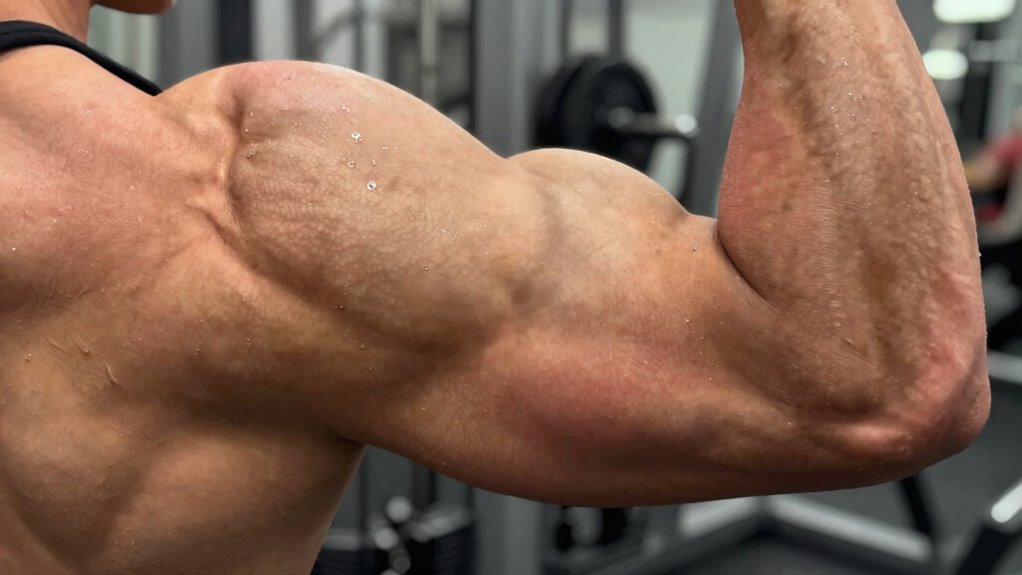
Have you ever wondered what delayed onset muscle soreness (DOMS) really reveals about your workout? DOMS is the uncomfortable stiffness and soreness you feel hours or even days after pushing yourself in the gym. Many believe that experiencing DOMS indicates a good workout, but that’s not entirely true. While it does point to some muscle damage, it doesn’t necessarily measure your progress or the effectiveness of your training.
DOMS shows muscle damage but doesn’t accurately reflect workout quality or progress.
When you experience DOMS, it signals that your muscles are undergoing some degree of stress and microscopic damage, which is a natural part of muscle recovery. This process is essential for exercise adaptation. As you recover, your muscles rebuild stronger and more resilient, allowing you to handle increased intensity or volume over time. However, the presence of DOMS alone doesn’t tell you whether your workout was *ideal*. You might experience soreness after a workout that wasn’t very effective, or conversely, have a highly efficient session with little to no soreness. Soreness is more about the type of exercise and the way your muscles respond, not necessarily about how well you trained.
It’s important to understand that muscle recovery is a *crucial* part of your fitness journey. If you push too hard without allowing proper recovery, you risk injury or overtraining. On the other hand, if you don’t challenge your muscles enough, you won’t promote meaningful exercise adaptation. DOMS can be a reminder that your muscles are working and adapting, but it shouldn’t be the sole marker of progress. Instead, focus on other signs of improvement, like increased strength, endurance, or better technique.
Furthermore, relying solely on soreness to gauge your progress can be misleading. Some people develop less soreness over time as their muscles adapt, even if they’re still making gains. Conversely, intense soreness doesn’t automatically mean a better workout. It might just mean you’ve introduced new movements or increased intensity, but it doesn’t necessarily correlate with muscle growth or improved performance. Recognizing that recovery involves muscle repair and adaptation and understanding how training variables influence soreness and recovery can help you tailor your workouts more effectively. Additionally, being aware of individual variability in soreness can help you avoid unnecessary frustration or overtraining. Knowing how your body responds to different stimuli can help optimize your training and recovery strategies.
As an affiliate, we earn on qualifying purchases.
Frequently Asked Questions
How Long Does DOMS Typically Last?
Muscle soreness from DOMS typically lasts between 24 to 72 hours, but it can extend up to a week for some. During this time, your recovery strategies like gentle stretching, proper hydration, and rest help ease soreness. You might notice increased stiffness or tenderness, but staying active and using heat or cold therapy can speed recovery. Keep listening to your body to avoid overtraining and promote effective healing.
Can DOMS Indicate an Injury?
Muscle soreness can sometimes whisper that your exercise recovery is underway, but it doesn’t always signal injury. If soreness is severe, persistent, or accompanied by swelling or sharp pain, it might be a sign of an injury rather than normal DOMS. Pay attention to your body’s signals; gentle rest and proper care are key. When in doubt, consult a healthcare professional to confirm your muscle soreness isn’t hiding something more serious.
Does DOMS Affect Long-Term Muscle Growth?
DOMS doesn’t considerably affect long-term muscle growth. While it’s a sign of muscle signaling from intense workouts, it’s mainly about temporary inflammation. Recovery timing is key; giving your muscles enough rest helps repair and grow. If DOMS lingers or worsens, it might signal overtraining or injury. Focus on proper recovery, nutrition, and consistent training to optimize long-term muscle development, rather than relying solely on soreness as a growth indicator.
Are Certain Exercises More Likely to Cause DOMS?
Certain exercises, especially those with increased exercise intensity, are more likely to cause DOMS. You’ll notice more muscle soreness after eccentric movements or unfamiliar workouts that push your muscles beyond their usual limits. Exercises like heavy squats, lunges, or unfamiliar resistance training tend to lead to greater soreness. So, if you’re aiming to experience DOMS, focus on challenging your muscles with intensity and novel movements.
Can Hydration Reduce DOMS Severity?
Yes, staying hydrated can reduce the severity of DOMS. Hydration benefits your muscles by maintaining electrolyte balance, which is essential for proper muscle function and recovery. When you’re well-hydrated, your muscles recover faster and feel less sore. Drinking enough water helps flush out toxins and reduces inflammation, making it easier to bounce back after intense workouts. Prioritize hydration to minimize soreness and support your overall recovery process.
post-workout muscle soreness relief
As an affiliate, we earn on qualifying purchases.
As an affiliate, we earn on qualifying purchases.
Conclusion
Understanding what DOMS can and can’t tell you helps you train smarter. Remember, research shows that about 50% of athletes experience delayed onset muscle soreness after intense workouts. While DOMS indicates your muscles are adapting, it doesn’t measure progress or performance. Don’t rely solely on soreness to gauge your fitness. Focus on consistent training, proper recovery, and gradual increases in intensity. That way, you’ll build strength safely and effectively, without misinterpreting the signals your body’s sending.
As an affiliate, we earn on qualifying purchases.
strength training progress tracker
As an affiliate, we earn on qualifying purchases.
As an affiliate, we earn on qualifying purchases.
NFL season / tailgating Picks
team gear
As an affiliate, we earn on qualifying purchases.
![A Better Way To Tie Your Gym Shorts. (Or Any Drawstring) [Video]](https://exactarticle.com/wp-content/uploads/2026/07/a-better-way-to-tie-your-gym-shorts-or-any-drawstring-video-featured-560x300.jpg)