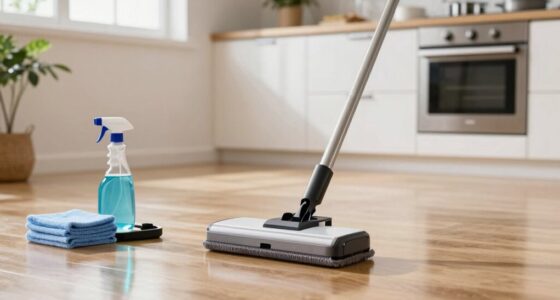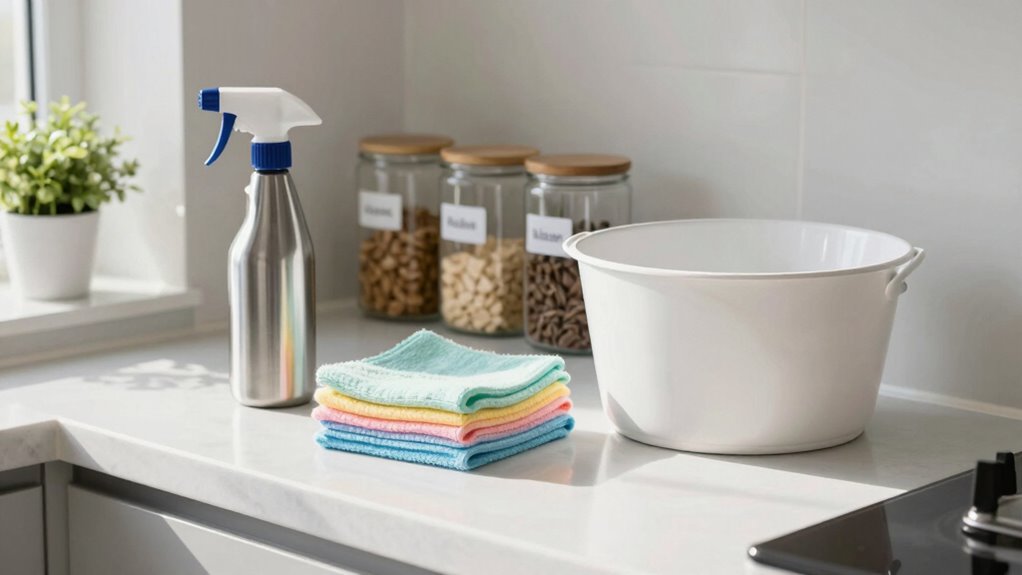

To create a cleaning routine that sticks, start by evaluating your space to target areas needing attention. Set realistic goals, break tasks into daily, weekly, and monthly actions, and schedule specific times for each. Use simple checklists and stay motivated by celebrating small wins. Be flexible and adjust your routine during busy periods. Consistency turns cleaning into a habit, making it effortless—keep going, and you’ll discover even more tips to maintain your system long-term.
Key Takeaways
- Establish a consistent, manageable schedule with specific days and times for daily, weekly, and monthly chores.
- Break cleaning tasks into small, achievable steps to prevent overwhelm and maintain motivation.
- Use simple, multi-purpose tools and checklists to streamline routines and track progress easily.
- Incorporate cleaning habits into daily routines with reminders and cues for automatic consistency.
- Regularly review and adjust your routine to stay flexible, realistic, and sustainable over the long term.

Lysol All Purpose Cleaner Spray, Multi-Purpose Disinfecting Spray, Kitchen & Bathroom Cleaner, Lemon Breeze Scent, 32 Fl Oz
ALL PURPOSE CLEANER KILLS 99.9% OF VIRUSES and BACTERIA: Lysol All Purpose disinfectant spray kills 99.9% of viruses…
As an affiliate, we earn on qualifying purchases.
As an affiliate, we earn on qualifying purchases.
Assess Your Space to Know What Needs Attention

Before you begin cleaning, it’s important to evaluate your space to identify what truly needs attention. Start by using declutter strategies to sort through your belongings, deciding what to keep, donate, or toss. This step helps reduce chaos and makes cleaning more efficient. As you assess each area, take note of the surfaces that need the most work and gather your cleaning supplies accordingly. Keep only the necessary cleaning supplies within reach to streamline the process. Don’t forget to prioritize high-traffic spots and clutter hotspots that tend to accumulate dirt. By understanding what needs cleaning and organizing, you’ll set a clear plan of action, making your cleaning routine more effective and less overwhelming. Additionally, recognizing performance upgrades like improved flywheels or engine enhancements can motivate you to maintain your space to match your vehicle’s upgraded capabilities.

Adhd Cleaning Planner – Reusable Adhd Cleaning and Organizing Planners Adhd Cleaning Planners for Adults Women Tidy Minds ADHD Planner Bundle Cleaning Schedule and Checklist Daily Weekly Monthly 2026
Cleaning Planner Designed for ADHD: Our cleaning planners feature bright colors, clear layouts, and progress trackers. They divide…
As an affiliate, we earn on qualifying purchases.
As an affiliate, we earn on qualifying purchases.
Why a Consistent Cleaning Routine Matters for Your Home
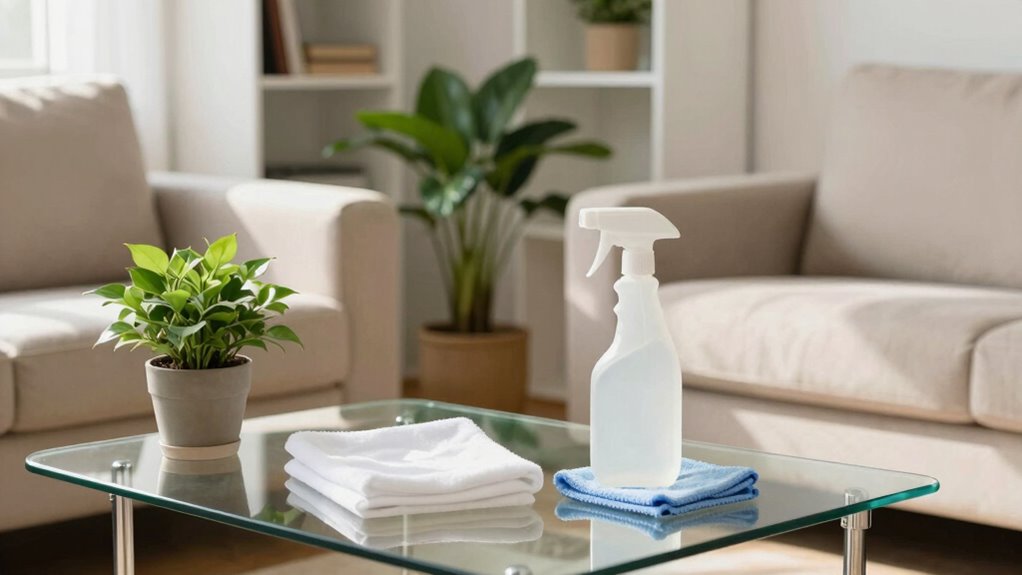
A consistent cleaning routine keeps your home healthier and more comfortable by preventing dirt and clutter from building up over time. When you maintain regular habits, you’ll find it easier to stay organized and motivated to keep your space tidy. This approach fosters a sense of home organization, making daily chores feel more manageable. To stay motivated, consider how a clean home boosts your mood and productivity. Regular cleaning also saves time since small tasks don’t pile up. When you stick to a routine, you create a sense of control and accomplishment.

USANOOKS Microfiber Cleaning Cloth Grey – 12 Pcs (12.5"x12.5") – High Performance – 1200 Washes, Ultra Absorbent Microfiber Towel Weave Grime & Liquid for Streak-Free Mirror Shine – Car Washing Cloth
10x GRIP-ROOT WEAVE – TRAP MORE, WORK LESS: Ultra-absorbent microfiber towels for car Grip Root weave works like…
As an affiliate, we earn on qualifying purchases.
As an affiliate, we earn on qualifying purchases.
Set Realistic Goals and Deadlines for Your Cleaning Tasks
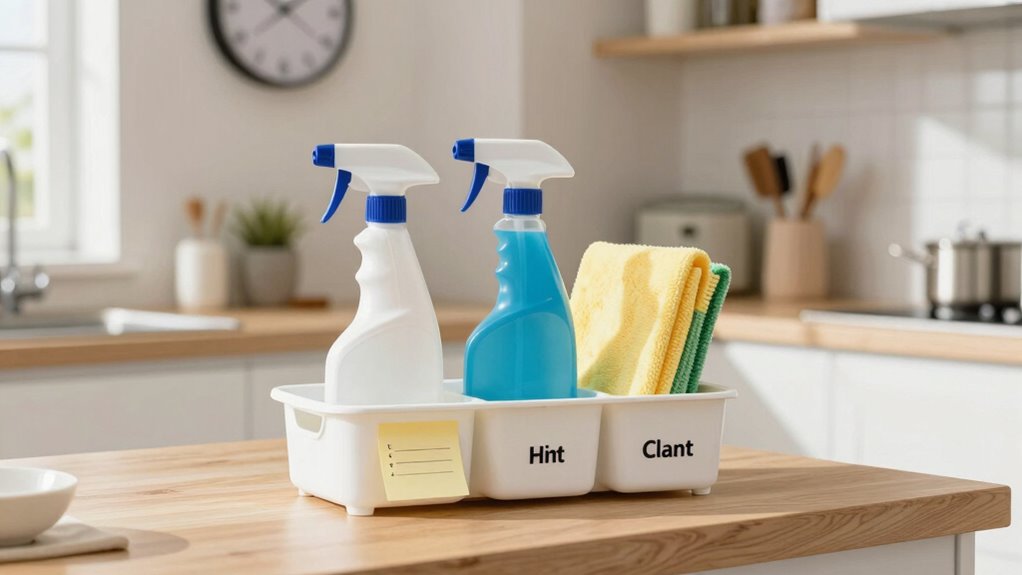
Building a consistent cleaning routine becomes more manageable when you set realistic goals and deadlines. Use motivation techniques like rewarding yourself after completing tasks to stay inspired. Employ goal setting strategies such as breaking larger chores into smaller, achievable steps, so you don’t feel overwhelmed. Set deadlines that fit your schedule, ensuring tasks are challenging but attainable within your daily routine. Avoid aiming for perfection; instead, focus on steady progress. When your goals are clear and deadlines are reasonable, you’ll find it easier to stay committed. This approach helps prevent burnout and keeps cleaning from feeling like a burden. Remember, the key is consistency, not perfection, so be flexible and adjust your goals as needed. Incorporating efficiency tips like optimizing your cleaning tools can further streamline your routine and make tasks more manageable.

Ukeetap Multi-Purpose Pull-Out Storage Organizers, Under Sink/Cabinet Organizers and Storage for Bathroom & Kitchen, Black, 12.8 Inches, 2 Packs
【2 Pack Value Set】Sized at 15” x 8” x 12.8” each, these organizers fit perfectly for bathroom organizers…
As an affiliate, we earn on qualifying purchases.
As an affiliate, we earn on qualifying purchases.
Choose the Best Days and Times to Keep up With Cleaning
To keep your cleaning routine on track, you need to identify the times when you’re most productive and least likely to be interrupted. Establish consistent weekly slots that fit your schedule and make cleaning a regular habit. Prioritize tasks based on how often they need attention so your routine stays effective and manageable. Incorporating home organization tips can also help streamline your cleaning process and maintain a tidy space more easily.
Identify Peak Cleaning Times
Ever wonder when the best days and times are to tackle cleaning tasks? Identifying peak cleaning times helps you avoid busy weekends and maximize productivity. During peak hours, your home might feel more cluttered, so scheduling cleaning outside these times keeps things manageable. Look for lighter periods in your day, like weekday mornings or late evenings. Consider avoiding times when your household is most active, such as evenings or weekends. You might find mornings between 9 and 11 am ideal, or weekday afternoons when everyone’s out. By pinpointing these quieter moments, you’ll stay consistent without feeling overwhelmed. Planning around these peak hours ensures cleaning becomes a smooth, integrated part of your routine, rather than a stressful chore. Recognizing these peak cleaning times can also help you choose the best tools and accessories to make your routine even more effective.
Set Consistent Weekly Slots
Choosing specific days and times for your cleaning sessions helps establish a reliable routine. When you set consistent weekly slots, you improve your time management, making cleaning feel less like a chore. Pick days when you’re least likely to be rushed or distracted, such as weekend mornings or weekday evenings. By doing so, you can prepare your cleaning supplies in advance, ensuring everything is ready when the scheduled time arrives. Consistency helps turn cleaning into a habit, reducing the mental effort of deciding when to do it. Establishing a designated cleaning time can also create a sense of comfort and stability in your home routine. Stick to these slots, and over time, cleaning becomes a natural part of your weekly rhythm. This simple system minimizes chaos and keeps your space consistently tidy without feeling overwhelming.
Prioritize Task Frequency
Identifying the best days and times for your cleaning tasks guarantees you stay consistent without feeling overwhelmed. By prioritizing task frequency, you can schedule deep cleaning and seasonal cleaning around your routine. Choose days when you’re most alert and available, such as Saturday mornings or weekday evenings. Regularly set aside time for quick daily tidying, and plan bigger tasks for less busy days. Consider these tips:
- Schedule deep cleaning during weekends or days off
- Tackle seasonal cleaning at the start of each season
- Reserve specific times for maintenance tasks like vacuuming or dusting
- Adjust your schedule as needed to stay flexible and realistic
- Content formats can help you organize your cleaning routine more effectively.
This approach helps you keep your space fresh, manageable, and less stressful over time.
Break Down Your Routine Into Daily, Weekly, and Monthly Tasks
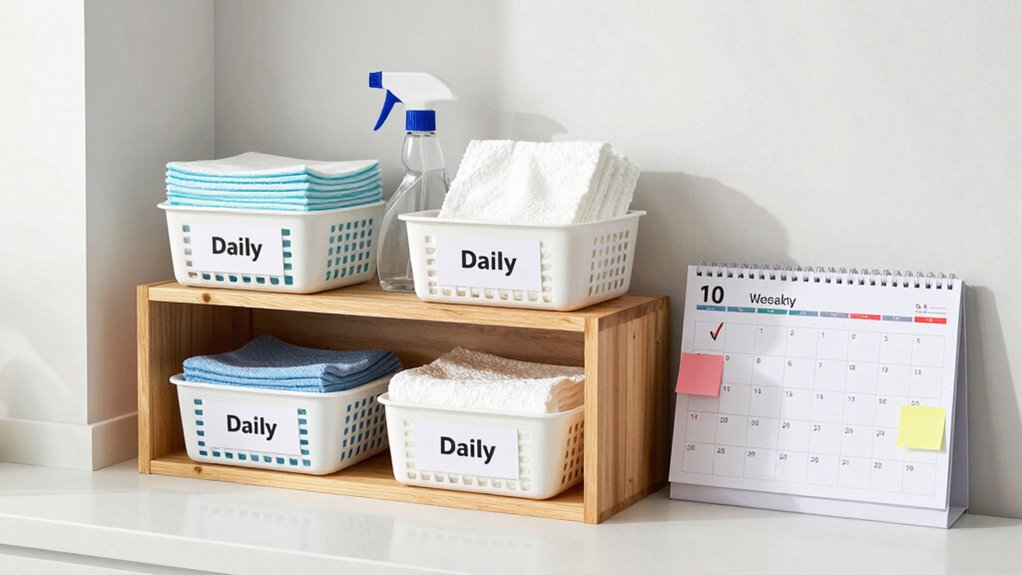
To keep your cleaning routine manageable, start by clarifying how often each task needs to happen. Assign specific days for weekly chores and set monthly reminders for deeper cleans. Be flexible and adjust your schedule as you find what works best for you. Incorporating a consistent schedule can also help maintain your routine more effectively.
Clarify Task Frequencies
Breaking down your cleaning routine into daily, weekly, and monthly tasks helps guarantee nothing gets overlooked. By clarifying task frequencies, you make certain essential chores don’t pile up. For example, your laundry schedule might be weekly, while vacuum maintenance could be monthly. Daily tasks could include wiping counters and tidying up, while weekly chores might focus on vacuuming floors and dusting surfaces. Monthly tasks can cover deep cleaning, like scrubbing bathrooms or cleaning behind appliances. Setting clear frequencies keeps you on track and prevents overwhelm. It also helps you allocate time efficiently, knowing exactly when to tackle specific chores. By defining these intervals, you create a consistent rhythm that makes cleaning feel manageable and sustainable over the long term. Incorporating regular wave and wind considerations can also help you adapt your cleaning schedule to seasonal changes and weather conditions.
Assign Specific Days
Once you’ve determined how often each task needs to be done, the next step is to assign specific days for those chores. Effective time management involves planning your cleaning schedule so tasks fit seamlessly into your week. By assigning certain chores to particular days—like laundry on Sundays or vacuuming on Wednesdays—you create a predictable rhythm that reduces decision fatigue. This consistency can boost your motivation strategies because you’ll feel accomplished each day without feeling overwhelmed. Keep your routine manageable by balancing daily, weekly, and monthly tasks, avoiding the temptation to cram everything into one day. When chores are spread out, you’ll stay on top of cleaning without it becoming a burden, making your routine easier to stick to long-term. Incorporating a cleaning schedule that aligns with your coffee brewing routine can help maintain your equipment’s performance and longevity.
Adjust as Needed
While setting your cleaning routine is important, it’s equally essential to modify it as needed to fit your changing schedule and priorities. Life shifts, and so should your cleaning schedules. Regularly review your tasks and tweak them to stay manageable. This might mean reorganizing storage solutions to make daily chores easier or shifting weekly tasks to fit busy weeks. Break down your routine into manageable parts:
- Daily tidying and quick wipe-downs
- Weekly deep cleaning and organization
- Monthly decluttering and maintenance tasks
- Seasonal updates for storage solutions
Flexibility keeps your routine sustainable. Don’t hesitate to add or skip tasks depending on your current needs. Adjusting your routine ensures cleaning remains consistent without feeling overwhelming.
Simplify Your Cleaning Tools and Supplies for Easier Maintenance
Simplifying your cleaning tools and supplies makes maintenance much easier and more efficient. Focus on using minimalist tools that serve multiple purposes, reducing clutter and confusion. Choose eco-friendly supplies like reusable cloths, natural cleaners, and biodegradable brushes to minimize waste and environmental impact. By limiting your collection to essential, versatile items, you’ll save time searching for supplies and streamline your routine. Keep your tools simple and effective, avoiding unnecessary gadgets that complicate your cleaning process. This approach not only makes it easier to stick to your routine but also promotes sustainability. With fewer, smarter tools, you’ll find cleaning less of a chore and more of a manageable task. Ultimately, a simplified setup encourages consistency and keeps your space tidy with less effort.
Make a Cleaning Checklist That Works for You
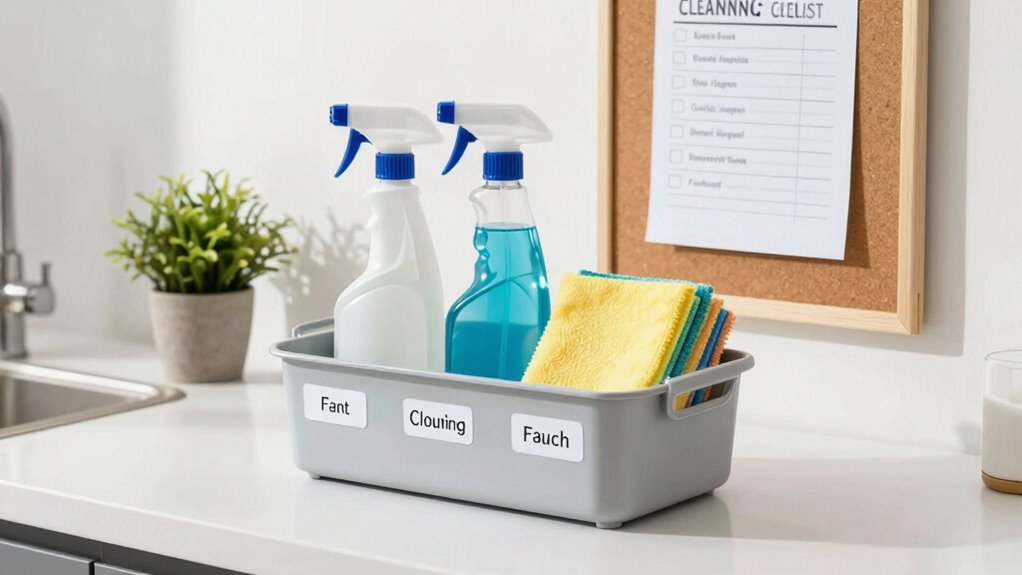
Creating a cleaning checklist tailored to your needs makes sticking to your routine much easier. When your list aligns with your lifestyle, you stay motivated and avoid feeling overwhelmed. Focus on tasks that matter most to you, and break them into manageable steps. To boost cleaning motivation, include a mix of daily, weekly, and monthly chores. Keep your tool organization simple—place supplies where you use them most. Consider adding specific tasks like vacuuming the living room or wiping kitchen counters. Keep the checklist visible, so you’re reminded of your progress. Use checkboxes to track completed tasks, which boosts satisfaction and momentum. Adapt your list as your routine evolves, ensuring it remains practical and motivating. Your customized checklist becomes a powerful tool to maintain consistency effortlessly.
Stay Motivated and Avoid Common Routine Pitfalls
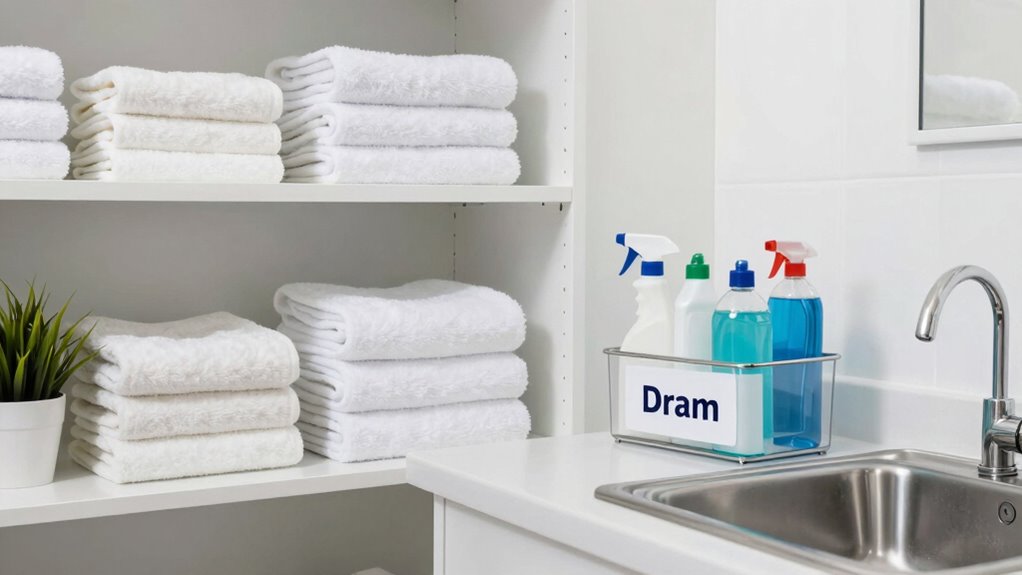
Staying motivated to stick with your cleaning routine can be challenging, especially when chores feel endless or repetitive. To combat this, use motivational strategies like rewarding yourself after completing tasks or visualizing the benefits of a clean space. Focus on habit formation by setting specific, achievable goals and establishing consistent cues, like cleaning right after breakfast. Avoid common pitfalls such as burnout or skipping tasks because they seem overwhelming; break chores into smaller steps to maintain momentum. Remind yourself of the long-term rewards, like reduced stress and a more comfortable home. Celebrate progress, no matter how small, to reinforce positive feelings and keep your motivation high. With intentional habit formation and smart motivational strategies, your cleaning routine becomes a sustainable part of your life.
Adjust Your Cleaning System When Life Gets Busy
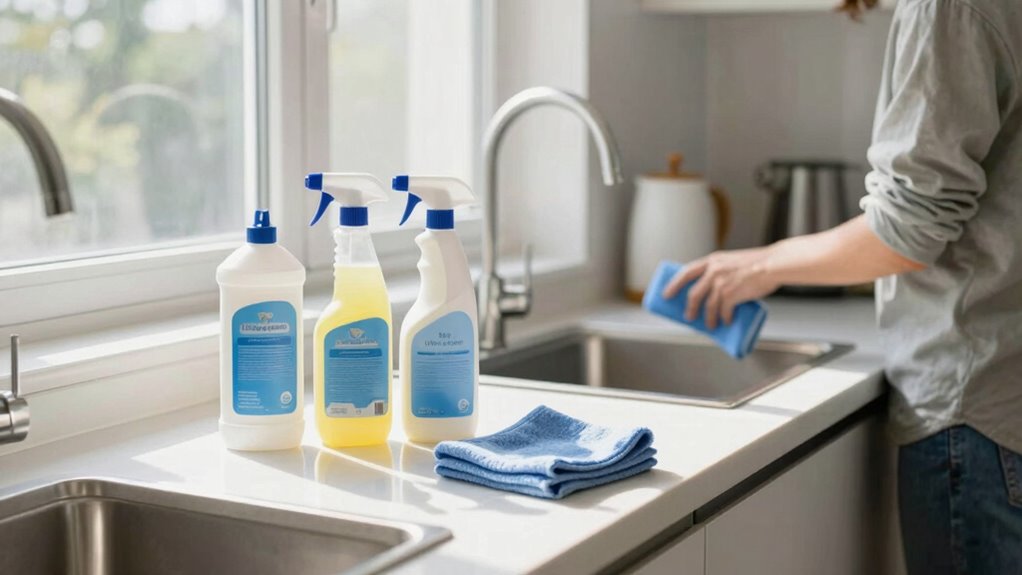
When life gets hectic, it’s OK to tweak your cleaning routine to stay on track. Reassess how often you clean, simplify tasks, or focus on just the most essential areas. These adjustments help you maintain a clean space without feeling overwhelmed.
Reassess Cleaning Frequency
Life can get hectic, and unexpected events often disrupt your regular cleaning schedule. When that happens, it’s time for a routine reassessment of your cleaning frequency. You might find you need to clean more often in busy periods or scale back when life settles down.
To adjust effectively:
- Evaluate which chores are suffering due to infrequent cleaning
- Notice if certain areas need more frequent attention
- Consider your energy levels and available time
- Update your schedule to reflect new priorities
Regularly reassessing your cleaning routine helps ensure your system stays realistic and effective. It prevents tasks from piling up and keeps your space manageable, even during busy times. Adjusting your cleaning frequency is key to maintaining a consistent, stress-free routine.
Simplify Tasks Temporarily
During busy periods, maintaining your usual cleaning routine can feel overwhelming. To stay on track, try simplifying tasks temporarily. Focus on quick wins like temporary decluttering to clear visible surfaces and reduce mess. Prioritize essential areas, like the kitchen and bathroom, and let less urgent spots wait. This approach prevents burnout and keeps your space manageable. Here’s a simple way to organize your efforts:
| Task | Area | Time Needed |
|---|---|---|
| Clear clutter | Living room, desk | 5 minutes |
| Wipe surfaces | Kitchen counters | 3 minutes |
| Sweep or vacuum | High-traffic areas | 10 minutes |
| Laundry | Bedrooms, laundry | 15 minutes |
| Trash and recycling | Throughout house | 5 minutes |
Adjusting your system with temporary decluttering and task prioritization makes cleaning achievable during busy times.
Prioritize Essential Areas
In busy times, focusing your cleaning efforts on the most essential areas guarantees your space remains functional and manageable. Prioritize spaces you use daily, like the kitchen and bathroom, to maintain hygiene and clutter control. Skip deep cleaning every corner; instead, do quick tidies to keep clutter in check. For high-traffic zones, set a timer to tackle quick surface cleanups. Use these tips:
- Focus on surfaces that accumulate dirt quickly
- Keep clutter off counters and floors
- Schedule brief deep cleans for critical areas
- Limit cleaning to essentials to save time
This approach ensures your home stays livable without overwhelming your schedule. Adjust your cleaning system by emphasizing clutter control and essential maintenance, making your routine sustainable even during busy periods.
Tips for Staying Consistent and Making Cleaning a Habit
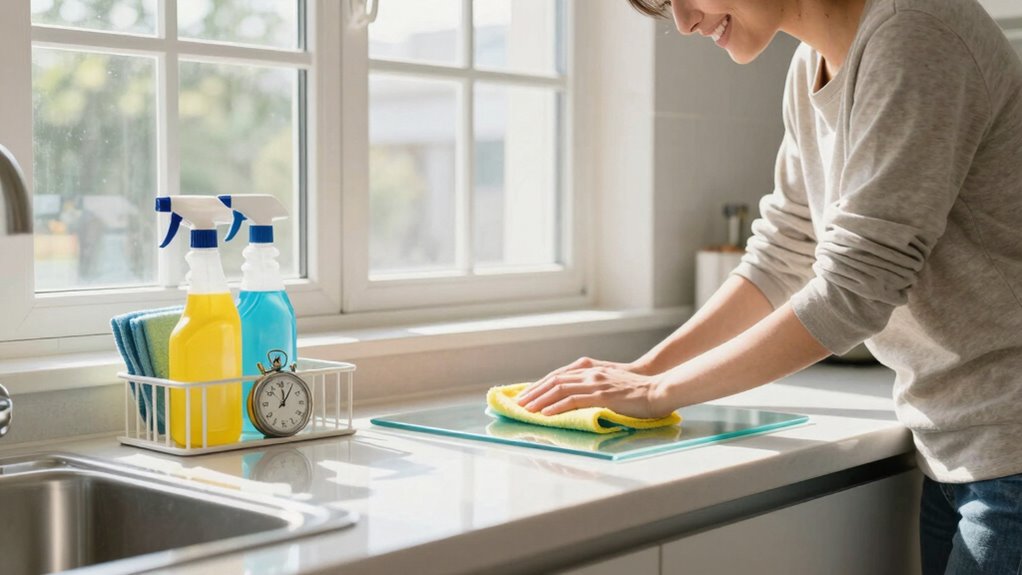
Building a consistent cleaning routine can feel challenging at first, but establishing small, manageable habits makes it easier to stick with over time. Use motivational strategies like rewarding yourself for sticking to your schedule or visualizing the benefits of a clean space. Focus on habit formation by integrating cleaning into your daily routines, such as doing a quick tidy-up after meals or before bed. Keep your goals realistic to avoid burnout and track your progress to stay motivated. Consistency is key, so set reminders or cues to prompt your cleaning tasks. Over time, these small actions become automatic, transforming cleaning from a chore into a habitual part of your life. Stay patient and persistent—habit formation takes time but pays off with a cleaner, more organized home.
Frequently Asked Questions
How Do I Motivate Myself to Stick With My Cleaning Routine?
To stay motivated, set up a reward system that excites you after completing your cleaning tasks. Use habit tracking to monitor your progress, which makes your routine feel more manageable and satisfying. Celebrate small wins to boost your motivation and keep you consistent. Remember, making cleaning a habit takes time, but with these strategies, you’ll find it easier to stick with your routine and enjoy a cleaner space effortlessly.
What Are Some Common Mistakes to Avoid in My Cleaning Schedule?
Don’t let time management slip away or neglect proper cleaning tools. Avoid overloading your schedule, which causes burnout, and skip using the right tools that make cleaning easier. Like a well-tuned orchestra, your routine needs harmony. Be realistic about what you can accomplish, stick to a schedule, and keep your tools organized. These mistakes can derail your efforts—so stay mindful, consistent, and prepared for a smoother, more effective cleaning routine.
How Can I Involve Family Members in Maintaining Cleanliness?
You can involve family members by assigning specific family chores and emphasizing shared responsibilities. Make a cleaning schedule that everyone agrees on, so each person knows their tasks. Encourage open communication about expectations and praise efforts. Turn chores into a team effort by doing them together, which makes cleaning more enjoyable. This approach fosters accountability and teamwork, keeping your home clean and everyone engaged in maintaining it.
What Should I Do if My Routine Feels Overwhelming?
If your routine feels overwhelming, focus on better time management by breaking tasks into smaller, manageable steps. Prioritize what’s most important and set realistic goals. This reduces stress and makes cleaning feel less intimidating. Remember, it’s okay to ask for help from family members and adjust your schedule as needed. Consistency is key, so take it one step at a time and celebrate small wins to stay motivated.
How Do I Handle Unexpected Messes or Spills Efficiently?
When unexpected messes happen, act swiftly with simple spill prevention tips like placing mats and sealing containers. Use quick cleanup strategies such as grabbing a cloth or paper towels immediately, and don’t delay. Keep cleaning supplies handy for prompt action. Staying prepared prevents messes from escalating, making cleanup quick and manageable. Remember, tackling spills instantly minimizes stress and mess, keeping your space tidy without the hassle.
Conclusion
A clean home brings peace, yet sticking to a routine can feel overwhelming. But remember, consistency creates comfort, even when life gets hectic. By breaking tasks into manageable steps, you turn routine into habit. It’s not about perfection, but progress. Embrace the small wins, stay flexible, and watch your space—and your mood—transform. In the end, a simple system isn’t just about cleaning; it’s about creating a sanctuary you’re proud of every day.