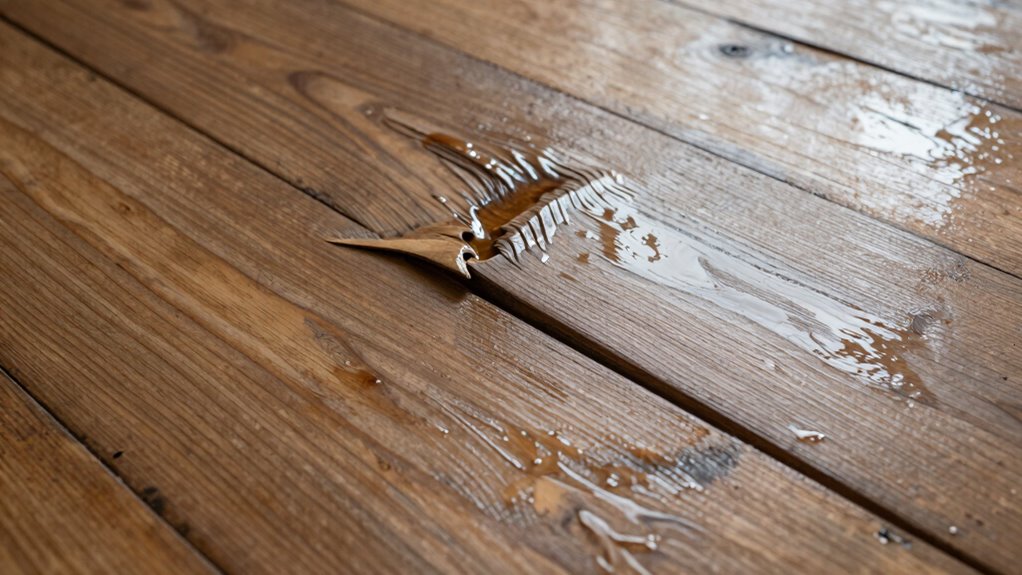

Fluctuating humidity levels cause wooden floors to expand or contract, leading to warping issues like cupping, crowning, gaps, and buckling. Excess moisture makes wood swell and buckle, while dry air causes shrinkage and gaps. Keeping indoor humidity stable between 35-55% helps prevent these problems. If you want to understand how to control moisture and protect your floors from damage, continue exploring essential tips and solutions.
Key Takeaways
- Fluctuating humidity causes wood to expand when moist and contract when dry, leading to warping over time.
- Excess moisture results in cupping, crowning, and buckling, while dry conditions cause gaps and cracks.
- Maintaining consistent humidity levels (35-55%) prevents cyclical expansion and contraction that weaken wood.
- High humidity can cause wood to absorb water and swell, increasing the risk of buckling and surface distortion.
- Proper climate control and moisture barriers are essential to prevent warping caused by humidity fluctuations.
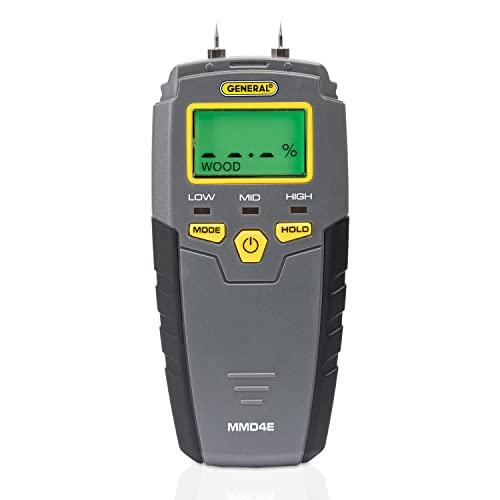
General Tools MMD4E Digital Moisture Meter, Water Leak Detector, Moisture Tester, Pin Type, Backlit LCD Display With Audible and Visual High-Medium-Low Moisture Content Alerts, Grays
HUMIDITY SENSOR: Our handy meter tool can quickly determine what level of remediation is needed to keep your…
As an affiliate, we earn on qualifying purchases.
As an affiliate, we earn on qualifying purchases.
How Does Humidity Affect Wooden Floors and Why It Matters
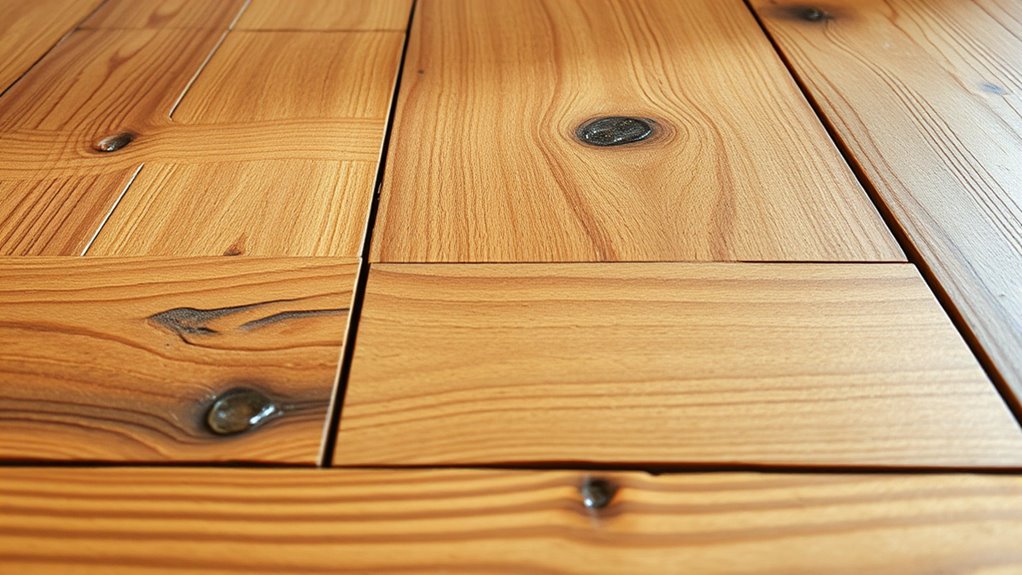
Humidity levels play a critical role in maintaining the stability of wooden floors. When humidity is high, wood absorbs moisture, leading to wood expansion. This moisture absorption causes the wood to swell, which can create gaps or misalignments as the boards push against each other. Conversely, when humidity drops, the wood loses moisture and contracts, resulting in gaps or uneven surfaces. Fluctuations in humidity cause continuous cycles of expansion and contraction, weakening the wood over time. Understanding how moisture absorption impacts your floors helps you prevent costly damage. Maintaining consistent humidity levels minimizes these changes, keeping your floors stable. Proper humidity management ensures the wood stays in its intended shape, preserving both the appearance and longevity of your flooring. Controlling humidity is essential for preventing warping and ensuring the durability of your wooden floors. Additionally, monitoring ambient air moisture levels can help you anticipate and mitigate potential issues before they become severe. Keeping the wood’s moisture content balanced is vital for preventing warping and cracks. Proper humidity levels help maintain the structural integrity of wooden flooring materials. Regularly measuring indoor humidity can prevent extreme fluctuations that accelerate wood deterioration.

Humidifier Tray Wooden Humidifiers Mat-8×8 Inch-Compatible with LEVOIT and All kinds of Small Humidifier-Prevents Any Water from Pooling Underneath
With dimensions of 8 inches by 8 inches by 0.6 inches, this tray is designed to fit perfectly…
As an affiliate, we earn on qualifying purchases.
As an affiliate, we earn on qualifying purchases.
What Types of Warping Occur in Wood Floors Due to Humidity Changes
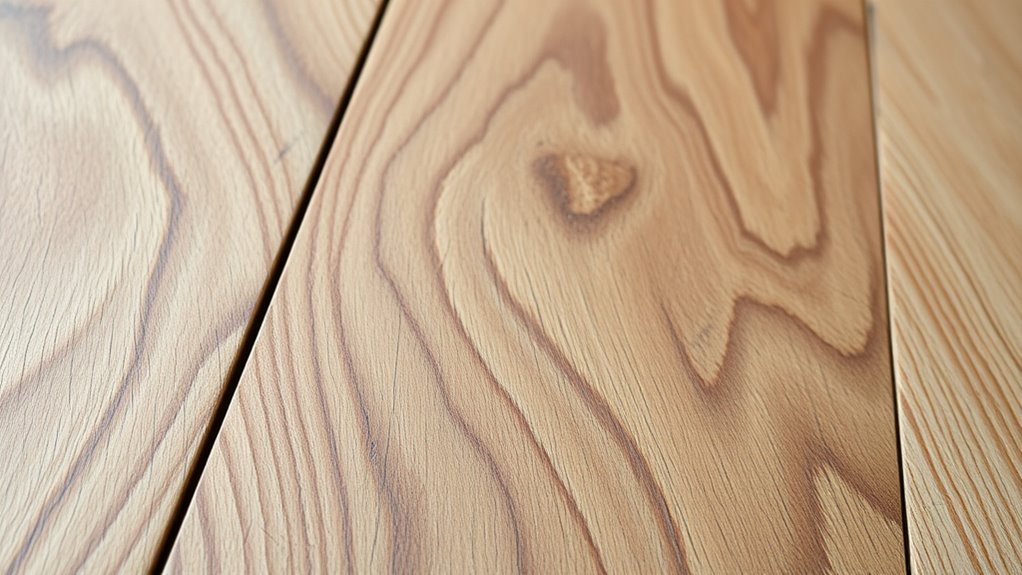
When wood floors are exposed to fluctuating moisture levels, warping can occur in several distinct forms. You might notice cupping, where the edges of planks rise, or buckling, causing the entire floor to lift unevenly. Warping often disrupts the natural wood grain patterns, making them appear distorted or misaligned. Seasonal variations, such as high humidity in summer or dry air in winter, intensify these issues by causing wood to swell or shrink unevenly. This movement stresses the wood’s structure, resulting in visible warps. You’ll see flat or bowed floors, gaps between planks, or raised areas. Recognizing these specific types of warping can help you understand how humidity fluctuations directly impact your wood floors’ integrity and appearance. Understanding moisture effects can further aid in preventing or addressing these issues effectively, especially when combined with appropriate climate control techniques. Proper ventilation can help regulate indoor humidity levels and minimize warping risks. Additionally, monitoring indoor moisture levels with hygrometers can provide early warning signs before significant damage occurs.

Premium Floor Underlayment with Moisture Barrier – 200 sq ft Roll, 3mm Thick – Quiets Foot Traffic Noise, Under Floor Insulation for Hardwood, Laminate, and Vinyl Plank Flooring, Gold
COVERS LARGE AREAS – Each roll of this flooring underlayment covers 200 sq ft and is 3 mm…
As an affiliate, we earn on qualifying purchases.
As an affiliate, we earn on qualifying purchases.
How Excess Moisture Causes Warping and What Signs to Look For
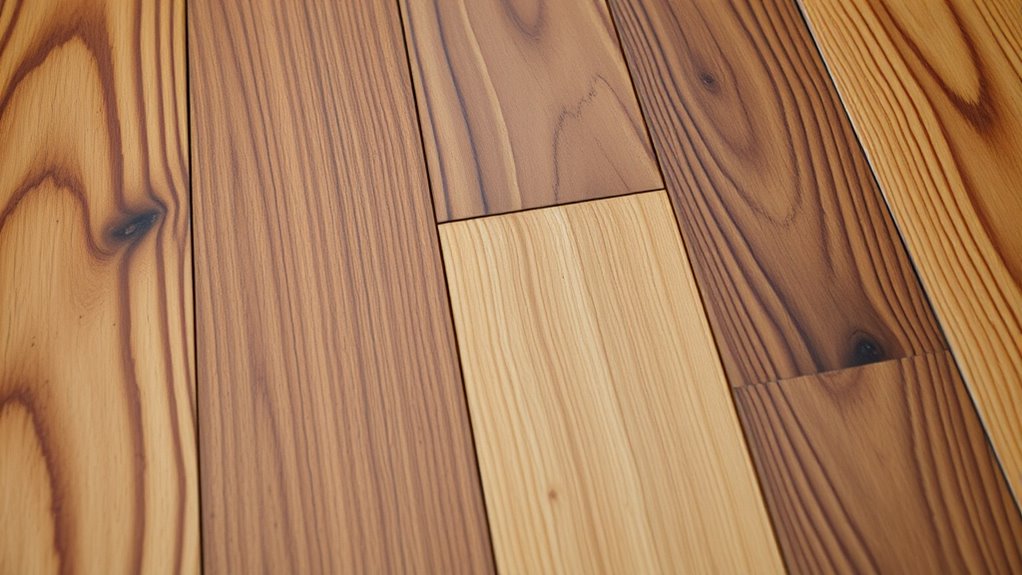
Excess moisture in your home can quickly lead to warping in your wood floors, as the wood absorbs the extra water and expands beyond its normal dimensions. When humidity damage occurs, you’ll notice signs like buckling, cupping, or crown-shaped surfaces. These are clear indicators of wood expansion caused by excess moisture. To visualize this, consider the following:
| Sign of Warping | Description |
|---|---|
| Buckling | Boards lift from subfloor |
| Cupping | Edges rise higher than center |
| Crowning | Surface becomes rounded |
| Gaps & Gaps | Cracks between planks |
These issues result from wood absorbing humidity, leading to swelling, which stresses the floor’s stability. Recognizing these signs early helps prevent further humidity damage and costly repairs. Additionally, understanding the contrast ratio of your environment can influence how moisture interacts with your flooring, affecting its susceptibility to warping. Being aware of the moisture content levels in your home can also help you maintain optimal conditions for your wood flooring. Proper ventilation systems are essential in controlling indoor humidity and preventing warping over time. Maintaining a stable humidity level in your home is crucial for protecting your floors from warping and other moisture-related issues. Implementing dehumidifiers can be an effective way to regulate moisture levels and preserve your flooring’s integrity.

DriTac 7900 Super Grab – Wood Flooring Adhesive with Moisture Control – 4-Gallon
DriTac 7900 Super Grab is a premium grade, moisture-cured urethane adhesive developed for installing long-length and wide-width plank…
As an affiliate, we earn on qualifying purchases.
As an affiliate, we earn on qualifying purchases.
Why Dry Air Can Make Your Wood Floors Shrink and Develop Gaps
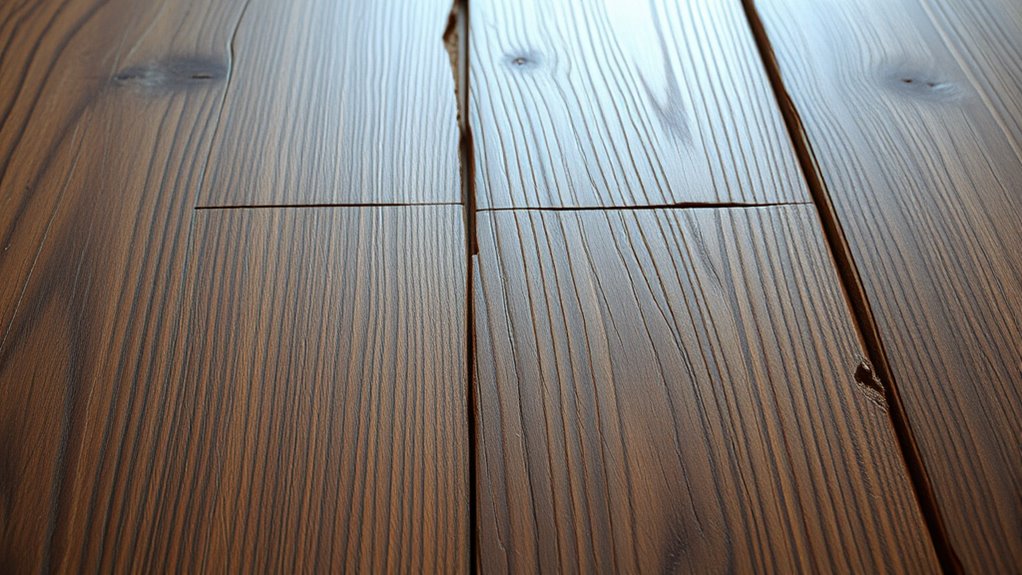
Dry air causes your wood floors to contract, leading to gaps and cracks between the planks. When humidity levels drop, the wood loses moisture and shrinks, which can expose the edges of your flooring. Even with protective wood floor finishes, this contraction can be visible and bothersome. To prevent this, use humidity sensors to monitor indoor moisture levels regularly. Keeping humidity between 35-55% helps maintain the wood’s natural moisture balance, reducing shrinking risks. If the air is too dry, consider adding a humidifier to stabilize the environment. This way, your wood floors stay stable and look their best. Understanding how dry air affects your floors allows you to take proactive steps to avoid gaps and preserve their beauty over time. Additionally, indoor climate control systems can provide more comprehensive solutions for maintaining optimal humidity levels in your home, which is especially important given the impact of environmental factors on wood stability. Regularly assessing and adjusting indoor humidity levels can further protect your flooring from damage caused by fluctuating moisture. Proper system maintenance also ensures your whole-home environment remains balanced, preventing extreme dryness that harms your floors.
How to Spot Warping in Your Wood Floors Caused by Humidity Fluctuations
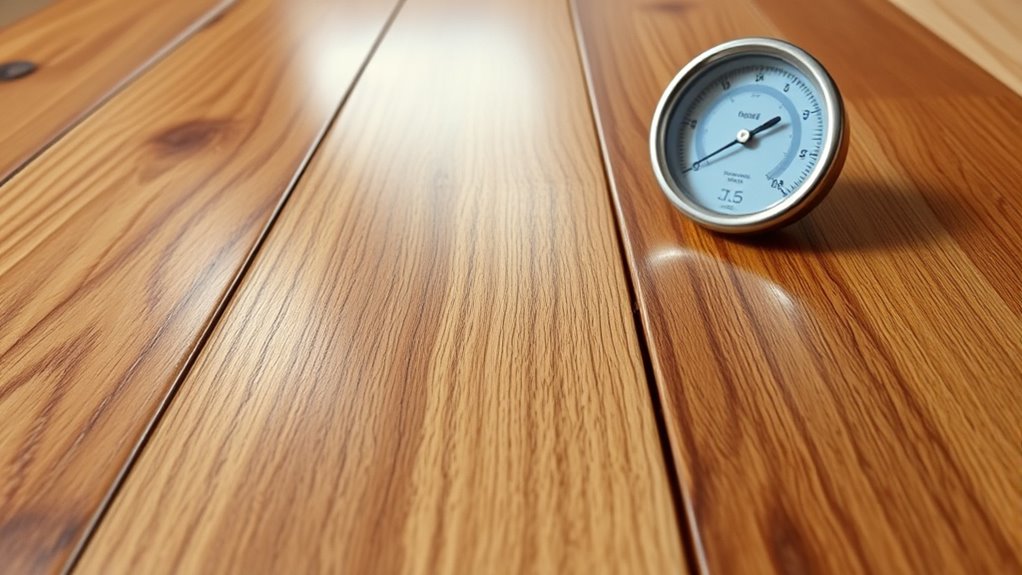
Look closely at your floors for signs of warping, such as visible gaps or uneven surfaces. Cupping and crowning are common indicators that humidity fluctuations are affecting the wood. Recognizing these issues early can help you take steps to protect your floors. Additionally, understanding how wood surface finishes influence moisture absorption can further aid in preventing damage. Applying the proper wood coatings can create a barrier that minimizes moisture intrusion and reduces warping risks. Being aware of humidity levels in your environment is also crucial to maintaining the integrity of your wood floors. Monitoring indoor climate control can help stabilize humidity and prevent future warping. Implementing proper ventilation can also help regulate moisture and preserve your flooring quality.
Visible Floor Gaps
When humidity levels fluctuate considerably, warping in your wood floors often becomes visible through gaps between the planks. As the moisture absorption varies with humidity, wood expands and contracts unevenly. When wood absorbs excess moisture, it expands, creating gaps where the planks pull apart. Conversely, during drier periods, wood contracts, making gaps more noticeable. These gaps are clear signs of warping caused by moisture imbalance. You might also notice the gaps widening over time or uneven spacing across the floor. Paying attention to these visible floor gaps helps you identify warping early. Regularly inspecting your floors for these signs allows you to address humidity issues before further damage occurs. Proper humidity control can minimize wood expansion and contraction, keeping your floors stable. Maintaining optimal humidity levels is essential for preserving your wooden flooring and preventing warping.
Cupping and Crowning
Cupping and crowning are two common signs of warping caused by humidity fluctuations in your wood floors. When the air’s humidity levels change, your wood absorbs moisture unevenly, leading to wood expansion. Cupping occurs when the edges of a plank rise higher than the center, creating a concave shape. Crowning happens when the center of a plank lifts above the edges, forming a convex surface. Both issues result from uneven moisture absorption and wood expansion, which forces the wood to warp. You can spot cupping by checking if the edges are higher than the middle, and crowning by noting if the center is elevated compared to the sides. Recognizing these signs early helps prevent further damage caused by ongoing humidity fluctuations.
How to Control Humidity and Protect Your Wood Floors From Warping

Controlling indoor humidity is essential to prevent wood floors from warping. When humidity levels fluctuate, wood absorbs or loses moisture, leading to warping. To maintain stable humidity, consider using humidification techniques like portable humidifiers, especially in dry seasons. Air purifiers can also improve air quality and help regulate moisture levels indirectly. Keep indoor humidity between 35-55% for suitable protection. Regularly monitor levels with a hygrometer to catch any fluctuations early. Ensuring proper ventilation helps prevent excess moisture buildup.
Controlling indoor humidity prevents wood floor warping by maintaining stable moisture levels.
- Use humidifiers to add moisture during dry months
- Install air purifiers to improve air quality and moisture balance
- Maintain consistent humidity levels with a hygrometer
Tools and Products to Maintain Ideal Humidity Levels for Your Floors
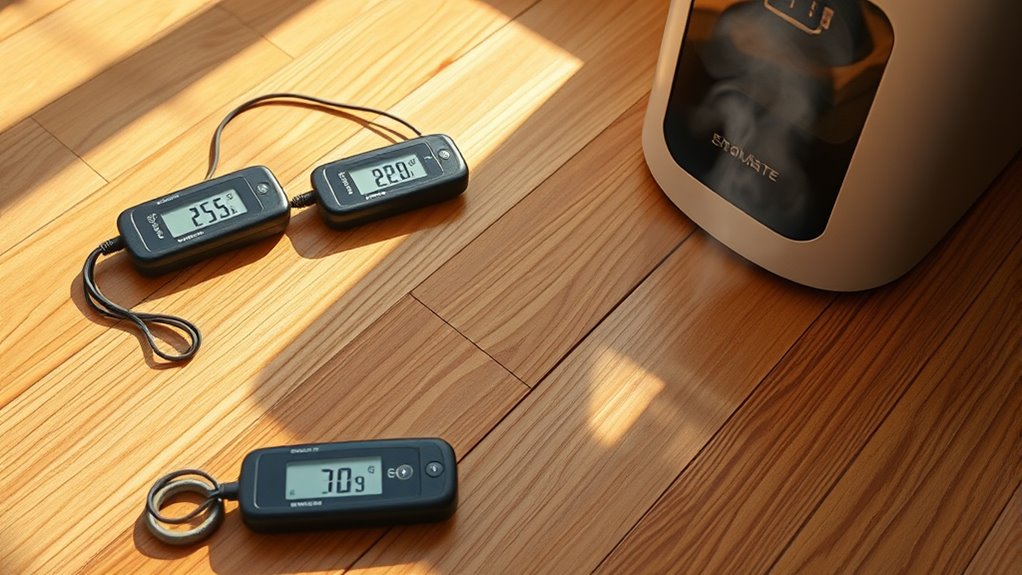
To keep your wood floors safe from moisture damage, you need the right tools and products to maintain consistent humidity levels. Air purifiers help remove excess moisture and airborne pollutants, supporting a healthier environment. Dehumidifiers are essential for reducing humidity in damp spaces, preventing warping and swelling. Use a hygrometer to monitor humidity regularly, ensuring levels stay between 35-55%. Here’s a quick comparison:
| Tool/Product | Purpose |
|---|---|
| Air Purifiers | Remove airborne moisture and pollutants |
| Dehumidifiers | Lower indoor humidity to prevent damage |
| Hygrometer | Measure and maintain optimal humidity levels |
Together, these tools help you create a stable environment that preserves your wood floors’ integrity.
Proactive Tips to Prevent Warping Before It Happens
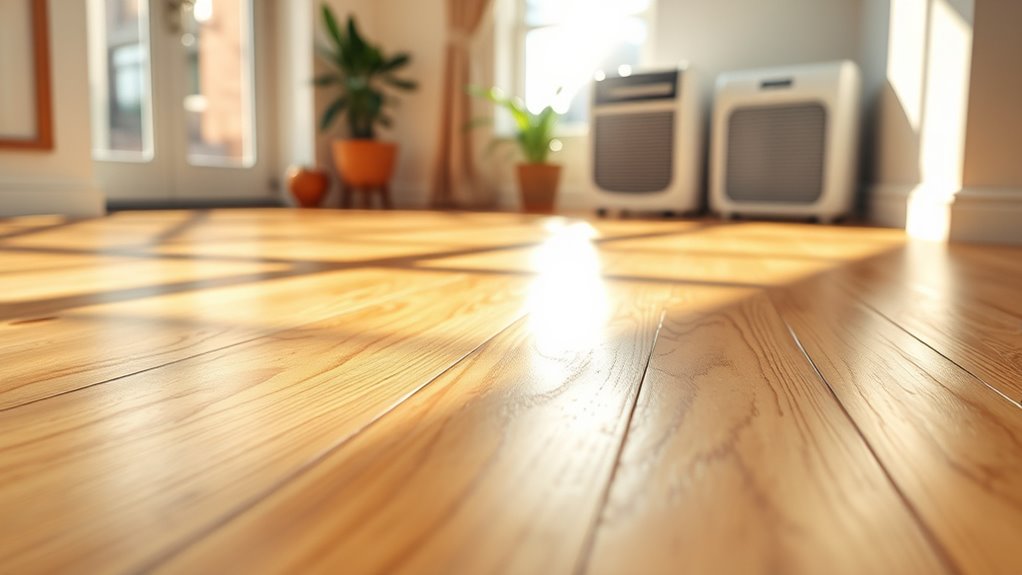
Preventing warping starts with taking proactive steps before issues arise. One key strategy is maintaining proper humidity control in your home, which helps keep wood floors stable. Use a humidifier or dehumidifier as needed to stay within the recommended range. Additionally, install moisture barriers beneath the flooring to prevent moisture transfer from the subfloor. This creates a protective layer that maintains consistent moisture levels. Regularly monitoring indoor humidity levels ensures you catch fluctuations early. Also, avoid exposing your floors to direct water or spills, and clean with damp, not wet, mops. By staying vigilant and implementing these tips, you reduce the risk of warping and extend the life of your wood floors.
When and How to Fix Warped Wood Floors (and When to Call a Professional)
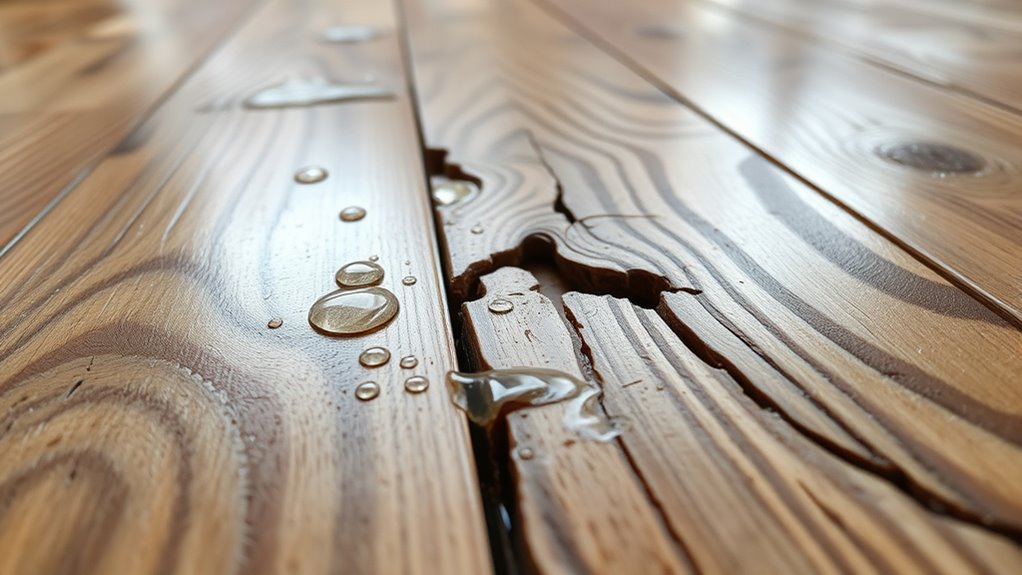
If you notice your wood floors are warped, it’s important to identify the signs early. You might be able to fix minor issues yourself, but serious warping often requires professional help. Knowing when to attempt repairs and when to call in experts can save you time and prevent further damage.
Recognizing Warped Wood
Warped wood floors are often easy to spot once you know what signs to look for. You might notice the wood grain appearing uneven or distorted, with some planks rising or buckling. Finish wear can become uneven, revealing gaps or raised edges. Warping often causes a visible change in the floor’s surface, making it look wavy or distorted. Pay attention to areas where the planks seem loose or creaky, as this can indicate water damage or excessive moisture.
- Curved or bowed planks that don’t lie flat
- Gaps or cupping between boards
- Areas with uneven finish wear or discoloration
Recognizing these signs early helps you decide whether simple adjustments suffice or if professional help is needed to prevent further damage.
DIY Repair Methods
When you notice minor warping or buckling in your wood floors, some simple DIY repairs can often restore their appearance and stability. Start by thoroughly cleaning the affected area to remove dirt and debris that can worsen the problem. Use a gentle wood cleaner and avoid excess moisture. Once clean, consider floor polishing to even out minor surface irregularities and improve the floor’s appearance. For small, localized warps, you might gently sand the area and reapply a matching finish. Keep in mind, though, that these methods work best for minor issues. If warping persists or worsens, it’s a sign to call in a professional to assess and perform more extensive repairs. Proper maintenance and timely intervention can help prolong your floor’s lifespan.
When to Seek Help
Minor warping or buckling in your wood floors can often be addressed with simple DIY methods, but there comes a point when professional help is necessary. If your floors repeatedly swell and shrink with humidity cycles or if moisture barriers haven’t prevented ongoing issues, it’s time to call in experts. Persistent buckling, significant gaps, or uneven surfaces indicate underlying problems that require specialized tools and knowledge. Professionals can assess moisture levels, recommend proper repairs, and help prevent future damage. They may also adjust humidity control systems or install better moisture barriers to stabilize your floors. Don’t ignore severe warping—trust a professional to ensure your floors are repaired correctly and long-lasting. Recognizing when to seek help saves time, money, and preserves your home’s integrity.
Frequently Asked Questions
Can Humidity Levels Be Accurately Measured Without Professional Tools?
You can do DIY measurement of humidity levels with basic tools, but accuracy varies. Using household humidity sensors or digital hygrometers, you get a reasonably good reading, though professional tools provide more precise results. Keep your device in the room you want to monitor for the best accuracy. While DIY measurement helps identify general conditions, for critical measurements, professional tools are recommended.
How Quickly Does Wood Typically Warp After Humidity Changes?
Wood can warp within days or weeks after humidity changes, depending on how much moisture it absorbs. When humidity rises, your wood experiences expansion due to moisture absorption, causing it to swell and potentially warp. Conversely, dropping humidity leads to contraction. You’ll notice warping faster if humidity fluctuates rapidly or if the wood isn’t properly sealed, making it more sensitive to environmental changes.
Are Certain Wood Species More Resistant to Humidity-Related Warping?
Like the oak that stands firm in storms, certain wood species display greater humidity resistance. You’ll find that hardwoods like Brazilian cherry or hickory are more resistant to warping, making them ideal for fluctuating environments. These woods expand and contract less with humidity changes, helping your floors stay stable. Choosing these resilient species means your floors won’t just endure, but also maintain their beauty and integrity over time.
Does Underfloor Heating Influence Humidity and Wood Floor Stability?
Yes, underfloor heating can affect humidity and wood floor stability. It causes thermal expansion, which might lead to warping if not properly managed. To prevent this, you should use moisture barriers to control moisture levels and guarantee even heat distribution. Maintaining consistent humidity and temperature helps keep your wood floors stable, reducing the risk of warping caused by fluctuating conditions.
Can Seasonal Changes Alone Cause Permanent Warping in Hardwood Floors?
Imagine the changing seasons like a tide pulling at your hardwood floors. Seasonal fluctuations can cause temporary shifts, but they rarely lead to permanent warping unless moisture levels stay unbalanced over time. Long-term deformation may occur if you ignore these fluctuations, but with proper humidity control, you can prevent lasting damage. Your floors aren’t doomed—just need consistent care during seasonal shifts to keep them looking pristine.
Conclusion
Maintaining stable humidity levels is key to preventing wood floor warping. Did you know that fluctuations as small as 10% can cause noticeable damage? By controlling moisture with the right tools and proactive care, you can keep your floors looking beautiful for years. Don’t wait for warping to ruin your space—stay vigilant and consistent with humidity management. Your floors will thank you with their durability and timeless appeal.