Proper kitchen ventilation is vital for your health and safety because it removes smoke, odors, grease particles, and moisture that can affect indoor air quality. Effective systems like range hoods and exhaust fans capture pollutants at the source and push contaminants outside, preventing issues like mold and respiratory problems. Good ventilation also keeps your kitchen comfortable and safe during cooking. Keep exploring to learn how to choose, install, and maintain your perfect ventilation system for a healthier home.
Key Takeaways
- Proper ventilation removes harmful pollutants like smoke, grease, and fumes, improving indoor air quality.
- Good airflow prevents moisture buildup, reducing mold growth and protecting kitchen surfaces and appliances.
- Effective range hoods capture contaminants at the source, enhancing safety and cooking comfort.
- Regular maintenance of ventilation systems ensures optimal performance and longevity.
- Proper kitchen ventilation supports health, safety, comfort, and overall well-being for residents.
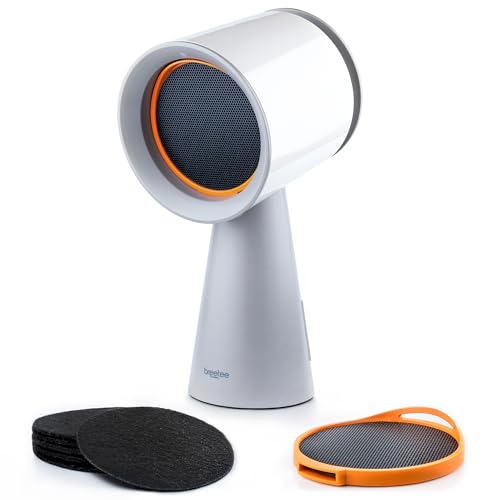
BREETEE Portable Range Hood Kitchen–5-Layer Filter Compact Desktop Exhaust Fan, Powerful 3-Speed Smoke Removal, Low Noise Countertop Range Hood, Oil Cup, for Apartments, Dorm, RV, Indoor BBQ–Off-white
POWERFUL PORTABLE RANGE HOOD: Breetee countertop range hood delivers strong suction to remove smoke, odors, and grease —…
As an affiliate, we earn on qualifying purchases.
As an affiliate, we earn on qualifying purchases.
Why Poor Kitchen Ventilation Affects Your Health: and How to Fix It
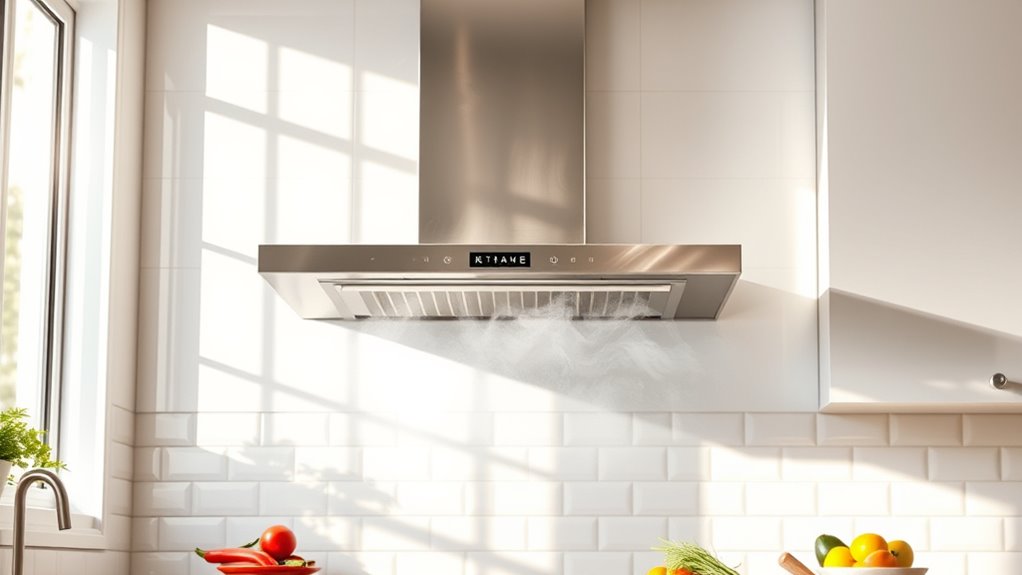
Poor kitchen ventilation can considerably impact your health because it allows harmful pollutants like smoke, grease particles, and cooking fumes to linger in the air. These contaminants directly affect air quality, making the environment unsafe over time. Breathing in polluted air can lead to respiratory issues, allergies, and even long-term health problems such as asthma or chronic bronchitis. Poor ventilation means your body is constantly exposed to these irritants, increasing health implications for you and your family. Proper airflow is essential for color accuracy, which impacts the overall safety and comfort of your kitchen environment. Ensuring adequate data storage and backup solutions can help monitor and maintain air quality systems effectively. Additionally, integrating indoor air quality monitoring devices allows for real-time detection of pollutants and ensures timely actions to improve ventilation. Using air filtration systems can further reduce airborne contaminants and improve indoor air quality. Implementing regular maintenance of ventilation equipment is also crucial to keep systems functioning efficiently and prevent the buildup of pollutants. Fixing this problem starts with improving airflow—using range hoods, exhaust fans, or opening windows during cooking. Ensuring good air quality reduces these health risks and creates a safer, more comfortable kitchen environment. Proper ventilation isn’t just about comfort; it’s essential for your overall health.

HG Power 10 Inch Exhaust Fan with Speed Controller, 988 CFM Kitchen Exhaust Fan with Damper, Metal Extractor Fan for Window, Attic, Ceiling, Basement Ventilation
Efficient Ventilation: With a large airflow capacity of 988 CFM, HG Power 10 inch exhaust fan effectively moves…
As an affiliate, we earn on qualifying purchases.
As an affiliate, we earn on qualifying purchases.
What Are the Best Types of Kitchen Ventilation Systems?
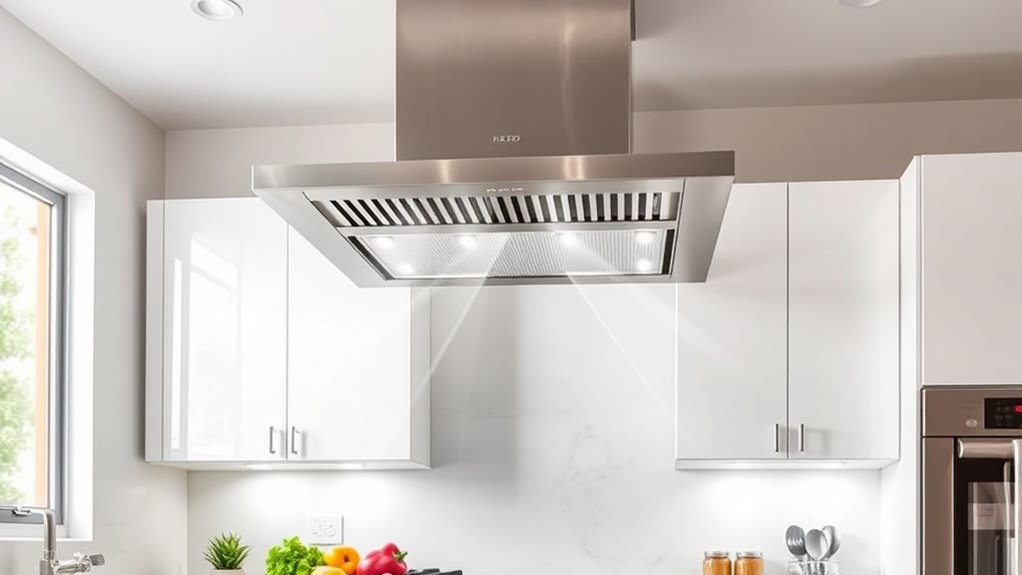
Choosing the right kitchen ventilation system can make a big difference in air quality and comfort. Range hoods are highly effective at removing smoke and odors, but other system types may suit different kitchen layouts. Understanding how each option works helps you pick the best solution for your space. Additionally, maintaining appropriate ventilation boundaries can support a healthy environment and prevent issues like excess moisture or pollutants buildup. Proper installation and cabling are essential to ensure these systems operate safely and efficiently over time. Knowing about ventilation standards can also guide you to comply with safety regulations and optimize system performance. Being aware of airflow management techniques can further enhance your ventilation effectiveness and ensure consistent air quality. Implementing proper maintenance practices is key to sustaining optimal system performance and longevity.
Range Hoods Effectiveness
Range hoods are among the most effective kitchen ventilation systems because they directly capture smoke, steam, and odors at the source. Their effectiveness depends on proper airflow patterns, which guarantee contaminated air is quickly drawn into the hood and exhausted outside. A well-designed range hood improves ventilation efficiency by creating a strong capture zone directly over your cooktop, preventing fumes from spreading throughout your kitchen. The shape, size, and placement of the hood influence how well it captures airborne pollutants. High-quality hoods with powerful fans and adjustable settings can adapt to different cooking styles, maximizing pollutant removal. When choosing a range hood, consider how it interacts with your kitchen’s airflow patterns to ensure ideal performance and cleaner air. Understanding airflow patterns is essential for optimizing the effectiveness of your ventilation system.
Ventilation System Types
When selecting the best kitchen ventilation system, understanding the different types available and how they effectively remove smoke, steam, and odors is essential. There are several options, including range hoods, exhaust fans, and downdraft systems, each with unique ventilation design features. Range hoods with effective air filtration can capture airborne grease and improve air quality, making them ideal for busy kitchens. Ventilation design also matters—consider whether ducted or ductless systems suit your space and needs. Ducted systems vent air outside, while ductless models filter and recirculate air, which can be more flexible. Choosing the right system depends on your kitchen layout, cooking habits, and air quality goals. Proper ventilation system types guarantee your kitchen stays fresh, safe, and comfortable. Incorporating halal-friendly cooking ideas into your ventilation planning can help ensure a healthy and comfortable culinary environment.

Broan-NuTone 413023 Ductless Range Hood Insert with Light, Exhaust Fan for Under Cabinet, 30-Inch, Black
HIGH-QUALITY DUCTLESS RANGE HOOD INSERT: Bisque hood insert improves ventilation and lighting over your stove with the non-ducted…
As an affiliate, we earn on qualifying purchases.
As an affiliate, we earn on qualifying purchases.
How Does Kitchen Ventilation Remove Smoke and Odors Effectively?
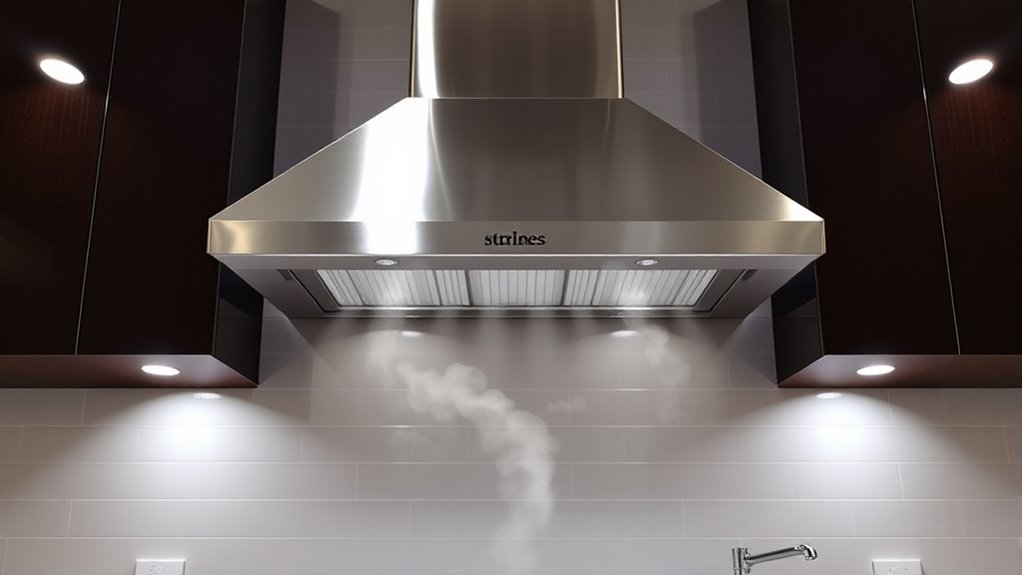
Kitchen ventilation removes smoke and odors effectively by actively pulling contaminated air out of the space and replacing it with fresh air. This process improves air quality by reducing airborne particles and pollutants that cause lingering smells. Ventilation systems like exhaust fans and range hoods draw smoke, steam, and odors upward and out of the kitchen, preventing them from spreading throughout your home. Proper airflow ensures that the contaminated air doesn’t linger, which is essential for maintaining a clean, healthy environment. Good ventilation also helps control odors by continuously removing the smell molecules before they settle or become overwhelming. Additionally, understanding the challenges in nanotech fabrication can guide the design of more efficient ventilation systems at the molecular level, enhancing overall air purification. By removing smoke and odors efficiently, your kitchen stays fresher and safer, making cooking more enjoyable and reducing the risk of stale or lingering smells. Using an effective airflow management system is key to maintaining optimal performance of your kitchen ventilation. Implementing advanced filtration technologies can further improve odor and smoke removal, especially in kitchens with high cooking volumes. Incorporating innovative air purification methods can also help in achieving cleaner indoor air quality.

Professional Indoor Air Quality Monitor with AQI Beep Alarms, Portable Real-Time Detector for Home Cars Plants and Pets (Black)
【Professional 16-in-1 Real-time Air Quality Monitor】: With real-time detection of PM1.0 | PM2.5 | PM10 | CO2 |…
As an affiliate, we earn on qualifying purchases.
As an affiliate, we earn on qualifying purchases.
How Do Range Hoods and Exhaust Fans Improve Air Quality?
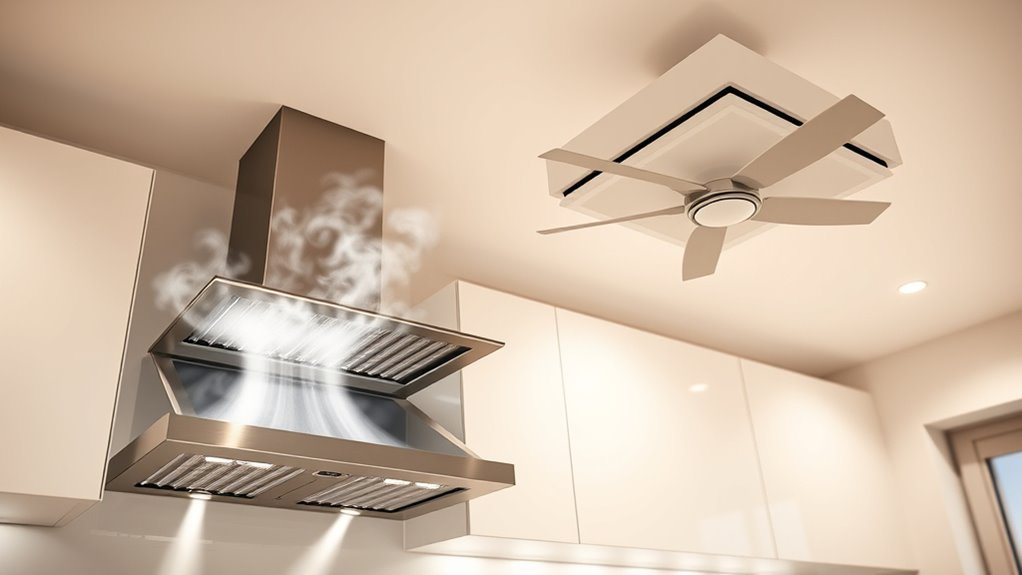
Range hoods and exhaust fans help clear smoke and odors quickly, keeping your kitchen fresh. They improve air circulation, making the space more comfortable and safer to cook in. By extracting contaminants, they guarantee the air stays cleaner and healthier for you. Additionally, using effective storage and connectivity gear can help ensure your kitchen appliances and systems operate smoothly and efficiently. Proper ventilation also plays a crucial role in maintaining ethical kitchen practices, ensuring that your cooking environment aligns with health and safety standards. Implementing these ventilation solutions can also help prevent issues like scams or fraud related to kitchen equipment investments, promoting safer and more reliable choices. Understanding the science behind ventilation can further enhance your ability to select the most effective solutions for your needs.
Smoke and Odor Removal
Range hoods and exhaust fans play a crucial role in removing smoke and odors from your cooking area. They capture airborne particles and volatile compounds that can compromise your air quality and cause lingering odors. By venting smoke and strong smells outside or filtering them through charcoal or other filters, these devices help keep the air fresh and clean. Effective odor control not only improves your comfort but also reduces potential health risks associated with inhaling cooking fumes. When you turn on your range hood or exhaust fan, you actively prevent the buildup of smoke and odors, ensuring a healthier kitchen environment. Proper ventilation is essential for maintaining good air quality and making your cooking space more pleasant and safer to use. Additionally, Proper ventilation helps prevent the accumulation of moisture and grease, which can lead to mold growth and fire hazards. Proper air circulation also disperses heat more effectively, making cooking safer and more efficient. Incorporating natural ventilation through windows and vents can further improve overall airflow and reduce reliance on mechanical systems. Good ventilation systems contribute to energy efficiency by reducing the workload on mechanical fans and ventilation devices.
Air Circulation Enhancement
By actively pulling airborne contaminants out of the cooking area, range hoods and exhaust fans considerably improve air circulation. They enhance air flow by directing fumes, heat, and moisture away from your kitchen, preventing stale air buildup. Proper ventilation design guarantees these devices work efficiently, creating a continuous cycle of fresh air intake and contaminated air removal. This improved air circulation helps maintain a healthier environment, reducing the risk of airborne pollutants and humidity issues. When installed correctly, range hoods and exhaust fans optimize your kitchen’s ventilation system, ensuring that air moves smoothly and effectively. Regular maintenance routines for these devices ensure they continue to operate at peak performance, further improving air quality and system longevity. This not only boosts comfort but also supports overall air quality, making your kitchen a safer and more pleasant space to cook and gather.
Contaminant Extraction
Effective ventilation devices like range hoods and exhaust fans target airborne contaminants directly, substantially improving indoor air quality. They capture smoke, grease, steam, and odors at the source, preventing them from spreading throughout your kitchen. By actively removing these pollutants, your ventilation system reduces the concentration of harmful particles in the air, leading to a healthier environment. Properly functioning range hoods and exhaust fans ensure contaminant removal is efficient, especially during high-heat cooking. This not only enhances air quality but also minimizes lingering smells and reduces buildup of grease and moisture that can cause mold. Overall, these devices play an essential role in maintaining a cleaner, safer kitchen by effectively extracting contaminants before they can affect your indoor air quality.
How Can Good Ventilation Help Prevent Mold and Moisture Problems?
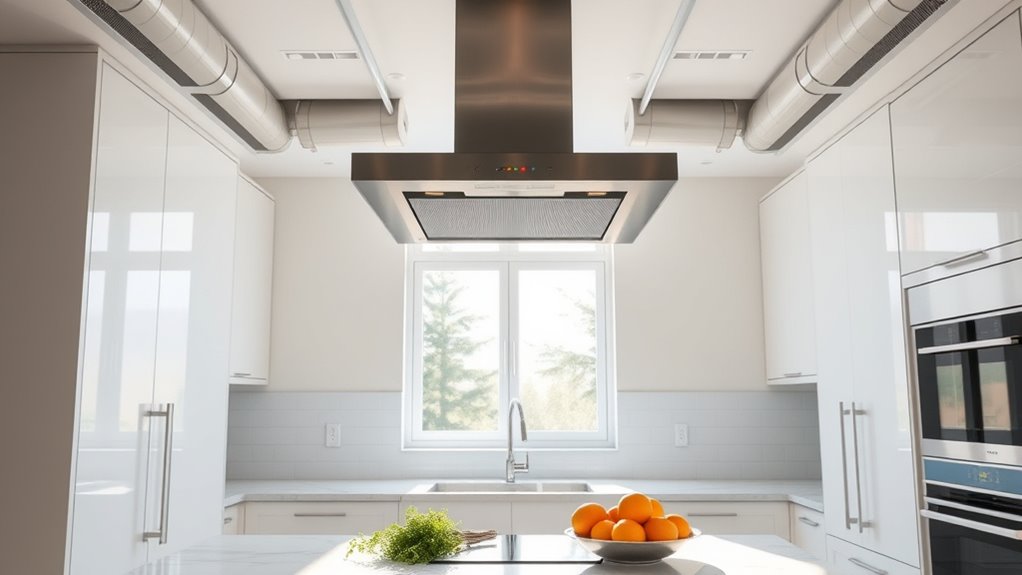
Good ventilation plays a crucial role in preventing mold and moisture problems in your kitchen. Proper airflow helps with moisture control by removing excess humidity caused by cooking, washing, and spills. When moisture isn’t allowed to linger, it reduces the risk of mold growth on walls, cabinets, and appliances. Ventilation systems, like range hoods and exhaust fans, draw out humid air and replace it with drier air from outside. This continuous exchange prevents the buildup of dampness, which can lead to mold and mildew. By maintaining a dry environment, good ventilation supports mold prevention and keeps your kitchen healthier. Regularly using your ventilation system ensures moisture doesn’t accumulate, protecting your walls, ceilings, and overall home from moisture-related damage.
How to Choose the Right Kitchen Ventilation System for Your Home
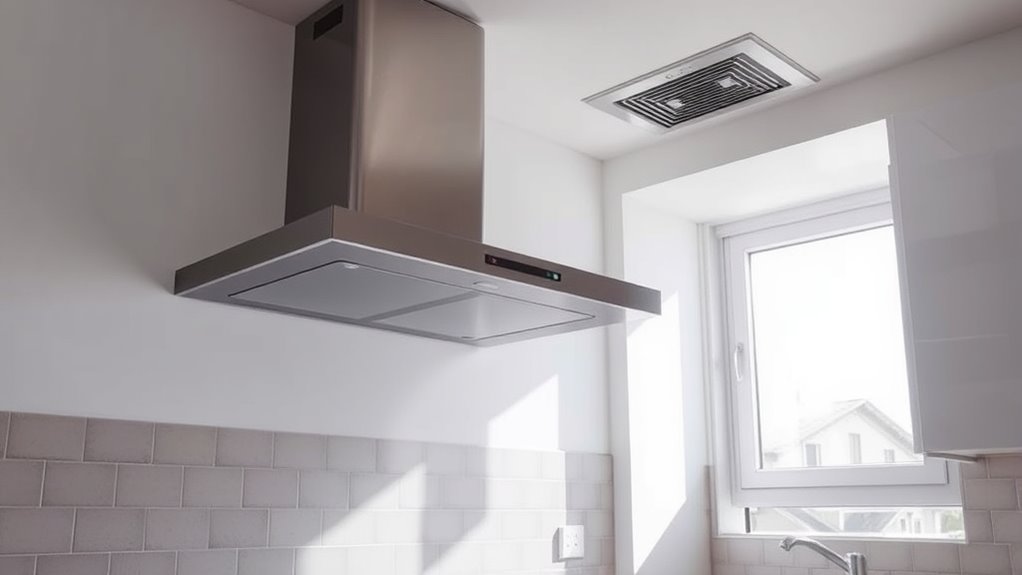
Choosing the right kitchen ventilation system depends on your cooking habits, kitchen layout, and budget. Focus on design considerations like duct placement, size, and noise levels to guarantee ideal airflow. Energy efficiency is also key—look for models with ENERGY STAR ratings to save on long-term costs.
| Ventilation Type | Best For |
|---|---|
| Range Hoods | Heavy cooking, high smoke, odors |
| Exhaust Fans | Basic ventilation, budget-friendly |
| Downdraft Vents | Open layouts, minimal space issues |
| Microwave Hoods | Small kitchens, limited space |
| Island Hoods | Central cooking islands, aesthetic appeal |
How to Install and Maintain Your Kitchen Ventilation for Long-Lasting Performance
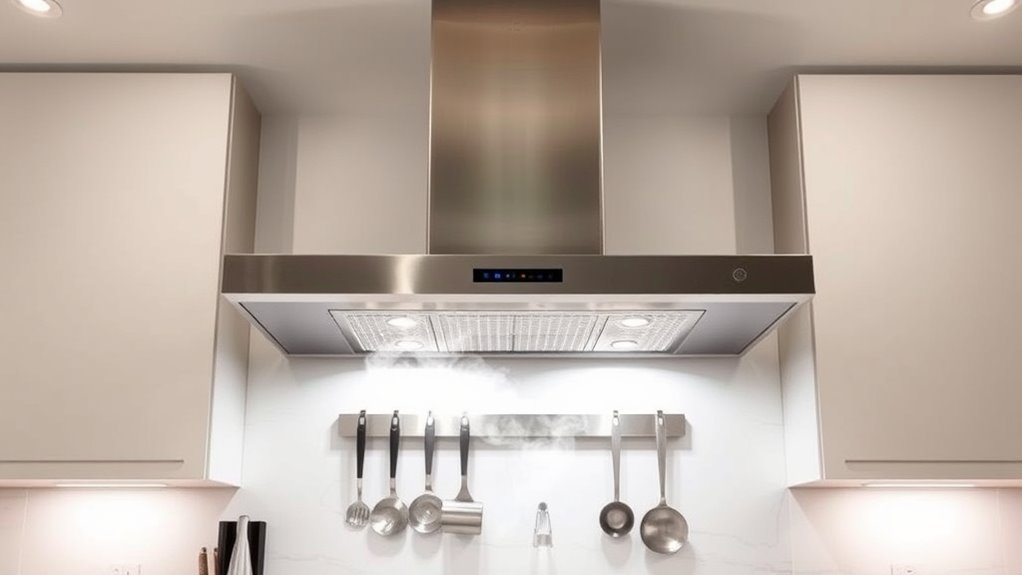
Once you’ve selected the right ventilation system for your kitchen, proper installation and ongoing maintenance are key to guaranteeing it performs reliably over time. Follow installation tips such as securing the fan firmly, sealing ductwork properly, and positioning the vent to maximize airflow. Regular ventilation maintenance is essential; clean filters, remove grease buildup, and inspect for obstructions monthly. Check the fan motor and electrical connections annually to prevent issues. Keep vents free of dust and debris, and ensure the ductwork remains airtight. Proper installation prevents leaks and inefficiencies, while consistent maintenance prolongs the lifespan of your ventilation system. Staying proactive with these steps guarantees your kitchen stays well-ventilated, safe, and efficient for years to come.
What Common Mistakes Should You Avoid When Installing or Using Kitchen Ventilation?
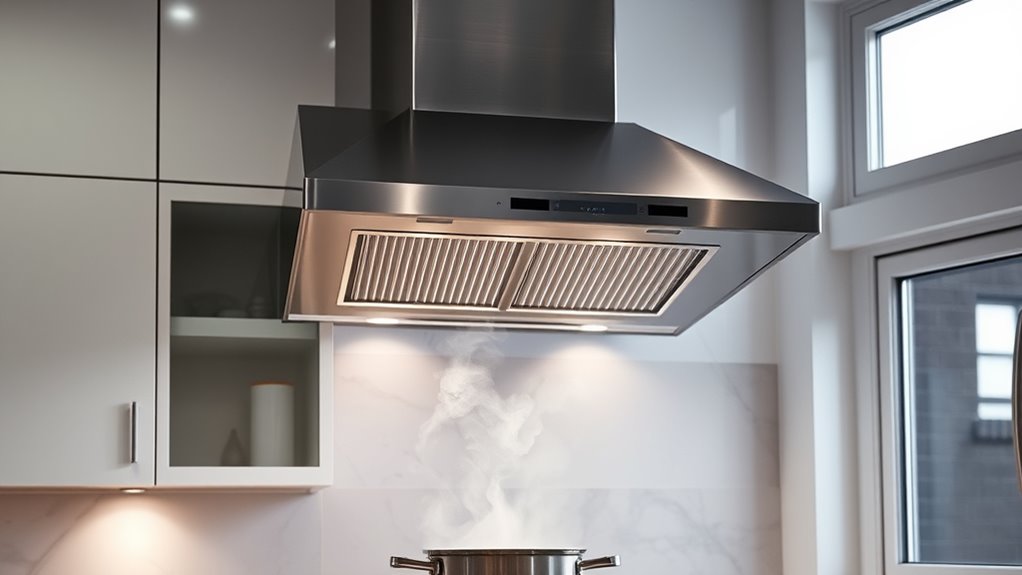
Installing or using a kitchen ventilation system without paying attention to common mistakes can lead to poor performance and costly repairs. One major installation pitfall is positioning the range hood too high or too low, which hampers effective extraction. Overlooking proper ductwork or choosing the wrong fan size can also reduce efficiency. User errors, like neglecting regular filter cleaning or turning on the system only when cooking, diminish its lifespan and effectiveness. Avoid sealing ducts improperly, as leaks allow odors and smoke to escape. Additionally, rushing the installation without reading manufacturer instructions can cause operational issues. By being aware of these pitfalls and errors, you ensure your ventilation system functions at its best, keeping your kitchen safe, odor-free, and comfortable.
How Can You Optimize Your Kitchen Ventilation for Safety and Comfort?
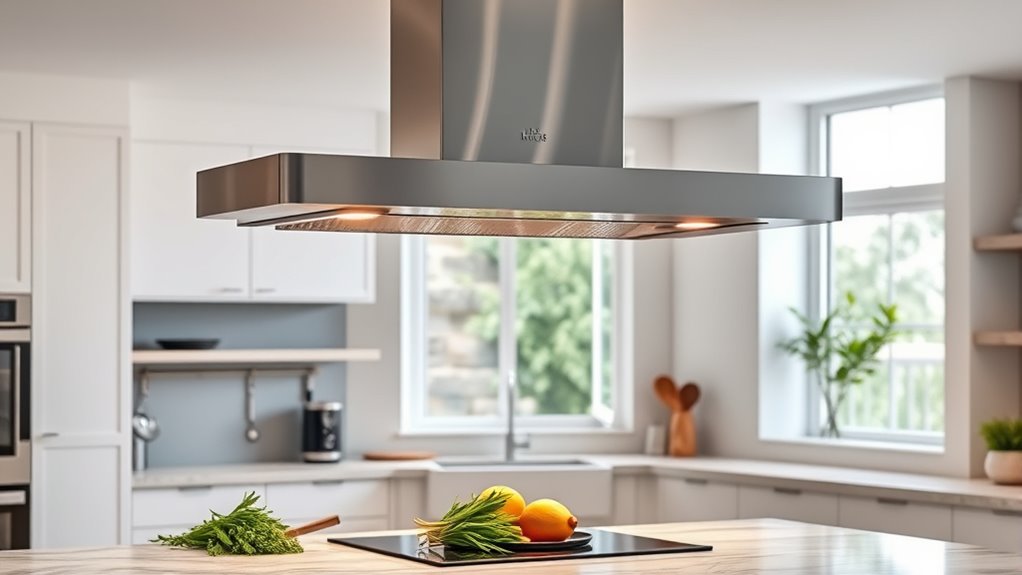
To maximize your kitchen ventilation for safety and comfort, you need to make certain your system is functioning efficiently and effectively. Proper air flow depends heavily on strategic fan placement and ensuring vents are unobstructed. Here are key steps to enhance your ventilation:
- Position the exhaust fan directly above the cooktop to capture fumes effectively.
- Ensure intake vents are placed where they promote optimal air flow without creating turbulence.
- Regularly clean or replace filters to maintain air quality.
- Avoid blocking vents or fans with cabinetry or appliances, which can disrupt air flow.
Frequently Asked Questions
How Often Should I Clean My Kitchen Ventilation System?
You should clean your kitchen ventilation system at least every three to six months, depending on your cooking frequency. Follow a regular maintenance schedule to keep it functioning efficiently. Use cleaning tips like removing grease buildup, washing filters, and wiping down surfaces. Regular cleaning prevents fire hazards and maintains good air quality. If you cook often or notice reduced airflow, clean it more frequently to guarantee peak performance.
Can Portable Fans Improve Kitchen Air Quality?
Portable fans can improve your kitchen air quality by enhancing airflow enhancement, helping to disperse cooking fumes and odors. However, you should consider noise considerations, as some models can be loud and disruptive. Choose a fan with adjustable settings and quieter operation to maximize benefits without compromising comfort. Keep in mind that while they help, portable fans are best used alongside your existing ventilation system for ideal air quality.
What Are Signs of Inadequate Kitchen Ventilation?
You might notice poor air quality if your kitchen feels stuffy, humid, or smells strongly of cooking odors. Inadequate ventilation can lead to lingering odors, excess moisture, and increased smoke or fumes, making odor control difficult. If you see condensation on windows or walls, or if smoke alarms go off frequently, these are signs your ventilation isn’t keeping up. Addressing these issues helps improve air quality and keeps your kitchen healthier.
Are There Energy-Efficient Ventilation Options Available?
Your kitchen deserves the best, and energy-efficient ventilation options are a game-changer. You can choose energy-saving fans that cut down on power use while keeping air fresh. Eco-friendly vents made from sustainable materials not only reduce your carbon footprint but also save you money long-term. These options are smarter choices, helping you maintain a healthy kitchen environment without wasting energy or resources.
How Does Kitchen Ventilation Impact Overall Home Energy Use?
Your kitchen ventilation directly impacts your home’s overall energy use by improving air circulation and indoor air quality. When your ventilation system efficiently removes smoke, odors, and excess heat, it reduces the need for your HVAC system to work harder, saving energy. Proper ventilation guarantees fresh air flows in while contaminants exit, helping you maintain a healthier, more energy-efficient home environment.
Conclusion
Think of your kitchen ventilation as the heartbeat of your home, keeping the air fresh and life vibrant. When you choose and maintain the right system, you’re nurturing a space where health and comfort flourish. Proper ventilation is your shield against unseen threats, symbolizing clarity and safety amid the chaos of cooking. Embrace it, and let your kitchen breathe freely — a sanctuary where your family’s well-being always takes center stage.