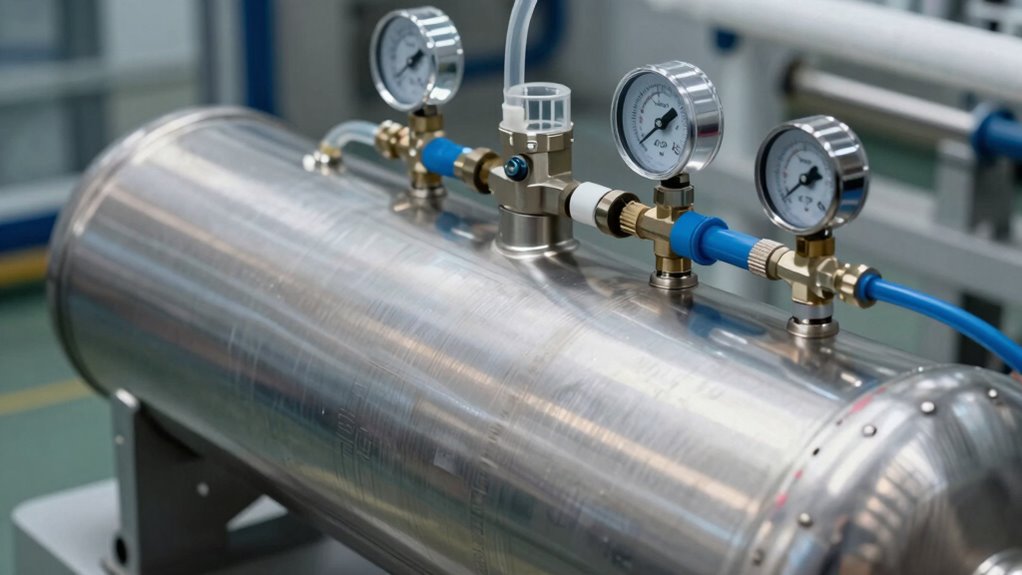

Choosing the right reverse osmosis tank size affects your system’s flow rate and efficiency. A larger tank stores more filtered water, providing a steady flow during high demand, while a smaller tank is better for low usage to avoid waste. Proper sizing helps maintain consistent water pressure and reduces interruptions. If you want to learn how to select the best tank size for your household and optimize flow, more details are ahead.

Get the little things that make your day delivered free with Prime
- Fast, free delivery on millions of items
- Prime Video, Amazon Music and more included
- Member-only deals all year
Key Takeaways
- Proper tank size ensures a consistent flow rate during water usage, preventing pressure drops.
- Larger tanks store more filtered water, supporting higher demand and continuous flow.
- Smaller tanks refill faster and are suitable for low household water needs.
- Over-sized tanks may cause longer refill times and energy waste.
- Balancing tank size with household usage optimizes flow rate, efficiency, and system performance.
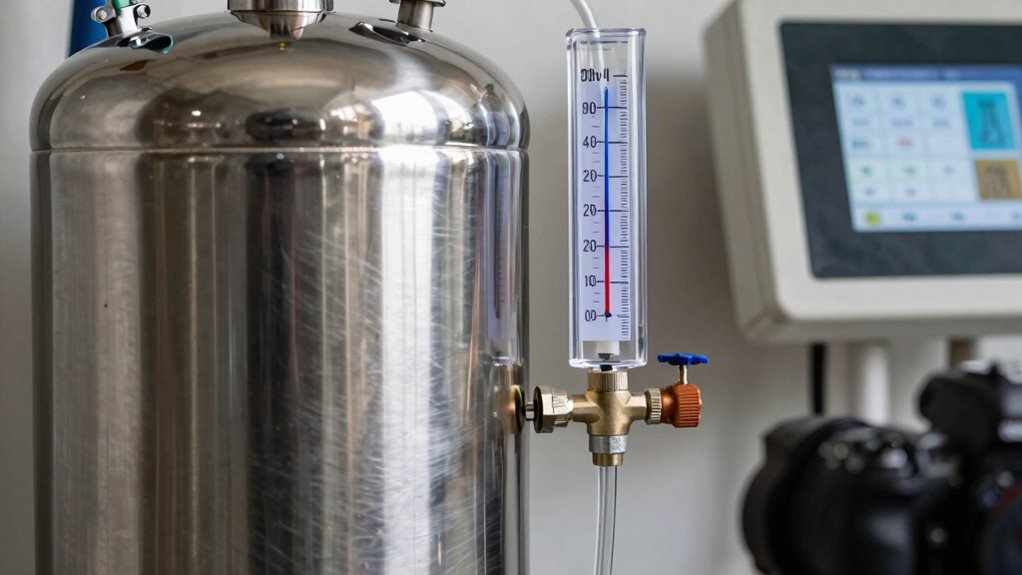
Have you ever wondered how the size of your reverse osmosis (RO) tank impacts the flow rate and overall performance of your water filtration system? The answer lies in understanding how water storage and system capacity work together to deliver clean, filtered water efficiently. Your RO tank acts as a reservoir, storing purified water so you don’t have to wait for the system to produce water on demand. If your tank is too small, you might find yourself waiting longer between uses, especially when demand suddenly spikes. Conversely, a larger tank can hold more water, ensuring you have a steady supply even when several people are using water simultaneously.
A larger RO tank provides a steady supply of filtered water during high demand periods.
The size of your tank directly affects your system’s capacity, which is the total amount of water it can supply before it needs to refill. A bigger tank means more stored water, which translates to a higher system capacity. This is especially beneficial if you have a large household or use water frequently throughout the day. When your tank is adequately sized, it maintains a consistent flow rate, delivering filtered water at a steady pace without interruption. That means fewer frustrations, and more convenience, especially during busy mornings or when entertaining guests.
However, it’s important to strike a balance. If your tank is excessively large relative to your household needs, it can take longer to fill initially, and the system might waste energy during the refill process. On the other hand, a tank that’s too small might cause your flow rate to drop during periods of high demand because it runs out quickly and needs time to refill. This impacts not only how much water you have available but also how efficiently your system operates overall. Proper tank sizing is crucial for optimizing both performance and energy efficiency. Additionally, considering tank installation factors can influence overall system efficiency and ease of maintenance. Properly sized tanks also help minimize wasted energy by reducing the number of refills needed during peak usage times. Being aware of your household’s water usage patterns can help you select the most suitable tank size for your needs.
In addition, the size of your RO tank influences the flow rate you experience at the faucet. A well-sized tank ensures that water flows smoothly and consistently, avoiding sudden drops in pressure or flow. This makes everyday tasks like filling a glass or cooking much more straightforward. Proper tank sizing is essential for optimal system performance and user satisfaction. When selecting a tank size, consider your household’s water usage patterns and system capacity needs. Larger tanks are ideal for high-demand households, while smaller tanks work well in single-person or low-usage settings. Ultimately, choosing a right size ensures your system functions excellently, providing you with reliable, clean water whenever you need it.
reverse osmosis tank size 4 gallons
As an affiliate, we earn on qualifying purchases.
As an affiliate, we earn on qualifying purchases.
Frequently Asked Questions
How Often Should I Replace My Reverse Osmosis Tank?
You should replace your reverse osmosis tank every 5 to 10 years, depending on its durability and water capacity. Over time, tanks can develop leaks or lose pressure, reducing efficiency. Regularly test your system’s performance, and if you notice decreased water flow or quality, it’s time for a replacement. Proper maintenance guarantees your tank continues to deliver clean water and maintains ideal water capacity.
Can I Upgrade My Tank Size Later?
Think of your reverse osmosis system as a garden; upgrading your tank is like planting a bigger watering can. You can generally upgrade your tank size later, but it depends on your system’s compatibility and tank customization options. Before doing so, check if your system supports a larger tank and confirm the fittings match. Upgrading can boost your water capacity, making your system more efficient and tailored to your needs.
What Are Signs My Tank Needs Replacing?
You’ll know your tank needs replacing if you notice reduced water storage capacity or inconsistent water flow. A tank with diminished capacity can’t hold enough water, leading to frequent refills and inconsistent pressure. Also, if your tank develops leaks or strange noises, it’s a sign it’s failing. Regularly check the tank’s condition to guarantee it maintains proper water storage and performance, preventing unexpected disruptions in your water supply.
Does Tank Size Affect Water Pressure?
Think of your reverse osmosis tank as a reservoir of potential energy; larger tank capacity usually means steadier water pressure. When the tank is bigger, it acts like a spacious dance floor, allowing water flow to move freely and consistently. Conversely, a smaller tank may cause pressure fluctuations, like dancers cramped on a small stage. So, yes, tank size directly influences water pressure by regulating how smoothly water flows into your system.
Is a Larger Tank More Cost-Effective Long-Term?
Yes, a larger tank can be more cost-effective long-term because it offers greater tank capacity, meaning you won’t need to run the system as often, saving water and energy. Though initial costs might be higher, the reduced wear on your system and fewer replacements can balance out expenses over time. Consider your water usage and flow rate to determine if investing in a bigger tank makes sense for your needs.
As an affiliate, we earn on qualifying purchases.
Conclusion
Think of your reverse osmosis system as a well-tuned orchestra, where tank size and flow rate are the conductor’s baton, guiding harmony. Choosing the right size ensures your water flows smoothly like a gentle stream, while the flow rate keeps the melody lively without missing a beat. When these elements are in sync, your purified water flows effortlessly, turning your home into a crystal-clear lake where every sip is revitalizingly pure and perfectly timed.
large capacity reverse osmosis tank
As an affiliate, we earn on qualifying purchases.
As an affiliate, we earn on qualifying purchases.
small reverse osmosis water storage tank
As an affiliate, we earn on qualifying purchases.
As an affiliate, we earn on qualifying purchases.
Halloween Picks
halloween
As an affiliate, we earn on qualifying purchases.