
If your home feels “off,” it might be due to hard water, caused by minerals like calcium and magnesium from natural sources depending on your location. You may notice soap scum, stains, or appliance issues. Testing your water at home with simple strips or reagent kits can confirm the hardness. High mineral content affects plumbing, appliances, and skin, but solutions like softeners can help. Keep exploring to learn how to tackle hard water effectively.
Key Takeaways
- Hard water contains high levels of minerals like calcium and magnesium, which can cause mineral buildup.
- Signs include soap scum, dull fixtures, reduced water flow, and dry skin.
- Mineral deposits can damage plumbing and appliances, leading to decreased efficiency and costly repairs.
- Water test kits can quickly determine mineral levels, helping identify if water is hard.
- Installing water softeners or filtration systems can improve water quality and alleviate “off” sensations.
How Can I Tell if My Water Is Hard?

Wondering if your water is hard? The easiest way to find out is through DIY testing with water test kits. These kits are simple to use and provide quick results, making it easy to determine your water’s hardness level at home. Typically, you’ll collect a water sample and add a reagent from the kit, which will change color depending on the mineral content. Comparing the color to the chart included in the kit reveals whether your water is soft, slightly hard, or very hard. Using water test kits is affordable and convenient, giving you a clear idea of your water quality without needing professional help. Knowing your water’s hardness helps you decide if further testing or treatment is necessary. Additionally, understanding water softener brine impact can help you evaluate the effectiveness of your water treatment system.
Easy Ways to Test Water Hardness at Home
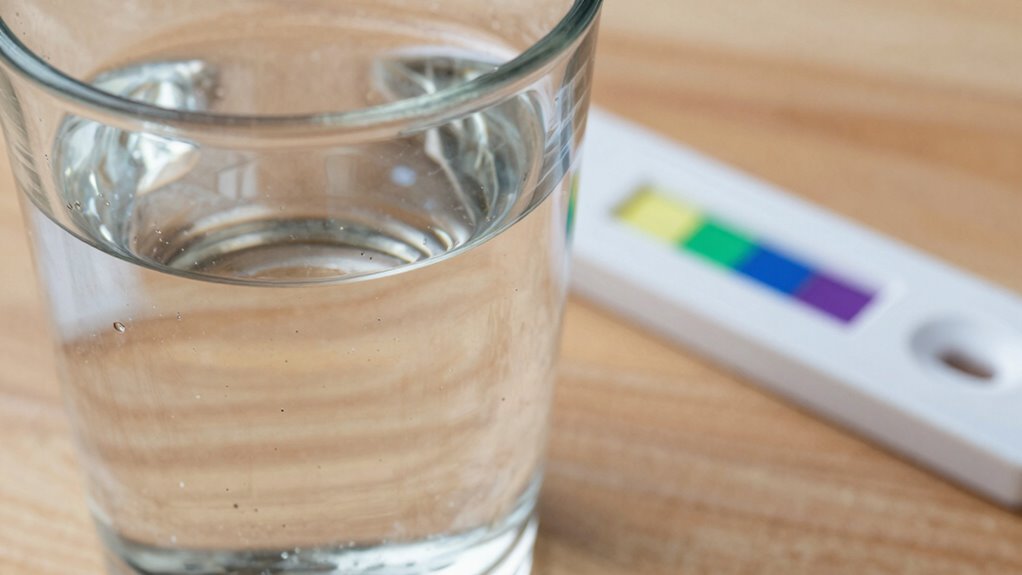
Testing your water hardness at home is straightforward with simple, DIY methods. One effective way is to use mineral indicators, which change color based on mineral content. You can purchase water test strips designed specifically for hardness testing. Simply dip the strip into a sample of your tap water and wait a few seconds for it to develop its color. Compare the color to the provided chart to determine your water’s hardness level. Alternatively, you can use a DIY testing kit that includes reagents to perform a titration at home—though these are more involved. These methods are quick, affordable, and give you a clear idea of your water’s mineral content without needing professional lab analysis. Regular testing helps you stay aware of your water quality and plan necessary treatment. Understanding the chemical composition of your water can also help you make informed decisions about water treatment options.
What Is Water Hardness and How Does It Affect Your Home?
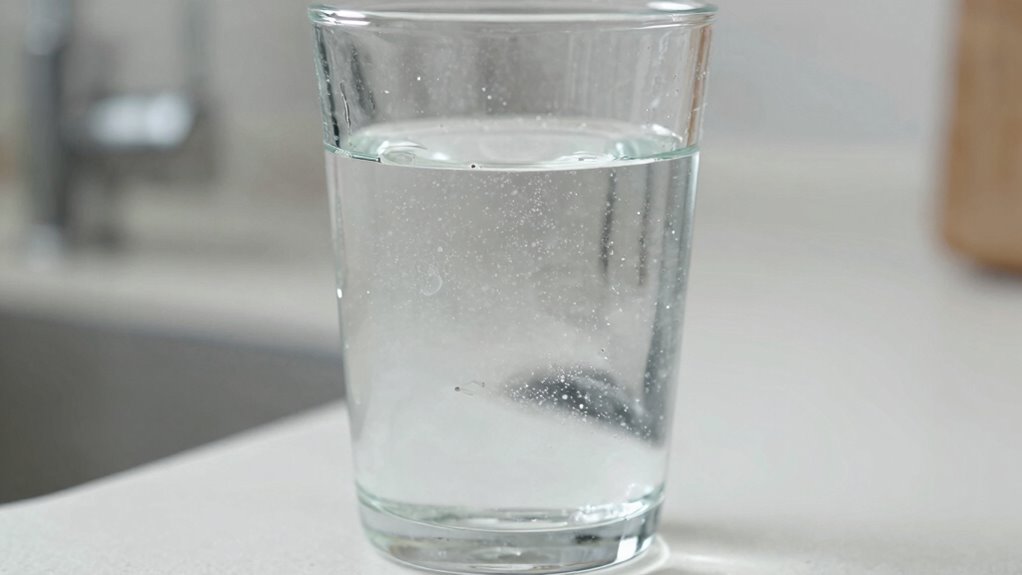
Water hardness comes from minerals like calcium and magnesium, which enter your water supply through natural sources. You might notice signs like soap scum or reduced water flow, indicating hard water. This can also lead to damage in your plumbing over time, affecting your home’s efficiency. Understanding cycling gear maintenance can help you prevent some of these issues from affecting your household appliances.
Causes of Water Hardness
Have you ever noticed soap doesn’t lather well or appliances seem to break down more quickly? These issues are often caused by water hardness, which results from calcium buildup and mineral deposits in your water supply. Hard water forms when groundwater picks up minerals like calcium and magnesium as it passes through soil and rock. These minerals don’t dissolve easily, leading to persistent mineral deposits on fixtures, pipes, and appliances. Over time, calcium buildup can clog pipes and reduce the efficiency of your water heater, dishwasher, and washing machine. The more minerals present, the harder the water feels and the more pronounced these effects become. Understanding these causes helps you recognize why your water feels “off” and what might be contributing to the problem.
Signs of Hard Water
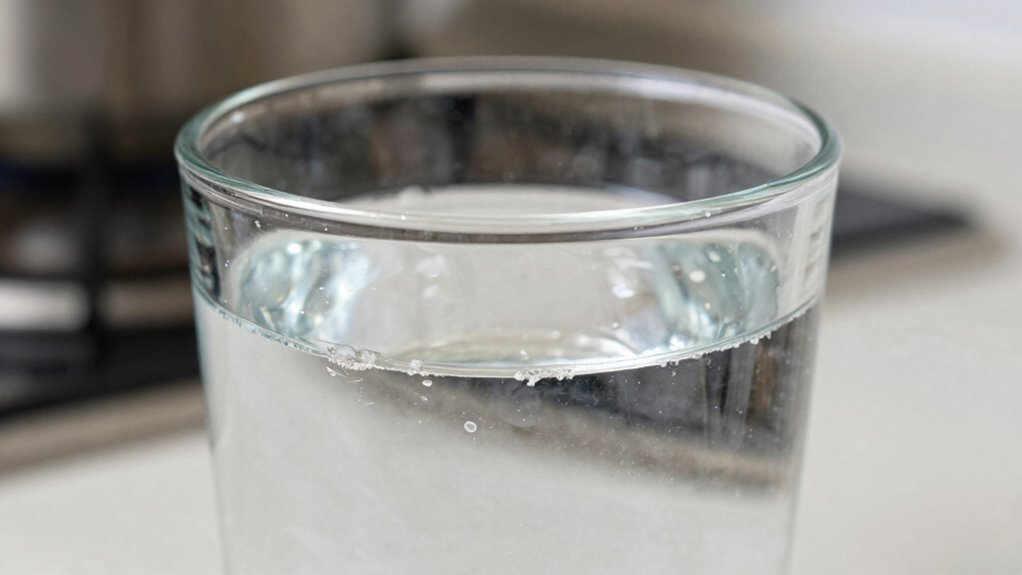
Noticing issues like soap not lathering well or seeing mineral stains on your fixtures are common signs of hard water. When water contains high mineral content, it leads to scaling buildup on pipes, faucets, and appliances, which can reduce their lifespan. You might also observe soap’s poor efficiency, as it won’t produce the rich lather you’re used to. Over time, this can cause soap scum to accumulate, making cleaning more difficult. Mineral deposits may appear as cloudy spots or white stains on your sinks, showerheads, or glassware. These signs indicate your water is hard and that minerals like calcium and magnesium are present in significant amounts. Recognizing these symptoms early can help you take steps to address and mitigate the effects of hard water in your home. Additionally, understanding water hardness can help you better manage and treat your water supply effectively.
Impact on Plumbing
Mineral buildup from hard water doesn’t just affect how your fixtures look; it can also cause serious damage to your plumbing system. Over time, the minerals contribute to plumbing corrosion and pipe blockages, reducing water flow and increasing repair costs. As minerals accumulate, pipes become narrower, leading to decreased pressure and potential leaks. Understanding how hard water impacts your plumbing helps you take preventative steps. Consider this table:
| Effect | Consequence |
|---|---|
| Plumbing corrosion | Metal pipes weaken and degrade |
| Pipe blockages | Reduced water flow, clogs |
| Increased wear | Frequent repairs and replacements |
Additionally, water softening techniques can help mitigate these issues before they escalate. Addressing water hardness early can save you money and prevent plumbing disasters.
What Causes Hard Water in Different Areas?
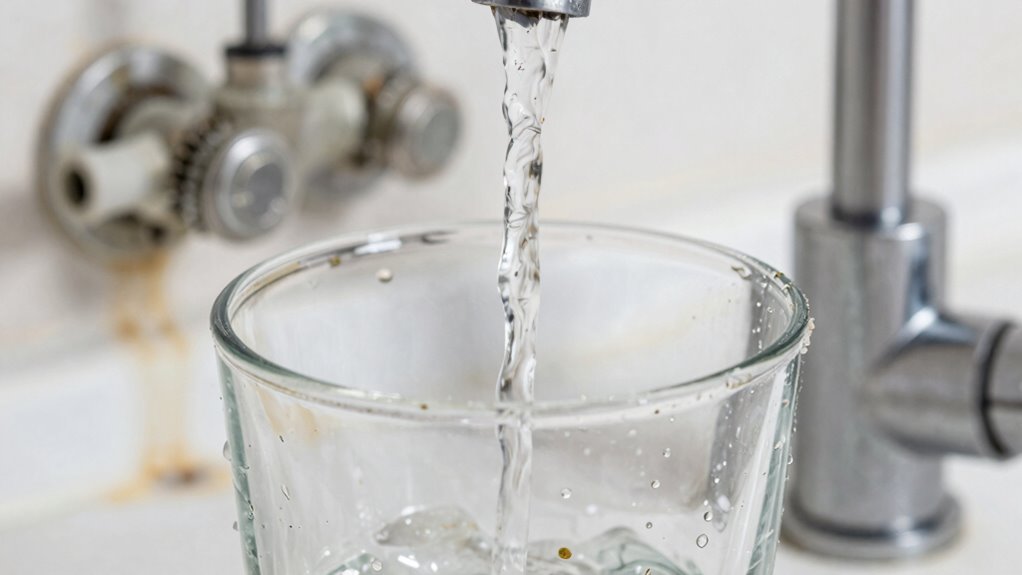
Your area’s water hardness depends on its regional water sources, like underground aquifers or surface water. Local geological makeup, such as mineral-rich rocks, influences how much calcium and magnesium dissolve into the water. Additionally, water treatment processes can alter hardness levels by adding or removing minerals before it reaches your tap. Understanding regional geology can help you better predict and manage water hardness in your area.
Regional Water Sources
Have you ever wondered why some areas have harder water than others? It all comes down to regional water sources and geological variation. Water picks up minerals like calcium and magnesium as it moves through rocks and soil, which vary widely depending on location. In regions with limestone or chalk-rich bedrock, your water naturally contains higher mineral content, leading to increased hardness. Conversely, areas with granite or volcanic formations tend to have softer water because these rocks release fewer minerals. Your local water source—be it groundwater, surface water, or aquifers—determines the mineral load. This regional geological variation directly influences water hardness levels, affecting everything from soap efficiency to appliance lifespan. Additionally, geological composition plays a crucial role in mineral levels in water. Understanding these regional differences helps explain why your water feels “off” compared to other areas.
Local Geological Composition
The specific types of rocks and soils in your area directly influence water hardness levels. Geological formations shape the mineral content in groundwater, with certain rocks releasing minerals that increase hardness. For example, limestone and chalk are rich in calcium carbonate, contributing to hard water. Similarly, areas with granite or basalt may have varying mineral deposits that affect hardness differently. These mineral deposits dissolve into the water as it filters through soil and rock layers, elevating calcium and magnesium levels. The presence of specific geological formations determines how much mineral content ends up in your water supply. Essentially, the natural composition of your local geology plays a key role in whether your water feels “off,” tastes different, or causes buildup in your plumbing. Additionally, geological composition influences the types and concentrations of minerals that enter your water.
Water Treatment Processes
What causes hard water to vary across different areas? It mainly depends on local water treatment methods and natural mineral levels. Some regions use ion exchange systems to soften water by replacing calcium and magnesium ions with sodium. Others rely on reverse osmosis, which filters out minerals altogether. The effectiveness of these methods can influence how much mineral content remains in the water. Additionally, Deaf Vibes techniques highlight the importance of personalized intervention strategies, which can be analogous to tailoring water treatment approaches to specific regional needs. These processes directly impact water hardness. Ion exchange is common in municipal systems, while reverse osmosis is popular for drinking water filtration. Your home’s water hardness can be affected by which treatment process your local water supplier uses.
How Hard Water Impacts Your Appliances, Skin, and Plumbing
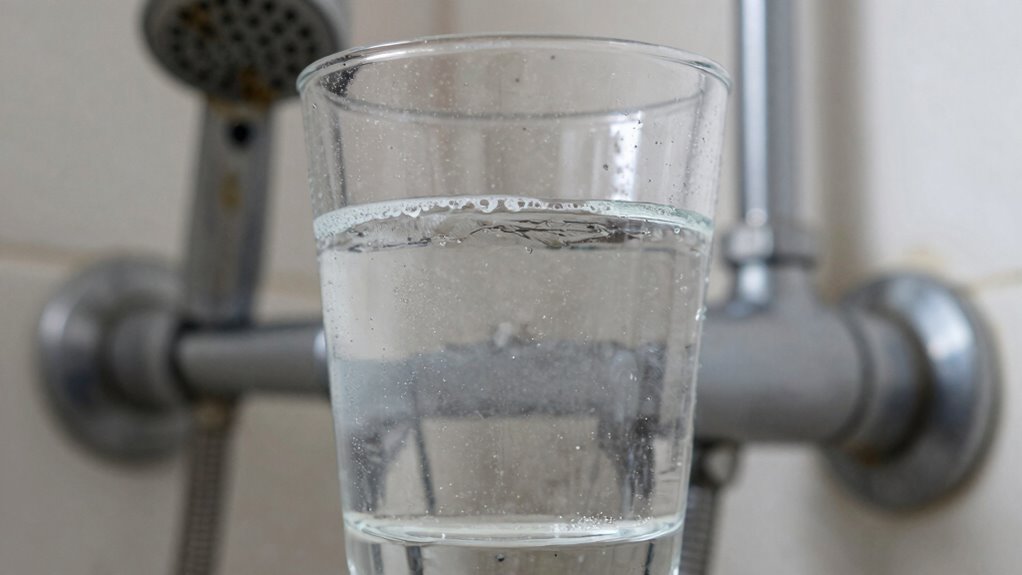
Hard water can cause significant problems for your appliances, skin, and plumbing systems. When you use hard water, mineral buildup occurs inside appliances like your dishwasher, washing machine, and water heater. This buildup can lead to appliance damage, reducing efficiency and lifespan. For your skin, hard water often causes irritation, dryness, and itchiness because the minerals strip natural oils and leave residues on your skin. Plumbing pipes are also vulnerable; mineral deposits can clog and corrode them over time, decreasing water flow and increasing the risk of leaks. You might notice your skin feeling rough or your appliances working harder than usual. Overall, hard water not only damages your equipment but also affects your daily comfort and hygiene, making it essential to understand its impacts. Understanding water quality is key to preventing long-term damage and maintaining your home’s systems.
Best Solutions for Hard Water: Softeners and Alternatives
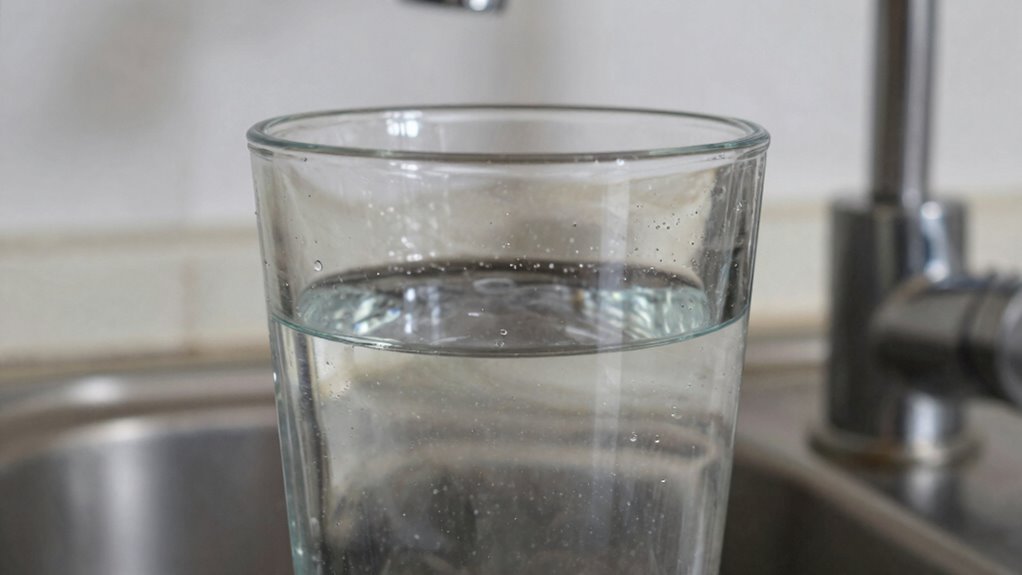
To effectively combat hard water issues, installing water softeners is one of the most reliable solutions. Soft water benefits include reduced soap scum, smoother skin, and longer-lasting appliances. Water softening methods vary, with ion exchange being the most common, where calcium and magnesium ions are replaced with sodium or potassium. Alternatively, salt-free systems use template-assisted crystallization to alter mineral behavior without adding salt. Reverse osmosis units can also reduce mineral content, though they’re more suited for drinking water. Choosing the right approach depends on your needs, budget, and water quality. Softening your water not only improves your home’s comfort but also protects plumbing and appliances, saving you money in the long run.
When Should You Call a Water Treatment Professional?
Sometimes, DIY solutions aren’t enough to resolve persistent water hardness issues, and professional expertise becomes essential. If you notice ongoing problems like scale buildup, soap scum, or reduced water pressure despite using water softening or filtration methods, it’s time to call a water treatment professional. They can assess your water quality and recommend effective solutions. Consider contacting an expert if:
When water issues persist despite DIY efforts, professional help ensures effective solutions.
- Your current water softening system isn’t reducing hardness effectively.
- Water filtration isn’t removing contaminants or improving taste.
- You experience frequent equipment failures or persistent mineral deposits.
A professional can optimize water softening systems and recommend advanced filtration options to ensure your water quality improves reliably. Trusting a specialist guarantees your home’s water feels right and functions efficiently.
Frequently Asked Questions
Can Hard Water Damage My Home’s Fixtures Over Time?
Yes, hard water can damage your home’s fixtures over time. It causes scale buildup on faucets, showerheads, and appliances, which reduces their efficiency and lifespan. The minerals in hard water can also lead to fixture corrosion, weakening metal parts and causing leaks. Regularly using water softeners or descaling treatments helps prevent this damage, keeping your fixtures functioning properly and extending their durability.
Are There Health Risks Associated With Drinking Hard Water?
Drinking hard water isn’t generally harmful, but it can impact your health if you have certain conditions. The minerals in hard water, like calcium and magnesium, contribute to your mineral intake, which is beneficial in moderation. However, excessive consumption might strain your kidneys, especially if you have pre-existing kidney issues. Overall, for most people, hard water is safe, but monitoring mineral levels and kidney health is wise.
How Often Should I Test My Water for Hardness?
You should test your water for hardness at least once a year. Did you know that over 85% of homes have hard water issues? Regular water testing helps you monitor mineral levels, ensuring your appliances last longer and your water quality stays ideal. If you notice changes in soap lather or scale buildup, consider testing more often. Staying proactive keeps your home’s water healthy and efficient.
Do Water Softeners Remove All Minerals From the Water?
Water softeners don’t remove all minerals from your water; instead, they target minerals like calcium and magnesium that cause hardness. They mainly perform mineral removal related to water mineralization, reducing scale buildup and improving soap efficiency. However, other minerals such as iron or manganese may require additional treatment. So, while softeners improve water quality, some minerals might still be present, affecting taste or staining.
Can Hard Water Cause Issues With Laundry and Cleaning?
Ever wondered why laundry feels stiff or soap scum clings to surfaces? Hard water definitely causes issues with laundry and cleaning. It reacts with soap, creating residue that leaves fabrics stiff and soap scum on fixtures. You might notice clothes don’t feel soft, and cleaning tasks require more effort. Hard water reduces soap’s effectiveness, making it harder to get surfaces truly clean. Are you tired of battling stubborn residues?
Conclusion
Understanding water hardness helps you spot issues before they worsen. Did you know that over 85% of U.S. households experience hard water? This means a lot of people are unknowingly dealing with mineral buildup, affecting appliances, skin, and plumbing. By testing and choosing the right solutions, you can protect your home and save money in the long run. Don’t wait—take action now to make certain your water feels right and your home runs smoothly.