Different home insulation types suit various areas and climates. Fiberglass batts are affordable and great for walls, while spray foam provides top air sealing for attics and gaps. Rigid foam boards excel in basements and exterior walls. Mineral wool is fire-resistant and moisture-resistant, ideal for humid spaces, and cellulose offers eco-friendly options. Choosing the right materials depends on your climate, budget, and specific needs. Keep exploring to learn how to make the best insulation choices for your home.
Key Takeaways
- Different insulation materials, such as fiberglass, spray foam, mineral wool, and cellulose, suit specific areas based on climate and moisture needs.
- Attics and roof spaces benefit from high R-value options like spray foam or mineral wool for durability and energy efficiency.
- Rigid foam boards are ideal for basement and exterior applications due to moisture resistance and thermal performance.
- Proper installation, sealing, and moisture barriers are essential to prevent gaps, thermal bridging, and moisture issues.
- Choice of insulation depends on climate, budget, environmental impact, and specific structural or moisture considerations.
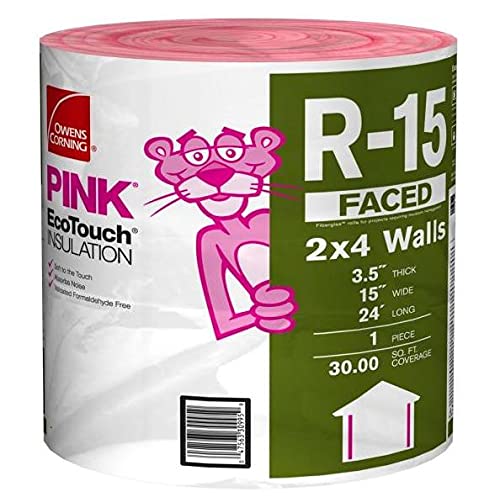
Owens Corning R- 15 Faced Fiberglass Insulation ROLL 15 in. X 24 FT. 1 ROLL RF32
Stens replacement parts have become a favorite among lawn and landscape professionals thanks to exceptional performance.
As an affiliate, we earn on qualifying purchases.
As an affiliate, we earn on qualifying purchases.
What Are the Different Types of Home Insulation?

Have you ever wondered what types of insulation can keep your home warm in winter and cool in summer? Different insulation materials offer varying levels of thermal resistance, which affects how well they prevent heat transfer. Fiberglass batts are common; they trap air to provide good thermal resistance and help control temperature. Spray foam offers high thermal resistance and creates an airtight seal, improving energy efficiency. Rigid foam boards are lightweight, moisture-resistant, and excel at moisture control, preventing dampness and mold. Mineral wool insulates well while resisting fire and moisture, making it ideal for areas prone to humidity. Each type has unique properties, so choosing the right insulation depends on your climate, budget, and specific needs. Proper insulation also helps manage moisture, protecting your home’s structure. Additionally, understanding multi-unit setups can aid in optimizing overall energy efficiency for larger or complex homes.

BEEST FullStop Spray Foam Insulation Kit for Walls and Attic – 240 Board ft/sq.ft. Perfect Heat & Acoustic Insulation for Reduced Energy Bills – 12x Spray Foam Can, 1 Cleaner, Pro X Gun & Safety Gear
Beest FullStop DIY Spray Foam Insulation Kit: Our spray foam insulation delivers exceptional thermal insulation and soundproofing, achieving…
As an affiliate, we earn on qualifying purchases.
As an affiliate, we earn on qualifying purchases.
Which Insulation Is Best for Attics and Roof Spaces?
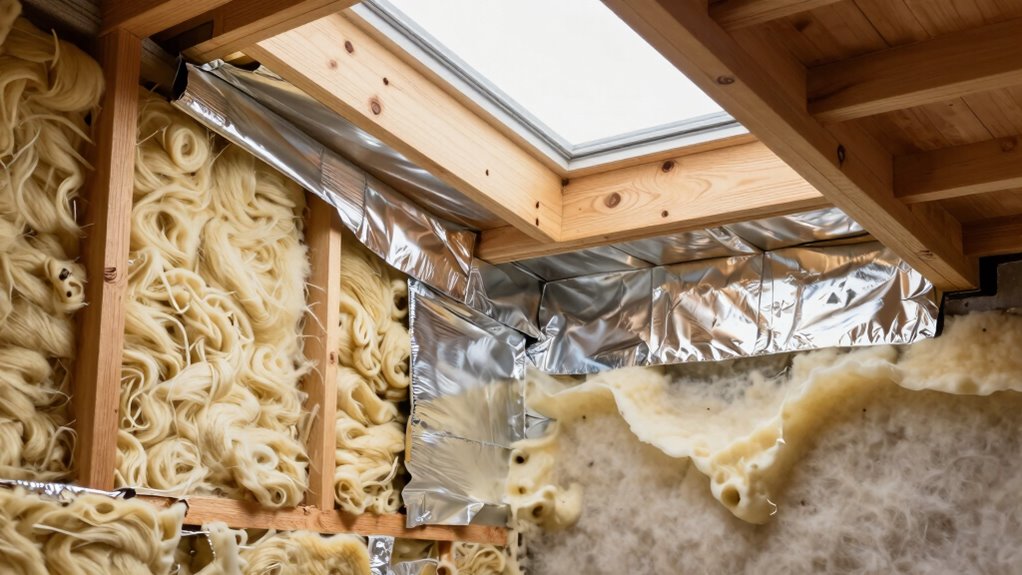
Choosing the right insulation for your attic or roof space depends on the materials’ effectiveness and your installation skills. The techniques you use can impact how well the insulation performs and lasts. Additionally, considering costs and potential energy savings helps you make the best decision for your home. Incorporating smart controls into your insulation strategy can further optimize energy efficiency and comfort.
Effective Insulation Materials
When selecting insulation for your attic or roof space, the effectiveness of the material plays a crucial role in energy savings and comfort. You want insulation that offers high R-values, sustained insulation durability, and minimal environmental impact. Fiberglass batts are popular due to their affordability and decent insulation properties, but spray foam provides superior air sealing and higher R-values, making it ideal for energy efficiency. Mineral wool is fire-resistant and environmentally friendly, with good insulation durability. Reflective foam boards work well in hot climates by reducing heat transfer. When choosing, consider the long-term performance, as durable materials maintain their insulating properties over time, reducing the need for replacements and minimizing environmental impact. Additionally, selecting safe household products ensures your insulation choices support overall household safety and health. Your choice should balance performance, longevity, and eco-friendliness for ideal results.
Installation Techniques Matter
Proper installation techniques are essential to maximize the performance of your attic or roof space insulation. Ensuring a tight fit helps prevent thermal bridging, where heat bypasses insulation through gaps or poorly fitted areas. You should also install moisture barriers correctly to protect your insulation from moisture buildup, which can reduce its effectiveness and cause damage. Avoid compressing insulation, as this can limit its insulating value and create cold spots. Pay attention to sealing around vents, chimneys, and other penetrations to prevent air leaks. Proper layering and consistent coverage eliminate gaps and voids that compromise insulation performance. Additionally, using appropriate installation methods ensures your insulation functions as intended without gaps or compression. When installed correctly, your insulation will better resist heat flow, moisture, and air leaks, ensuring your attic or roof space remains energy-efficient and protected.
Cost and Energy Savings
Selecting the right insulation can substantially reduce your energy bills and improve your home’s comfort. For attics and roof spaces, choosing insulation with the best cost comparison and energy efficiency is vital. Fiberglass batts are affordable and easy to install, offering good thermal performance. Spray foam, while more costly upfront, provides superior air sealing and higher energy savings over time. Cellulose insulation offers an eco-friendly option with moderate costs and decent energy efficiency. Use the table below to compare these options:
| Insulation Type | Cost Comparison | Energy Efficiency |
|---|---|---|
| Fiberglass Batts | Low | Moderate |
| Spray Foam | High | High |
| Cellulose | Moderate | Moderate |
Consider your budget and long-term savings to choose the best fit. Incorporating cycling skills and gear care tips can help you maintain your home efficiently, especially when managing energy consumption for climate control.

DGSL Double Reflective Bubble Foil Insulation Foam, 23.6 in X 10 FT Aluminum Foil Thermal Insulation Radiant Barrier for Window, Garage Door, RV, Roof
Reflective Window Insulation: Our rv window insulation is well-made, which is weight of 200 g / 10.76 sqft….
As an affiliate, we earn on qualifying purchases.
As an affiliate, we earn on qualifying purchases.
Fiberboard, Spray Foam, and Rigid Foam: When and Why to Use Them
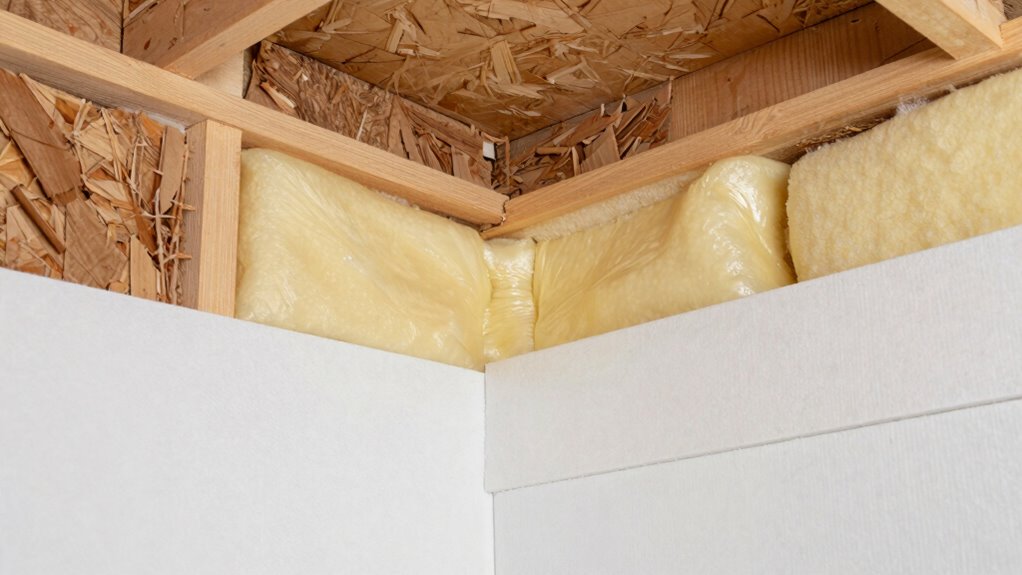
Fiberboard, spray foam, and rigid foam are popular insulation options, each suited for specific applications. You should consider them when prioritizing insulation durability and environmental impact. Here are some key uses:
Fiberboard, spray foam, and rigid foam are versatile insulation options for durability and eco-friendliness.
- Use fiberboard for interior wall sheathing and soundproofing, thanks to its good environmental profile.
- Spray foam provides excellent air sealing in attics and wall cavities, enhancing insulation durability.
- Rigid foam is ideal for basement insulation and exterior sheathing, offering moisture resistance.
- Choose spray foam or rigid foam when long-term performance and minimal environmental impact are priorities.
These materials help improve energy efficiency while addressing environmental concerns, making them suitable for different parts of your home depending on your needs. Knowing when and why to use each ensures you optimize insulation performance effectively.

Roxul AFB Acoustical Fire Batts, Mineral Wool Insulation, Sound Deadening, Heat Resistant, 2-inch, Case of 6
6 pieces of 24" x 48" x 2" acoustical fire batt mineral wool
As an affiliate, we earn on qualifying purchases.
As an affiliate, we earn on qualifying purchases.
Is Cellulose or Mineral Wool Right for Your Home?
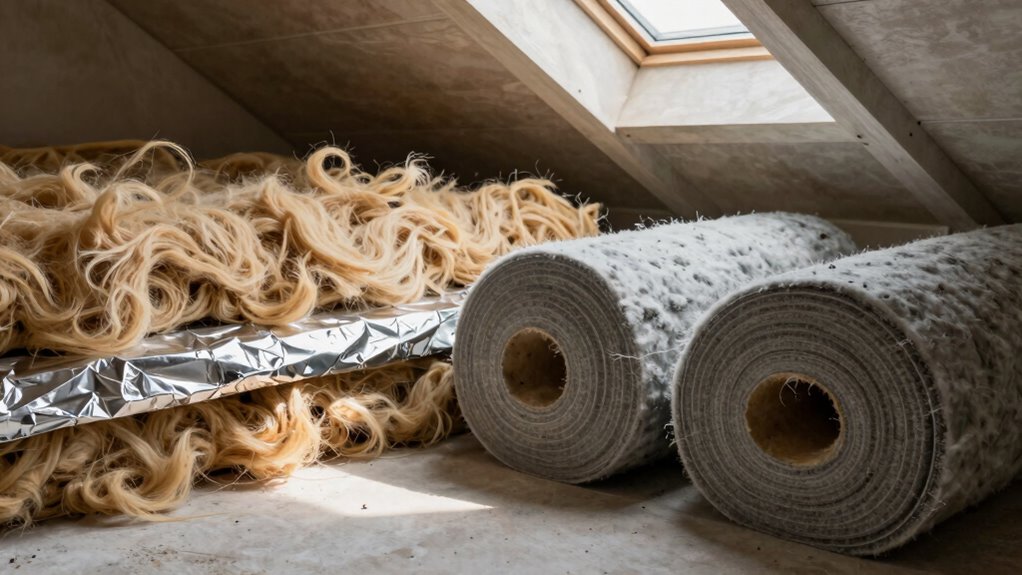
Choosing between cellulose and mineral wool depends on the type of insulation material that fits your home and your installation needs. Both options offer benefits, but they differ in how they’re installed and maintained. Consider your specific requirements to determine which material works best for your space.
Type of Insulation Materials
When deciding between cellulose and mineral wool insulation, it’s important to understand their differences to determine which suits your home best. Both materials offer unique benefits related to thermal resistance and moisture barriers. Here’s what to evaluate:
- Thermal Resistance: Mineral wool generally has a higher R-value, providing better insulation.
- Moisture Management: Cellulose contains moisture barriers that help prevent mold, while mineral wool resists water absorption.
- Fire Resistance: Mineral wool is more fire-resistant, making it safer in high-risk areas.
- Soundproofing: Mineral wool offers superior soundproofing qualities compared to cellulose.
- Maintenance and Longevity: Proper maintenance, including regular inspections and ensuring correct application, can extend the effectiveness of either insulation type, especially when considering filtration and pump protection to prevent dust and debris buildup during installation.
Choosing the right material depends on your home’s specific needs, climate, and safety considerations. Both options can improve energy efficiency when correctly selected.
Installation Considerations
Deciding whether cellulose or mineral wool insulation is right for your home depends on several installation considerations. One key factor is how each material handles thermal bridging; mineral wool naturally resists heat flow, reducing this issue, while cellulose may need additional insulation strategies. Moisture barriers are also vital—cellulose is more vulnerable to moisture absorption, so proper vapor barriers are essential during installation. Mineral wool is more resistant to moisture, making it suitable for damp areas. Consider your existing walls and framing, as well as the ease of installation. Both materials require careful handling to prevent gaps that compromise insulation performance. Ultimately, your choice depends on your home’s specific needs, climate, and the importance you place on moisture management and thermal efficiency.
How to Choose Insulation for Walls, Basements, and Other Areas
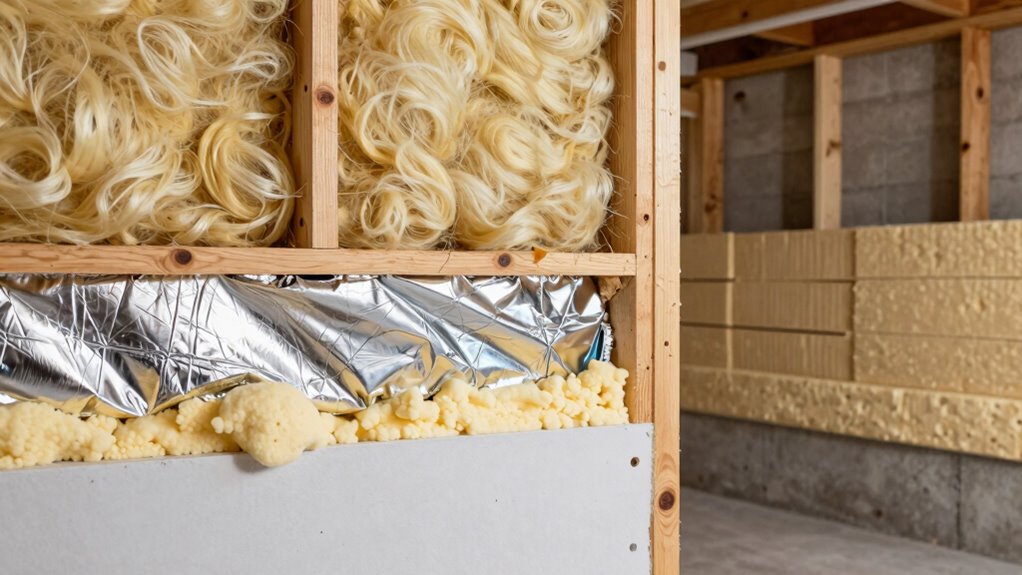
Selecting the right insulation for walls, basements, and other areas depends on understanding the specific needs of each space. For walls, focus on filling the wall cavity to prevent heat loss and improve energy efficiency. In basements, effective sealing is vital to prevent air leaks and moisture issues. To choose the best insulation, consider these factors:
- The R-value needed for your climate and space
- Compatibility with existing wall or basement sealing systems
- Moisture resistance for basements prone to dampness
- Ease of installation and maintenance
- The air sealing properties of different insulation types to ensure optimal energy performance
For wall cavities, foam board or batt insulation works well, while spray foam offers superior sealing and insulation for basement walls. Proper selection guarantees comfort, energy savings, and long-term durability.
How to Pick Insulation Based on Your Climate and Budget
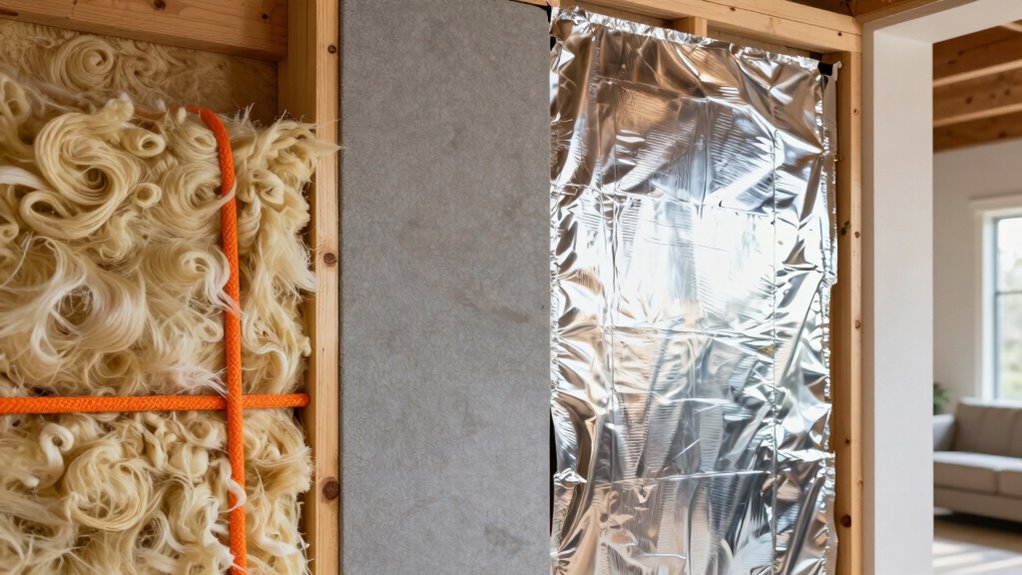
Choosing the right insulation depends largely on your climate and budget, as these factors influence what materials will perform best and what you can afford. For colder climates, climate specific insulation like spray foam or rigid foam boards provides superior thermal resistance, helping you stay warm and save on heating costs. In milder or warmer areas, fiberglass batts or blown-in cellulose can be effective and more budget friendly options. Consider your budget when selecting insulation; if you’re on a tight budget, materials like fiberglass or mineral wool offer affordable, reliable performance. Always match your insulation choice to your climate to maximize energy efficiency, comfort, and long-term savings. Additionally, understanding the different insulation types can help you make more informed decisions tailored to your home’s needs. By balancing your climate needs with your budget, you ensure your home stays comfortable without overspending.
Top Insulation Installation Mistakes to Avoid
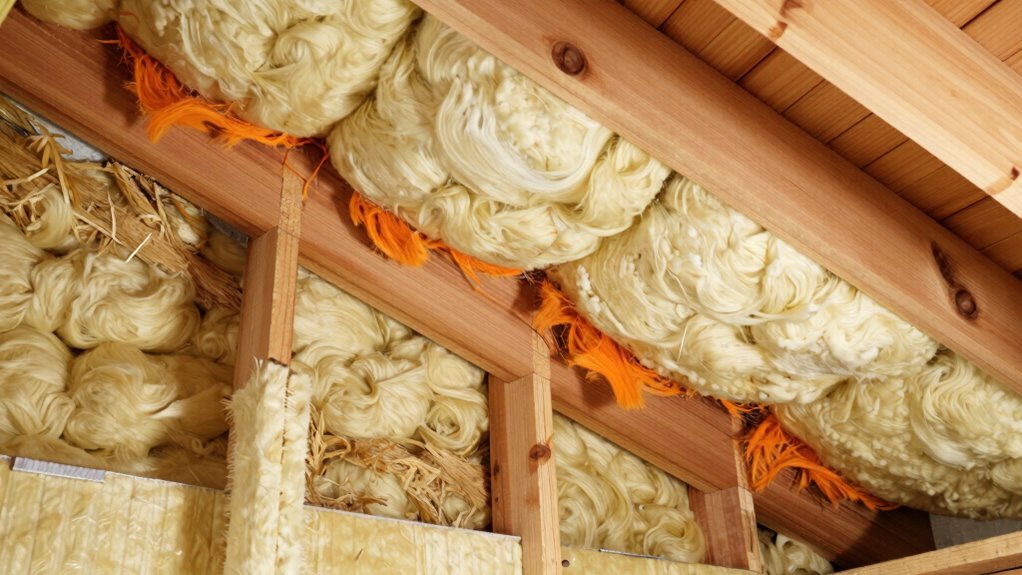
Proper insulation installation is crucial for maximizing energy efficiency and comfort, but many homeowners make simple mistakes that undermine its effectiveness. Common installation pitfalls can reduce performance and compromise safety. To avoid these, keep in mind:
- Inadequate sealing: Gaps or compressed insulation create thermal bridges, reducing efficiency.
- Imperfect layering: Missing vapor barriers or uneven layers lead to moisture issues.
- Ignoring safety precautions: Wear protective gear and ensure proper ventilation when handling insulation materials.
- Poor choice of insulation type: Using the wrong insulation for specific areas can cause long-term problems.
Frequently Asked Questions
How Long Does Home Insulation Typically Last Before Replacement Is Needed?
Typically, your home insulation lasts around 15 to 25 years before you should consider replacement. The insulation lifespan depends on the type and installation quality, but over time, it can settle, get damaged, or lose effectiveness. Keep an eye on signs like drafts or increased energy bills. Regular inspections help determine the right replacement timing, ensuring your home stays energy-efficient and comfortable.
Can Insulation Improve Indoor Air Quality and Reduce Allergies?
Insulation can improve your indoor air quality by trapping dust, allergens, and pollutants, reducing airborne irritants. It also helps maintain consistent temperatures, preventing mold growth that worsens allergies. With proper insulation, you’ll notice allergy reduction and fresher air inside your home. Additionally, high-quality insulation minimizes drafts and humidity fluctuations, creating a healthier environment. So, investing in good insulation not only saves energy but also makes your home’s air cleaner and more comfortable.
What Are the Environmental Impacts of Different Insulation Materials?
You might worry about insulation’s environmental impact, but choosing sustainable materials or recycling insulation reduces waste and lowers your carbon footprint. Some options, like cellulose or mineral wool, come from recycled content, making them eco-friendly. While manufacturing can consume energy, these materials often have a smaller overall impact compared to traditional options like foam or fiberglass. By selecting eco-conscious insulation, you support sustainability and lessen environmental harm.
Is It Necessary to Hire a Professional for All Types of Insulation Installation?
You don’t always need a professional for insulation installation, especially if you choose DIY options like foam boards or batt insulation. However, for certain types like spray foam or blown-in insulation, hiring a professional guarantees proper installation and insulation safety. DIY insulation can be cost-effective, but always follow safety guidelines to avoid hazards. When in doubt, consulting a professional guarantees your insulation is installed correctly and safely.
How Does Insulation Affect Overall Home Energy Efficiency Ratings?
Insulation substantially boosts your home’s energy efficiency by improving thermal performance and increasing the insulation R value. When you upgrade or add insulation, you reduce heat loss in winter and keep your home cooler in summer. This means your heating and cooling systems don’t have to work as hard, lowering energy bills. To maximize benefits, choose insulation with the right R value for your climate and home, ensuring ideal energy efficiency.
Conclusion
Choosing the right insulation can cut your energy bills by up to 20%. With so many options, it’s easy to feel overwhelmed, but understanding each type helps you make informed decisions. Remember, proper installation is key—avoid common mistakes that can reduce efficiency. Investing in the right insulation not only saves you money but also boosts comfort and reduces your carbon footprint. Take the time to select wisely, and your home will stay cozy all year round.