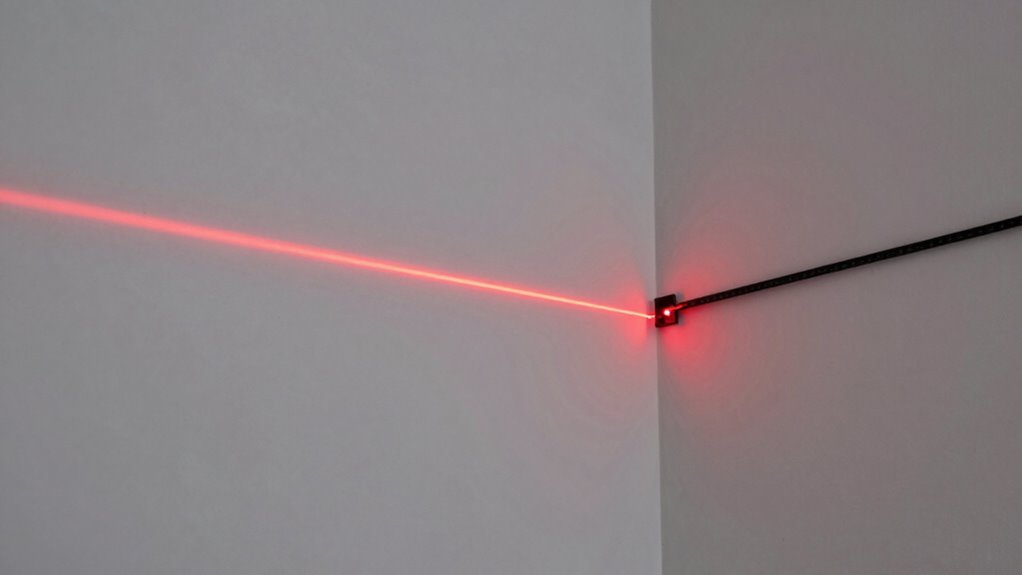

Your laser level’s accuracy depends on proper calibration, which keeps lines true regardless of beam color. Green beams are brighter and easier to see outdoors, making them ideal for large or daylight projects, while red beams are more common but less visible outside. Environmental factors like temperature and vibrations can also affect performance. To get the best results, guarantee regular calibration and choose the right beam color for your environment. Keep exploring to learn more about maintaining precision.

Get the little things that make your day delivered free with Prime
- Fast, free delivery on millions of items
- Prime Video, Amazon Music and more included
- Member-only deals all year
Key Takeaways
- Proper calibration ensures laser lines are accurate regardless of beam color, preventing measurement errors.
- Green beams are more visible in daylight, making them ideal for outdoor or large-scale projects.
- Self-leveling lasers maintain consistent accuracy and reduce manual adjustments during use.
- Environmental factors like temperature and vibrations can influence laser accuracy and visibility.
- Selecting the correct beam color and maintaining calibration maximizes measurement precision and ease of use.
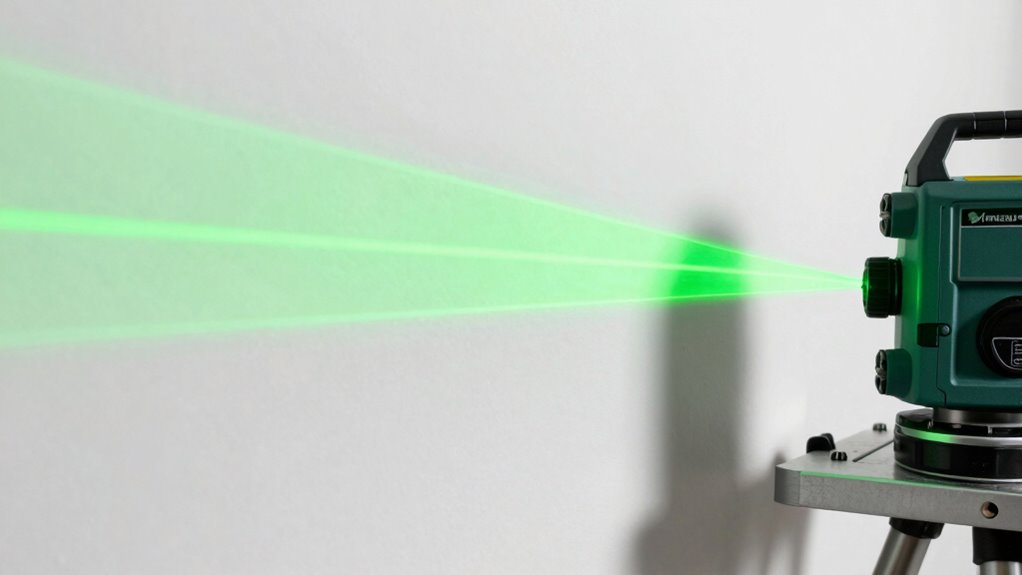
Have you ever wondered how precise a laser level really is or why beam color matters? The accuracy of your laser level depends on several factors, and understanding them can help you achieve better results. One key aspect is calibration methods. Proper calibration guarantees that your device’s laser beam aligns correctly with the measurements you’re taking. Most laser levels come with built-in calibration procedures or require periodic adjustments to maintain accuracy. You might need to calibrate it yourself using a known reference point or have it professionally calibrated to ensure the laser projects true lines, especially if you’ve dropped it or notice discrepancies. Regular calibration prevents errors that can throw off your entire project, whether you’re hanging pictures or installing cabinetry. Additionally, some models feature self-leveling capabilities, which automatically calibrate the device and help maintain accuracy throughout your work. To ensure ongoing precision, it’s also beneficial to understand how environmental conditions like temperature and vibrations can affect laser accuracy. For example, sudden temperature changes can cause slight shifts in the laser’s internal components, impacting its accuracy over time. It can also be helpful to use target plates to improve line visibility in challenging environments or when working at a distance.
Beam visibility is another critical element influencing how well you can see and work with the laser. The color of the beam plays a significant role here. Red laser beams are common and generally inexpensive, but their visibility can diminish in bright or outdoor environments. Green laser beams, on the other hand, tend to be brighter and more visible to the human eye, especially in daylight conditions. This increased visibility makes green lasers more suitable for outdoor use or large-scale projects where you need to see the line clearly from a distance. However, green laser levels tend to be more expensive, so it’s essential to weigh the benefits against your specific needs.
The combination of calibration methods and beam visibility directly impacts the overall accuracy of your laser level. If your device isn’t properly calibrated, even the most visible beam won’t provide accurate results. Conversely, a well-calibrated laser with poor beam visibility can make it difficult to see your line, especially in challenging environments. Some advanced laser levels feature self-leveling capabilities, which automatically calibrate the device and help maintain accuracy throughout your project. Others require manual calibration, so understanding how to perform this process is crucial. Additionally, choosing the right beam color for your environment ensures you get the best visibility and precision, whether you’re working indoors or outdoors. Proper maintenance of your laser level, such as keeping the lenses clean and storing it properly, also plays a vital role in maintaining its accuracy over time.
In the end, paying attention to calibration methods and beam visibility will help you maximize your laser level’s accuracy and effectiveness. Keep your device calibrated regularly, select the appropriate beam color for your environment, and you’ll find that your measurements become more precise and your work more efficient.
As an affiliate, we earn on qualifying purchases.
Frequently Asked Questions
How Do Environmental Factors Affect Laser Level Performance?
Environmental interference, like dust, fog, or bright sunlight, can disrupt your laser level’s performance by scattering or dimming the beam. To maintain accuracy, you should use proper calibration techniques, such as regularly checking the level against known references and adjusting as needed. Keep the workspace clean and shield the laser from direct sunlight to guarantee consistent, precise results, regardless of environmental conditions.
Can Laser Levels Be Used Outdoors in Bright Sunlight?
Yes, you can use laser levels outdoors in bright sunlight, but their effectiveness depends on laser level brightness and beam color visibility. To see the laser beam clearly, choose a model with high brightness settings, often indicated by luminous intensity. Opt for a laser with a green beam, as it’s more visible in sunlight than red beams. Using a laser detector can also improve accuracy and visibility in outdoor, bright conditions.
What Is the Typical Lifespan of a Laser Level Battery?
A laser level battery typically lasts between 4 to 12 hours, depending on usage and model. You should plan for regular battery replacement and practice good power management, like turning the device off when not in use. To extend battery life, opt for rechargeable batteries and keep spare ones handy. Proper maintenance guarantees your laser level stays reliable on the job, minimizing downtime and maximizing productivity.
Are There Safety Precautions for Using Laser Levels?
Yes, you should follow safety precautions when using laser levels. Always wear laser safety glasses to protect your eyes from accidental beam exposure, especially since beam visibility can be high, making it easier to overlook potential hazards. Keep the laser level directed away from your eyes and others’, avoid pointing it toward reflective surfaces, and make certain the workspace is clear. These steps help prevent injury and ensure safe, effective use of your laser level.
How Do I Calibrate a Laser Level for Maximum Accuracy?
To calibrate your laser level for maximum accuracy, start with calibration procedures like placing the device on a level surface or mounting it on a tripod. Turn it on and check the beam against a known reference point. Use accuracy tips such as adjusting the device until the laser hits the target precisely. Regular calibration guarantees reliable results, so repeat these steps periodically for peak performance.
As an affiliate, we earn on qualifying purchases.
Conclusion
So, now you’re a laser level expert—kind of like a wizard, but with beams instead of spells. Remember, accuracy isn’t just a fancy term; it’s your new best friend, ensuring everything lines up perfectly. And beam color? Think of it as choosing your sidekick—green for the sunny days, red for the moonlit nights. With these tips, your projects will be so precise, even your neighbor’s envy will be on point. Happy leveling!
As an affiliate, we earn on qualifying purchases.
As an affiliate, we earn on qualifying purchases.
Evergreen bestsellers Picks
bestsellers
As an affiliate, we earn on qualifying purchases.