To measure for shelves, start by using a tape measure to find the wall width and determine the ideal shelf length. Mark the height from the floor or nearby furniture, and double-check all measurements before marking where the shelves will go. Keep in mind potential obstructions like outlets or moldings. Use a level for straight placement and choose hardware suited for your wall material to guarantee safety. If you want to perfect your process, keep going for more tips.
Key Takeaways
- Measure wall width, height, and depth carefully, accounting for obstructions and room layout.
- Use a level and pencil to mark precise, straight guidelines for shelf placement.
- Confirm spacing between shelves for uniform appearance and functional use.
- Identify wall material to select proper anchors and hardware for secure mounting.
- Consider shelf weight capacity and choose appropriate materials and supports for safety.
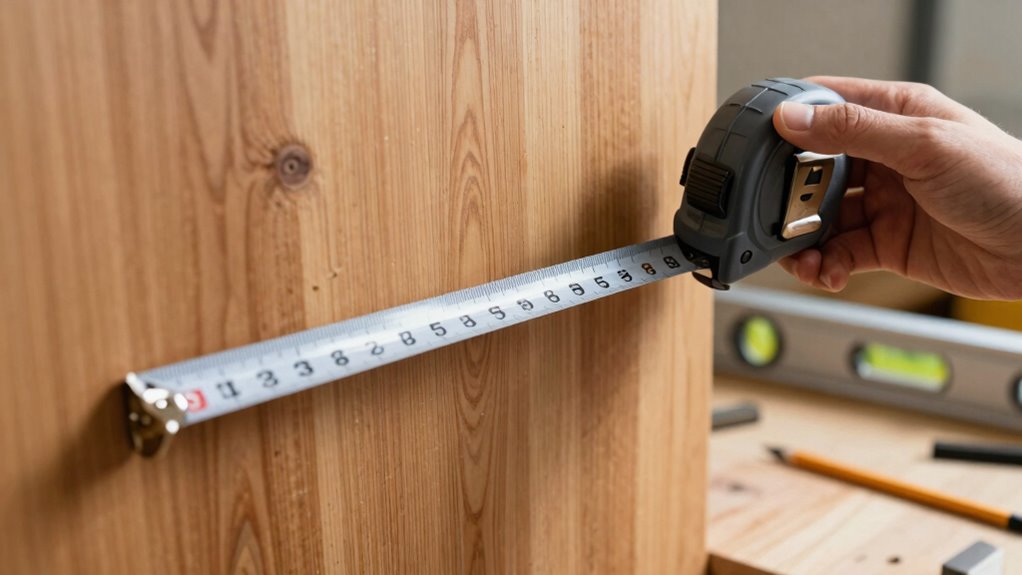
Are you unsure how to guarantee your shelves fit perfectly in your space? The key is accurate measuring, which assures your shelves sit flush against the wall and hold everything you plan to put on them. To start, you need to take into account wall clearance—that’s the space between your wall and the shelf’s edge. This measurement is vital because it determines how much room you’ll have for decorative items, books, or other objects. Use a tape measure to find the width of the wall where you want to install the shelves. Measure from one end to the other, noting the longest point to avoid surprises later. If you’re installing multiple shelves, confirm the spacing between them so they don’t look crowded or uneven.
Next, focus on the height and depth of the shelves. For height, decide where you want the bottom of your shelf to sit and measure from the floor or any existing furniture nearby to guarantee proper placement. For depth, measure from the wall outward to see how far you want your shelves to extend into the room. Keep in mind that deeper shelves require more wall clearance, which could impact the room’s layout. When measuring depth, account for any moldings, electrical outlets, or other obstructions that might interfere with the shelf’s placement. Additionally, understanding the wall construction can help determine the best hardware and mounting techniques to ensure stability and safety. Knowing the types of wall materials can also guide you in selecting the right tools and anchors for a secure installation. Being aware of proper mounting techniques is crucial for ensuring your shelves stay securely in place over time. It’s also helpful to consider the shelf material to match your aesthetic and functional needs. Considering local building codes may also be necessary if you’re mounting shelves in a commercial or shared space to meet safety standards.
Weight capacity is just as important as dimensions. Before choosing or installing a shelf, determine what you plan to put on it. Heavier items like books or kitchenware demand a sturdy shelf with a higher weight capacity. Check the material and mounting hardware to make sure they can support your intended load. For example, solid wood shelves and heavy-duty brackets typically handle more weight than lighter materials. When measuring for wall mounting, also think about the wall’s construction—whether it’s drywall, plaster, or brick—as this affects the type of anchors or screws needed to secure your shelves safely.
Finally, double-check all your measurements before purchasing or installing. Use a level to verify your measurements are straight, and mark your wall lightly with a pencil for precise placement. Taking these steps guarantees that your shelves will fit perfectly, look professional, and hold up over time. By paying attention to wall clearance, weight capacity, and proper measurements, you set yourself up for a successful shelf installation that combines style and function seamlessly.
As an affiliate, we earn on qualifying purchases.
Frequently Asked Questions
What Tools Are Best for Measuring Shelves Accurately?
You should use a measuring tape for precise length measurements and a spirit level to guarantee your shelves are perfectly horizontal. The measuring tape helps you get accurate dimensions for where to place your shelves, while the spirit level guarantees they’re level, preventing any tilting. Both tools are essential for a professional, polished look. Keep them handy to make your measuring process simple, accurate, and efficient.
How Do I Account for Shelf Thickness in Measurements?
To account for shelf thickness, you should subtract the shelf’s depth from your wall clearance measurements, ensuring the shelf fits without protruding. Measure the total wall space first, then determine the actual space the shelf will occupy by noting its thickness. This way, you can plan for the correct shelf depth, avoiding issues with wall clearance, and making sure your shelves sit flush and secure.
Should I Measure for Adjustable Shelves Differently?
When considering adjustable shelves, you should measure slightly differently to guarantee ideal shelf aesthetics and a seamless DIY installation. Focus on measuring the height between the support holes or tracks, accounting for the thickness of the shelf material itself. This way, you’ll achieve a balanced look, and your adjustable shelves will fit perfectly, offering flexibility and style. Adjust your measurements as needed for a clean, professional finish.
How Do I Measure for Corner Shelves?
To measure for corner shelves, start by measuring the space where you want to install them, including the depth and width of each wall section. Consider decor placement and how the shelves will complement your existing decor. Think about material considerations, like weight capacity and style. Use a tape measure to mark exact points, ensuring the shelves fit snugly into the corner without obstructing pathways or other decor items.
What Is the Standard Height for Most Shelves?
Like Goldilocks, you want a shelf height that’s just right. Most shelves sit around 4 to 5 feet high, making them accessible for various decorating ideas and easy to reach. When choosing shelf material options, consider the height to guarantee your decor fits comfortably without crowding. Adjust based on what you plan to display, but sticking close to this standard keeps your space functional and visually appealing.
As an affiliate, we earn on qualifying purchases.
Conclusion
Now that you’ve learned how to measure for shelves, you’re ready to confidently plan your perfect storage space. Remember, precision is key to ensuring your shelves fit perfectly and stay secure. Will you take the time to double-check your measurements before drilling? By paying attention to detail, you’ll create a functional, beautiful addition to your home that stands the test of time. Happy DIY-ing!
As an affiliate, we earn on qualifying purchases.
As an affiliate, we earn on qualifying purchases.