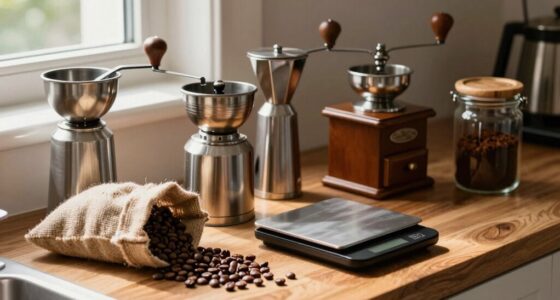
To stop wasting beans, use the right grind size for your brewing method, guaranteeing optimal extraction and flavor. Coarse for French press, medium for drip, and fine for espresso—each requires a specific setting. Consistently adjust and maintain your grinder, and refer to a detailed grind size chart to fine-tune your process. Mastering these steps saves beans and guarantees great coffee every time; if you keep exploring, you’ll reveal even better results.
Key Takeaways
- A grind size chart guides selecting the correct grind for each brewing method, preventing over- or under-extraction.
- Proper grind calibration maximizes flavor extraction, reducing waste of coffee beans and ensuring optimal taste.
- Consistent grind size ensures uniform extraction, avoiding uneven brewing that leads to wasted beans and poor flavor.
- Adjusting grind size according to the chart helps prevent common issues like bitterness or weak coffee, saving beans.
- Mastering grind size matching improves brew quality, reducing the need to discard poorly extracted or overused beans.

SHARDOR Electric Super Silent Blade Coffee Grinder, Timed Grind Control Rotary Knob, Adjustable Coarse to Fine for Coffee Beans, Spices & Herbs, with 1 Removable Stainless Steel Bowl, Black
【Adjustable Grinding Precision】There are seconds marks above the timing knob, from coarse to fine. You can choose the…
As an affiliate, we earn on qualifying purchases.
As an affiliate, we earn on qualifying purchases.
Why Your Coffee Tastes Bland Without the Right Grind Size
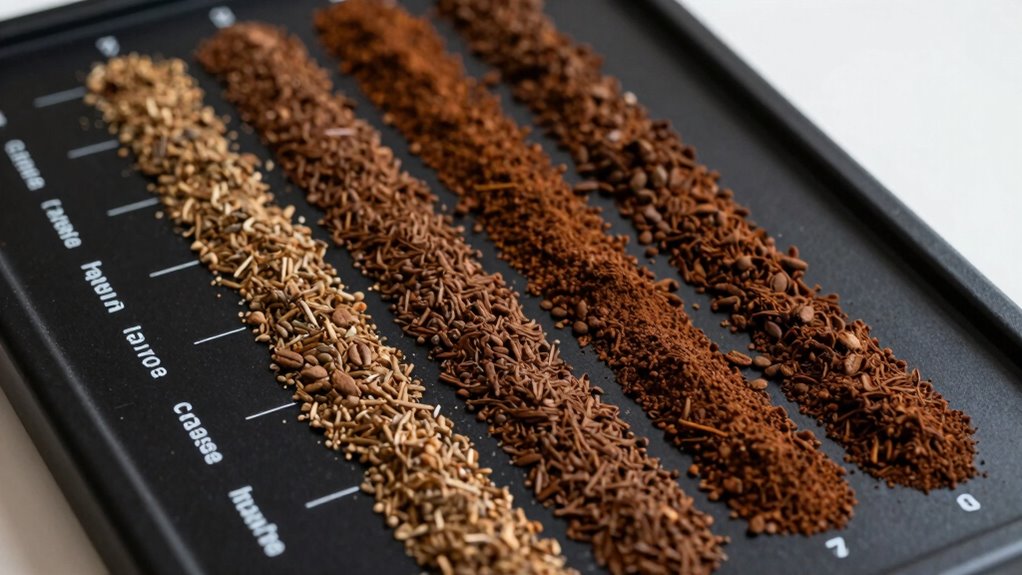
If your coffee tastes bland, the problem often lies in the grind size. When you grind your beans too coarsely, water flows through too quickly, extracting less flavor and dulling the coffee’s richness. Conversely, grinding too fine can lead to over-extraction, resulting in bitterness and a flat taste. The right grind size enhances coffee flavor by allowing ideal extraction, unlatching the beans’ full potential. Additionally, proper grinding helps preserve your beans’ freshness; coarse grinds stay fresh longer and reduce oxidation. If you want vibrant, flavorful coffee, paying attention to grind size is essential. It’s not just about taste—using the correct grind also protects your beans, ensuring they retain their quality longer and deliver a better cup every time. Proper grind size also plays a key role in optimizing your overall travel experience, especially when exploring local coffee cultures around the world.

SHARDOR Conical Burr Espresso Coffee Grinder Electric with Precision Timer 2.0, Touchscreen Adjustable Burr Mill with 51 Precise Settings for Home Use, Anti-static, Stainless Steel
Premium 40 Millimeter Stainless Steel Conical Burr: Designed to minimize grinding heat and protect the essential oils in…
As an affiliate, we earn on qualifying purchases.
As an affiliate, we earn on qualifying purchases.
How Different Brewing Methods Need Specific Grind Sizes
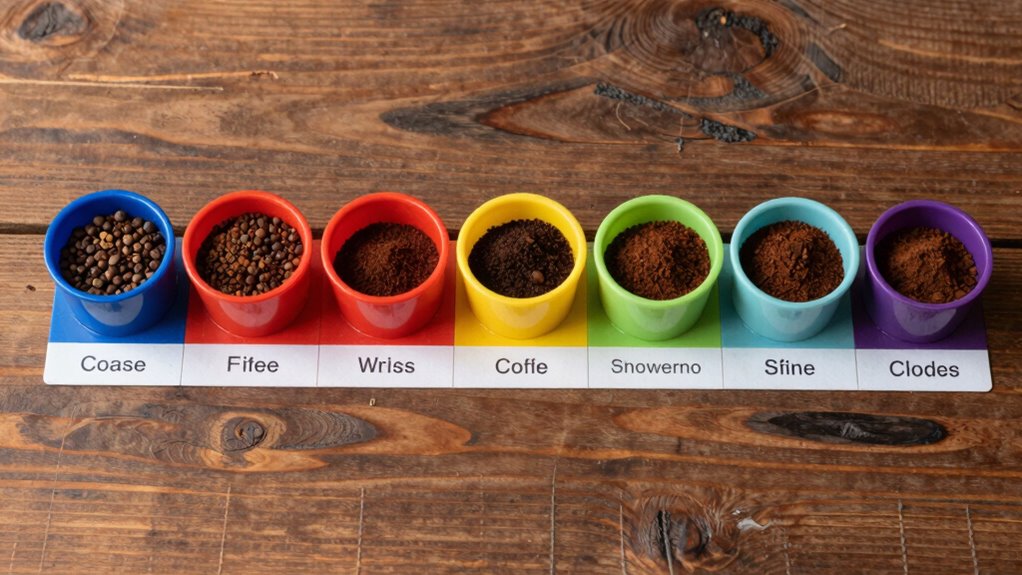
Choosing the right grind size isn’t just about flavor; it also depends on your brewing method. Different methods require specific grind sizes to optimize extraction and flavor. For example, espresso needs a fine grind for high pressure, while French press calls for a coarse grind to prevent over-extraction. Consistent grind size ensures uniform extraction, vital for balancing flavor and avoiding bitterness. Additionally, brewing temperature impacts grind effectiveness; hotter water extracts more quickly, so grind size adjustments may be necessary. Here’s a quick comparison:
| Brewing Method | Ideal Grind Size | Notes |
|---|---|---|
| Espresso | Fine | High pressure, fast extraction |
| Drip | Medium | Balances flow rate and extraction |
| French Press | Coarse | Prevents over-extraction |
Matching grind size to your method maximizes flavor and minimizes waste. Proper grind consistency is also essential for achieving optimal results in any brewing process.

Veken French Press Coffee Maker 34oz, No Plastic Touching Cafe,Thickened Glass Stainless Steel Brewer, Cold Brew Cafetera Tea pot for Kitchen Travel Camping, Gifts, Decor, Bar Accessories, Dark Pewter
No Plastic Touching Food: Made with 304 stainless steel and food-grade silicone, our French press keeps all brewing…
As an affiliate, we earn on qualifying purchases.
As an affiliate, we earn on qualifying purchases.
Mastering the Coffee Grind Size Chart to Get Perfect Coffee

Mastering the coffee grind size chart is essential for brewing the perfect cup. Your understanding of how grind sizes relate to different roasting levels and the coffee plant’s origin helps maximize flavor extraction. Light roasts preserve more of the coffee plant’s natural acidity and brightness, requiring a slightly coarser grind for balanced extraction. Dark roasts, with their roasted flavors, often benefit from a finer grind to enhance body and richness. By matching the grind size to the brewing method, you ensure ideal contact between water and coffee grounds. This precision prevents over-extraction or under-extraction, which can ruin your coffee. Whether you’re using a French press or espresso machine, mastering these details allows you to get the most from your coffee plant’s unique characteristics. Incorporating industry trends into your brewing routine can further improve your coffee experience.

YUNGOO 8 PCS Espresso Accessories Kit, 51mm Espresso Tamper Kit Coffee Tamper Set with Coffee Distributor, Espresso Tamping Station, Espresso WDT Stirrer, Puck Screen,Dosing Funnel
【Compatible with 51mm Delonghi Portafilters】 This comprehensive 8-piece espresso accessories kit is precision-engineered to perfectly fit Delonghi and…
As an affiliate, we earn on qualifying purchases.
As an affiliate, we earn on qualifying purchases.
Tips to Adjust Your Grind and Save Beans
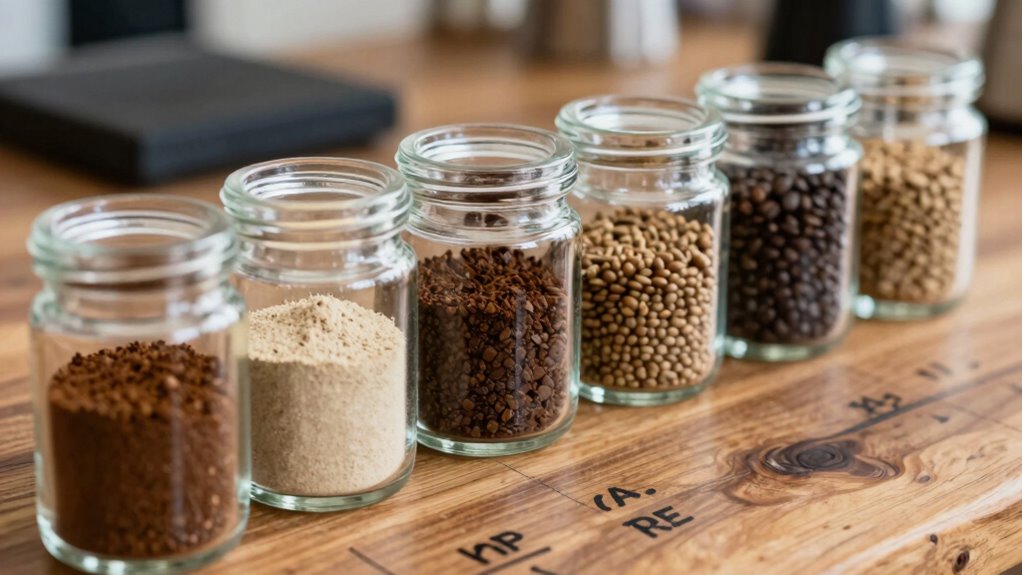
To improve your brew and save beans, start by adjusting the grind coarseness to match your brewing method. Keep an eye on the brewing time, as a proper duration helps prevent over- or under-extraction. Making small tweaks guarantees you get the best flavor without wasting your valuable beans. Additionally, understanding regional flavors can help you select the ideal grind size to enhance specific taste profiles.
Adjust Grind Coarseness
Adjusting your grind coarseness is essential for getting the perfect brew and saving beans in the process. To improve grind size consistency, start by calibrating your grinder. Proper calibration guarantees your beans are ground uniformly, preventing over-extraction or under-extraction. If your coffee tastes off or the brew is too bitter or weak, it’s likely a sign you need to adjust the grind. For French press, use a coarser setting, while espresso requires a finer grind. Take small steps when adjusting, testing each time to find the ideal coarseness for your brewing method. Regularly maintaining and calibrating your grinder helps keep the grind consistent, reduces waste, and ultimately improves your coffee’s flavor. Consistent grind size is key to achieving the best extraction and flavor.
Use Proper Brewing Time
Using proper brewing time is key to extracting the best flavor from your coffee and preventing waste. When your brew time is too short, your coffee can taste weak and underdeveloped, while overly long brewing can lead to over-extraction and bitterness. To optimize coffee flavor, adjust your grind consistency to match your brewing method, which influences how quickly water extracts flavors. A consistent grind ensures even extraction, so your coffee doesn’t become over- or under-extracted. Keep an eye on brewing time—if your coffee brews too quickly or slowly, tweak the grind size accordingly. This balance helps maximize flavor while minimizing waste, ensuring every bean delivers its full potential. Proper timing combined with the right grind consistency results in richer, more satisfying coffee. Consistent grind size is essential for achieving an even extraction and optimal flavor.
Troubleshoot Common Coffee Problems Caused by Grind Size
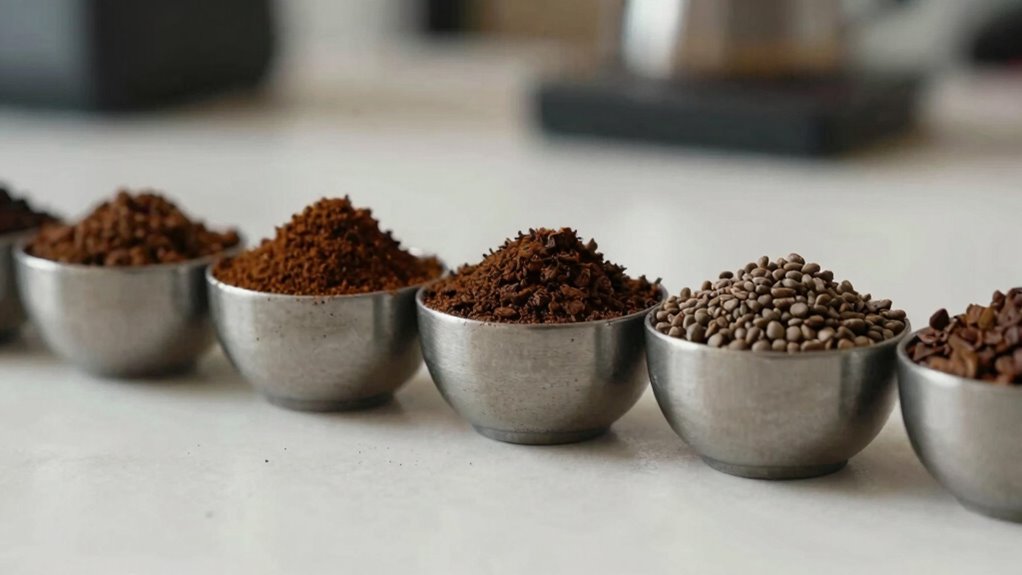
If your coffee tastes bitter or overly strong, your grind might be too fine, causing over-extraction. Conversely, if your brew is weak or sour, a coarse grind could be the culprit, leading to under-extraction. Inconsistent results often mean your grind size isn’t uniform, so it’s worth adjusting your grinder for a steadier brew. Ensuring your grinder produces a consistent particle size can also help prevent uneven extraction and improve overall flavor.
Over-Extraction From Fine Grinds
Over-extraction occurs when your coffee grounds are too fine, causing water to extract too many solubles and resulting in a bitter, harsh flavor. This often happens when grind consistency is too uniform or overly fine, making it hard for water to flow through smoothly. As a result, your coffee flavor becomes overpowered by unwanted bitter notes. To visualize, imagine:
- Water struggling to pass through a dense, powdery bed of grounds.
- Coffee brewing slowly, with a thick, muddy appearance.
- Extraction pulling out undesirable flavors, leaving a harsh aftertaste.
- The brew tasting overly bitter and unbalanced.
Finer grinds increase surface area, which amplifies extraction. Ensuring your grind size isn’t too fine helps maintain proper grind consistency, prevents over-extraction, and preserves the true flavor profile of your beans.
Under-Extraction With Coarse Grinds
Coarse grind sizes can lead to under-extraction, resulting in a weak and underwhelming coffee flavor. When your brew tastes flat or lacks body, it’s often due to water passing too quickly through the grounds. To improve extraction, try adjusting your blooming techniques by pouring a small amount of water to saturate the grounds evenly before full brewing. This helps release carbon dioxide and promotes better extraction. Additionally, focus on maintaining grind consistency; uneven coarse grounds can cause some particles to extract too quickly while others under-extract. Using a quality grinder ensures uniform particle size, which helps water extract flavors more evenly. Proper bloom and grind consistency are essential for a balanced cup, and paying attention to these factors will help you avoid the pitfalls of under-extraction caused by coarse grinds.
Inconsistent Brew Results
Inconsistent brew results often stem from improper grind size adjustments, which can cause variability in flavor and strength. When your coffee flavor fluctuates or your brew lacks balance, it’s usually due to inconsistent grind size. Imagine these common issues:
- A muddy cup with over-extracted, bitter notes.
- A weak brew lacking depth and richness.
- Uneven extraction causing some sips to be bitter while others are flat.
- Clogged filters or slow pour-overs due to inconsistent grind consistency.
Being mindful of grind size uniformity can significantly improve your brewing consistency and overall flavor.
To fix this, focus on maintaining a uniform grind size tailored to your brewing method. Consistent grind size ensures better grind consistency, leading to more predictable extraction, improved flavor clarity, and a more satisfying coffee experience every time.
Using a Coffee Grind Size Chart to Brew Better Coffee Every Time
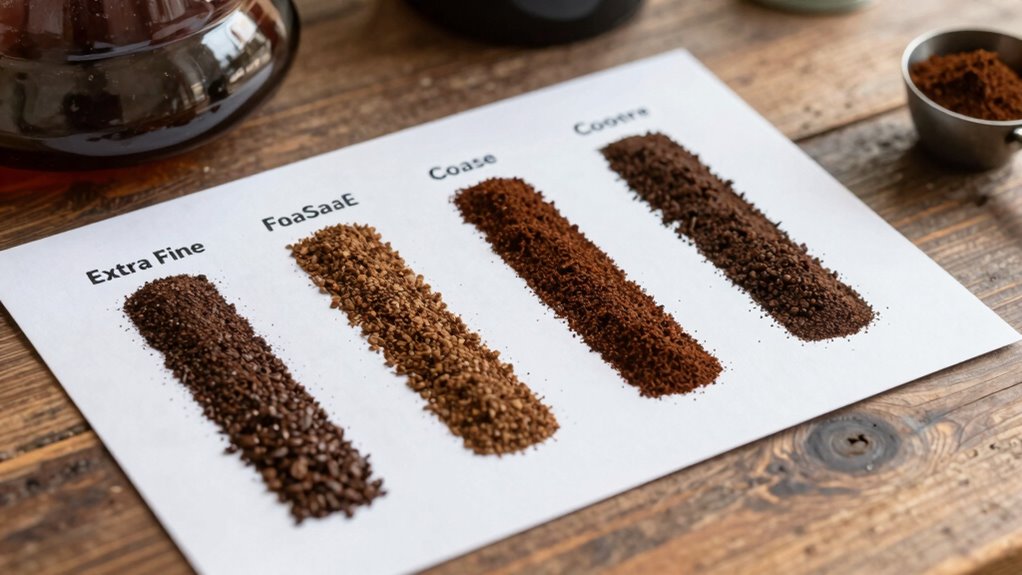
Using a coffee grind size chart can dramatically improve your brewing results by helping you select the perfect grind for each method. When you match the right grind size to your brewing technique, you access the full potential of your coffee’s flavor profiles. For example, a finer grind highlights bright, acidic notes, while a coarser grind emphasizes body and richness. By making grind size adjustments based on the chart, you guarantee extraction is balanced and consistent. This precision prevents under- or over-extraction, which can dull flavors or produce bitterness. Over time, you’ll learn how small tweaks influence taste, allowing you to fine-tune your brew every time. Understanding the extraction process is essential to mastering coffee brewing and achieving the ideal flavor balance. With this knowledge, you’ll enjoy richer, more nuanced coffee that truly reflects your preferences.
Frequently Asked Questions
How Often Should I Adjust My Grind Size for Different Beans?
You should adjust your grind size calibration whenever you switch beans or notice changes in flavor or extraction time. Generally, make bean freshness adjustments every few weeks, as fresher beans often require a finer grind. Regularly tasting your coffee helps you dial in the perfect grind size, ensuring ideal flavor. Keep experimenting and fine-tuning to match each bean’s unique characteristics and maintain a consistently excellent brew.
Can Grind Size Affect the Acidity and Sweetness of My Coffee?
Did you know that grind size can markedly impact your coffee’s acidity and sweetness? When you adjust the grind, you control acidity levels because finer grinds increase extraction, boosting acidity, while coarser grinds reduce it. A proper grind enhances sweetness, balancing flavors perfectly. By experimenting with your grind size, you gain better acidity control and sweetness enhancement, making every cup tailored to your taste preferences.
What Tools or Equipment Help Me Achieve Consistent Grind Sizes?
To achieve consistent grind sizes, you should use a high-quality burr grinder, which offers better grind size consistency compared to blade grinders. Regular grinder calibration ensures your machine maintains precise settings, preventing uneven grinds. Investing in a grinder with adjustable grind settings allows you to fine-tune your grind size, leading to better extraction and flavor. Consistent grind size is key to making balanced coffee every time, so prioritize proper equipment and regular calibration.
How Does Ambient Humidity Influence Grind Size and Coffee Flavor?
Imagine you’re brewing coffee on a humid day, and the humidity impact causes your beans to absorb moisture, leading to a finer grind than usual. This moisture can cause inconsistent grind sizes, affecting extraction and resulting in flavor variation. Higher humidity often results in clumping, making it harder to achieve uniform grinds. To maintain consistency and ideal flavor, store beans in airtight containers and adjust grind settings based on ambient conditions.
Is There a Universal Grind Size for All Coffee Beans and Brewing Methods?
No, there’s no universal grind size for all coffee beans and brewing methods. You need to focus on grind size consistency for each method, as it guarantees ideal extraction. Keep in mind that bean freshness impacts how your grind should be adjusted; fresher beans often require a slightly coarser grind. Experiment and fine-tune your grind size based on your brewing method to get the best flavor.
Conclusion
Think of your coffee grind size as the key to opening a treasure chest of flavor. When you match the right grind to your brewing method, every sip becomes a gem worth savoring. Don’t let your beans go to waste—tweak and tune until your coffee shines like a well-polished jewel. With the right grind, you’re not just making coffee; you’re crafting liquid gold that awakens your senses with every cup.