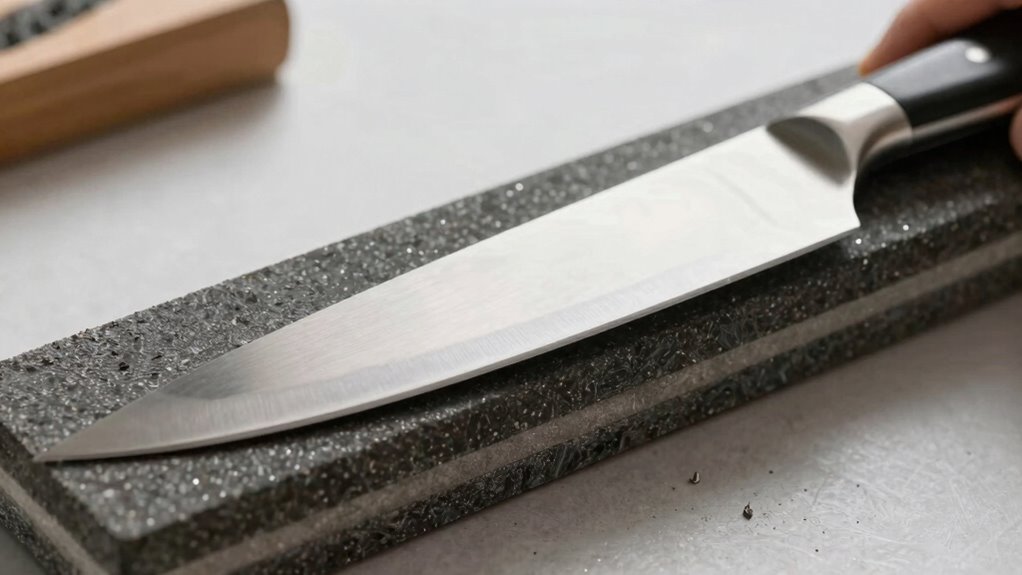

Finding the right sharpening angle depends on your knife’s type and use. For general kitchen tasks, aim for about 20°, while precision knives need closer to 15°. Maintaining a consistent angle guarantees your blade stays sharp and durable. Use guides or tools to help keep the correct angle during sharpening. If you keep these tips in mind, you’ll improve your knife’s performance and longevity—plus, you’ll discover how to perfect your technique as you go along.
Key Takeaways
- The sharpening angle is the tilt at which you hold the knife against the stone or sharpener, typically between 15° and 20°.
- A smaller angle (around 15°) creates a sharper edge but is less durable; a larger angle (around 20°) offers more strength.
- Use a sharpening guide or protractor to maintain a consistent angle during sharpening.
- Different knives have recommended angles: kitchen knives usually 15-20°, heavy-duty blades 20-25°.
- Regularly check and adjust your angle to ensure a sharp, durable edge and prevent uneven dulling or chipping.

Professional Knife Sharpening Angle Guide for Whetstone – 2 Pack, Non-Slip Ceramic Edge Protector, Universal Fit for Kitchen and Hunting Knives, Durable Sharpening Tool with Consistent Angle Control
Achieve Perfect 15° Angles Every Time – Precision-engineered guides ensure consistent sharpening angles for razor-sharp edges. Ideal for…
As an affiliate, we earn on qualifying purchases.
As an affiliate, we earn on qualifying purchases.
Why Your Knife’s Sharpening Angle Matters
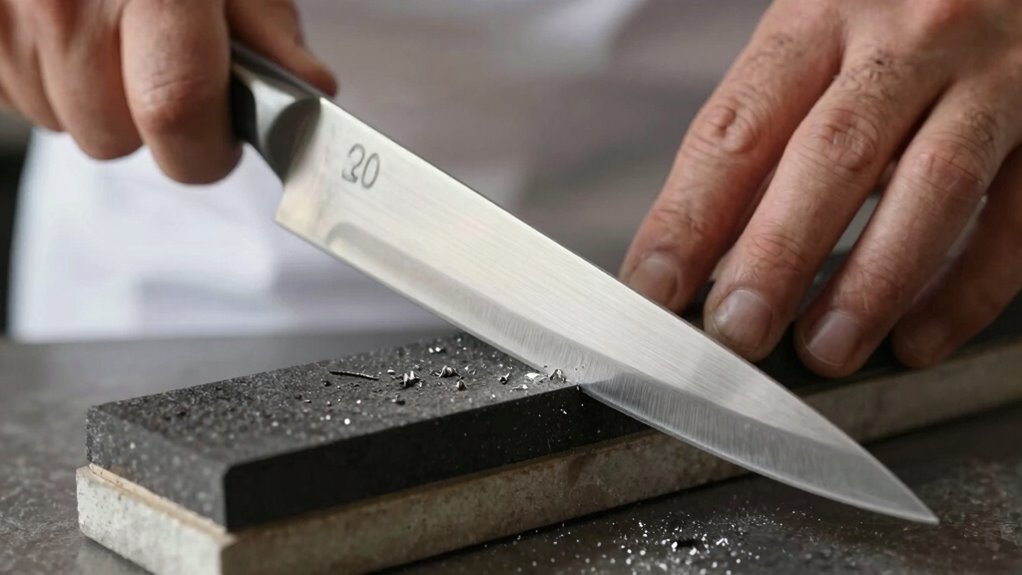
Your knife’s sharpening angle directly influences its cutting performance and durability. When you choose the right angle, you make knife maintenance easier and extend your blade’s lifespan. Many sharpening myths suggest that a more acute angle always results in a sharper edge, but that’s not true. A proper angle balances sharpness with strength, preventing your knife from dulling quickly or chipping. If you overlook the correct angle, you risk damaging your blade or making it harder to maintain. Knowing this helps you sharpen effectively and avoid common mistakes that can compromise your knife’s performance. By understanding the importance of sharpening angles, you ensure your knives stay sharp, safe, and reliable for all your cutting tasks.

SHARPAL 194H Whetstone Knife Blade Sharpener Sharpening Stone Angle Guide, Chisel/Plane Iron Blade Honing Guide, Knife Edge Angle Finder, Knife Sharpening Trainer (Angle from 15° to 45°)
𝐀𝐜𝐡𝐢𝐞𝐯𝐞 𝐫𝐚𝐳𝐨𝐫-𝐬𝐡𝐚𝐫𝐩 𝐞𝐝𝐠𝐞𝐬 𝐞𝐯𝐞𝐫𝐲 𝐭𝐢𝐦𝐞: SHARPAL 194H is the perfect tool to ensure that your knives, chisels and…
As an affiliate, we earn on qualifying purchases.
As an affiliate, we earn on qualifying purchases.
Standard Sharpening Angles for Different Knives
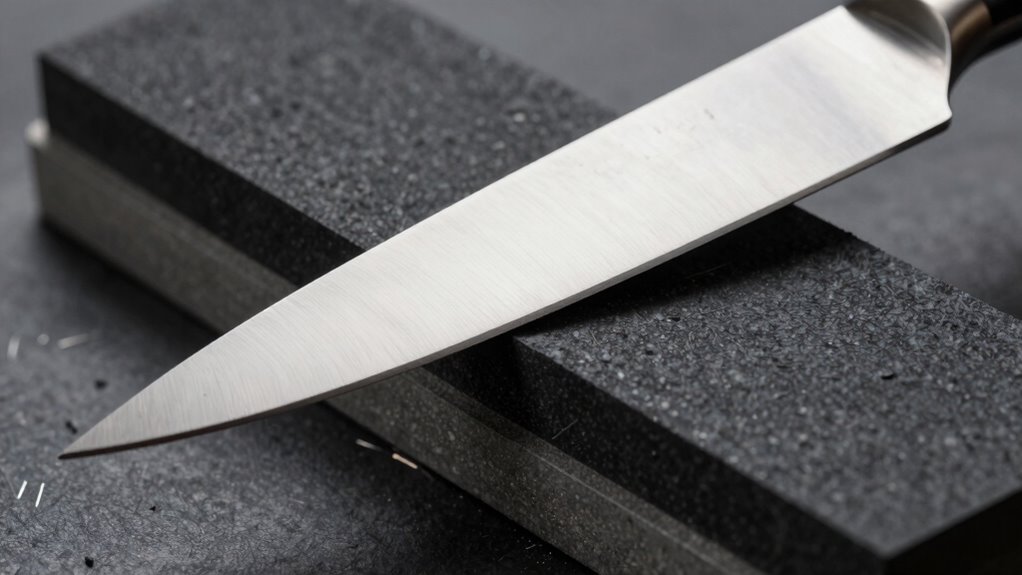
Different types of knives require specific sharpening angles to perform at their best. For general kitchen use, a 20-degree angle strikes a good balance between sharpness and durability. Utility knives often need a slightly steeper angle, around 20-25 degrees, for added strength. For precision tasks, such as fillet or sushi knives, a narrower angle of 15-17 degrees offers exceptional sharpness, but may require more maintenance. Keep in mind, your personal preferences and aesthetic considerations can influence your choice; some prefer a more polished look with a finer edge, while others prioritize longevity. Remember, the standard angles serve as a guide, but adjusting based on how you use and care for your knives makes a real difference. Proper sharpening techniques can also extend the life and performance of your blades.

Intelitopia Complete Knife Sharpening Stone Set – Dual Grit Whetstone 400/1000 3000/8000 Knife Sharpener with Leather Strop, Flattening Stone, Bamboo Base, 3 Non-slip Rubber Bases & Angle Guide
【Complete Knife Sharpening Stone Kit】You don't need to be a Pro to sharpen your blades, all you need…
As an affiliate, we earn on qualifying purchases.
As an affiliate, we earn on qualifying purchases.
How to Find the Right Angle for Your Knife?
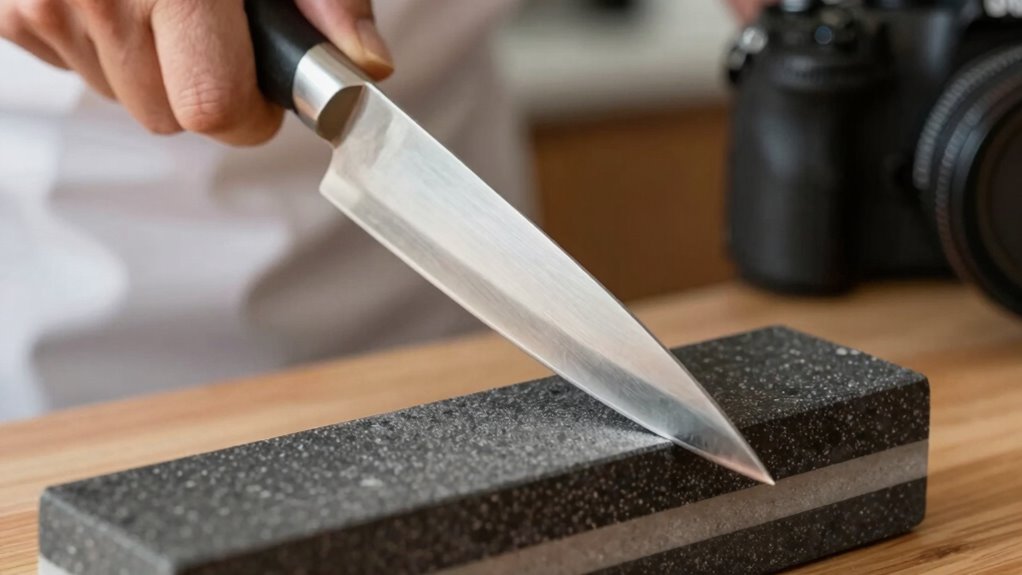
Finding the right sharpening angle for your knife starts with understanding its intended use and manufacturer recommendations. For example, a kitchen chef’s knife typically benefits from a 15-20° angle, balancing sharpness and durability. If you notice blade corrosion, a slightly wider angle can help safeguard against moisture and rust, especially for carbon steel blades. Handle ergonomics also matter; if your knife has a comfortable, well-designed handle, you can aim for a consistent angle without straining your wrist. Use a sharpening guide or angle jig to maintain precision. Remember, the correct angle ensures your knife stays sharp longer and resists corrosion, while also considering the importance of content formats and the handle’s ergonomics for safe, comfortable use.
SHARPAL 194H Whetstone Knife Blade Sharpener Sharpening Stone Angle Guide, Chisel/Plane Iron Blade Honing Guide, Knife Edge Angle Finder, Knife Sharpening Trainer (Angle from 15° to 45°)
𝐀𝐜𝐡𝐢𝐞𝐯𝐞 𝐫𝐚𝐳𝐨𝐫-𝐬𝐡𝐚𝐫𝐩 𝐞𝐝𝐠𝐞𝐬 𝐞𝐯𝐞𝐫𝐲 𝐭𝐢𝐦𝐞: SHARPAL 194H is the perfect tool to ensure that your knives, chisels and…
As an affiliate, we earn on qualifying purchases.
As an affiliate, we earn on qualifying purchases.
How Sharpness and Durability Are Affected by the Angle
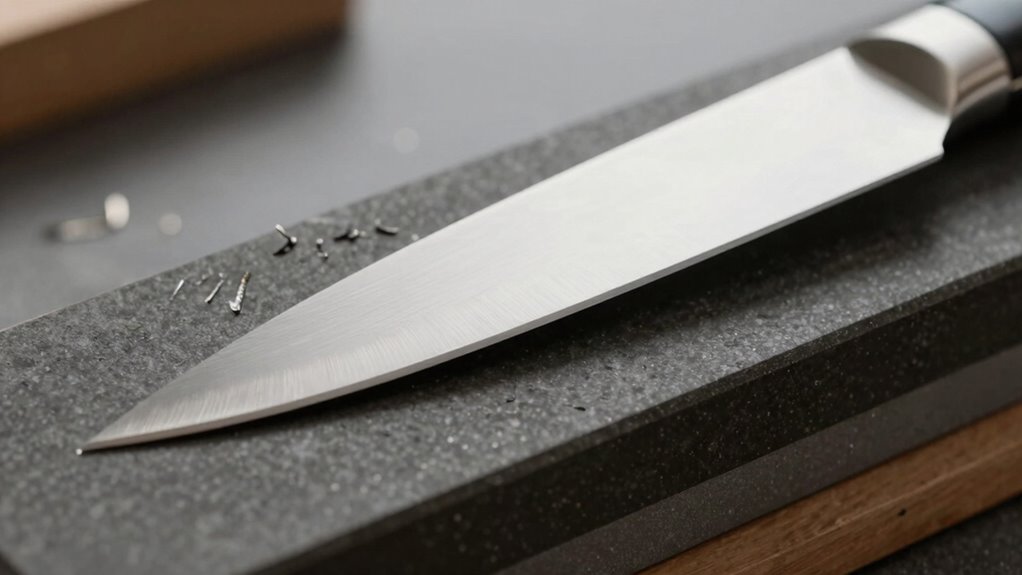
The sharpening angle directly influences how sharp and durable your knife will be. A smaller angle creates a sharper edge but may compromise durability, causing it to dull faster. Conversely, a larger angle increases lifespan but can make the knife less precise. Keep in mind that sharpening myths often suggest a single perfect angle, but your choice depends on your usage needs. For outdoor or heavy-duty tasks, considering Free Floating designs and techniques can help you achieve the ideal balance. – A narrow angle enhances knife aesthetics by giving a sleek, razor-sharp edge. – A wider angle boosts durability, making your knife more resistant to chipping. – Understanding this balance helps you avoid common sharpening myths and select the best angle for your tasks.
How to Set Your Knife’s Sharpening Angle at Home

Setting the correct sharpening angle at home starts with choosing the right tools. Use a sharpening guide or a protractor to set your angle accurately, usually between 15° and 20° for most kitchen knives. Consistent angles ensure your knife stays sharp longer and cuts safely. When setting your angle, consider how you store your knives; proper knife storage, like a block or magnetic strip, prevents accidental cuts and maintains blade integrity. Always sharpen on a stable, flat surface to avoid slips that could lead to injury. Remember, a well-sharpened knife reduces the risk of accidents and makes kitchen tasks safer. Keep your sharpening setup clear of clutter, and double-check your angle before each session to maintain kitchen safety and maximum performance. Additionally, understanding the sharpening angle can help you achieve more precise and efficient results.
Common Mistakes When Sharpening and How to Avoid Them

One common mistake when sharpening knives is maintaining an inconsistent angle, which can cause uneven edges and reduce the blade’s edge retention over time. This often confuses honing versus sharpening, leading you to think regular honing alone keeps your knife sharp, but sharpening restores the proper edge. To avoid this, focus on maintaining a steady angle throughout the process.
- Skipping proper angle training, which results in uneven sharpening
- Over-sharpening, causing unnecessary material removal and dulling the blade
- Using the wrong grit for your knife’s condition, affecting edge stability
Best Tools for Maintaining Accurate Sharpening Angles

Using the right tools can make maintaining accurate sharpening angles much easier and more consistent. A sharpening guide or angle jig is your best bet for precise results, especially if you’re new to sharpening. These tools help you set and hold the correct angle, reducing guesswork. When choosing between ceramic vs. steel guides, ceramic guides are often more durable and maintain their shape longer. For serrated blades, specialty sharpening tools like ceramic rods or serration-specific sharpeners are ideal, as they can reach into the grooves without damaging the teeth. Avoid using makeshift solutions that can alter the intended angle or harm your blades. Investing in reliable tools ensures your knives stay sharp at the proper angle, whether you’re working with straight or serrated blades. Additionally, selecting an appropriate battery inverter generator can ensure your sharpening tools and other equipment operate smoothly during your maintenance routines.
Tips for Keeping the Correct Angle During Sharpening

Maintaining the correct angle during sharpening requires focus and consistent technique. To keep your blade polishing effectively, pay close attention to your grip and handle ergonomics, which help stabilize your hand and prevent angle drift. Use a sharpening guide if needed, as it ensures steady, accurate angles throughout the process. Regularly check your blade’s edge for uniformity, and avoid applying excessive pressure that could alter your angle. Remember, a steady hand and proper handle ergonomics make all the difference in achieving a sharp, precise edge. Additionally, understanding floating on water principles can help you develop a smoother, more controlled sharpening motion.
When and Why to Adjust Your Knife’s Sharpening Angle
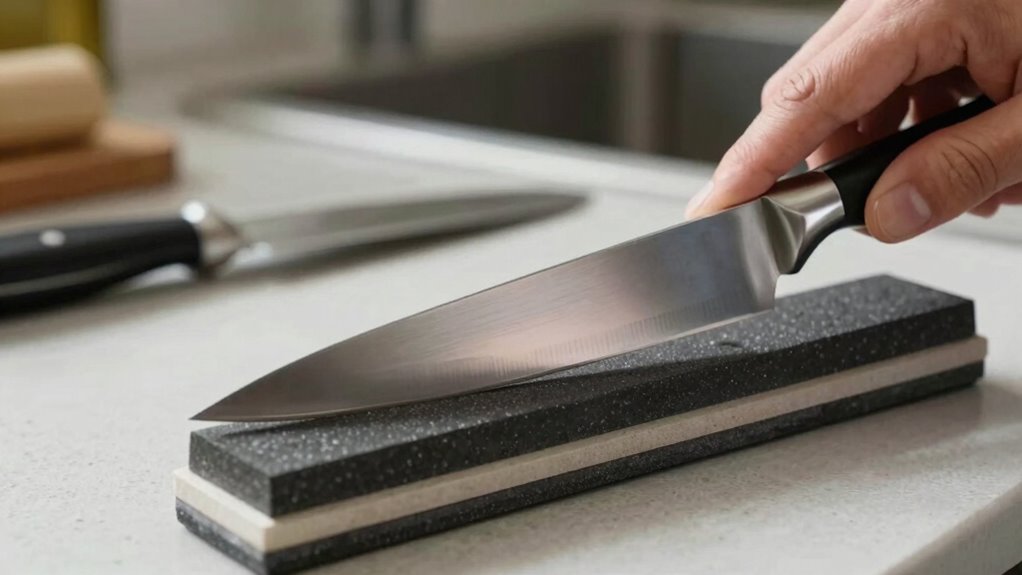
You might need to adjust your sharpening angle based on the tasks you tackle and the blade’s durability. Different cutting tasks, like slicing or heavy chopping, often require changes in angle for ideal performance. Additionally, your personal cutting style can influence when and why you should modify the angle to keep your knife in top shape. For example, using specialized gear like high-quality honing stones can help maintain consistent angles during sharpening.
Cutting Tasks and Angles
Adjusting your knife’s sharpening angle is essential because different cutting tasks demand different blade behaviors. For delicate tasks like slicing fruits or garnishing, a sharper, more acute angle (around 15°) helps achieve clean, precise cuts. For tougher jobs like chopping bones or heavy-duty slicing, a slightly wider angle (around 20°) provides added strength and durability. Proper knife maintenance involves selecting the right angle for each task, ensuring your blade performs almost ideally.
Consider these points:
- Use a sharper angle for fine culinary techniques that require precision.
- Widen the angle when tackling dense or hard materials to prevent dulling.
- Adjusting angles based on the task extends your knife’s lifespan and improves efficiency.
Tailoring your sharpening angle helps you master different cutting tasks effectively.
Blade Durability Factors
Since the sharpening angle directly affects a knife’s strength and longevity, understanding when and why to adjust it is crucial for maximum durability. Material hardness plays a key role—harder steels tend to hold their edge longer but are more prone to chipping if the angle is too steep. Softer materials may require a more acute angle to improve edge retention, but this can compromise strength. If you notice your knife dulls quickly or chips easily, consider adjusting the sharpening angle slightly to balance durability and performance. A steeper angle increases durability but may reduce ease of sharpening, while a shallower angle enhances sharpness at the expense of longevity. Regularly evaluating your blade’s performance helps you find the ideal angle for your specific material.
Personal Cutting Style
How does your personal cutting style influence the ideal sharpening angle for your knife? If you prefer precise, delicate cuts, a more acute angle (around 15°) enhances sharpness but may reduce durability. For heavy-duty tasks like chopping or tough ingredients, a slightly greater angle (20°-25°) offers more strength. Your personal style determines whether you need customized angles for excellent performance. For instance, finesse carving benefits from a sharper edge, while general kitchen work might require a more robust edge. Adjusting your sharpening angle allows you to tailor the knife’s edge to suit your specific needs. Remember, your personal style is unique, so don’t hesitate to experiment with angles to find what works best for you. This ensures your knife complements your cutting technique perfectly.
Troubleshooting Sharpness Problems Caused by Incorrect Angles
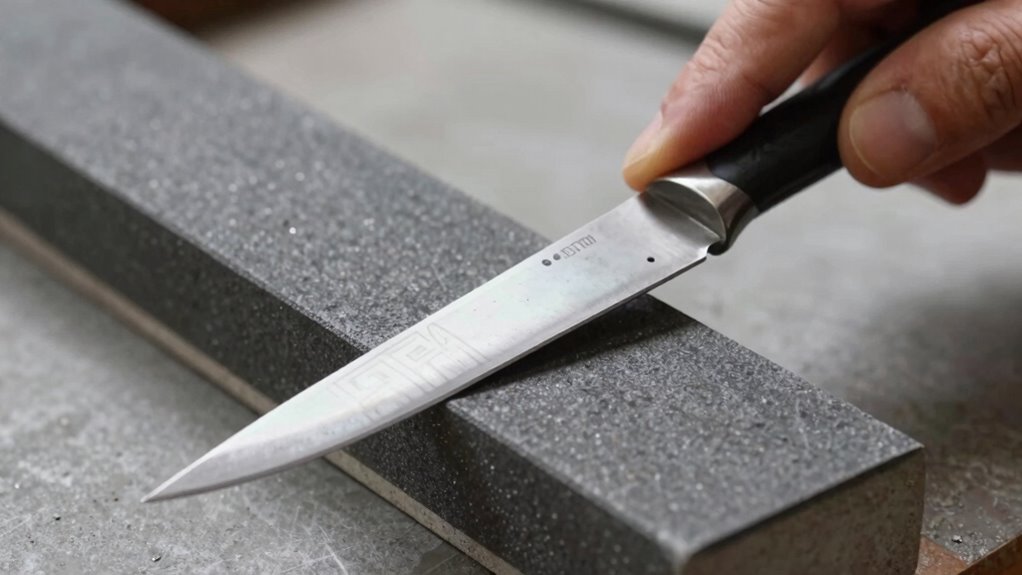
Incorrect sharpening angles often lead to dull or uneven edges, making it difficult to achieve a truly sharp knife. When your angle is off, you’ll notice poor edge stability, meaning the edge doesn’t hold up during use. Inconsistent angles during grinding spoil grind consistency, resulting in a rough or uneven edge. To troubleshoot, check if you’re maintaining a consistent angle throughout each stroke; even small deviations can cause sharpness issues. Ensure you’re using the right sharpening tools and techniques to keep your grind uniform. If your edge wobbles or shows irregular wear, it’s a sign your angle is incorrect. Correcting your angle and focusing on grind consistency will improve edge stability, restoring sharpness and making your knife perform better.
Frequently Asked Questions
Can Different Blade Materials Require Different Sharpening Angles?
Yes, different blade materials often need different sharpening angles because their composition affects how they hold an edge and how easily they can be sharpened. For example, harder steels require a steeper angle for sharpening, ensuring consistent cutting performance. You should adjust your sharpening technique accordingly to maintain sharpening consistency and avoid damaging the blade. By understanding your blade’s material, you’ll achieve better results and longer-lasting sharpness.
How Often Should I Re-Sharpen My Knives for Optimal Angles?
You should re-sharpen your knives every 6 to 12 months, depending on your maintenance schedule and how often you use them. Regular sharpening maintains the ideal angles for cutting efficiency and safety. If you notice dullness or difficulty slicing, it’s time to sharpen. Keeping a consistent sharpening frequency ensures your knives stay in top shape, prolonging their lifespan and making your prep work easier and safer.
Are There Professional Tools for Setting Precise Sharpening Angles?
Yes, there are professional tools like angle gauges and sharpening jigs that help you set precise sharpening angles. You might think they’re unnecessary, but they guarantee consistency and accuracy, especially if you want professional results. Angle gauges let you measure your desired angle exactly, while sharpening jigs hold your knife steady at that angle. Using these tools makes sharpening easier and more reliable, giving you a sharper, safer edge every time.
Does the Type of Cutting Task Influence the Best Sharpening Angle?
Yes, the type of cutting task definitely influences the best sharpening angle. For delicate tasks like slicing fruits, a more acute angle enhances cutting precision but may reduce blade durability. For tougher jobs, a slightly wider angle improves blade strength and longevity. You should choose your sharpening angle based on the balance you want between blade durability and cutting precision, ensuring your knife performs ideally for each specific task.
How Does Temperature or Humidity Affect Maintaining Sharpening Angles?
A stitch in time saves nine, so pay attention to how temperature and humidity affect your knife. High humidity accelerates blade corrosion, making it harder to maintain sharp angles, which means you might need more frequent sharpening. Conversely, extreme dryness can cause metal to become brittle. Keep your knives in a stable environment, and adjust sharpening frequency accordingly, to preserve your blade’s edge and stay sharp longer.
Conclusion
So, surprise! The secret to a razor-sharp knife isn’t just about pushing harder or guessing the angle. It’s about paying attention, setting the right one, and sticking to it. Ironically, the more you focus on precision, the less you’ll struggle with dull blades. Keep your angles consistent, and you’ll slice through anything with ease—no magic required. Who knew that a tiny angle could make such a huge difference? Happy sharpening!