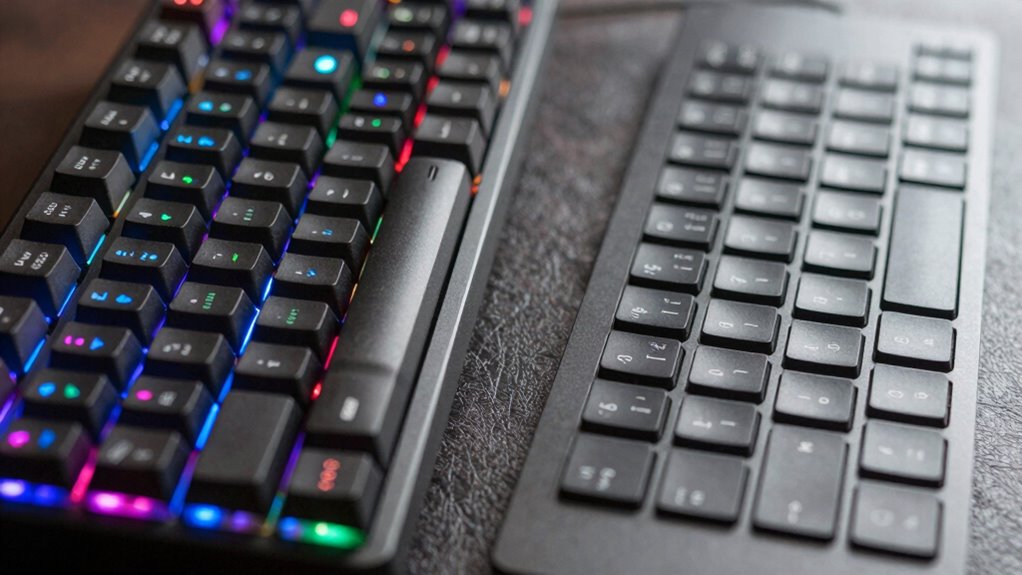
When choosing between mechanical and membrane keyboards, you’ll notice key differences that affect your typing experience. Mechanical keyboards offer tactile feedback and durability, making them ideal for fast typists. In contrast, membrane keyboards provide a softer feel and quieter typing, which can suit quieter environments. Your choice should consider comfort, typing style, and workspace size. Stick around, and you’ll uncover more tips to help you find the keyboard that fits your needs perfectly.
Key Takeaways
- Mechanical keyboards use distinct key switches for tactile feedback, enhancing the typing experience and responsiveness.
- Membrane keyboards rely on a single rubber dome, offering a softer feel but less tactile feedback compared to mechanical options.
- Durability favors mechanical keyboards, which typically last longer than membrane keyboards due to their robust construction.
- Mechanical keyboards are generally louder, while membrane keyboards provide a quieter typing experience suitable for shared environments.
- Choosing between layouts and key types depends on personal comfort, typing style, and workspace size preferences.
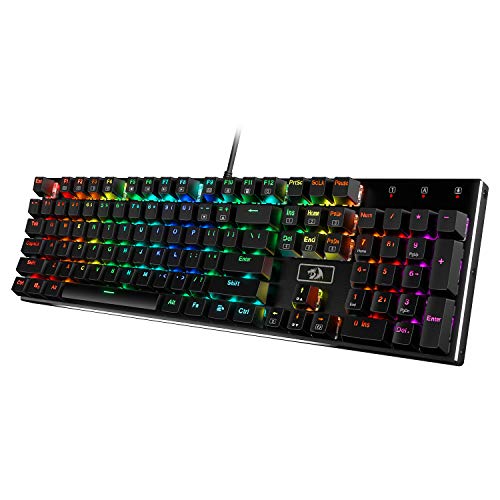
Redragon K556 RGB LED Backlit Wired Mechanical Gaming Keyboard, 104 Keys Hot-Swap Mechanical Keyboard w/Aluminum Base, Upgraded Socket and Noise Absorbing Foams, Soft Tactile Brown Switch
YES! TRUE HOT-SWAP – The transformative innovation with 99.8%+ switches compatible free-mod hot swappable Redragon keyboard is available…
As an affiliate, we earn on qualifying purchases.
As an affiliate, we earn on qualifying purchases.
How to Choose the Right Keyboard for Your Needs
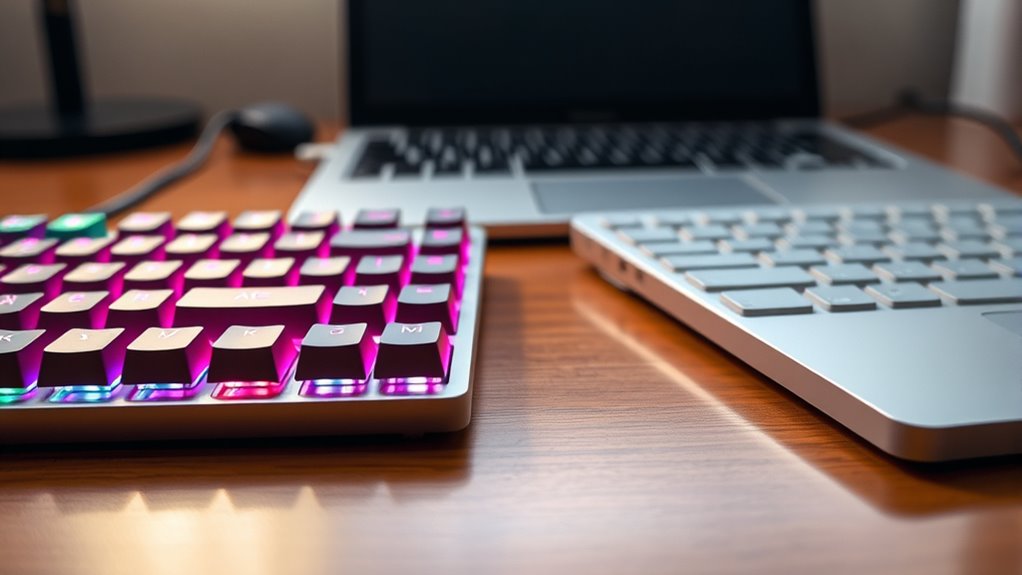
When it comes to choosing the right keyboard for your needs, how do you know where to start? First, consider keyboard ergonomics. A well-designed keyboard can reduce strain on your wrists and enhance comfort, especially during long typing sessions. If you find yourself typing for hours, look for features like a split layout or wrist support that promote a natural hand position. Next, think about your typing speed. If you’re a fast typist, you’ll want keys that provide a satisfying tactile response without too much resistance. Test different keyboards to find one that feels right for you. Remember, a keyboard isn’t just a tool; it’s an extension of your productivity. Choose wisely to boost both comfort and efficiency!

LexonElec M96 Wireless Keyboard, Low Profile Quiet Typing Membrane Gaming Keyboard with Smart Display & Knob, RGB Backlit, USB C Rechargeable, 94 Keys PBT Keycap for Windows PC, Mac, Linux-BlackBerry
【Wireless Dual Mode Connection】90% Wireless Gaming Keyboard – Features stable Bluetooth 5.0/3.0, hassle-free 2.4Ghz receiver connection. Up to…
As an affiliate, we earn on qualifying purchases.
As an affiliate, we earn on qualifying purchases.
Understanding Mechanical and Membrane Keyboards
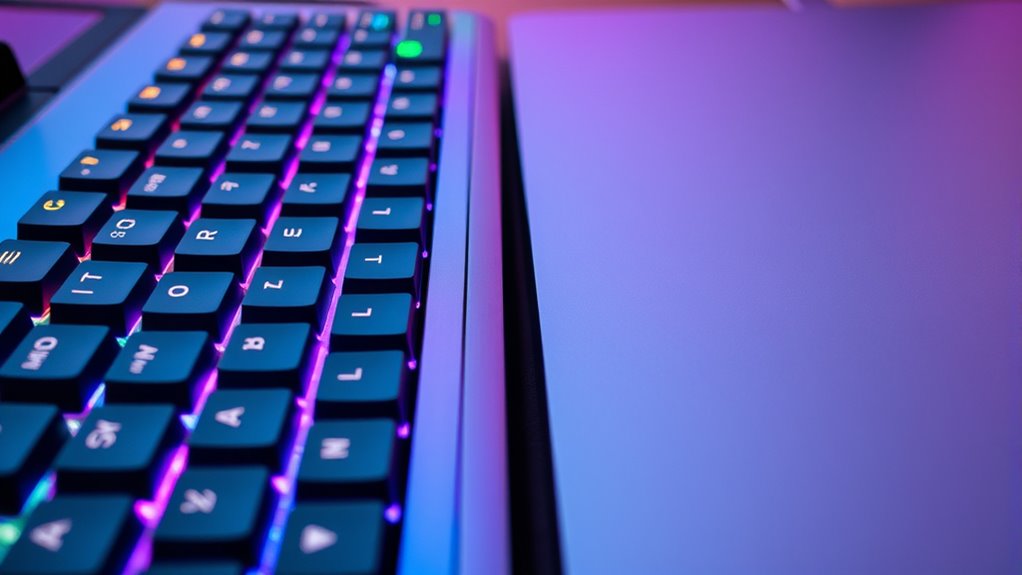
Mechanical and membrane keyboards each offer distinct experiences that cater to different preferences and needs. With mechanical keyboards, you enjoy various key switch types, like tactile, linear, and clicky, which provide unique typing feedback. This feedback can enhance your typing experience, making it feel more engaging and responsive. On the other hand, membrane keyboards use a softer feel, often leading to quieter typing sessions. They typically feature a single rubber dome under the keys, which can sometimes result in a less satisfying response. If you prioritize durability and customization, mechanical keyboards are likely your best bet. However, if affordability and compact design matter more to you, a membrane keyboard might be the way to go. Choose based on what feels right for you!

Perixx PERIBOARD-512B Wired Ergonomic Keyboard – Split Keyboard, Wrist Rest, Natural Typing – Wired USB Connectivity – US English – Black
Split-Key Ergonomic Design: One-piece split layout separates keys into left and right zones to reduce wrist bending and…
As an affiliate, we earn on qualifying purchases.
As an affiliate, we earn on qualifying purchases.
Key Differences Between Mechanical and Membrane Keyboards
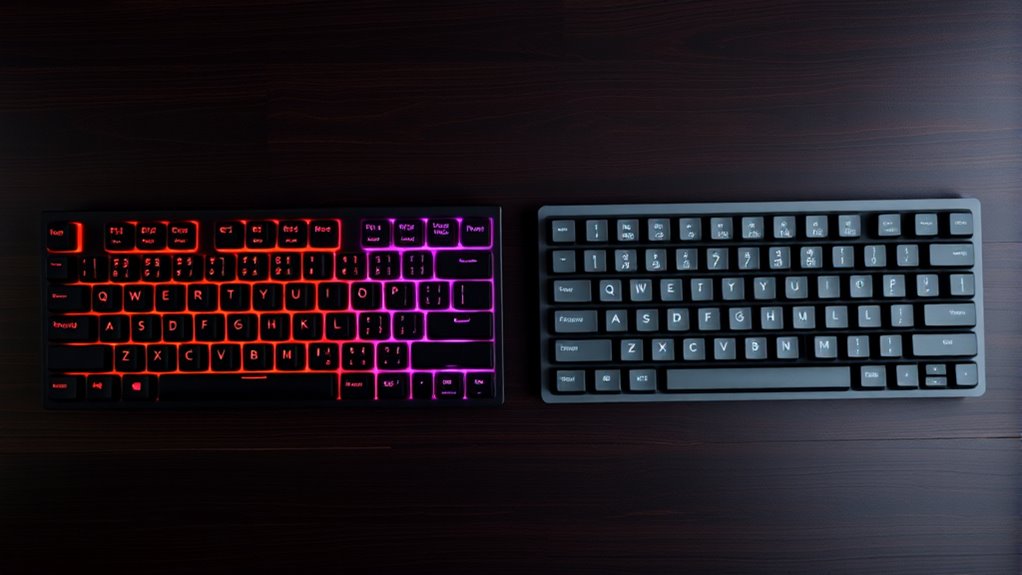
While both mechanical and membrane keyboards serve the same basic function, their differences greatly impact your typing experience. Mechanical keyboards use distinct key switch types, offering a variety of tactile feedback and durability. In contrast, membrane keyboards rely on a rubber dome, resulting in a softer typing feel but less responsiveness.
Here’s a quick comparison:
| Feature | Mechanical Keyboards | Membrane Keyboards |
|---|---|---|
| Key Switch Types | Various tactile options | Single rubber dome |
| Typing Feel | Responsive, tactile | Soft, less feedback |
| Durability | Long-lasting | Shorter lifespan |
| Noise Level | Typically louder | Quieter |
| Customization | Highly customizable | Limited customization |
Understanding these differences helps you choose the right keyboard for your needs.

Kisnt KN85 Wireless Mechanical Gaming Keyboard, 75% Layout with RGB Backlit, Custom Hot Swappable, Creamy Sound, Bluetooth/2.4GHz/USB-C Compatible with Windows/Mac/PC(Retro Beige,Linear Switch)
【Less Keys, More Desk】Crafted for users who value style and functionality, the KN85 series is a game-changer in…
As an affiliate, we earn on qualifying purchases.
As an affiliate, we earn on qualifying purchases.
Find the Perfect Keyboard for Your Typing Style

Finding the perfect keyboard for your typing style can greatly enhance your productivity and comfort. Start by identifying your typing preferences; are you a fast typist, or do you take your time? If you type for long periods, consider keyboards with ergonomic designs that support your wrists and reduce strain. Mechanical keyboards often provide tactile feedback, while membrane keyboards offer a softer touch, catering to different feels. Experiment with various layouts and key switches to discover what feels best for you. Think about your workspace, too; a compact keyboard might suit smaller desks, while a full-sized one can accommodate more functions. Ultimately, choosing the right keyboard can make all the difference in your daily typing experience.
Tips for Transitioning Between Mechanical and Membrane Keyboards

Shifting between mechanical and membrane keyboards can feel like a challenge, especially when you’re accustomed to the distinct tactile feedback of one type. However, you can make this change smoother by following a few simple tips:
- Adjust Your Typing Technique: Pay attention to your finger pressure. Mechanical keys require less force, while membrane keys may need a firmer touch.
- Familiarize Yourself with Keyboard Shortcuts: Take some time to relearn shortcuts on your new keyboard. They might differ slightly, and mastering them will enhance your efficiency.
- Practice Regularly: Spend time using both types of keyboards. The more you practice, the more comfortable you’ll become with each layout.
With patience and practice, you’ll adapt quickly to either keyboard type!
Frequently Asked Questions
Do Mechanical Keyboards Require More Maintenance Than Membrane Keyboards?
Mechanical keyboards don’t necessarily require more maintenance than membrane keyboards, but they do benefit from specific cleaning techniques due to their design. You can easily remove keycaps for thorough cleaning, which helps maintain performance and hygiene. In a durability comparison, mechanical keyboards often last longer, reducing the frequency of replacements. Regularly cleaning both types will keep them functioning well, but mechanical ones might need that extra attention to preserve their longevity and responsiveness.
Can I Use a Mechanical Keyboard for Gaming and Typing?
Absolutely, you can use a mechanical keyboard for both gaming and typing! In fact, many gamers prefer mechanical keyboards for their superior gaming performance, thanks to faster response times and tactile feedback. You’ll also find that the typing experience is often enhanced, providing a satisfying feel with each keystroke. Whether you’re battling it out in a game or typing up reports, a mechanical keyboard can really elevate your experience.
How Do Keycap Materials Differ Between Mechanical and Membrane Keyboards?
Keycap materials differ greatly between mechanical and membrane keyboards. You’ll find that mechanical keyboards usually use durable materials like ABS or PBT, which enhance keycap durability and resist wear over time. These keycaps often come in various textures, providing a satisfying feel during typing or gaming. In contrast, membrane keyboards typically use softer plastic, which may wear down faster and have fewer texture options. Your choice impacts both feel and longevity.
Are There Silent Mechanical Keyboards Available?
Sure, silent mechanical keyboards do exist, despite the stereotype that all mechanical switches are loud and clacky. With silent switches, you can enjoy a smoother typing experience without disturbing anyone around you. These keyboards combine the satisfying feel of mechanical keys with noise reduction, perfect for quiet environments. You’ll love how you can type away without the usual distractions, making it an ideal choice for both work and leisure.
What Is the Lifespan of Mechanical Vs Membrane Keyboards?
Mechanical keyboards typically last longer than membrane ones, often boasting a lifespan of 50 million keystrokes or more, while membrane keyboards usually range from 5 to 10 million. In your keyboard durability comparison, consider factors like build quality, usage frequency, and maintenance. If you’re a heavy typer or gamer, investing in a mechanical keyboard might be worth it for its longevity. Ultimately, it’s about finding what suits your needs best.
Conclusion
In choosing between mechanical and membrane keyboards, it’s essential to take into account your typing needs and preferences. Did you know that about 60% of gamers prefer mechanical keyboards due to their responsiveness and tactile feedback? Whether you’re a gamer, writer, or casual user, understanding your typing style will help you find the perfect fit. Don’t hesitate to experiment with different types to discover what feels best for you. Happy typing!