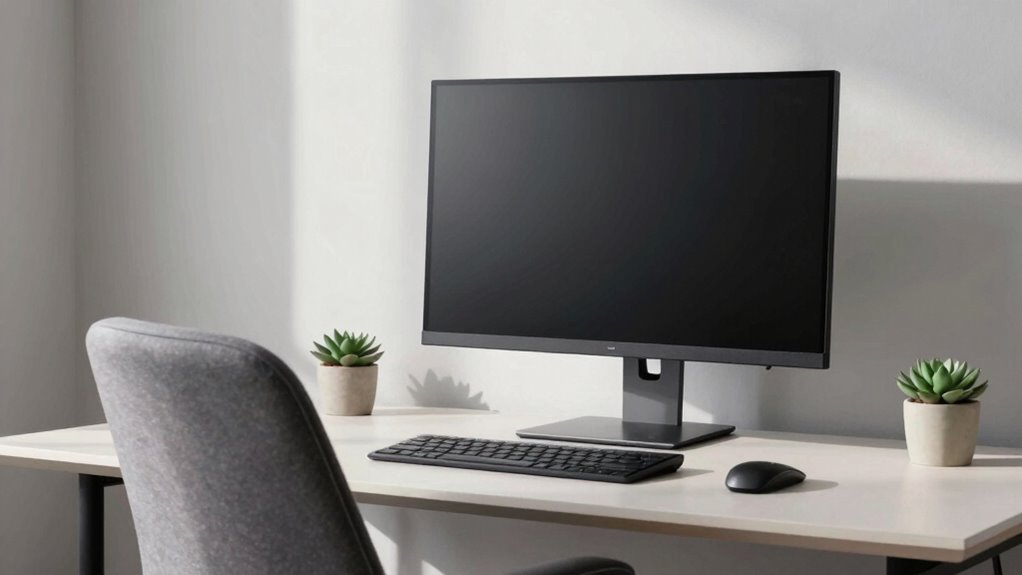
If you’re struggling with neck pain, your monitor height could be to blame. Position your monitor so the top of the screen aligns with your eye level, keeping it about an arm’s length away. This setup helps reduce strain and promote better posture. If you find yourself leaning forward or tilting your head, it’s time to adjust. Want to know more tips on optimizing your workspace for comfort? There’s plenty more to explore!

Get the little things that make your day delivered free with Prime
- Fast, free delivery on millions of items
- Prime Video, Amazon Music and more included
- Member-only deals all year
Key Takeaways
- Position your monitor at eye level, with the top of the screen at or just below eye level to prevent neck strain.
- Maintain an arm’s length distance from the monitor to reduce eye strain and promote better posture.
- Adjust the monitor angle slightly back (10-20 degrees) to enhance comfort and reduce neck discomfort.
- Use adjustable stands to easily modify monitor height and ensure proper alignment throughout the day.
- Evaluate your chair height to support good posture, ensuring feet are flat and knees at a 90-degree angle.
As an affiliate, we earn on qualifying purchases.
Identifying Your Neck Pain? Here’s Why Monitor Height Matters
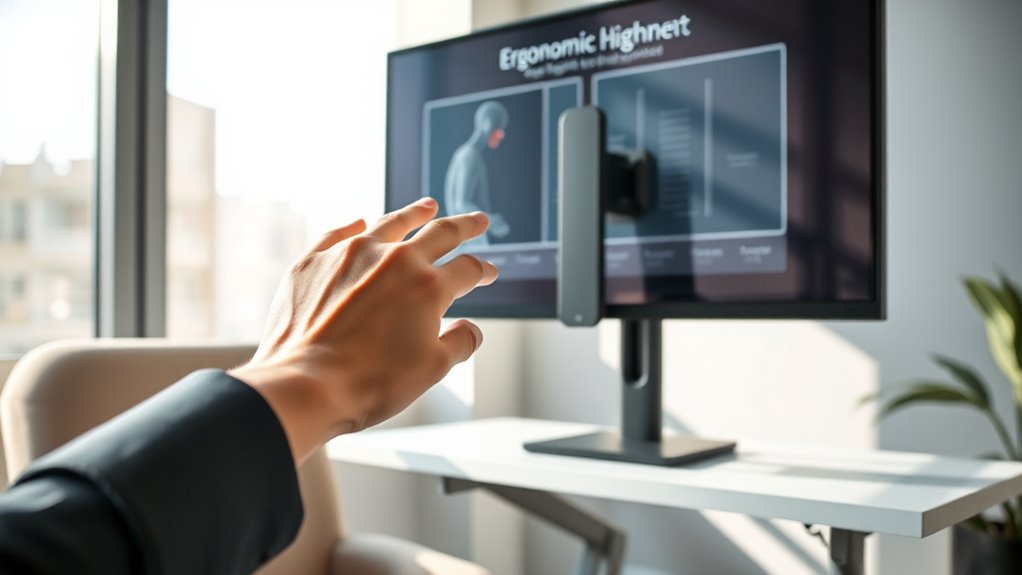
Have you ever wondered why your neck aches after long hours at your desk? Poor monitor ergonomics could be the culprit. If your screen’s positioned too high or too low, it forces your neck into awkward angles, leading to neck strain. When you spend hours looking down or craning your neck, those muscles tighten, resulting in discomfort and pain. Proper monitor height adjustment can help prevent this kind of strain and promote better posture during your work sessions. Additionally, ensuring your ergonomic workspace setup supports your neck’s natural position can make a significant difference in reducing discomfort. Using the right DIY tools and safety tips can also help you make adjustments safely and effectively.
As an affiliate, we earn on qualifying purchases.
Assessing Your Current Monitor Height and Setup
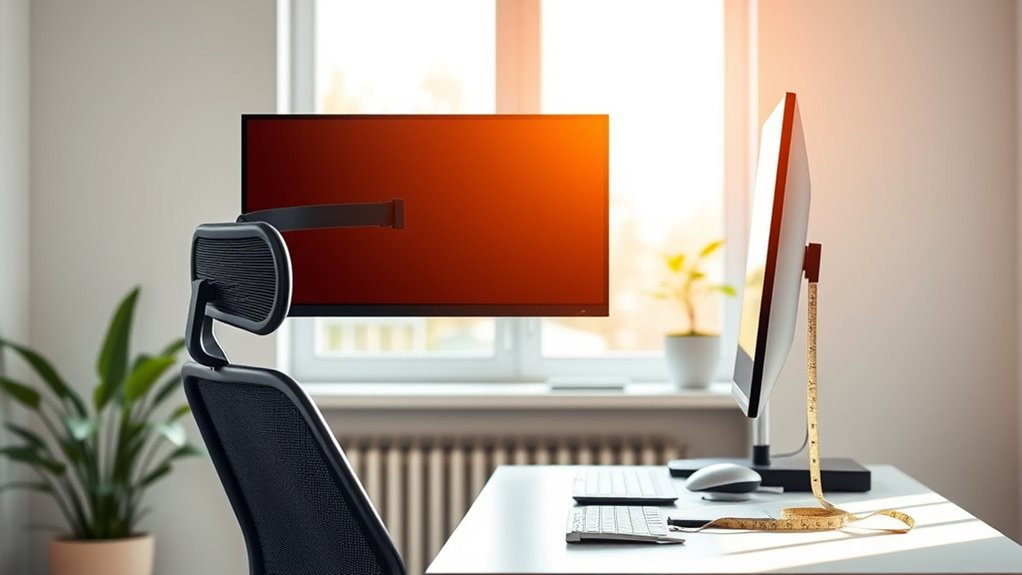
To guarantee comfort while you work, it’s essential to assess your monitor height and setup. Your screen should align with your eye level to prevent strain on your neck and eyes. Take a moment to evaluate your current position and make adjustments where needed. Ensuring proper monitor placement can also reduce overall fatigue during long work sessions.
Importance of Proper Alignment
While you might not realize it, the height of your monitor plays an essential role in your overall comfort and productivity. Proper alignment can greatly reduce neck strain and eye fatigue, leading to alignment benefits that enhance your work experience. To achieve this, use alignment techniques such as adjusting your monitor so that the top of the screen is at or just below eye level. This position keeps your neck in a neutral posture, minimizing discomfort. Regularly assess your setup and make necessary adjustments to guarantee you’re maintaining this alignment. By prioritizing proper monitor height, you’ll not only feel better but also increase your focus and efficiency throughout the day. Additionally, maintaining a comfortable indoor environment with proper air quality and humidity levels can further support your comfort during long hours at your desk. Remember that a well-optimized workspace includes considering ergonomic principles and workspace setup to prevent strain. Don’t underestimate the impact of simple adjustments!
Evaluating Eye Level Position
As you assess your current monitor height and setup, consider how it aligns with your eye level. Ideally, your screen should be at or just below eye level to minimize eye strain and reduce screen glare. Proper monitor positioning can make a significant difference in your comfort throughout the day. Additionally, incorporating ergonomic principles can help prevent long-term discomfort and injuries. Ensuring your workspace is adjustable allows for better customization and promotes healthier habits. Regularly evaluating your setup helps maintain optimal ergonomics and adapt to changes over time. Being mindful of visual ergonomics can further enhance your comfort and prevent fatigue.
As an affiliate, we earn on qualifying purchases.
Is Your Monitor Too Low or Too High? Here’s How to Tell
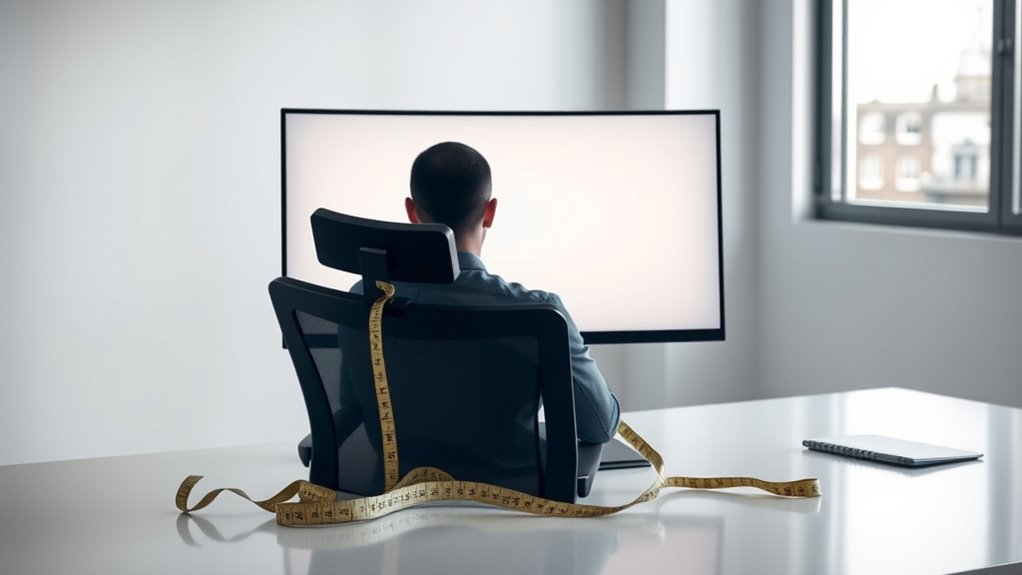
Have you noticed discomfort in your neck or eyes while working? Your monitor might be too low or too high, impacting your posture and productivity. Let’s explore the signs of both and find the ideal height for your setup. Ensuring your monitor is at the correct ergonomic height can prevent strain and promote better comfort during long hours of work. Maintaining proper ergonomic setup can also reduce the risk of repetitive strain injuries and improve overall well-being. Adjusting your monitor to smart home safety standards can further enhance your workspace comfort and safety.
Signs Of Low Monitor
If you find yourself straining to see the screen or experiencing discomfort in your neck and shoulders, your monitor might be too low. You should be able to maintain a natural line of sight, with the top of the screen at or just below eye level. If you’re tilting your head down or hunching your shoulders to see better, that’s a sign of monitor strain. Poor screen visibility can lead to eye fatigue, making it hard to focus for long periods. Additionally, if you frequently adjust your position to get a clearer view, it’s time to raise your monitor. Ensuring your monitor is at the right height can help alleviate discomfort and improve your overall productivity. Microplastics in dust can also contribute to indoor air quality issues, which may indirectly affect your comfort and health during long work sessions.
Signs Of High Monitor
When your monitor’s positioned too high, you might notice discomfort in your neck or headaches from consistently tilting your head back. You should also pay attention to your posture; if you’re slouching or craning your neck, it’s a sign your monitor placement needs adjustment. Additionally, if you find yourself straining your eyes or frequently adjusting your seating position to see the screen clearly, your monitor might be too high. The ideal screen distance is essential; if you’re leaning back uncomfortably or can’t maintain a relaxed posture, it’s time to reassess. Remember, a proper setup can greatly enhance your comfort and productivity, so make those necessary changes for a better work experience. Staying aware of ergonomic principles can help prevent musculoskeletal issues and promote overall safety during long periods of screen time.
Ideal Monitor Height
Finding the right monitor height is key to preventing discomfort and improving your overall work experience. Ideally, your monitor should be at eye level, so you can view the screen without straining your neck. To check if your monitor placement is correct, sit up straight and look straight ahead; your eyes should align with the top third of the screen. If you find yourself leaning forward or tilting your head, your monitor may be too low. Conversely, if you’re looking up frequently, it’s likely too high. Maintaining a screen distance of about an arm’s length can also help reduce eye strain. Adjust your monitor height to guarantee comfort and enhance productivity throughout your workday. Proper ergonomic setup is essential for long-term comfort and health. Ensuring your workspace ergonomic principles are followed can make a significant difference in preventing neck pain, especially when using anti-fatigue mats or other standing desk gear designed for extended periods of standing. Paying attention to posture awareness can further promote better neck and spinal health during long work hours. Regularly monitor adjustments can help maintain proper alignment and prevent discomfort over time.
ergonomic desk setup accessories
As an affiliate, we earn on qualifying purchases.
As an affiliate, we earn on qualifying purchases.
Ergonomic Setup: Positioning Your Monitor Correctly
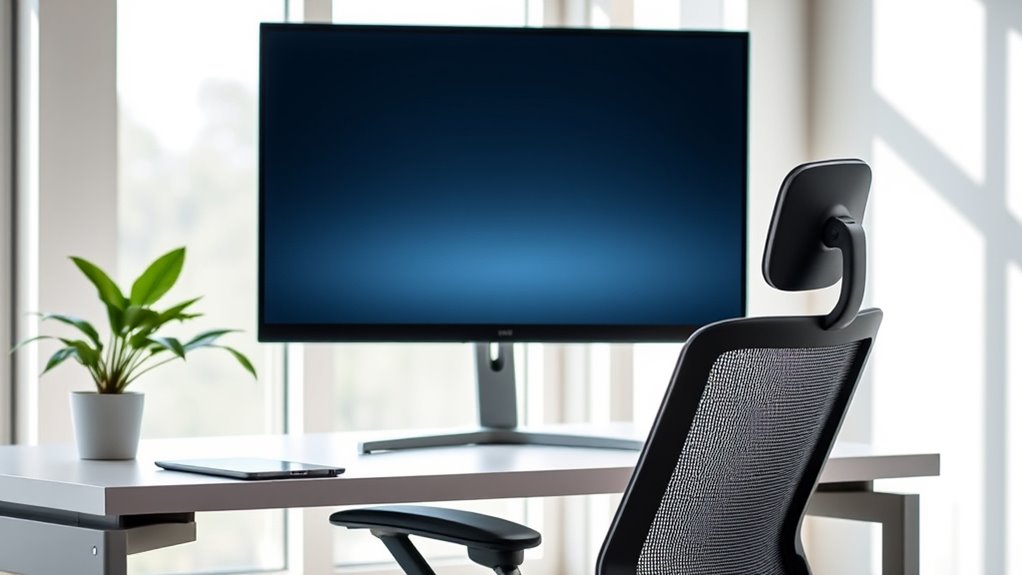
To guarantee comfort and reduce strain during long hours at your desk, it’s essential to position your monitor correctly. Proper monitor positioning is a key aspect of workspace ergonomics that can greatly enhance your work experience. Here are some tips to get it right:
- Keep the top of the screen at or just below eye level.
- Sit about an arm’s length away from the monitor.
- Confirm the screen is tilted slightly back (10-20 degrees) for ideal viewing.
- Adjust brightness and contrast to reduce glare and eye strain.
How Chair Height Affects Your Monitor Height
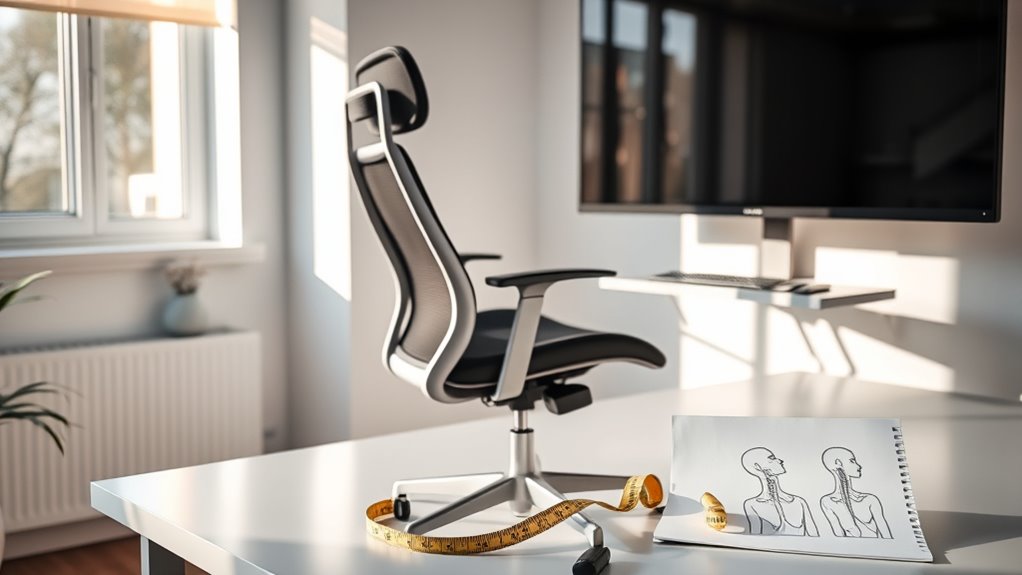
Although chair height may seem like a minor detail, it plays an essential role in determining how effectively you can position your monitor. Proper chair ergonomics help you maintain a comfortable posture, aligning your eyes with the top of the screen for ideal viewing. If your chair is too low, you’ll find yourself straining your neck to see the monitor, leading to discomfort over time. Conversely, a chair that’s too high can force your arms into awkward positions, disrupting monitor alignment. To achieve the best setup, adjust your chair so that your feet rest flat on the floor and your knees are at a 90-degree angle. This way, you’ll enhance both your comfort and productivity while reducing the risk of neck pain.
Tips for Adjusting Your Monitor Height in Different Workspaces
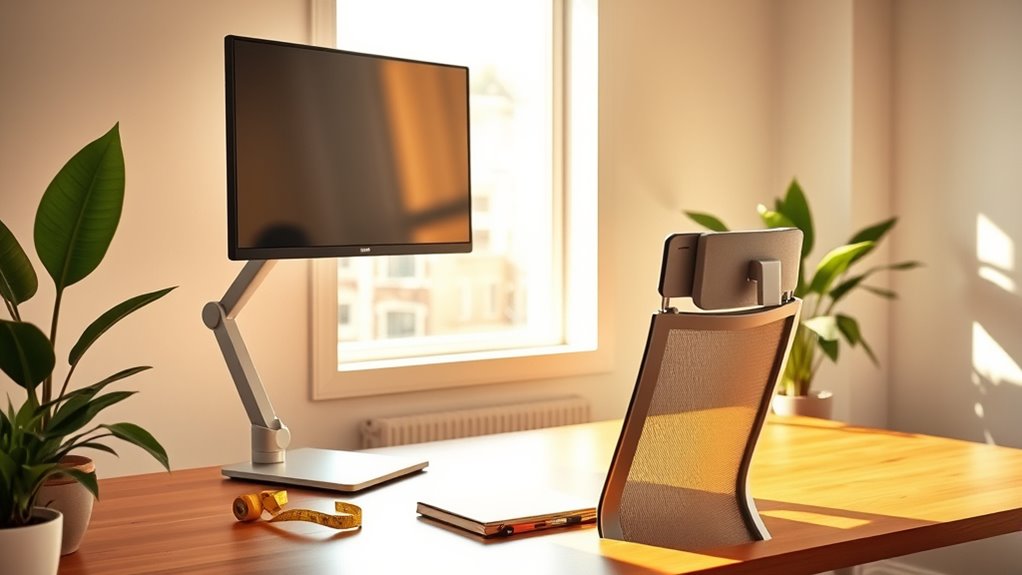
Proper chair height not only sets the stage for monitor placement but also influences how you can optimize your workspace. Making effective workspace adjustments is essential for comfort and productivity. Here are some tips for adjusting your monitor height in various environments:
- Use adjustable monitor stands to find the perfect height easily.
- Position your monitor so the top of the screen is at or slightly below eye level.
- Keep your screen about an arm’s length away to reduce strain.
- Ascertain your monitor is angled slightly upward to promote better posture.
- Regularly reassessing your setup can help maintain ergonomic benefits and prevent discomfort. ergonomic standards For sustained comfort, consider integrating ergonomic principles into your workspace setup, including maintaining proper air purifier maintenance to ensure a healthier breathing environment.
Essential Ergonomic Accessories for Your Workspace
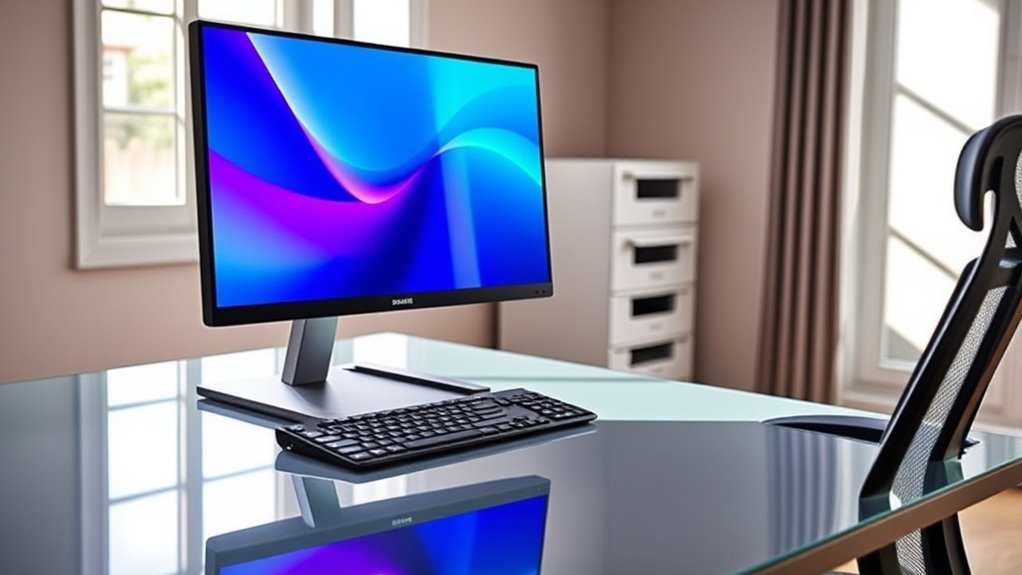
Creating a comfortable workspace goes beyond just adjusting your monitor; the right ergonomic accessories can make a significant difference in your overall well-being. Start by investing in monitor stands to elevate your screen to eye level, reducing neck strain. Monitor stands not only help with height adjustment but also free up valuable desk space. Additionally, consider desk risers. These allow you to switch between sitting and standing, promoting better circulation and energy levels throughout your workday. A keyboard tray can also enhance your typing posture, keeping your wrists in a neutral position. By incorporating these accessories, you’ll create a more ergonomic workspace that supports your body and boosts productivity. Don’t underestimate the impact of a well-equipped workstation!
Maintain Good Posture While Working at Your Computer
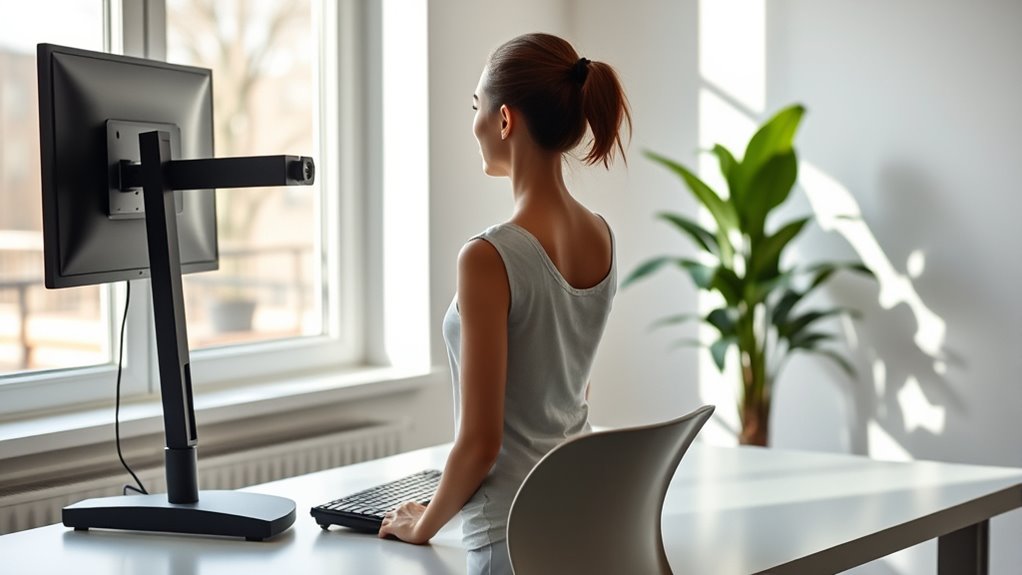
To maintain good posture while working at your computer, it’s essential to be mindful of your body alignment throughout the day. Making simple desk adjustments and incorporating posture exercises can greatly improve your comfort and reduce pain. Here are some tips to help you:
- Position your monitor at eye level to avoid straining your neck.
- Keep your feet flat on the floor or on a footrest.
- Use a chair that supports your lower back and promotes an upright position.
- Take regular breaks to stretch and reset your posture.
Frequently Asked Questions
Can Monitor Height Affect Eye Strain Levels?
Yes, monitor height can definitely affect eye strain levels. When you position your monitor at eye level, you reduce the need to tilt your head or strain your neck, which promotes better monitor ergonomics. This alignment helps your eyes remain in a comfortable position, reducing fatigue. If you’re experiencing eye strain, adjusting your monitor height might be a simple yet effective solution to enhance your comfort and productivity throughout the day.
How Often Should I Adjust My Monitor Height?
You should adjust your monitor height as often as needed to keep your neck alignment in check. Think of it like fine-tuning a guitar; a little tweak can make a world of difference. Regular adjustments help you maintain good monitor ergonomics, reducing strain on your eyes and neck. If you notice discomfort or strain, don’t hesitate to raise or lower your monitor until it feels just right. Your body will thank you!
What Is the Ideal Distance From the Monitor?
The ideal distance from your monitor is typically 20 to 30 inches, or about an arm’s length away. This monitor distance helps reduce eye strain and promotes a comfortable ergonomic setup. Make sure the top of the screen is at or slightly below eye level to maintain good posture. Adjust your chair and desk height accordingly to create a workspace that supports your health and productivity. You’ll feel the difference!
Are There Specific Heights for Different Monitor Sizes?
Yes, there are specific heights for different monitor sizes when you’re aiming for an ergonomic setup. For a 24-inch monitor, the top should be at eye level or slightly below, while a 27-inch monitor might require a height adjustment to guarantee comfort. Generally, larger screens need to be positioned slightly higher to prevent neck strain. Adjust your setup based on your monitor size to optimize your viewing experience and maintain good posture.
Can Using Multiple Monitors Affect My Setup?
Yes, using multiple monitors can definitely affect your setup. Proper monitor positioning is essential for maintaining an ergonomic setup. If your monitors are at different heights or angles, it can strain your neck and eyes. You should make certain that all screens are aligned at eye level, allowing you to shift your gaze comfortably without awkward movements. This way, you can enhance productivity while minimizing discomfort during long work sessions.
Conclusion
Don’t underestimate the impact of monitor height on your neck pain. You might think it’s just a minor detail, but proper alignment can make a world of difference in your comfort and productivity. By taking the time to adjust your setup, you’re investing in your health and well-being. Remember, a few simple changes can lead to significant relief. So, prioritize your workspace ergonomics; your neck will thank you for it!
Halloween Picks
halloween
As an affiliate, we earn on qualifying purchases.