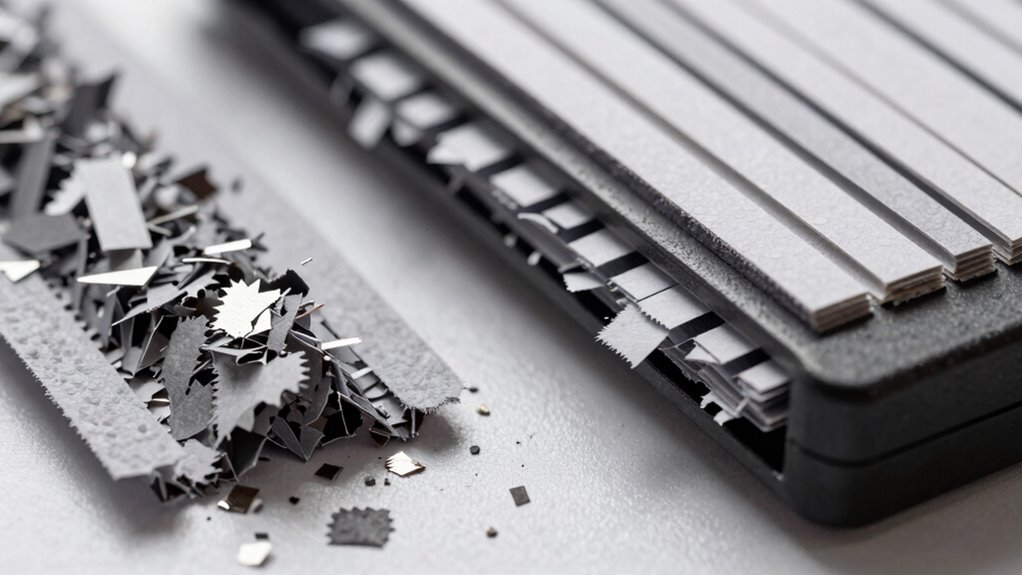

Micro-cut shredders cut paper into tiny particles, providing high security for sensitive documents, but they fill up faster and need more frequent emptying. Cross-cut shredders produce larger pieces, handling bigger volumes more efficiently and offering moderate security. If you need maximum protection, micro-cut is best, but for regular use with less sensitive materials, a cross-cut works well. Explore further to discover the key differences that can help you choose the right shredder for your needs.

Get the little things that make your day delivered free with Prime
- Fast, free delivery on millions of items
- Prime Video, Amazon Music and more included
- Member-only deals all year
Key Takeaways
- Micro-cut shredders provide higher security by cutting paper into tiny particles, suitable for sensitive information.
- Cross-cut shredders handle larger volumes efficiently with moderate security, ideal for general office use.
- Micro-cut models require frequent emptying due to smaller particle size, while cross-cut shredders last longer between emptying.
- Choose micro-cut for maximum confidentiality, and cross-cut for versatile, high-capacity shredding needs.
- Both types vary in paper handling capacity, with cross-cut generally managing thicker stacks more easily.
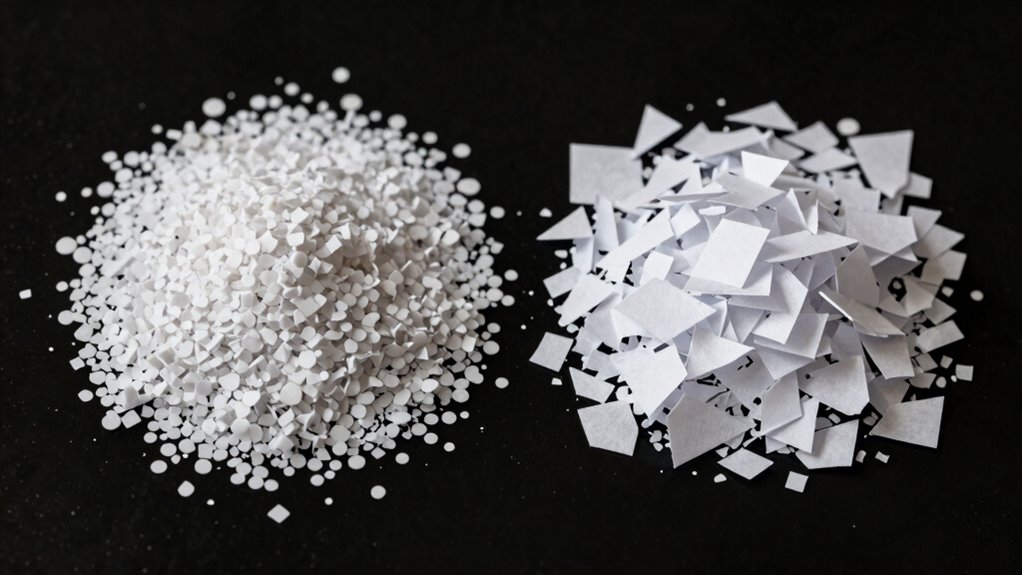
When choosing a shredder, understanding the differences between micro-cut and cross-cut models can help you make an informed decision. One of the first factors to weigh is paper size, as different shredders handle various sheet capacities and types of documents. Micro-cut shredders typically process fewer sheets at a time compared to cross-cut models, making them suitable for lighter, everyday shredding. Cross-cut shredders, on the other hand, are often designed to handle larger volumes more efficiently, which is beneficial if you need to shred multiple documents regularly. Additionally, consider the size and thickness of paper you’ll be shredding—micro-cut shredders excel at handling standard office paper, while cross-cut models can manage thicker stacks or larger sheets with ease.
Micro-cut shredders handle fewer sheets for light use, while cross-cut models manage larger volumes efficiently.
Security level is another vital aspect that varies considerably between these two types of shredders. Micro-cut shredders provide a higher security level because they cut paper into tiny particles, often measuring less than 5mm in length. This makes it nearly impossible for anyone to reconstruct your documents, offering enhanced protection for sensitive information like financial statements, legal documents, or personal data. Cross-cut shredders, while still more secure than strip-cut models, produce larger shredded pieces, generally around 2mm by 15mm. This means they offer a moderate level of security, suitable for less sensitive documents but not ideal for highly confidential information. If your priority is maximum security, a micro-cut shredder is the better choice.
Another point worth weighing is the maintenance and disposal process. Since micro-cut pieces are much smaller, they tend to fill up the shredder bin faster, requiring more frequent emptying. This can be a hassle if you’re shredding large volumes regularly. Cross-cut shredders, with their larger particles, typically have a higher sheet capacity and longer operation time before needing to be emptied. However, because the shredded particles are bigger, they can sometimes be easier to collect and dispose of. Proper shredder maintenance and cleaning are crucial to ensure the longevity and optimal performance of your shredder. Regular maintenance can also help prevent jamming issues, which are more common when shredding high volumes of small particles. Additionally, understanding the shredder technology involved can help you select a model that best suits your shredding needs and reduces potential problems over time. Moreover, being aware of the material compatibility can prevent damage to your shredder and ensure it functions efficiently.
Furthermore, the security level of the shredder can influence your choice depending on the sensitivity of the documents being shredded. Ultimately, your decision hinges on your specific needs. If you’re shredding sensitive, confidential documents regularly and want maximum security, a micro-cut shredder offers peace of mind. But if you need a versatile, high-capacity shredder for less sensitive materials, a cross-cut model provides a good balance of efficiency and security. By understanding your typical paper size and the security level you require, you can choose the shredder that best fits your office or home needs.
Products Worth Considering

Levoit Core 600S-P Smart Air Purifier for Large Rooms

Samsung 42-Inch S90H OLED 4K Smart TV Bundle

Dyson Ball Animal Total Clean Upright Vacuum
As an affiliate, we earn on qualifying purchases.
Frequently Asked Questions
Which Shredder Type Is More Environmentally Friendly?
Cross-cut shredders are generally more environmentally friendly because they produce smaller pieces, promoting better recycling benefits. They often require less energy consumption to operate efficiently, making them a smarter choice for eco-conscious users. By reducing shred size, cross-cut models help guarantee your shredded documents are easier to recycle, minimizing waste and supporting sustainability. So, if you’re aiming for greener office practices, a cross-cut shredder aligns better with your environmental goals.
Can Micro-Cut Shredders Handle Credit Cards and CDS?
Think of a micro-cut shredder as a tiny tornado, capable of thoroughly obliterating credit cards and CDs. Yes, it handles credit card security by shredding them into minuscule pieces and destroys CDs effectively. This makes micro-cut shredders ideal for sensitive documents and media. Their fine shreds prevent reconstruction, ensuring your information stays private. So, if you need all-encompassing destruction, a micro-cut shredder is your best choice.
How Loud Are Cross-Cut Shredders During Operation?
Cross-cut shredders typically produce moderate noise levels during operation, with their operating sound ranging from about 65 to 75 decibels. You might notice it as a consistent hum or buzz, which can be louder depending on the shredder’s power and design. While not extremely loud, it’s enough to be noticeable in quiet office settings. Wearing ear protection isn’t usually necessary, but consider placing the shredder away from quiet work areas for comfort.
What Is the Recommended Maintenance Routine for Each Shredder Type?
You should clean your shredder regularly to maintain ideal shredding speed and paper capacity. For both types, regularly oil the blades to prevent jams and guarantee smooth operation. Clear out paper jams promptly, and avoid overloading beyond the shredder’s capacity. For cross-cut models, pay extra attention to the blades’ sharpness, while for micro-cut shredders, ensure the motor stays cool. Regular maintenance keeps shredders efficient and extends their lifespan.
Are There Specific Security Standards for Micro-Cut Shredders?
Yes, micro-cut shredders must meet specific security standards to guarantee data protection. You should look for shredders that comply with security standards like NSA/CSS 04-02 or DIN 66399, which specify the level of destruction needed for sensitive information. Adhering to these shredding standards guarantees your micro-cut shredder provides the necessary security compliance, especially for confidential or classified documents, helping you prevent data breaches effectively.
Conclusion
When choosing between micro-cut and cross-cut shredders, consider your security needs and the amount of shredding you do. Did you know that micro-cut shredders can produce over 2,000 tiny particles from a single sheet, making it nearly impossible for anyone to piece your documents back together? This highlights just how secure they are compared to cross-cut models. Whichever you pick, prioritize your safety and peace of mind—your confidential information deserves nothing less.