![A Better Way To Tie Your Gym Shorts. (Or Any Drawstring) [Video]](https://exactarticle.com/wp-content/uploads/2026/07/a-better-way-to-tie-your-gym-shorts-or-any-drawstring-video-featured-200x110.jpg)
A stable standing desk frame is key for safety, comfort, and productivity. It prevents wobbling by ensuring the frame distributes weight evenly and stays balanced, even on uneven floors. Choosing well-constructed, durable materials like metal and using features like reinforced bases and adjustable feet can boost stability. Proper assembly and regular maintenance also help keep your desk secure over time. Want to learn more about how to keep your desk stable and secure?

Get the little things that make your day delivered free with Prime
- Fast, free delivery on millions of items
- Prime Video, Amazon Music and more included
- Member-only deals all year
Key Takeaways
- Well-constructed frames with even weight distribution prevent wobbling and enhance overall stability.
- Wide, reinforced bases and adjustable feet help compensate for uneven floors and improve balance.
- Durable materials like steel or aluminum increase resistance to flexing and ensure long-term support.
- Proper assembly following manufacturer instructions and tightening all bolts ensures frame integrity.
- Regular maintenance, including tightening and inspecting components, sustains stability over time.
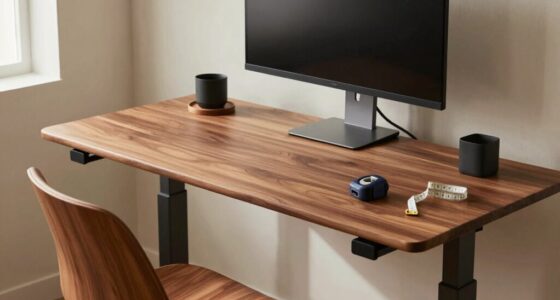
Have you ever wondered why your standing desk wobbles or feels unstable? It’s a common concern, especially when you’re trying to enjoy the ergonomic benefits of a sit-stand setup. A stable frame isn’t just about comfort; it’s about safety and productivity. When your desk wobbles, it can cause frustration and even lead to accidents or damage to your equipment. Understanding what influences frame stability can help you make better choices and ensure your workspace remains secure.
A stable standing desk frame boosts safety, comfort, and productivity by preventing wobbling and equipment damage.
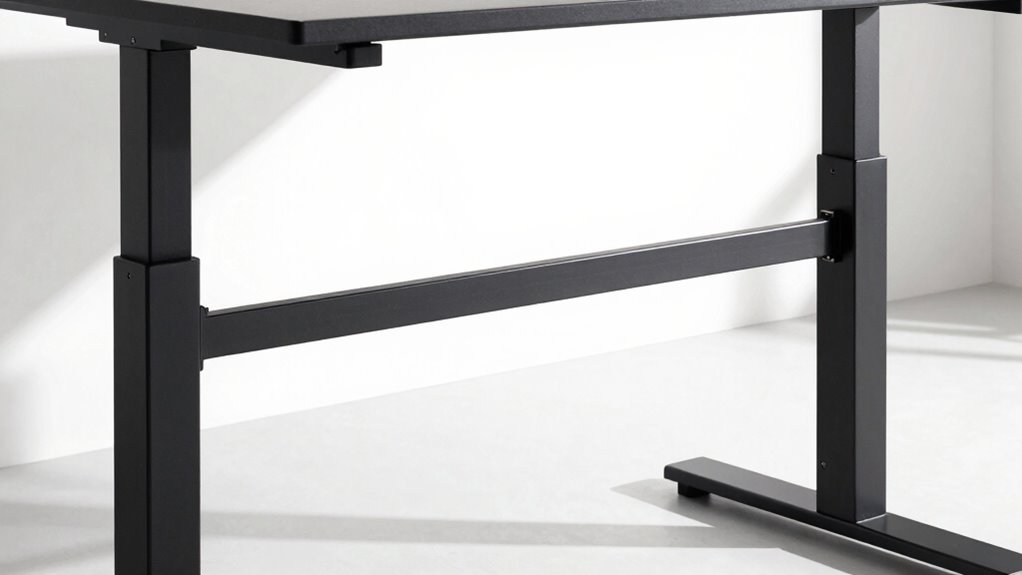
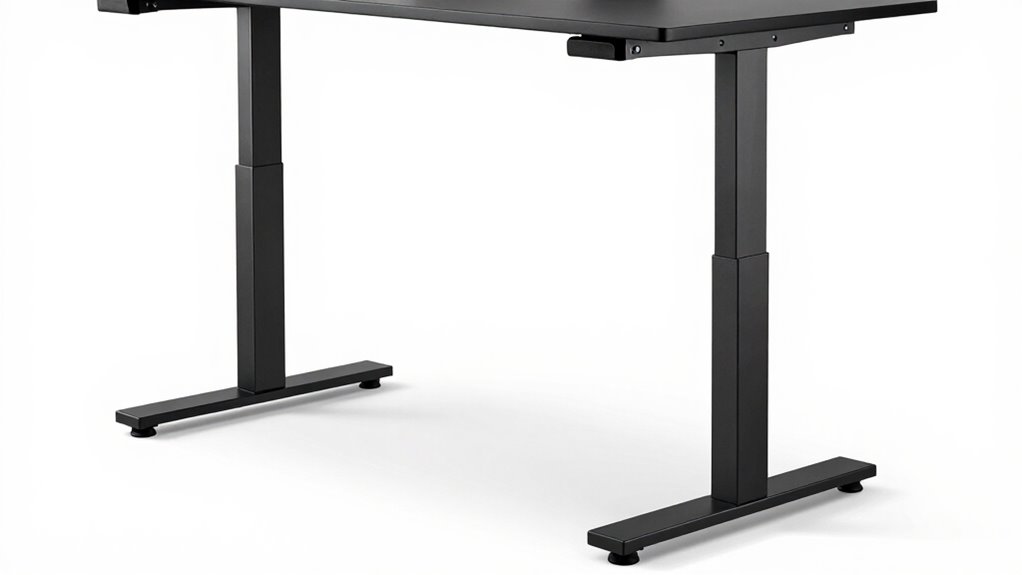
The foundation of a stable standing desk frame lies in its design and build quality. A well-constructed frame distributes weight evenly and offers sturdy support. Look for desks with wide, reinforced bases and adjustable feet that can compensate for uneven floors. These features help prevent wobbling and keep your workspace steady. When shopping, pay attention to the materials used—metal frames, especially those made of steel or aluminum, tend to be more durable and resistant to flexing than cheaper plastic options. The thickness of the frame components also plays a role; thicker, solid tubing usually provides better stability. Additionally, selecting a durable materials frame can significantly improve long-term stability and resistance to wear. Properly designed frames with weight distribution features help maintain balance even under varying loads. Regular maintenance, like tightening bolts periodically and inspecting for wear or damage, also keeps your desk stable over time.
Assembly tips are crucial for ensuring your desk remains stable over time. First, always follow the manufacturer’s instructions carefully. Proper tightening of bolts and screws is essential; loose connections are a common cause of wobbling. Use the tools provided or recommended to ensure all fasteners are secure. It’s also helpful to double-check the stability once fully assembled—once tightened, some parts may still shift slightly during the initial use. Adjust the leveling feet to stabilize the desk on uneven surfaces, preventing any rocking or tilting. When assembling, consider doing it on a flat surface to avoid misalignment, which can compromise stability. Using proper assembly techniques can help prevent future issues and improve overall stability. Incorporating quality components during assembly can also contribute to a more durable and wobble-free desk. Additionally, selecting a frame made from durable materials can significantly improve long-term stability and resistance to wear. Regular maintenance, like tightening bolts periodically and inspecting for wear or damage, also keeps your desk stable over time. Remember, a stable standing desk frame enhances the ergonomic benefits you’re seeking—reducing strain, improving posture, and increasing comfort. When your desk is solid and secure, you can focus on working effectively without the distraction of instability or wobbling.
standing desk frame stability kit
As an affiliate, we earn on qualifying purchases.
As an affiliate, we earn on qualifying purchases.
Frequently Asked Questions
How Does Weight Distribution Affect Desk Stability?
Weight distribution impacts desk stability by influencing the center of gravity. If you have weight imbalance, the desk’s center of gravity shifts, making it wobble or tip over more easily. To maintain your desk stable, you should evenly distribute weight across the frame, especially when adding equipment or adjusting height. Proper weight balance ensures the center of gravity remains low and centered, providing a sturdy, safe workspace.
Can Additional Accessories Compromise Frame Stability?
Adding accessories is like decorating a house—you need to make certain they fit without upsetting the balance. If your accessories are compatible, they won’t compromise your desk’s stability. However, if they clash with the frame design considerations, they can cause wobbling or tipping. Always check accessory compatibility and consider frame design considerations to keep your standing desk stable, even as you personalize it to suit your needs.
What Are Signs of a Unstable Standing Desk Frame?
You’ll notice your standing desk feels wobbly or creaks when you use it, indicating instability. Tilt or sway when you shift your weight, or uneven surfaces, are clear signs. These issues compromise ergonomic benefits and can affect your comfort and safety. While aesthetic considerations matter, prioritize stability to prevent accidents. Regularly check bolts and supports, and avoid overloading the frame to maintain a secure, stable workspace.
How Do Different Flooring Types Impact Stability?
Your standing desk’s stability depends heavily on your flooring. Different flooring types impact stability because of flooring compatibility; hard surfaces like tile or hardwood typically offer better support, while carpet or uneven surfaces may cause wobbling. Surface unevenness can make your desk less stable, so consider using a mat or adjustable feet to level it out. Ensuring proper flooring compatibility helps keep your standing desk steady and secure.
Does Frame Material Influence Long-Term Stability?
Yes, the frame material influences long-term stability because of material durability and frame design. Durable materials like steel or aluminum resist wear and deformation over time, maintaining stability. Additionally, a well-designed frame distributes weight evenly and minimizes wobbling, ensuring your standing desk remains steady. Choosing a sturdy material combined with a sound frame design guarantees your desk stays stable, even with daily use and varying weights.
adjustable leveling feet for standing desk
As an affiliate, we earn on qualifying purchases.
As an affiliate, we earn on qualifying purchases.
Conclusion
To guarantee your standing desk remains stable, focus on choosing a frame with a sturdy design and proper weight distribution. Some might think size alone guarantees stability, but it’s about quality construction and thoughtful placement. Remember, investing in a well-built frame isn’t just about safety—it’s about creating a reliable workspace that helps you stay focused and comfortable throughout your day. Don’t compromise on stability; it’s the foundation of your productivity and well-being.
As an affiliate, we earn on qualifying purchases.
desk frame reinforcement brackets
As an affiliate, we earn on qualifying purchases.
As an affiliate, we earn on qualifying purchases.
NFL season / tailgating Picks
team gear
As an affiliate, we earn on qualifying purchases.