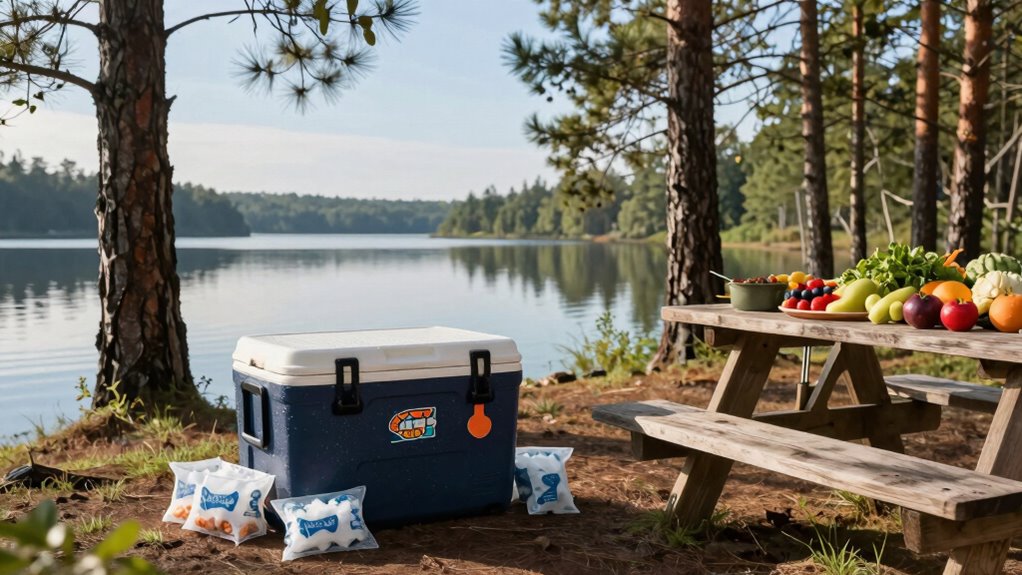
To keep food cold while camping, choose a high-quality cooler with good insulation. Pack it efficiently by placing ice at the bottom, followed by heavier foods, and lightweight items on top. Use ice packs or even dry ice for extended cooling. Always keep your cooler in the shade to minimize heat exposure and monitor food temperatures with a thermometer. Curious about meal planning and safety tips? There’s more to explore to guarantee your food stays fresh!

Get the little things that make your day delivered free — and shop member deals
- Fast, free delivery on millions of items
- Access to Prime Big Deal Days deals on October 6–7
- Prime Video, Amazon Music and more included
Key Takeaways
- Choose a high-quality, well-insulated cooler to maintain cold temperatures for longer periods during your camping trip.
- Pre-chill your cooler overnight and layer ice packs or blocks at the bottom for optimal cooling.
- Pack food strategically by placing heavier items like meats on top of ice and lighter items like fruits on top to avoid crushing.
- Limit cooler openings to preserve cold air and check temperatures regularly to ensure food safety.
- Keep your cooler in shaded areas to minimize heat exposure and enhance insulation performance.
As an affiliate, we earn on qualifying purchases.
How to Choose the Best Cooler for Your Camping Needs
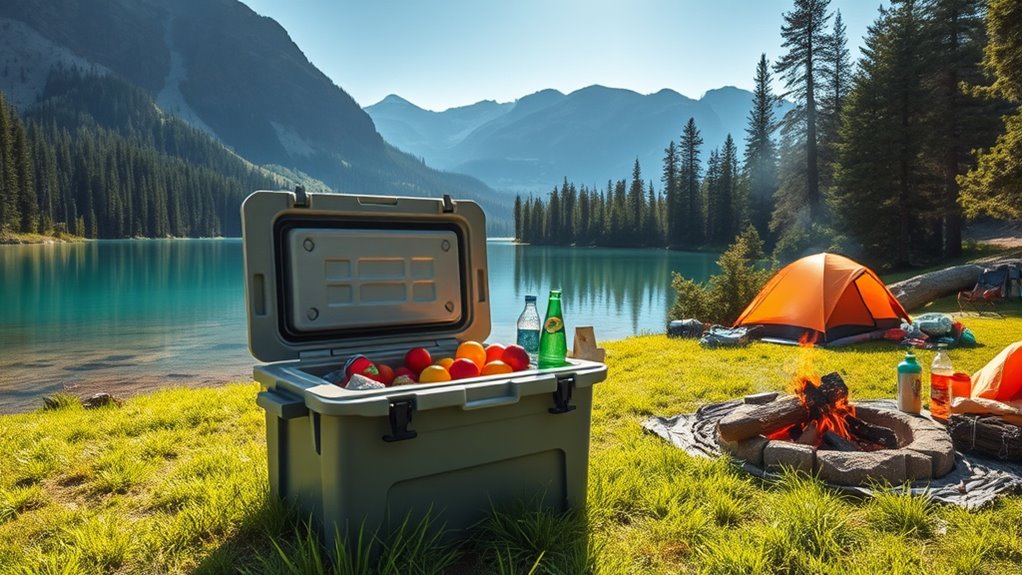
Choosing the right cooler for your camping trip can make all the difference in keeping your food fresh and your drinks cold. First, consider the cooler materials. Hard-sided coolers offer better insulation and durability, while soft-sided models are lighter and easier to pack. Next, think about size capacity. You’ll want a cooler that fits your needs without being too bulky. If you’re camping with a group, a larger cooler might be necessary, but for solo trips, a compact option could suffice. Don’t forget to check the cooler’s insulation quality, as this impacts how long it keeps items cold. By choosing wisely, you’ll guarantee your food and drinks stay chilled throughout your adventure.
As an affiliate, we earn on qualifying purchases.
Pack Your Cooler Efficiently for Maximum Freshness
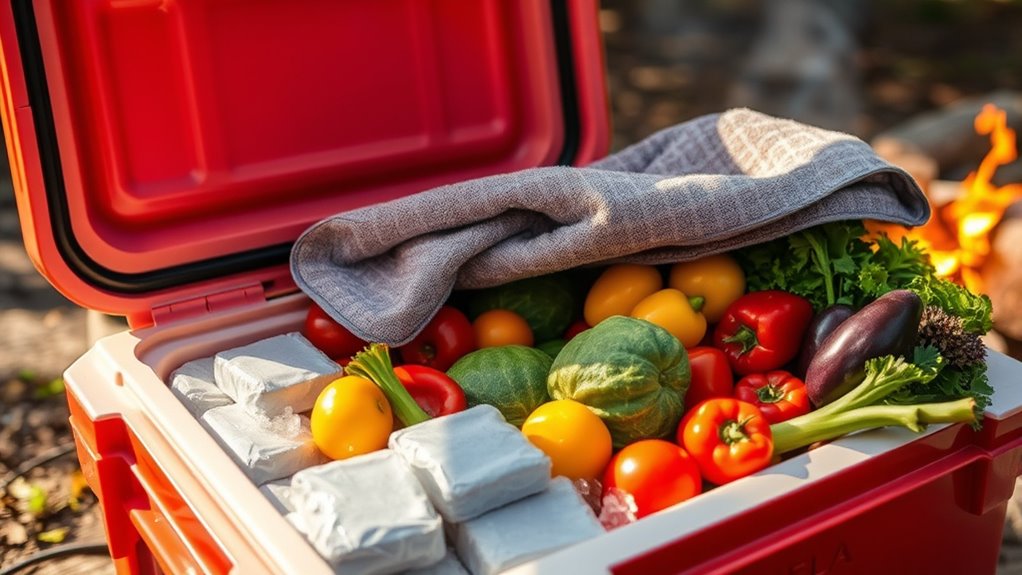
To keep your food fresh while camping, efficient packing of your cooler is essential. Start with proper cooler organization to maintain an ideal temperature. Here are three tips for ideal layering:
Efficient packing of your cooler ensures your food stays fresh while camping. Proper organization is key for maintaining ideal temperatures.
- Ice First: Place a layer of ice or ice packs at the bottom of the cooler. This sets a cold foundation for your food.
- Heavy Items Next: Add heavier items like meats and drinks on top of the ice. They’ll help keep the ice cold longer.
- Lightweight Foods Last: Finally, pack lighter items, such as fruits and veggies, on the top. This way, they stay cool without being crushed.
As an affiliate, we earn on qualifying purchases.
Extend Cooling With Ice Packs and Dry Ice
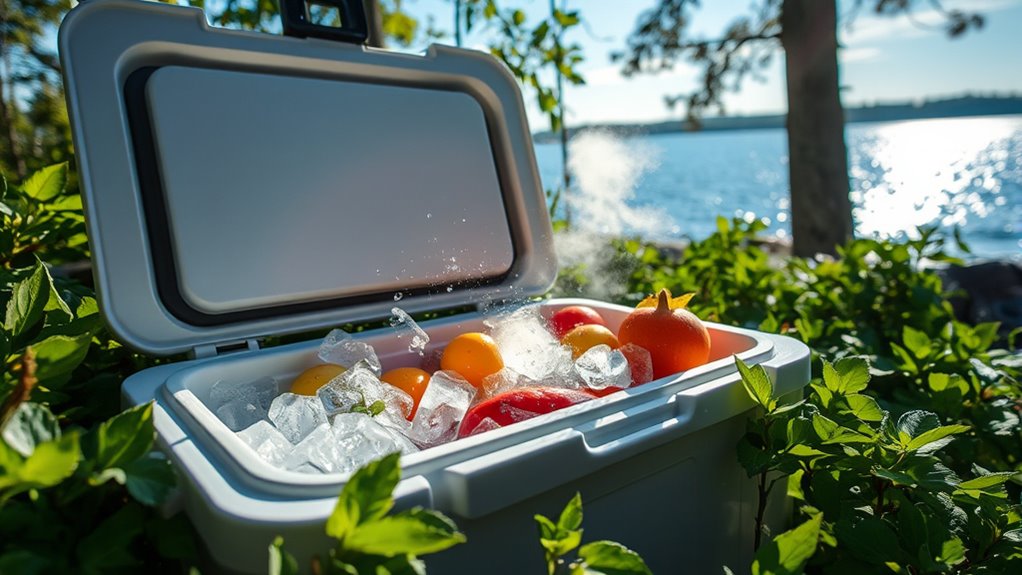
While you might think traditional ice is enough to keep your food cold during a camping trip, adding ice packs and even dry ice can greatly extend that cooling effect. Ice pack types include gel packs, which freeze solid and last longer, and hard plastic packs, which are reusable and versatile. You can use these alongside regular ice for ideal results. If you choose to use dry ice, remember that it’s much colder than regular ice, so handle it with care. Always use gloves and make sure your cooler is well-ventilated to prevent gas buildup. Following dry ice safety guidelines guarantees you can enjoy your camping meals without worrying about spoilage.
As an affiliate, we earn on qualifying purchases.
Why Keeping Your Cooler in the Shade Keeps Your Food Fresh
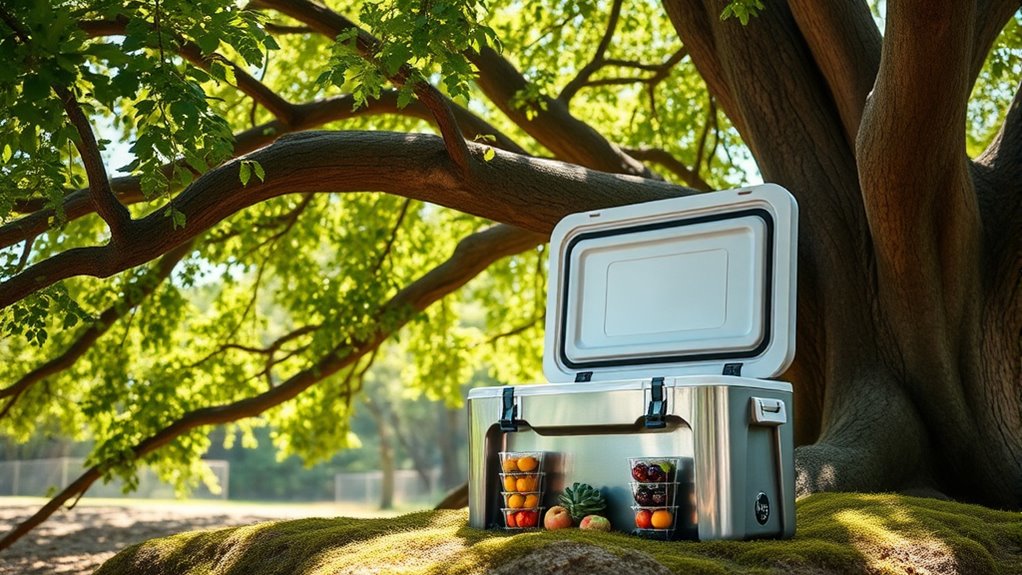
Keeping your cooler in the shade is essential for maintaining a consistent temperature. It reduces temperature fluctuations that can lead to spoilage, and it minimizes sun exposure that heats up your food. By choosing a shady spot, you’re helping your cooler do its job more effectively.
Reduces Temperature Fluctuations
When you place your cooler in the shade, you considerably reduce temperature fluctuations that can spoil your food. Keeping your cooler out of direct sunlight helps maintain temperature stability, ensuring your food stays fresh longer. Here are three effective cooling methods to enhance your experience:
- Choose the Right Spot: Find a shaded area, like under a tree or next to your tent, to keep your cooler cooler for longer.
- Use Reflective Covers: Consider draping a reflective tarp over your cooler to further shield it from heat.
- Pack Smart: Layer ice packs and food strategically, placing perishables nearest to the ice for ideal cooling.
Additionally, selecting a water-cooled mattress pad can help maintain a cooler environment around your food storage area, especially if you’re camping in particularly hot conditions. Incorporating proper insulation techniques can also significantly help in maintaining a consistent temperature inside your cooler.
Minimizes Sun Exposure
Placing your cooler in the shade not only stabilizes temperature but also minimizes sun exposure, which is essential for preserving food freshness. By implementing effective sunshade strategies, you can considerably extend the life of your perishable items. Here’s a quick overview of cooler placement tips:
| Cooler Placement | Benefits | Tips |
|---|---|---|
| Under Trees | Natural shade | Choose dense foliage |
| Near a Tent | Provides coverage | Position wisely |
| In a Vehicle | Reflective surfaces | Park strategically |
| Use a Canopy | Portable shade | Set up before heat hits |
Insulation Techniques to Maintain Cool Temperatures
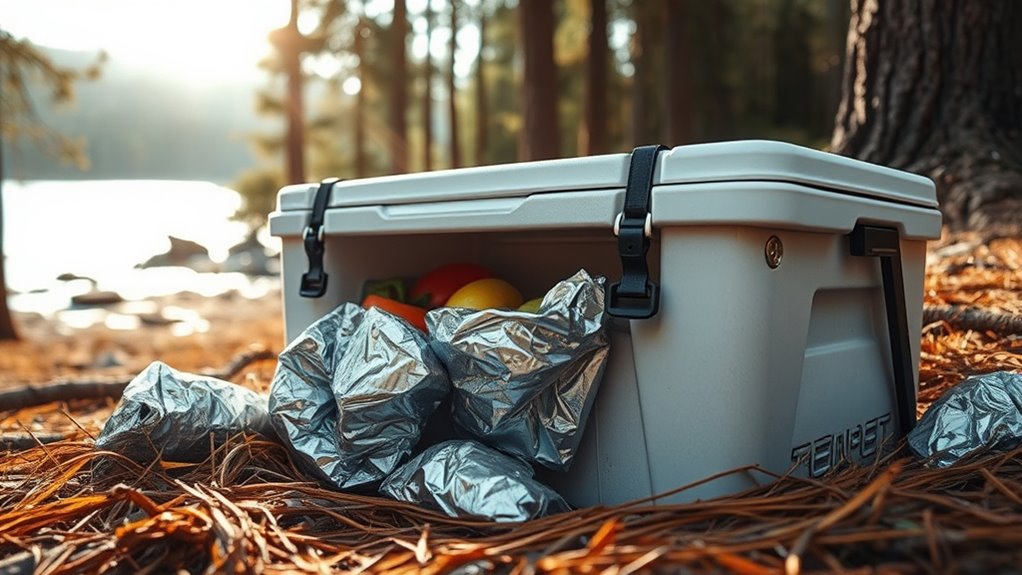
To guarantee your food stays cold while camping, consider the power of insulation techniques that trap cool air and prevent heat from seeping in. Using effective insulation materials and creating thermal barriers can greatly enhance your cooling efforts. Here are three techniques to try:
Ensure your food remains cold while camping by using insulation techniques that effectively trap cool air and block heat.
- Insulated Cooler: Choose a cooler with thick walls and quality insulation materials to keep the cold in longer.
- Reflective Blankets: Wrap your food containers in reflective blankets to deflect heat away and maintain lower temperatures.
- Ice Packs: Use gel ice packs instead of regular ice, as they last longer and provide better thermal barriers for your food.
Implementing these insulation techniques will help you enjoy fresh, cold food throughout your camping adventure.
Meal Planning Tips to Prevent Food Spoilage While Camping
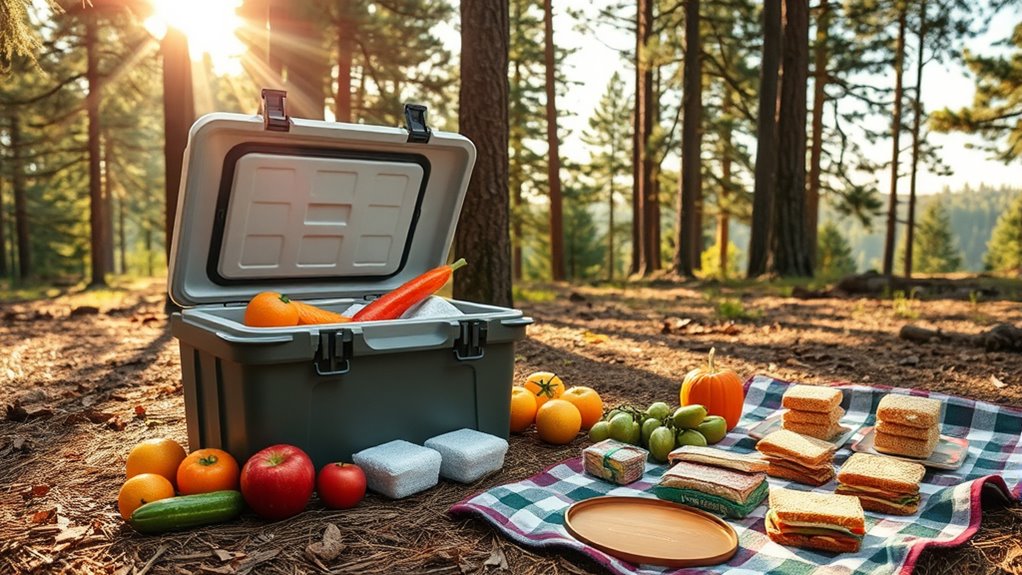
When planning your meals for camping, you’ll want to choose your perishable ingredients wisely to minimize spoilage. Pre-cooking and freezing meals can also save time and keep your food fresh longer. Plus, using insulated coolers effectively will help maintain the right temperature for your supplies. Incorporating outdoor cooking gear such as portable refrigerators or specialized coolers can further enhance your ability to keep food cold.
Choose Perishable Ingredients Wisely
Choosing the right perishable ingredients can make all the difference in preventing food spoilage while camping. To guarantee food safety during your trip, consider these tips when selecting your ingredients:
- Opt for hardy vegetables: Choose items like carrots, bell peppers, and squash that can withstand warmer temperatures and last longer without refrigeration.
- Select vacuum-sealed proteins: Look for vacuum-sealed meats or fish, as they have a longer shelf life and reduce the risk of spoilage.
- Pick dairy wisely: Instead of milk, consider using shelf-stable alternatives like powdered milk or cheese that doesn’t require refrigeration until opened.
Pre-Cook and Freeze Meals
Pre-cooking and freezing your meals not only saves time but also helps keep your food fresh while camping. Start your meal preparation by selecting recipes that freeze well, like casseroles or soups. Cook them in advance, and use proper freezing techniques to guarantee freshness. Divide meals into individual portions and store them in airtight containers or freezer bags, removing as much air as possible to prevent freezer burn. Label each package with the contents and date, making it easier to organize your meals while camping. When you’re ready to hit the road, simply pack the frozen meals in your cooler. This method not only reduces spoilage but also gives you quick, easy options for mealtime enjoyment under the stars.
Use Insulated Coolers Effectively
Packing your frozen meals in insulated coolers is a smart way to maintain their freshness while camping. To maximize the effectiveness of your cooler, consider these cooler selection criteria and maintenance tips:
- Choose the Right Size: Select a cooler that fits your needs; larger coolers hold more ice and food, but make sure it’s portable.
- Pre-chill Your Cooler: Before packing, refrigerate or freeze your cooler overnight. This helps keep the temperature down when you add your food.
- Layer Wisely: Place ice packs or blocks at the bottom, followed by the food, and add more ice on top. This keeps everything cold longer. Additionally, proper insulation plays a key role in maintaining a low temperature inside your cooler. Using high-quality insulation material can greatly improve cooler performance and extend the cooling duration. Regularly inspecting and maintaining your cooler ensures optimal airtight sealing, which helps prevent warm air from entering.
- Maintain Proper Temperature: Keep the cooler in a shaded area and minimize how often you open it to prevent temperature fluctuations, ensuring your food safety is maintained. Being mindful of insulation quality can significantly extend the cooling duration.
How to Keep an Eye on Food Temperature With a Thermometer?
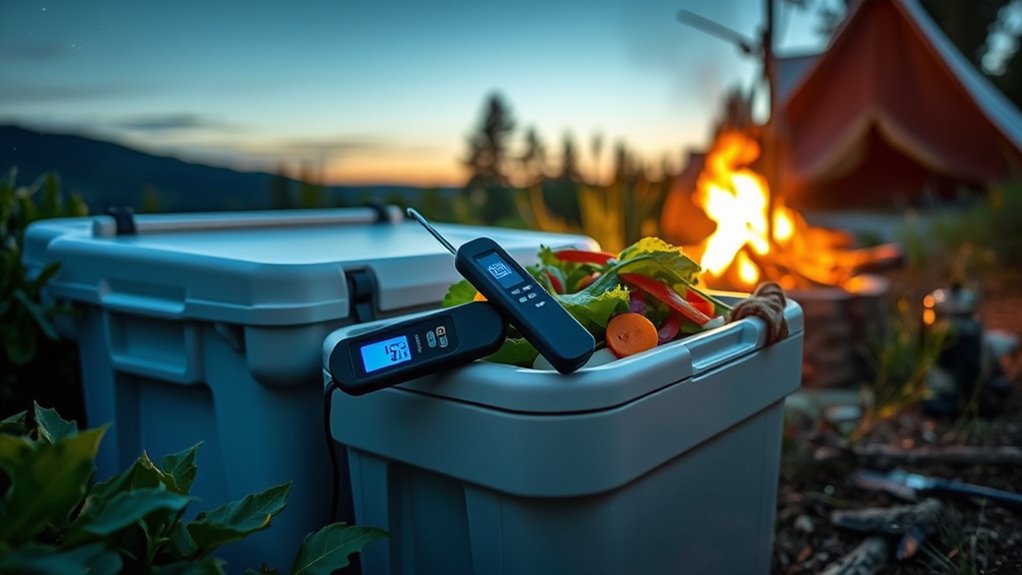
While camping, monitoring food temperature is essential to guarantee safety and flavor, and a thermometer can help you do just that. Start by ensuring your thermometer is properly calibrated, as this will give you accurate readings. Check the temperature of perishable items like meat and dairy frequently, aiming for safe ranges—below 40°F for cold foods and above 140°F for hot ones. A digital thermometer is often the easiest to read, but any reliable thermometer will work. Don’t forget to insert it into the thickest part of the food for the most accurate results. By keeping an eye on food temperature, you’ll enhance food safety and enjoy delicious meals during your camping adventure.
What to Do With Leftovers to Keep Them Safe?
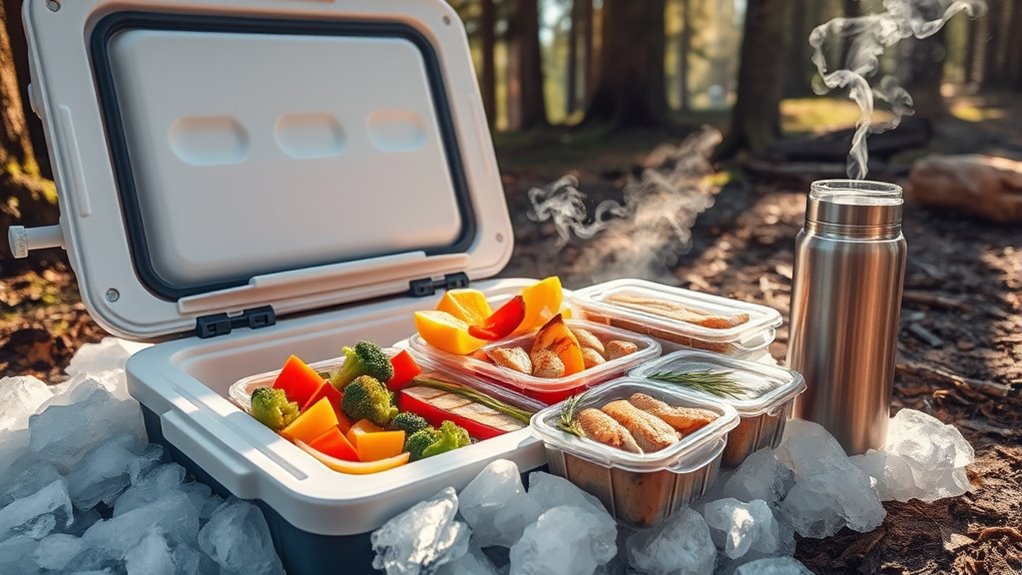
Keeping track of food temperature isn’t just important for cooking; it also plays a significant role in handling leftovers safely. When camping, proper leftover storage is essential to guarantee food safety. Here are three tips to keep your leftovers safe:
- Cool Quickly: After meals, let leftovers cool to room temperature before packing them away. This helps prevent bacterial growth.
- Store Properly: Use airtight containers to store your leftovers. If you can, keep them in a cooler with ice packs to maintain a safe temperature.
- Reheat Thoroughly: When you’re ready to eat the leftovers, reheat them to at least 165°F. This guarantees any harmful bacteria are killed off.
Additionally, monitoring food storage temperatures with a portable thermometer can help ensure your leftovers stay within safe limits during camping trips.
Frequently Asked Questions
How Long Can Food Last in a Cooler Without Ice?
Food can last in a cooler without ice for about 4 to 6 hours, depending on the cooler types and how well it’s insulated. If you’re using a high-quality cooler, it might keep your food safe for a bit longer. Always check the temperature, aiming for below 40°F to guarantee food safety. After that time, you should consume or cook the food to avoid any risk of spoilage. Stay safe while enjoying your meals!
Can I Use Regular Ice Instead of Dry Ice?
Sure, you can use regular ice instead of dry ice—because who wouldn’t want to deal with melting water? While regular ice does a decent job of keeping things cool, it’ll melt faster than dry ice. So, if you’re aiming for long-lasting chill, dry ice is your best bet. Just remember, regular ice may require more frequent replenishing, but it’s definitely easier to handle—unless you enjoy soggy sandwiches!
What Types of Food Spoil the Fastest When Camping?
When camping, perishable foods like meat and dairy products spoil the fastest. Raw meat, especially poultry, is prone to bacterial growth and should be consumed quickly. Dairy products, such as milk and cheese, can also go bad if left unrefrigerated for too long. To guarantee meat safety, always check for unusual odors or changes in texture. Keep these items cool, and you’ll minimize the risk of spoilage during your trip.
How Often Should I Check the Cooler Temperature?
You should check the cooler temperature every few hours, especially on hot days. Regular temperature monitoring is vital for effective cooler maintenance. If you notice the temperature rising above 40°F (4°C), it’s time to add more ice or rearrange the contents for better airflow. Keeping an eye on it helps prevent spoilage and guarantees your food stays fresh. Don’t forget to seal the cooler tightly after checking to retain the cold.
Are There Specific Foods to Avoid While Camping?
You wouldn’t want to risk food safety while camping, right? It’s best to avoid perishable items like dairy, raw meats, and certain fruits that spoil quickly. Instead, focus on camping snacks that are shelf-stable, like nuts, dried fruits, and granola bars. These options not only withstand the heat but also provide essential energy for your outdoor adventures. By planning wisely, you’ll enjoy your trip without worrying about food safety.
Conclusion
By following these tips, you can keep your food cold and fresh while camping, ensuring your meals are enjoyable and safe. Did you know that nearly 48 million people get sick from foodborne illnesses each year in the U.S.? Taking the right precautions can make all the difference. So, pack smart, choose the right cooler, and always keep an eye on your food’s temperature. With a little effort, you can enjoy delicious, safe meals in the great outdoors!
NFL season / tailgating Picks
team gear
As an affiliate, we earn on qualifying purchases.