Mastering trail navigation is key for every hiker. You need to understand how to read a topographic map, recognize its symbols, and interpret contour lines. Familiarizing yourself with compass features, like the direction of travel arrow and bearing setting, is essential too. GPS offers real-time tracking and simplifies route planning, but don’t rely solely on it. Combining these tools enhances your navigation skills and keeps you safe. There’s so much more to discover about effective navigation strategies.
Key Takeaways
- Understanding topographic maps includes recognizing contour lines, symbols, and scale for effective navigation in varying terrains.
- A compass indicates direction with a needle that points north, and the bezel helps set specific bearings for navigation.
- GPS devices offer real-time location tracking and route planning, enhancing navigation ease and accuracy in unfamiliar areas.
- Offline maps allow access without cell service, improving battery efficiency and ensuring navigation continuity when technology fails.
- Integrating GPS with traditional maps and compasses promotes accuracy and confidence in navigation, reducing reliance on a single tool.

Contour Topographic Map Model,Geology 3D Plate Tectonics Model, Contour Line Reading and Landform Recognition,Geography Classroom Teaching Aid(Large)
Comprehensive Terrain Features: Includes key geographical features such as mountain tops, ridges, valleys, saddles, cliffs, rivers, alluvial fans,…
As an affiliate, we earn on qualifying purchases.
As an affiliate, we earn on qualifying purchases.
Why Mastering Trail Navigation Is Crucial for Every Hiker
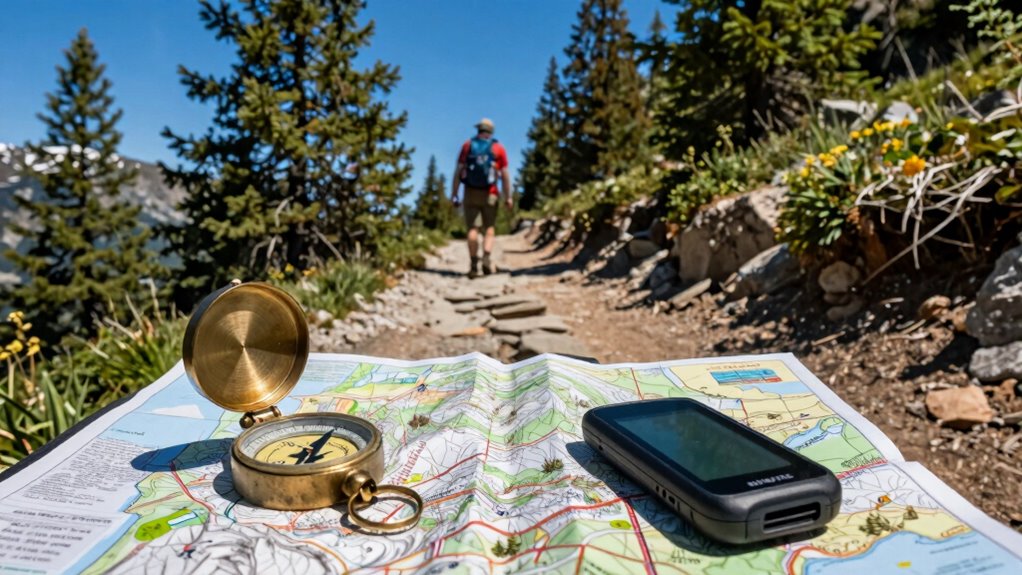
Mastering trail navigation is essential for every hiker because it not only guarantees your safety but also enhances your overall outdoor experience. When you know how to navigate effectively, you build navigation confidence that allows you to explore trails with ease. You’ll feel empowered to venture off the beaten path, knowing you can find your way back. This sense of security is vital for trail safety, especially in unfamiliar areas where getting lost can lead to dangerous situations. Understanding the basics of navigation helps you make informed decisions, reducing anxiety and increasing your enjoyment of nature. By honing your skills, you’re not just protecting yourself but also ensuring that your hiking adventures are fulfilling and memorable.

Handheld GPS for Hiking, Rugged and Waterproof Handheld GPS Navigator, 3.2" Sunlight Readable Screen, Compact Satellite Handheld GPS with USA Topo Map, Multi-GNSS Support, Extra Battery Life
Compact and lightweight GPS handheld navigator boasts an anti-slip design offering a bright 3.2" screen that is sunlight…
As an affiliate, we earn on qualifying purchases.
As an affiliate, we earn on qualifying purchases.
How to Read a Topographic Map
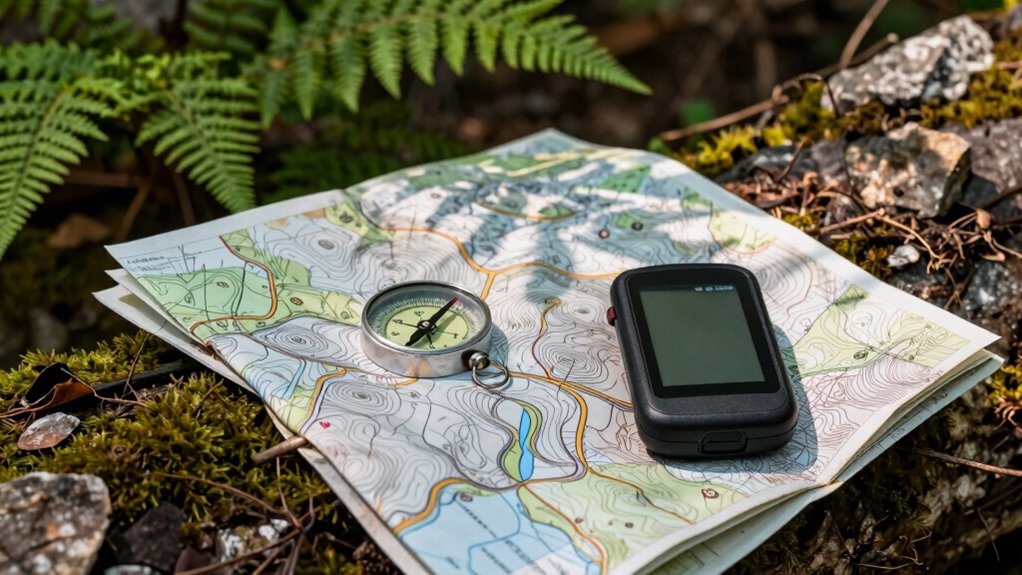
Have you ever looked at a topographic map and felt overwhelmed by the squiggly lines and symbols? Don’t worry! Once you grasp the basics, it becomes much easier to navigate. Here are some essential tips to help you read a topographic map:
- Contour Lines: These lines represent elevation changes. Close lines indicate steep terrain, while spaced lines suggest gentle slopes.
- Map Symbols: Familiarize yourself with common symbols to identify features like trails, water bodies, and roads.
- Scale Representation: Understand the scale to determine distances when route finding.
- Map Orientation: Align your map with the terrain using landmarks for better navigation techniques.
With practice, you’ll master landforms identification and grid systems, enhancing your outdoor adventures!
Westcott Nickel-Plated Ball Bearing Compass with Pencil, Professional Style, Back-to-School Supplies, Draws Circles up to 13 Inches in Diameter
All-Metal Nickel-Plated Construction – A school supplies essential, this reliable nickel-plated metal compass is crafted for durability and…
As an affiliate, we earn on qualifying purchases.
As an affiliate, we earn on qualifying purchases.
Essential Features of a Compass and How to Use It

A compass is an essential tool for any outdoor enthusiast, and understanding its crucial features can make navigation easier. You’ll want to familiarize yourself with the parts of your compass, how to set declination correctly, and how to navigate using bearings. These skills will help you confidently find your way on the trails.
Compass Parts Overview
Understanding the essential features of a compass is crucial for effective navigation. Familiarizing yourself with these parts will enhance your skills, regardless of the compass types you use. Here’s a breakdown of the key components:
- Base Plate: The flat, clear surface that holds everything together.
- Compass Needle: The magnetic needle that always points north.
- Rotating Bezel: The adjustable ring that helps you set your bearing.
- Direction of Travel Arrow: This arrow shows where you should head.
Regular compass maintenance, like keeping it clean and protected from extreme temperatures, maintains its accuracy. By understanding these parts, you’ll navigate with confidence on any trail.
Setting Declination Correctly
Setting declination correctly is essential for accurate navigation in the wilderness. Magnetic variation, the difference between true north and magnetic north, varies by location and affects your compass readings. You need to perform a declination adjustment to guarantee your compass points you in the right direction.
Here’s a quick reference table for common declination values:
| Location | Magnetic Variation (°) | Adjustment Type |
|---|---|---|
| New York | 14 | Add |
| California | 8 | Subtract |
| Colorado | 10 | Add |
| Florida | 2 | Subtract |
| Washington | 21 | Add |
Always check local declination values before heading out. This way, you’ll maintain accuracy in your navigation efforts.
Navigating Using Bearings
Steering with bearings is an essential skill that enhances your wilderness exploration. To guide effectively, you’ll need to understand how to use your compass for precise bearing adjustments while traversing terrain. Here’s how to get started:
- Identify Your Destination: Use your map to pinpoint where you want to go.
- Set the Bearing: Align the compass by rotating the bezel until the desired bearing matches the direction of travel arrow.
- Follow the Bearing: Keep the magnetic needle within the orienting arrow as you walk, adjusting as needed for any changes in terrain.
- Recheck Regularly: Periodically verify your bearing and adjust accordingly to stay on course.
With practice, you’ll confidently guide using bearings and enhance your outdoor adventures!

Outdoor Trail Maps Taos Wilderness Areas – New Mexico Hiking (2023)
Waterproof, tear-resistant, 1:55,000 scale with a compact 4"x7" folded size for your pocket
As an affiliate, we earn on qualifying purchases.
As an affiliate, we earn on qualifying purchases.
How GPS Makes Trail Navigation Easier?

GPS technology transforms trail navigation by giving you real-time location tracking, so you always know where you are. With offline map access, you can explore even the most remote areas without worrying about losing your signal. Plus, route planning features help you create the perfect path before you hit the trail.
Real-Time Location Tracking
As you venture into the wilderness, real-time location tracking transforms your trail navigation experience. With GPS technology, you gain several advantages that enhance your journey:
- Real-time updates: You can see your position on the map as you move, ensuring you stay on course.
- Location accuracy: GPS provides precise coordinates, so you can confidently navigate even in unfamiliar terrain.
- Route planning: You can easily plot your trail before you head out, knowing you’ll have guidance as you walk.
- Emergency assistance: If you get lost, you can quickly share your location with others for help.
- Device compatibility: Modern GPS devices and smartphones are designed to work seamlessly together, making navigation more reliable.
Offline Map Access
While exploring remote trails, having offline map access can greatly enhance your navigation experience. With offline maps, you gain several advantages that can prove essential in the wilderness. Here’s a quick look at some offline map benefits and sources:
| Benefit | Description | Source |
|---|---|---|
| No Signal Needed | Access maps without cell service | Downloadable apps |
| Battery Efficiency | Save phone battery life | Pre-loaded maps |
| Instant Access | Quick navigation without delays | Offline map websites |
Additionally, offline maps help protect your privacy by reducing reliance on real-time data sharing.
Route Planning Features
When you’re planning a hike, leveraging route planning features can transform your navigation experience. GPS tools simplify this process by providing essential data for effective route selection strategies and terrain considerations. Here’s how you can make the most of these features:
- Customizable Routes: Modify paths based on your preferences, like distance or difficulty.
- Real-Time Terrain Feedback: Access essential info about elevation changes and obstacles ahead.
- Waypoints & Markers: Easily set waypoints to keep track of points of interest or rest stops.
- Safety Alerts: Receive notifications about weather changes or trail hazards to stay safe.
- Power Backup Considerations: Consider battery life and backup options to ensure your GPS or devices stay powered during long hikes.
Using these features guarantees you’ll navigate confidently and enjoy your hike to the fullest.

How do you decide between traditional and digital navigation methods on the trail? It often comes down to personal preference and the specific situation. Traditional tools like maps and compasses offer reliability, don’t depend on batteries, and encourage a deeper connection with your surroundings. However, they require more skill and experience to use effectively. On the other hand, digital advancements, such as GPS devices and smartphone apps, provide real-time data and ease of use, making navigation simpler for many. They can also offer additional features like tracking and route planning. Ultimately, combining both methods may be your best bet, allowing you to leverage the strengths of each while ensuring you’re prepared for any trail challenge.
Practical Exercises to Hone Your Navigation Skills Outdoors

To truly master orientation skills outdoors, you need to practice in a variety of environments and conditions. Engaging in navigation drills will help you develop confidence and competence. Here are some practical exercises to try:
- Map Reading: Choose a local map and identify key features, then orient yourself to them without using a GPS.
- Compass Work: Set a bearing and follow it in a straight line, adjusting for terrain obstacles.
- Landmark Navigation: Pick a distant landmark and find your way towards it using only your compass and map.
- Night Navigation: Practice finding your way after dark to challenge your skills and enhance your ability to interpret the terrain.
These outdoor challenges will sharpen your navigation skills and prepare you for real-world adventures.
Top Navigation Mistakes Hikers Make

Many hikers underestimate the importance of proper navigation, leading to avoidable mistakes that can impact their safety and enjoyment on the trail. Common errors often stem from novice hikers who rely too heavily on technology without understanding the basics. One major navigation pitfall is map misinterpretation; not paying attention to scale or terrain features can result in wrong turns. Additionally, failing to check the weather or daylight hours can leave you unprepared for sudden changes. Another mistake is neglecting to regularly update your map skills, assuming GPS will always guide you. By recognizing these pitfalls, you can improve your navigation confidence and guarantee a safer, more enjoyable hiking experience.
How to Effectively Use GPS With Maps and Compasses?
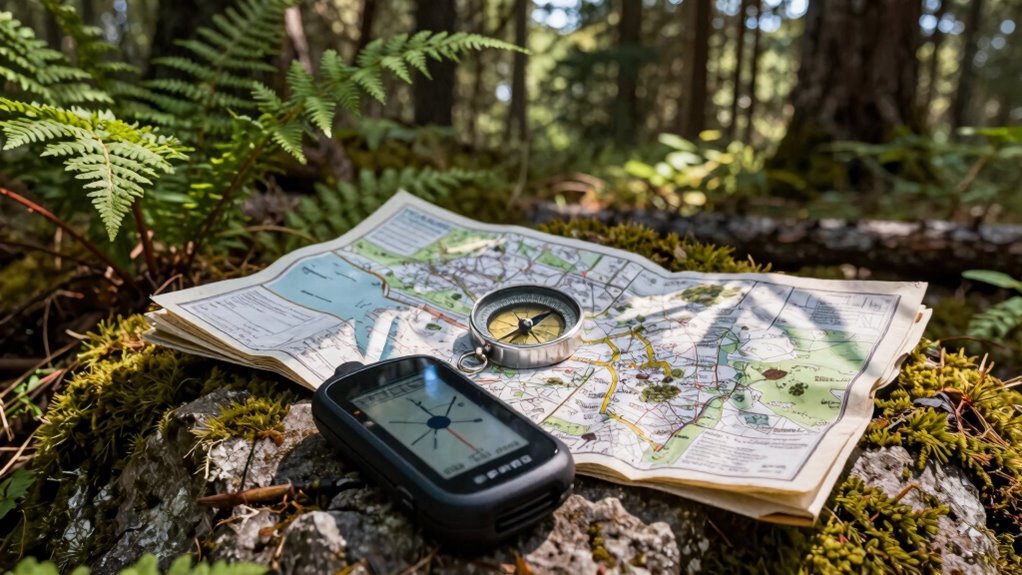
Ever wondered how to seamlessly integrate GPS technology with traditional maps and compasses? You can enhance your navigation skills and guarantee map accuracy by following these simple steps:
- Set Your GPS First: Input your destination into your GPS device before heading out. This gives you a digital reference point.
- Cross-Reference: Use your map to check the GPS route. Confirm it aligns with the trails and landmarks.
- Compass Check: Regularly compare your compass bearings with GPS coordinates. This helps maintain directional awareness and GPS integration.
- Stay Updated: Regularly update your GPS software for the latest maps and features, guaranteeing peak performance.
Frequently Asked Questions
What Should I Do if I Get Lost on a Trail?
If you get lost on a trail, don’t panic. First, take a deep breath and assess your surroundings. Use your phone for trail communication if you have service, or try to retrace your steps calmly. Look for landmarks you recognize, and remember to manage your panic by staying focused. If you’re really unsure, it’s often best to stay put and wait for help rather than wandering further off course.
How Can I Improve My Map Reading Skills Quickly?
To level up your map reading skills quickly, start by familiarizing yourself with map symbols and terrain features. Grab a vintage map of your favorite hiking area and study it like it’s an ancient treasure map. Practice identifying key symbols, like trails, rivers, and elevation changes. Take a few practice hikes, using your map to navigate. The more you do it, the more confident you’ll become in interpreting maps like a pro!
Are There Specific Apps for Offline GPS Navigation?
Yes, there are several great offline navigation apps you can use. Apps like Maps.me and Gaia GPS offer excellent offline maps and GPS features, allowing you to download specific areas in advance. These apps provide trail information, elevation profiles, and even user-generated content. Just make sure you download the maps before heading out, and you’ll have reliable navigation without needing a cell signal. Enjoy your adventures with confidence!
Can I Navigate Without a Compass or GPS?
Yes, you can navigate without a compass or GPS. Use landmarks navigation by identifying prominent features like mountains, rivers, or buildings to guide your way. Look for natural signs, such as the direction of moss growth on trees or the position of the sun, to help orient yourself. Trust your instincts, and keep your eyes peeled for recognizable terrain. With practice, you can confidently find your path without relying on technology.
What Are the Legal Responsibilities of Hikers Regarding Navigation?
As a hiker, you’re legally responsible for your navigation choices. Navigation laws often require you to stay on marked trails and follow posted guidelines. Responsible hiking means understanding your surroundings and being prepared for changes in the environment. If you get lost, it’s your duty to know how to signal for help and report any emergencies. Always prioritize safety and awareness to meet both legal and ethical responsibilities while enjoying the outdoors.
Conclusion
Mastering trail orientation isn’t just a skill; it’s your ticket to unforgettable adventures. By blending the old-school charm of maps and compasses with the sleek efficiency of GPS, you’re setting yourself up for success in the great outdoors. Embrace the journey, avoid common pitfalls, and practice your skills to build confidence. With a little preparation, you’ll find that navigating trails becomes second nature, turning every hike into a delightful exploration rather than an intimidating task.