
Understanding HDMI versions is key to optimizing your home entertainment setup. HDMI 1.4 works for standard HD content, while 2.0 supports 4K at 60Hz, perfect for streaming. For gamers, HDMI 2.1 is a must, offering 4K at 120Hz and advanced features like Variable Refresh Rate. Choosing the right version guarantees compatibility with your devices and enhances your viewing experience. Start making informed choices today, and you’ll find out more about maximizing your system’s potential.

Get the little things that make your day delivered free with Prime
- Fast, free delivery on millions of items
- Prime Video, Amazon Music and more included
- Member-only deals all year
Key Takeaways
- HDMI versions (1.4, 2.0, 2.1) determine compatibility and performance, impacting video and audio quality for devices.
- Choose HDMI 2.1 for gaming to take advantage of features like 4K at 120Hz and Variable Refresh Rate.
- HDMI 2.0 is suitable for streaming 4K at 60Hz, while HDMI 1.4 suffices for standard HD content.
- Higher bandwidth cables enhance picture quality and support advanced features, reducing issues like pixelation.
- Future-proof your setup by selecting HDMI versions that align with current and upcoming device capabilities.
As an affiliate, we earn on qualifying purchases.
What Are HDMI Versions and Why Do They Matter?
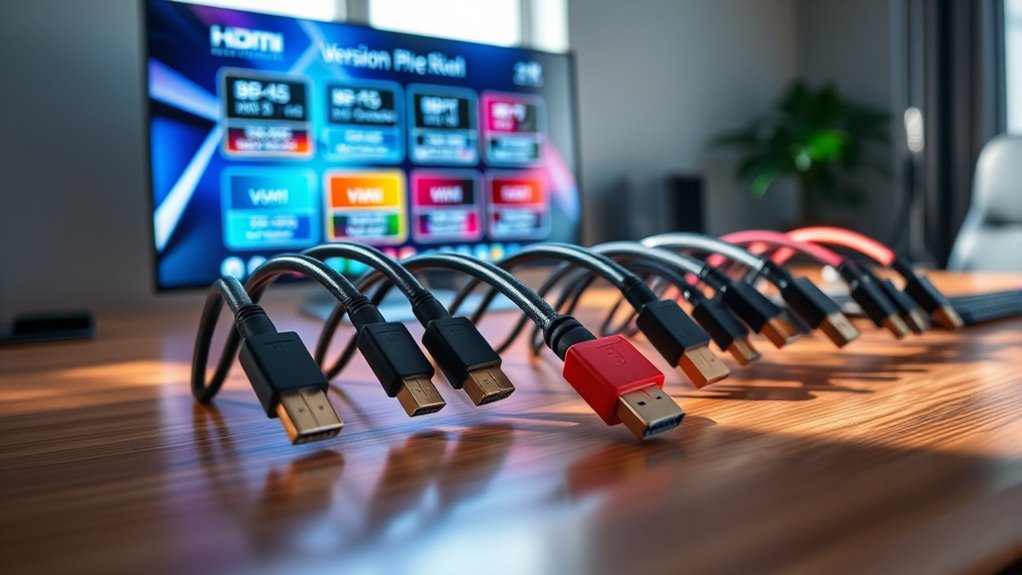
When you connect your devices using HDMI, you might wonder what the different versions mean and why they’re important. HDMI has evolved over the years, with each version introducing new features and capabilities that enhance your viewing experience. Understanding HDMI history helps you appreciate how far this technology has come, from its early days focusing on basic video and audio transfer to today’s advanced applications supporting 4K and 8K resolutions, high dynamic range, and enhanced audio formats.
These versions matter because they determine compatibility with your devices and the quality of your content. For example, if you want to stream the latest 4K movies, using a compatible HDMI version guarantees you get the best performance, making your entertainment experience truly immersive.
As an affiliate, we earn on qualifying purchases.
Comparing HDMI Versions: Key Differences Between 1.4, 2.0, and 2.1
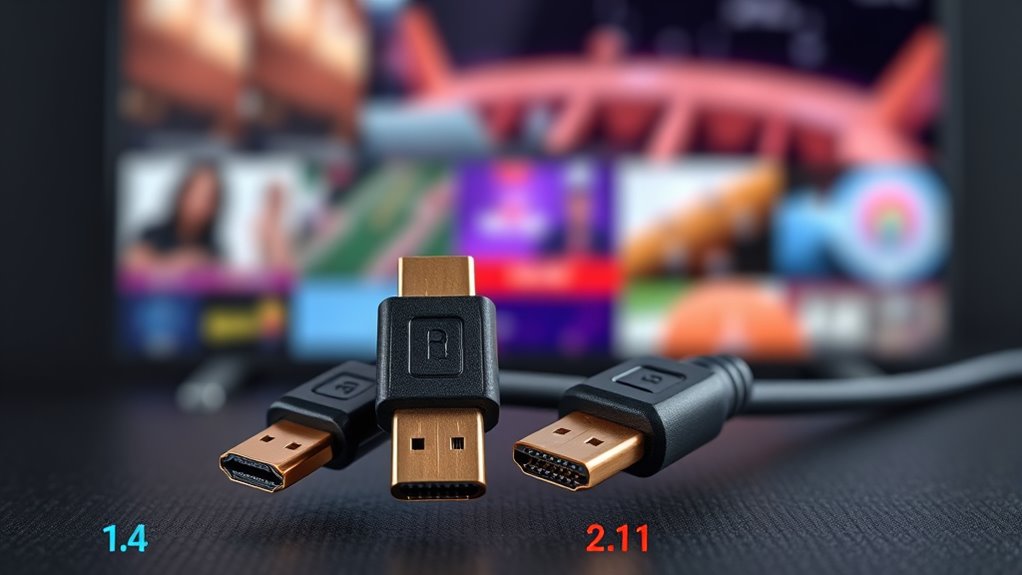
As you explore the differences between HDMI versions 1.4, 2.0, and 2.1, you’ll notice significant advancements that cater to modern viewing needs. Each version brings unique HDMI features that enhance your experience, particularly in video quality and audio capabilities.
| HDMI Version | Key Features |
|---|---|
| 1.4 | 4K support at 30Hz, 3D, Ethernet channel |
| 2.0 | 4K at 60Hz, HDR support, enhanced audio return channel |
| 2.1 | 8K at 60Hz, Dynamic HDR, Variable Refresh Rate |
Understanding these differences helps you choose the right cable compatibility for your devices. By knowing what each version offers, you can guarantee your setup meets your entertainment needs.
As an affiliate, we earn on qualifying purchases.
Deciding Which HDMI Version Fits Your Needs
Choosing the right HDMI version for your setup can greatly enhance your viewing experience. First, think about your HDMI compatibility considerations. Check what devices you own—like TVs, gaming consoles, and sound systems—and verify they support the HDMI version you’re considering. If you’re into gaming or 4K content, you might want to prioritize features like higher refresh rates and dynamic HDR, which are available in HDMI 2.1. On the other hand, if you mainly watch standard HD content, HDMI 1.4 or 2.0 might suffice. By focusing on HDMI feature prioritization, you can select a version that meets your needs without overspending on unnecessary capabilities. Always align your choice with your current and future devices for the best results.
As an affiliate, we earn on qualifying purchases.
Why Bandwidth Matters for HDMI Versions
When you’re choosing an HDMI version, understanding bandwidth is essential. Higher bandwidth means better picture quality and the ability to support advanced features. Plus, it guarantees compatibility with future devices, so you won’t have to upgrade again anytime soon.
Bandwidth Determines Picture Quality
Understanding how bandwidth impacts picture quality is essential for maximizing your viewing experience. Higher bandwidth allows more data to be transmitted simultaneously, which directly influences picture clarity. If you’re using an HDMI version with lower bandwidth, you might notice issues like pixelation or blurriness, especially during fast-moving scenes. This bandwidth impact becomes even more significant when you’re watching high-definition or 4K content, where every detail matters. If your HDMI cable can’t handle the necessary bandwidth, you won’t fully enjoy the vibrant colors and sharp images that modern displays offer. So, choosing the right HDMI version with adequate bandwidth guarantees you get the best possible picture quality and enhances your overall enjoyment when watching your favorite shows or movies.
Higher Bandwidth Supports Features
As technology evolves, higher bandwidth in HDMI versions not only enhances picture quality but also reveals a range of advanced features. With increased bandwidth, you can enjoy smoother gameplay, higher frame rates, and better color depth in your favorite movies and video games. This means features like 4K at 120Hz or even 8K support become viable, allowing for an immersive viewing experience. Higher bandwidth also enables enhanced audio formats, improving your home theater setup. You’ll find that the feature support offered by newer HDMI versions can greatly elevate your overall entertainment experience. So, whether you’re gaming or streaming, choosing the right HDMI version with higher bandwidth guarantees you won’t miss out on the latest innovations in audiovisual technology.
Compatibility With Future Devices
While higher bandwidth in HDMI versions enhances your current viewing experience, it also plays an essential role in ensuring compatibility with future devices. When you invest in a higher bandwidth HDMI version, like HDMI 2.1, you’re not just preparing for today’s tech; you’re future-proofing your setup. This means you’ll enjoy backward compatibility with older HDMI devices, allowing seamless connectivity regardless of the technology you’re using. By choosing a higher version, you’re also enhancing device longevity, as it’ll support new features and resolutions that come down the line. Ultimately, this decision safeguards your investment, ensuring you can enjoy cutting-edge visuals and audio without needing constant upgrades. Embrace the future by selecting an HDMI version that meets both current and upcoming demands.
HDMI Features: 4K, 8K, and More
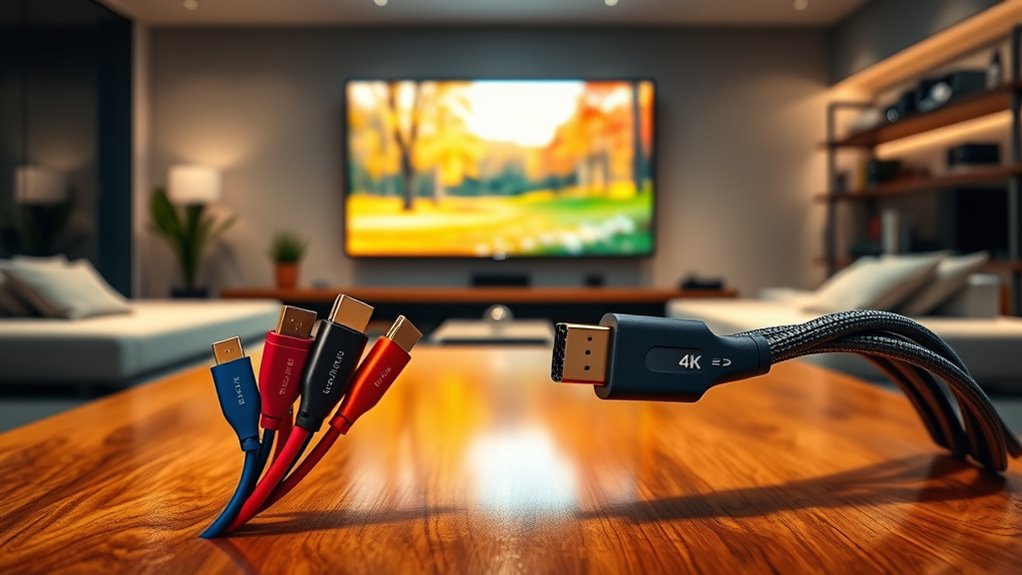
When you’re exploring HDMI features, you’ll notice that 4K resolution offers stunning clarity and detail, making your viewing experience truly immersive. With the rise of 8K technology, you’re stepping into a domain of even greater visual fidelity, which can enhance everything from gaming to movie nights. Let’s break down the advantages of both resolutions and see how they can elevate your home entertainment setup.
4K Resolution Advantages
K resolution brings a stunning level of detail to your viewing experience, especially with HDMI features that support 4K and 8K formats. You’ll enjoy sharper images, more vibrant colors, and a more immersive experience overall. The k resolution benefits include enhanced clarity, making it easier to see fine details in movies and games. This level of detail is particularly noticeable on larger screens, where every pixel counts. However, it’s essential to keep in mind the k resolution limitations, such as the need for compatible hardware and content that supports these higher resolutions. Not every device or streaming service offers 4K or 8K, so be sure to check your setup to fully take advantage of k resolution’s impressive capabilities.
8K Technology Benefits
As you explore the benefits of K technology, you’ll discover that HDMI features supporting 4K and 8K resolutions greatly enhance your viewing experience. These advancements provide sharper images, vibrant colors, and improved detail, making your favorite movies and games more immersive.
| K Technology Benefits | Description |
|---|---|
| Higher Resolutions | Supports 4K and 8K output |
| Enhanced Color Depth | Greater range of colors |
| Improved Refresh Rates | Smoother motion handling |
| Dynamic HDR | Better contrast and brightness |
| Enhanced Audio Formats | Supports advanced sound systems |
With these features, you can truly appreciate the depth and clarity of your media like never before. Investing in HDMI technology guarantees that you’re ready for the future of enhanced viewing.
Can You Use Older Cables With Newer Devices?
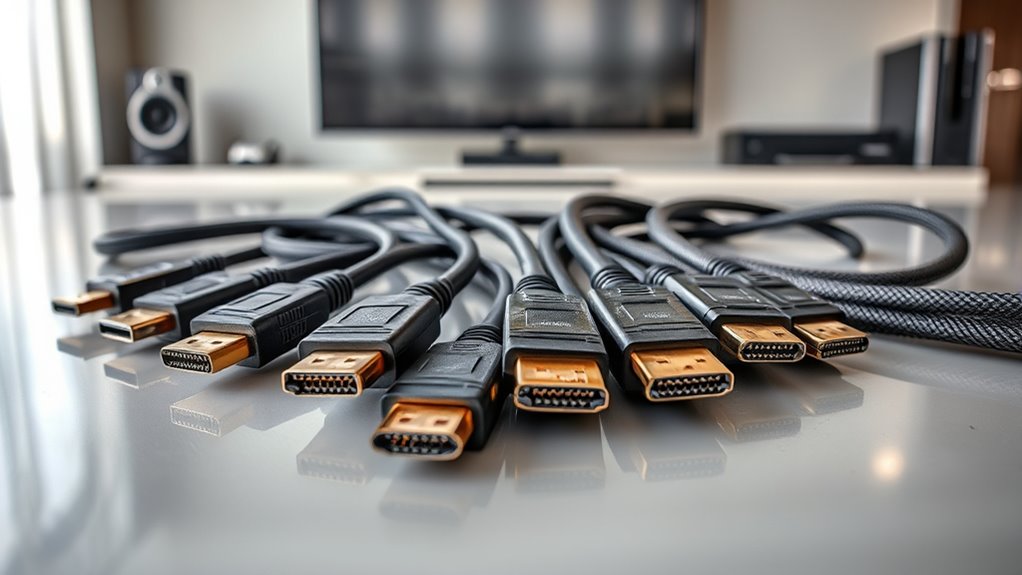
While you might wonder if your older HDMI cables can connect to newer devices, the short answer is yes, you can generally use them. Most older cables support basic video and audio signals, ensuring cable compatibility with many modern devices. However, it’s essential to take into account that using older cables may limit your device performance. For instance, if you’re connecting a device that supports 4K resolution but using an older HDMI cable, you might not achieve the full potential of that resolution. While the connection will work, you could miss out on features like higher refresh rates or HDR content. To maximize your experience, think about investing in newer cables that match your devices’ capabilities, especially if you want the best performance. Additionally, understanding HDMI Versions helps determine which cables are suitable for your setup.
Essential Insights for Gamers: HDMI 2.1 Features
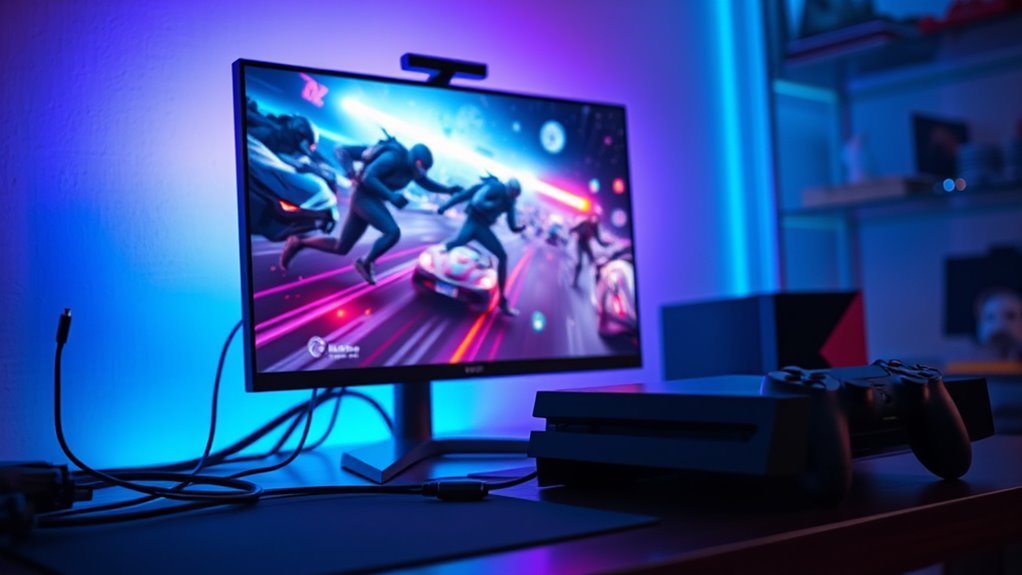
For gamers looking to elevate their experience, HDMI 2.1 brings a host of impressive features that can transform your gameplay. This version markedly enhances gaming performance and boosts console compatibility, ensuring you’re ready for the latest tech. Here are some key features you’ll want to know:
HDMI 2.1 offers groundbreaking features that elevate gaming performance and ensure compatibility with the latest consoles.
- 4K at 120Hz: Enjoy smoother visuals with high refresh rates.
- Variable Refresh Rate (VRR): Reduce screen tearing for a more immersive experience.
- Auto Low Latency Mode (ALLM): Automatically switches to the best settings for gaming.
- Quick Frame Transport (QFT): Minimizes lag for faster response times.
- eARC: Enables high-quality audio formats for a richer sound experience.
With HDMI 2.1, you’ll be fully equipped for the next generation of gaming.
Choosing the Best HDMI Version for Streaming and Gaming
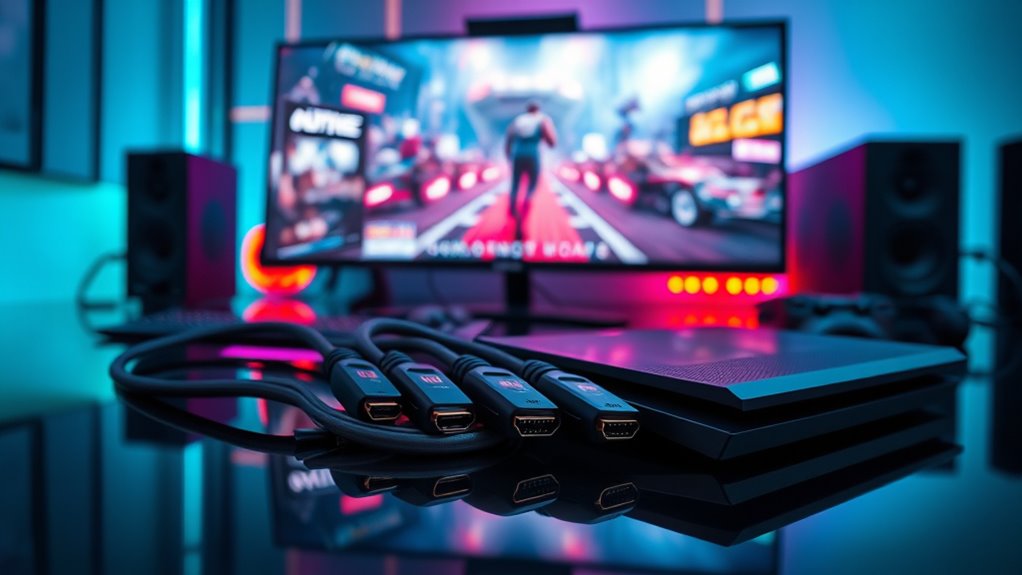
Choosing the right HDMI version can greatly enhance your streaming and gaming experience. For ideal streaming performance, HDMI 2.0 offers 4K resolution at 60Hz, making it perfect for most streaming devices. If you’re into gaming, HDMI 2.1 is your best bet, supporting 4K at 120Hz and features like Variable Refresh Rate (VRR) that reduce lag and screen tearing. This means smoother gameplay and a more immersive experience. Additionally, both versions support HDR, boosting color and contrast for stunning visuals. So, if you’re planning to upgrade your setup, consider what you need most. Prioritize HDMI 2.1 for cutting-edge gaming or HDMI 2.0 if streaming’s your main focus. Either way, you’ll elevate your audio-visual enjoyment.
How to Future-Proof Your Home Entertainment System
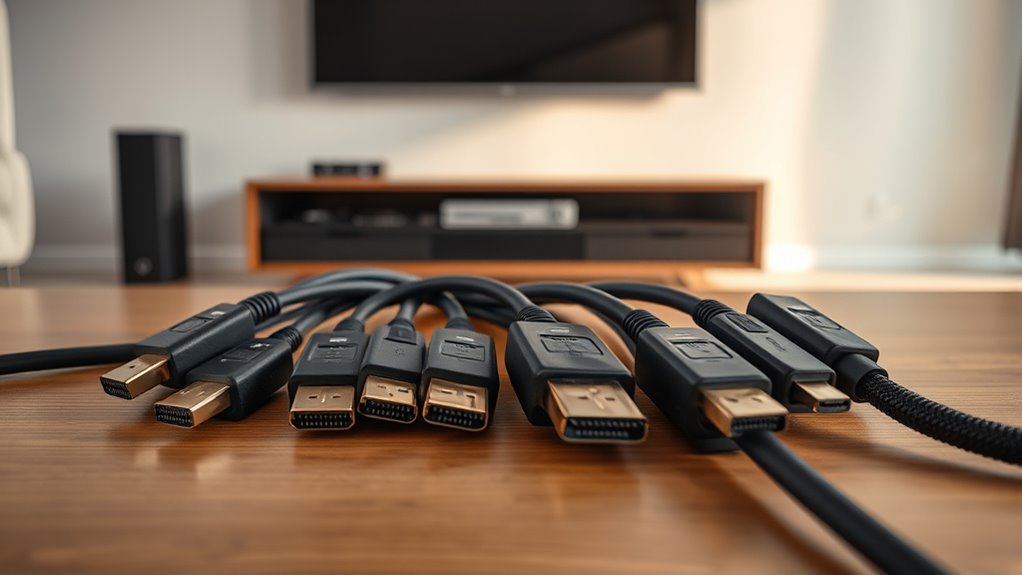
As technology evolves at a rapid pace, future-proofing your home entertainment system becomes essential to keep up with the latest advancements. To guarantee you’re ready for what’s next, consider these key points:
Future-proofing your home entertainment system is vital to adapt to rapid technological advancements.
- Opt for HDMI 2.1 for enhanced performance.
- Invest in devices with smart home integration capabilities.
- Choose gear that supports a wide range of formats for better device compatibility.
- Verify your system is easily upgradable for new technologies.
- Look for products that offer firmware updates to stay current.
- Incorporate home‑care techniques to maintain your system’s longevity and ensure optimal performance over time. Additionally, selecting compatibility standards can help ensure your devices work seamlessly together as new technologies emerge.
What Should Gamers Know About HDMI 2.1?
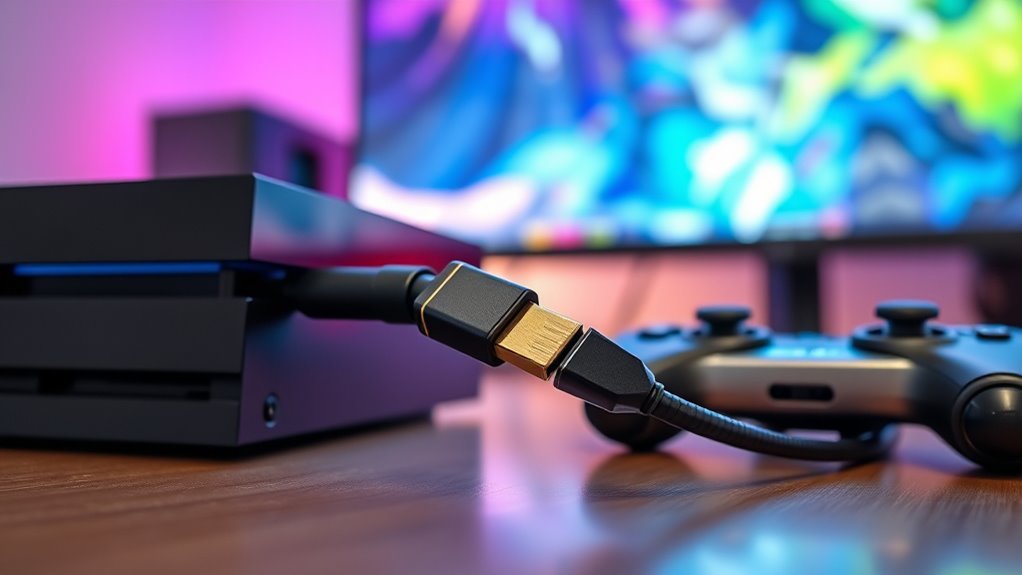
If you’re a gamer, HDMI 2.1 is a game changer you can’t ignore. It brings enhanced gaming features, higher refresh rates, and variable refresh rates that can elevate your gaming experience. Understanding these benefits will help you make the most of your setup. Additionally, high refresh rates supported by HDMI 2.1 are essential for smooth gameplay and reducing motion blur.
Enhanced Gaming Features
While gaming technology continues to evolve, HDMI 2.1 stands out with features that greatly enhance the gaming experience. With this upgrade, you can expect improved gaming performance and visual fidelity, making every session more immersive. Here are some key features to evaluate:
- Variable Refresh Rate (VRR): Reduces screen tearing for smoother gameplay.
- Auto Low Latency Mode (ALLM): Automatically switches to low-latency mode for quick responses.
- Quick Frame Transport (QFT): Minimizes lag for faster frame delivery.
- Dynamic HDR: Adjusts HDR settings scene-by-scene for stunning visuals.
- Enhanced Audio Return Channel (eARC): Supports advanced audio formats for a richer sound experience.
These features make HDMI 2.1 a must-have for serious gamers looking to elevate their setup.
Higher Refresh Rates
When it comes to gaming, higher refresh rates can greatly enhance your experience, allowing for smoother and more responsive gameplay. HDMI 2.1 supports refresh rates up to 120Hz at 4K resolution, which is a game-changer for many gamers. With this capability, you can enjoy fast-paced action without the lag or tearing that often comes with lower refresh rates. You’ll notice improved clarity during intense scenes, making it easier to track your opponents and react quickly. If you’re using a compatible gaming console or PC, switching to HDMI 2.1 can remarkably boost your gaming performance. So, if you want that competitive edge, investing in a setup that supports higher refresh rates is definitely worth considering.
Variable Refresh Rate
Variable Refresh Rate (VRR) is a groundbreaking feature that can greatly enhance your gaming experience, especially with HDMI 2.1. It allows your display to dynamically adjust its refresh rate to match your console’s output, reducing screen tearing and stuttering. Here’s what you should know:
- Adaptive Sync: Synchronizes the frame rate between your GPU and display.
- Smooth Gameplay: Enjoy a more fluid gaming performance with fewer disruptions.
- Reduced Input Lag: Experience quicker responses during intense gaming sessions.
- Wider Compatibility: Works with various gaming consoles and PCs.
- Better Visuals: Achieve a more immersive experience with stunning visuals.
- Connected equipment can further optimize your gaming setup, ensuring seamless performance across your home entertainment system.
With HDMI 2.1 and VRR, you’ll elevate your gaming to a whole new level!
Frequently Asked Questions
Do HDMI Versions Affect Audio Quality as Well as Video?
Yes, HDMI versions do affect audio quality as well as video. Higher versions support greater video bandwidth, which can improve both picture clarity and audio fidelity. You’ll notice that newer HDMI standards reduce audio latency, making sound sync better with the video. If you’re using high-resolution audio formats or advanced surround sound systems, having the right HDMI version guarantees you get the best performance from your equipment.
Can I Mix Different HDMI Versions in My Setup?
Imagine a grand orchestra where each instrument plays a different tune. You can mix different HDMI versions in your setup, but be mindful of HDMI compatibility concerns. While they’ll work together, the lowest version’s limitations might hold back your performance. Also, consider HDMI cable lengths; longer cables can introduce signal degradation. Just like a conductor balancing sounds, guarantee your devices harmonize for the best audio-visual experience.
What Devices Require HDMI 2.1 Functionality?
If you’re looking to fully utilize HDMI 2.1 functionality, you’ll need devices like next-gen gaming consoles, 8K displays, and high refresh rate monitors. VR headsets also benefit from this technology, enhancing your immersive experience. Additionally, consider upgrading your audio receivers to support the latest standards, ensuring you get the best sound quality as well. By choosing these devices, you can take advantage of HDMI 2.1’s advanced features for a superior setup.
Are There Any Downsides to Using Older HDMI Cables?
Sure, using older HDMI cables might seem like a money-saving genius move, but there are downsides. They often lack cable compatibility with newer devices, which can limit your options. Plus, you might experience signal degradation, leading to lower resolution or audio quality. So, while you’re saving a few bucks, you could miss out on that stunning 4K experience or immersive sound that newer cables provide. It’s a gamble you might not want to take!
How Often Do HDMI Specifications Get Updated?
HDMI specifications typically get updated every few years, with major releases reflecting advancements in technology. If you look back at HDMI history, you’ll see that updates often coincide with new features like higher resolutions or improved audio formats. Keeping track of HDMI updates is essential, especially if you want to guarantee compatibility with the latest devices. So, stay informed about these changes to make the most of your home entertainment setup!
Conclusion
In the world of HDMI, choosing the right version is like picking the right tool for a job; you wouldn’t use a hammer to tighten a screw. By understanding the differences and features, you can guarantee your home entertainment system meets your needs now and in the future. Whether you’re streaming your favorite series or diving into a gaming marathon, investing in the right HDMI version can elevate your experience, much like a skilled chef needs quality knives to create culinary masterpieces.
NFL season / tailgating Picks
team gear
As an affiliate, we earn on qualifying purchases.