
HDR labels on TVs can be misleading because not all standards guarantee top performance. You need to look beyond the label and check the actual specifications, like color coverage and processing speed. High labels don’t always mean better contrast or more vivid images. Technologies behind panels and backlights also matter. If you want a truly great HDR experience, understanding these details will make a big difference and help you make smarter choices. Keep exploring to discover more.

Get the little things that make your day delivered free with Prime
- Fast, free delivery on millions of items
- Prime Video, Amazon Music and more included
- Member-only deals all year
Key Takeaways
- HDR labels vary in quality; not all guarantee optimal contrast, color accuracy, or performance.
- Industry standards like Dolby Vision or HDR10+ offer better assurance than generic labels.
- Color coverage metrics (e.g., DCI-P3, Rec. 2020) are more reliable indicators of true HDR quality.
- Processing speed and panel/backlight technology significantly impact the actual HDR viewing experience.
- Always review detailed specifications beyond labels for a more accurate assessment of HDR performance.
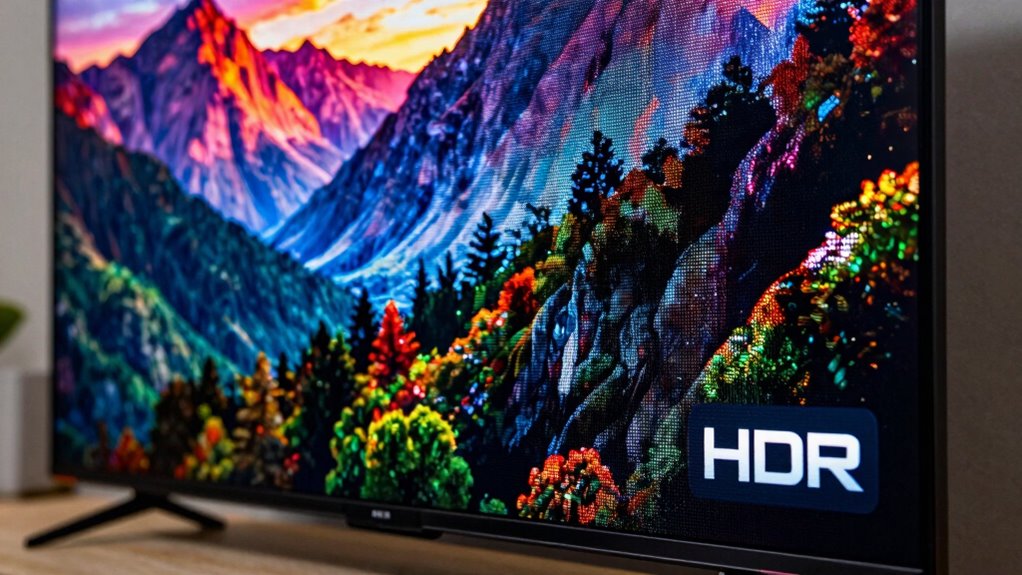
Have you ever noticed the HDR labels on TVs and wondered what they really mean? It’s easy to get caught up in the hype, especially when manufacturers highlight HDR as a major selling point. But understanding what these labels signify can be tricky. Basically, HDR—short for High Dynamic Range—refers to a TV’s ability to display a wider range of brightness and colors. The label promises better contrast, more vivid colors, and more realistic images. However, not all HDR labels are created equal, and the true performance depends on several factors, including color accuracy and processing speed. To truly appreciate HDR content, it’s important to consider how well the display can handle the industry standards and specifications involved. Color accuracy plays a crucial role in how well a TV can reproduce the vividness and realism of HDR content. When a TV has high color accuracy, it can display a broader spectrum of colors without distortion or oversaturation. This means that the images you see are closer to what the content creator intended, making scenes more immersive and true to life. Even with an HDR label, some TVs may only produce a limited color palette, resulting in duller or less vibrant images. So, when you see HDR on a TV, don’t just assume it will automatically deliver perfect colors. Look for reviews or specifications that specify color coverage, such as DCI-P3 or Rec. 2020, which indicate the range of colors the display can handle. Additionally, understanding the processing capabilities of a TV can give you better insight into its HDR performance. Processing speed is another critical aspect often overlooked when evaluating HDR performance. It determines how quickly a TV can analyze and render the complex image data involved in HDR content. Faster processing speeds mean the TV can better handle high dynamic range images without lag or artifacts, especially in fast-moving scenes like sports or action movies. When processing is sluggish, details can get lost, or you might see banding and other visual inconsistencies. High processing speed allows the TV to optimize contrast and color in real-time, delivering a smoother, more polished picture. This is especially important for HDR, as the technology relies heavily on precise adjustments to brightness and colors to create that stunning visual difference. Additionally, advancements in panel technology can further influence HDR quality by impacting contrast ratios and black levels. Moreover, the backlight technology used can significantly affect how well a TV displays HDR content, especially in terms of black levels and contrast. In the end, the labels on your TV might promise a lot, but understanding the underlying technology helps you make smarter choices. Look beyond the HDR label itself and consider the TV’s color accuracy and processing speed. These factors directly influence how well your TV can deliver the vibrant, lifelike images that HDR is supposed to provide. When you’re shopping, ask questions about these specs, and don’t be swayed by marketing alone. A well-rounded understanding ensures you get a TV that truly lives up to the promise of high dynamic range.
As an affiliate, we earn on qualifying purchases.
Frequently Asked Questions
Do HDR Labels Guarantee the Best Picture Quality?
HDR labels don’t guarantee the best picture quality, but an HDR certification indicates the TV meets certain standards for visual enhancement. It means you’ll likely experience better contrast and vibrant colors, but actual quality varies. You should look beyond the label, checking for features like peak brightness, color accuracy, and local dimming. Ultimately, a certified HDR TV can improve your viewing, but other factors also influence picture quality.
Are All HDR Labels on TVS the Same Standard?
Not all HDR labels on TVs follow the same standard. Brightness standards vary, and certification processes differ across brands. You should verify if a TV’s HDR label aligns with recognized standards like HDR10, Dolby Vision, or HDR10+. These standards ensure consistent quality, but not all labels guarantee the same experience. Always research the certification process behind the label to know what kind of HDR performance you can expect.
How Do HDR Labels Affect TV Pricing?
HDR labels considerably influence TV pricing because they reflect the quality of HDR technology and the manufacturer’s branding. Higher-quality HDR, like Dolby Vision or HDR10+, often commands a premium, as it offers better contrast and color. Manufacturer branding also affects price; well-known brands tend to charge more for their reputation. So, when you see an HDR label, remember it indicates the level of HDR technology and brand value, impacting the overall cost.
Can HDR Labels Be Trusted for Accurate Color Representation?
Think of HDR labels as a compass guiding your color journey; they aren’t always perfectly reliable. While some labels symbolize true color accuracy, others might be mere signs of marketing. Trust depends on the manufacturer and testing standards behind the label. To guarantee genuine color accuracy, look for detailed specifications and independent reviews, rather than relying solely on the label’s promise. Labels can guide, but don’t let them be the only navigator.
What Should I Look for Beyond HDR Labels?
Beyond HDR labels, you should look for HDR certification, which guarantees the TV meets specific standards. Check if it adheres to recognized color accuracy standards, ensuring more precise and vibrant images. Research the TV’s peak brightness and local dimming capabilities, as these considerably impact HDR performance. Also, read reviews to verify real-world color accuracy and contrast. These factors help you select a TV that truly delivers high-quality HDR visuals.
TV color coverage metrics DCI-P3
As an affiliate, we earn on qualifying purchases.
As an affiliate, we earn on qualifying purchases.
Conclusion
So, next time you see those HDR labels on TVs, don’t just nod and believe the hype. They’re like shiny medals in a beauty pageant—look great but don’t tell the full story! Remember, not all HDR labels are created equal; some are just fancy marketing tricks. If you want your TV to truly blow your mind, dig deeper than the label and look for real specs. Otherwise, you’re just buying a fancy box of illusions!
As an affiliate, we earn on qualifying purchases.
As an affiliate, we earn on qualifying purchases.
Halloween Picks
halloween
As an affiliate, we earn on qualifying purchases.