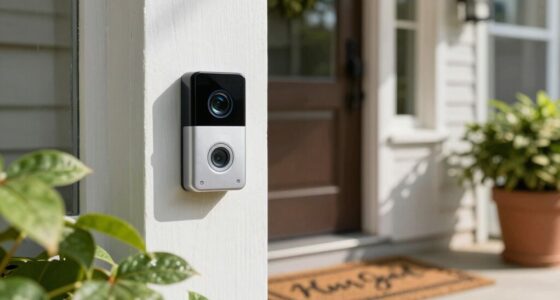

Proper camera placement is vital for maximizing security while ensuring comfort. Focus on key areas like entry points and common rooms, avoiding angles that intrude on privacy. Use indoor cameras for living spaces and outdoor ones for external coverage, making sure they’re weather-resistant. Maintain a respectful distance from neighbors’ properties. By careful placement, you can capture essential details without making guests feel uneasy. Discover more tips on optimizing your camera setup for the best results.
Key Takeaways
- Position cameras at entry points like doors and windows to capture clear footage of intrusions while avoiding privacy invasion.
- Use downward angles for front entry cameras to enhance visibility without making guests feel uncomfortable.
- Maintain a respectful distance from private areas, ensuring cameras do not capture neighbors’ properties.
- Install indoor cameras in high-traffic areas like living rooms and hallways, focusing on monitoring without being intrusive.
- Communicate with neighbors about camera placements and use signage to inform visitors of surveillance for transparency.

2026 Enhanced 2K UHD Security Cameras Wireless Outdoor – Free Cloud & SD Storage, Dual-Band WiFi 2.4G/5G, Full-Color Night Vision, 6-Month Battery, Motion Alerts, IP66 Weatherproof, 2-Way Talk
📌【Why Choose Us?】 Millions of families trust realhide for hassle-free, reliable home security. From easy setup to long-lasting…
As an affiliate, we earn on qualifying purchases.
As an affiliate, we earn on qualifying purchases.
Why Camera Placement Matters for Your Home
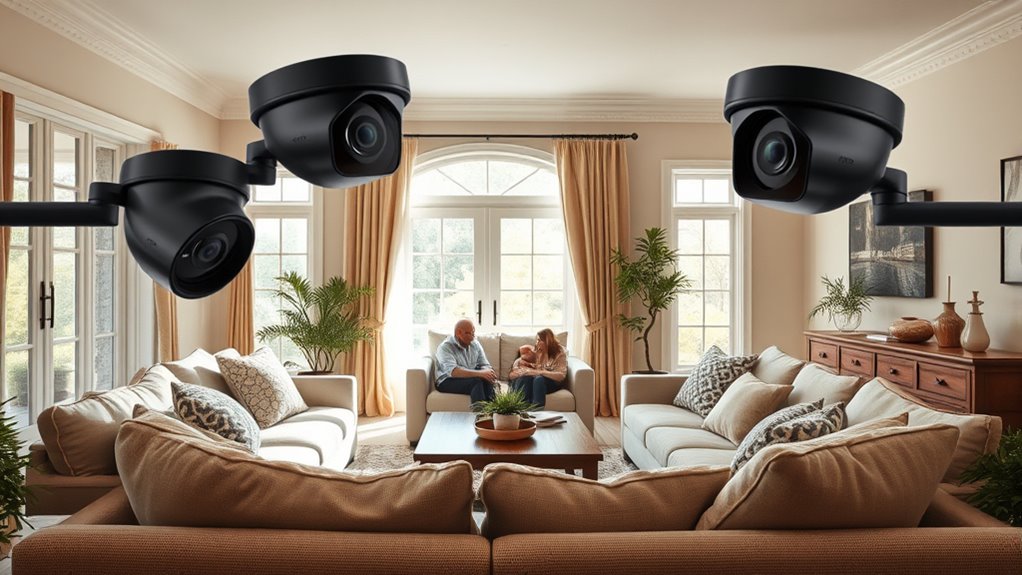
While you might think all cameras offer the same level of security, where you place them can greatly impact their effectiveness. Choosing the right camera angles is essential for ensuring ideal coverage. You want to capture clear images without invading anyone’s privacy, striking a privacy balance that respects your household and guests. For instance, positioning cameras too close can lead to awkward moments, while placing them too far may miss important details. By carefully considering each angle, you can enhance security without compromising comfort. Think about areas that need monitoring and how the camera’s view can provide the best insight. Proper camera placement also involves understanding security zone info, helping you optimize coverage while respecting privacy boundaries. Additionally, understanding privacy considerations can guide you in avoiding areas that could infringe on personal privacy. Incorporating smart automation tips can further enhance your home security system’s effectiveness and ease of use. Leveraging connected equipment can streamline your setup and provide smarter, more adaptable surveillance options. For example, integrating AI-powered cameras with adaptive monitoring features can help you adjust coverage dynamically based on activity patterns.

GMK Security Cameras Wireless Outdoor 4 Pack, 2K Battery Powered Cameras for Home Security, Color Night Vision, Motion Detection, 2-Way Talk, IP65 Waterproof, Remote Access, Cloud/SD Storage
【2K Ultra HD & Full Color Night Vision – 4 Cam Kit】Upgrade your home security with this 4…
As an affiliate, we earn on qualifying purchases.
As an affiliate, we earn on qualifying purchases.
Identifying Key Areas for Effective Coverage
To guarantee your home security cameras provide effective coverage, it’s important to identify key areas that need monitoring. Start by focusing on entry points like doors and windows, as these are the most vulnerable spots for potential intruders. Make sure cameras are positioned to capture clear views of these areas. Next, consider any blind spots around your property. These could be corners or obstructions that might prevent a camera from having a full view. Walk around your home and assess where visibility is limited. Regularly inspecting your camera maintenance routines can also help prevent issues like foggy lenses or connectivity problems, ensuring optimal performance over time. Additionally, reviewing your filtration/suction basics can assist in keeping your camera lenses clean and clear of dust or debris. Properly camera placement not only improves coverage but also helps avoid intrusive angles that can make footage less useful. Being aware of weatherproofing standards can help you select cameras that withstand various weather conditions, maintaining reliable operation. Moreover, understanding the cost considerations can guide you in choosing the right equipment within your budget. By addressing these critical locations, you’ll enhance your security system’s effectiveness, ensuring you have eyes on the most important areas without compromising privacy.

Blink Outdoor 4 – Wireless smart security camera, two-year battery life, 1080p HD day and infrared night live view, two-way talk. Sync Module Core included – 5 camera system
Outdoor 4 is our most affordable wireless smart security camera yet, offering up to two-year battery life for…
As an affiliate, we earn on qualifying purchases.
As an affiliate, we earn on qualifying purchases.
Choosing the Right Camera Types for Effective Placement

As you evaluate the best camera types for your home security, it is vital to match each camera’s features with your specific needs and placement goals. Here are some options to evaluate:
- Indoor Cameras: Great for monitoring living spaces; look for motion detection and two-way audio features.
- Outdoor Cameras: Weather-resistant options are necessary; night vision and wide-angle lenses enhance visibility.
- Wireless Cameras: Easy to install without complicated wiring; verify they come with robust battery life.
- Smart Cameras: Integrate with your home automation system; assess models with cloud storage for easy access.
Remember these installation tips: choose locations that avoid obstructions, guarantee adequate lighting, and test the camera angles to cover your desired areas effectively. To ensure optimal performance, consider camera placement strategies that maximize coverage while minimizing blind spots.

Video Surveillance Sign, 4-Pack 12"x 8" Security Camera Signs, Reflective and Waterproof Material 24 Hour Surveillance Sign For Home/Business
Clear and legible: 12"x8" Security camera sign made of durable metal aluminum with high-quality printing and large, easy-to-read…
As an affiliate, we earn on qualifying purchases.
As an affiliate, we earn on qualifying purchases.
How to Maintain Privacy While Installing Cameras
How can you guarantee your home security cameras don’t infringe on your privacy or that of your neighbors? Start by understanding camera ethics; you should only capture footage of your own property and not invade others’ spaces. Placement is key: avoid angles that might accidentally record your neighbor’s yard or public areas. Communicate with your neighbors about your camera installation to confirm surveillance transparency; this builds trust and shows you’re considerate of their privacy. Use signs to inform visitors that cameras are in use, which reinforces your commitment to ethical surveillance. Regularly review your camera footage and settings to affirm compliance with privacy standards. By being mindful and respectful, you can maintain security without compromising anyone’s privacy.
Best Practices for Indoor Camera Placement

When placing indoor cameras, think about ideal locations that provide the best coverage of your space. You’ll want to make certain you avoid any areas that might violate privacy, especially in shared living spaces. Balancing security with respect for personal boundaries is key to effective camera placement.
Optimal Locations For Coverage
To guarantee thorough coverage of your home, strategically positioning indoor cameras is essential. Start by identifying key areas where you need surveillance. Here are some ideal locations for your cameras:
- Living Room: Capture activity in a central gathering space.
- Entryway: Focus on entryway monitoring to see who comes and goes.
- Hallways: Ascertain you have visibility of traffic between rooms.
- Kitchen: Monitor this high-traffic area for safety and activity.
- Security smart locks can be integrated with cameras to enhance overall safety and control access. Additionally, considering indoor air quality can help ensure a healthier environment while maintaining security. Being aware of home security systems can further optimize your placement strategy for comprehensive protection. Proper camera placement can also minimize creepy angles and blind spots, providing a more natural overview of your home, especially when combined with ergonomic considerations to reduce visual strain and ensure clear, unobstructed views.
Avoiding Privacy Violations
While monitoring key areas in your home is important, it’s equally essential to respect the privacy of those who live and visit your space. To achieve ethical monitoring, start by identifying clear privacy boundaries. Avoid placing cameras in bedrooms and bathrooms, as these areas are personal and should remain off-limits. Instead, focus on common areas like entryways and living rooms where security is necessary. Communicate openly with family members about where cameras are installed to guarantee everyone feels comfortable. If you have guests, consider notifying them about the camera locations to maintain trust. Being aware of privacy violations and how to prevent them is crucial for maintaining ethical oversight. Proper camera placement can help ensure you’re monitoring effectively without overstepping privacy boundaries. Understanding home security best practices can help you make informed decisions about camera placement. Remember, ethical monitoring fosters peace of mind for everyone involved, especially when respecting privacy boundaries.
Indoor vs. Outdoor Camera Placement: Best Practices
When it comes to camera placement, understanding the differences between indoor and outdoor setups is essential. You’ll want to identify ideal indoor locations while also strategizing for outdoor coverage. Plus, don’t forget to take into account privacy to guarantee you’re protecting your space effectively.
Optimal Indoor Locations
Choosing ideal indoor locations for your cameras is essential for maximizing security and surveillance effectiveness. By strategically placing your cameras, you can cover various room types and guarantee you’re capturing the right camera angles. Here are some best indoor locations to contemplate:
- Entryways: Capture who enters and exits your home.
- Living Rooms: Monitor high-traffic areas where family gathers.
- Kitchens: Keep an eye on valuable appliances and potential hazards.
- Hallways: Assure visibility throughout different rooms and prevent unwanted access.
These placements not only help in surveillance but also deter intruders, giving you peace of mind. Reflect on your home’s layout and choose spots that provide thorough coverage without invading anyone’s privacy. Proper camera placement is key to balancing security with privacy considerations.
Outdoor Coverage Strategies
Effective outdoor camera placement is essential for enhancing your home’s security, as it allows you to monitor vulnerable areas and deter potential intruders. To optimize your outdoor coverage, consider the following strategies:
| Area to Monitor | Recommended Camera Angle | Importance of Outdoor Lighting |
|---|---|---|
| Front Entry | Downward angle | Enhances visibility at night |
| Backyard | Wide-angle | Covers large open spaces |
| Side Entrances | Side view | Prevents blind spots |
| Driveway | Elevated angle | Captures vehicle details |
Position cameras under eaves or awnings to protect them from the elements. Utilize outdoor lighting to improve image quality and guarantee your camera angles effectively capture movement in critical areas. Proper camera positioning also involves considering the placement height to prevent tampering and ensure clear footage. Additionally, choosing eco-friendly outdoor lighting options can help reduce energy consumption while maintaining optimal visibility. Paying attention to security camera best practices can further enhance your outdoor surveillance setup. Incorporating proper installation techniques can also help extend the lifespan of your outdoor cameras and ensure consistent performance.
Privacy Considerations Explained
While safeguarding your home’s security is essential, it’s equally important to respect the privacy of both your family and neighbors when placing cameras. Balancing camera ethics with privacy expectations can help create a secure yet respectful environment. Here are some best practices to ponder:
- Position indoor cameras to cover entry points, avoiding private spaces like bedrooms and bathrooms.
- For outdoor cameras, focus on your property lines, steering clear of your neighbor’s yard.
- Inform family members of camera locations to maintain transparency and trust.
- Regularly review footage and adjust camera angles to guarantee compliance with privacy expectations.
Regularly Review Your Camera Setup for Optimal Security
To guarantee your home remains secure, it’s essential to regularly review your camera setup. Check your camera angles to verify they cover all entry points and blind spots. Over time, you might need setup adjustments due to changes in your home or landscaping.
Here’s a quick checklist to guide your review:
| Aspect | Action Needed |
|---|---|
| Camera Coverage | Adjust angles as needed |
| Clarity | Clean lenses regularly |
| Recording Settings | Confirm they’re updated |
| Alerts & Notifications | Test functionality |
Frequently Asked Questions
Can Smart Cameras Integrate With Home Automation Systems?
Yes, smart cameras can integrate seamlessly with home automation systems. This smart home integration enhances your security by allowing cameras to work in conjunction with other devices like alarms and lights. You’ll enjoy automation benefits such as instant alerts when motion is detected and the ability to view live feeds from your smartphone. By connecting everything, you create a cohesive system that improves your home’s safety and efficiency.
How Can I Hide Cameras for Discreet Monitoring?
You can hide cameras for discreet monitoring by using hidden mounts and discreet designs. Imagine placing a camera in a potted plant or behind a picture frame—no one would suspect a thing! These clever placements guarantee you capture everything without drawing attention. Consider wall sconces or decorative items that can cleverly conceal your devices. Just remember, the more seamless the design, the better your chance of maintaining privacy while guaranteeing security.
What Are the Legal Considerations for Camera Placement?
When placing cameras, you need to take into account privacy laws and consent requirements. Always check your local regulations, as laws vary by location. In many places, you must inform individuals about surveillance in areas where they have a reasonable expectation of privacy, like bathrooms or bedrooms. Be transparent about camera usage to avoid legal issues. It’s essential to respect others’ privacy while still achieving your monitoring goals.
How Do I Ensure My Cameras Are Weatherproof?
To guarantee your cameras are weatherproof, choose models made from durable weatherproof materials like polycarbonate or aluminum. During installation, seal any openings with silicone caulk to prevent moisture intrusion. Look for cameras with an IP rating of at least IP65, indicating resistance to dust and water. Regularly inspect your camera’s housing and connections to maintain their integrity, guaranteeing they continue to function properly regardless of the weather conditions.
Can I Monitor My Cameras Remotely Through an App?
Yes, you can monitor your cameras remotely through an app! Most modern security cameras offer remote access, allowing you to view live feeds and recorded footage right from your smartphone. Check the app features before purchasing; look for options like motion alerts, two-way audio, and cloud storage. With the right setup, you’ll stay connected to your home security anytime, anywhere, giving you peace of mind when you’re away.
Conclusion
To summarize, thoughtful camera placement can enhance your home security without invading anyone’s privacy. By identifying key areas and selecting the right camera types, you can achieve effective coverage that keeps your home safe. Remember, it’s all about striking the right balance—how can you guarantee safety while respecting personal space? Regularly reviewing your setup will help you stay ahead of potential issues, making your home a secure and comfortable place for everyone.