To create a simple, reliable home office network setup, start by ensuring you have a minimum internet speed of 25 Mbps. Choose essential equipment like a dependable computer and an ergonomic chair. Optimize your Wi-Fi by centralizing your router placement and considering signal boosters for larger spaces. For enhanced stability, use wired connections whenever possible. Finally, enforce strong security practices. There are more tips to create an efficient workspace that you won’t want to miss.
Key Takeaways
- Position your router in a central location to maximize Wi-Fi coverage and minimize dead zones in your home office.
- Prioritize wired connections for essential devices like computers and printers for improved stability and speed.
- Utilize signal boosters or extenders if your office is in a large space to enhance Wi-Fi range.
- Regularly update router firmware and security settings to ensure optimal performance and protect against vulnerabilities.
- Implement network monitoring tools to track usage and identify any connectivity issues proactively.
home office Wi-Fi extender
As an affiliate, we earn on qualifying purchases.
As an affiliate, we earn on qualifying purchases.
Determine Your Ideal Internet Speed for Remote Work
How do you know if your internet speed is up to par for remote work? Start by checking your current internet speed using an online speed test. For most remote jobs, a minimum of 25 Mbps download speed is recommended to meet bandwidth requirements, especially if you’re video conferencing or downloading large files. If your speed is below this, consider upgrading your plan or switching providers. Keep in mind that multiple devices can slow down your connection, so evaluate how many people are using the internet simultaneously. Prioritize a stable connection for a smooth remote work experience. Remember, a reliable internet speed not only enhances productivity but also reduces frustration during virtual meetings and collaborative tasks.

Fizzin Ergonomic Office Chair, 400 LBS Computer Chairs with Adjustable Lumbar Support, Breathable Mesh Desk Chair Ergonomic with Thickened Cushion, Comfy Home Office Desk Chair (Black)
Ergonomic Office Chair: Our ergonomic office chair provides total comfort and support for your head, back, hips and…
As an affiliate, we earn on qualifying purchases.
As an affiliate, we earn on qualifying purchases.
Choose the Best Equipment for Your Home Office

Selecting the right equipment for your home office can considerably enhance your productivity and comfort. To guarantee you make the best choices, consider the following:
Choosing the right home office equipment boosts productivity and comfort, ensuring you make informed decisions.
- Evaluate Equipment Compatibility: Make sure your devices work well together. For instance, check if your printer can connect seamlessly with your laptop or desktop. Additionally, ensuring that your appliances are compatible with your power supply and voltage standards can prevent potential safety issues and equipment damage, especially if you have appliances from different regions or brands. power supply compatibility Being aware of your electrical standards can help prevent issues with incompatible devices. Understanding the AI integration in devices can also streamline your setup and improve efficiency. Recognizing device interoperability ensures that your equipment functions smoothly within your network, minimizing technical hiccups. Furthermore, investigating data transfer protocols can improve the speed and reliability of your device connections.
- Set Budget Considerations: Determine how much you can spend. Prioritize essential equipment like a reliable computer and ergonomic chair, while keeping some funds for accessories.
- Research User Reviews: Read reviews to understand how others experience the equipment. This can reveal insights on performance, durability, and any potential issues.
wired Ethernet adapter for PC
As an affiliate, we earn on qualifying purchases.
As an affiliate, we earn on qualifying purchases.
Optimize Your Wi-Fi for Maximum Coverage
After you’ve chosen the right equipment for your home office, ensuring a strong and reliable Wi-Fi connection is next on the agenda. Proper Wi-Fi placement is essential; position your router in a central location for ideal coverage. Consider using signal boosters to extend your Wi-Fi range, especially in larger spaces. Utilizing local automation can also help optimize your network performance by reducing congestion. Additionally, configuring network protocols correctly can enhance overall stability and security of your home network.
router signal booster
As an affiliate, we earn on qualifying purchases.
As an affiliate, we earn on qualifying purchases.
Boost Stability With Wired Connections
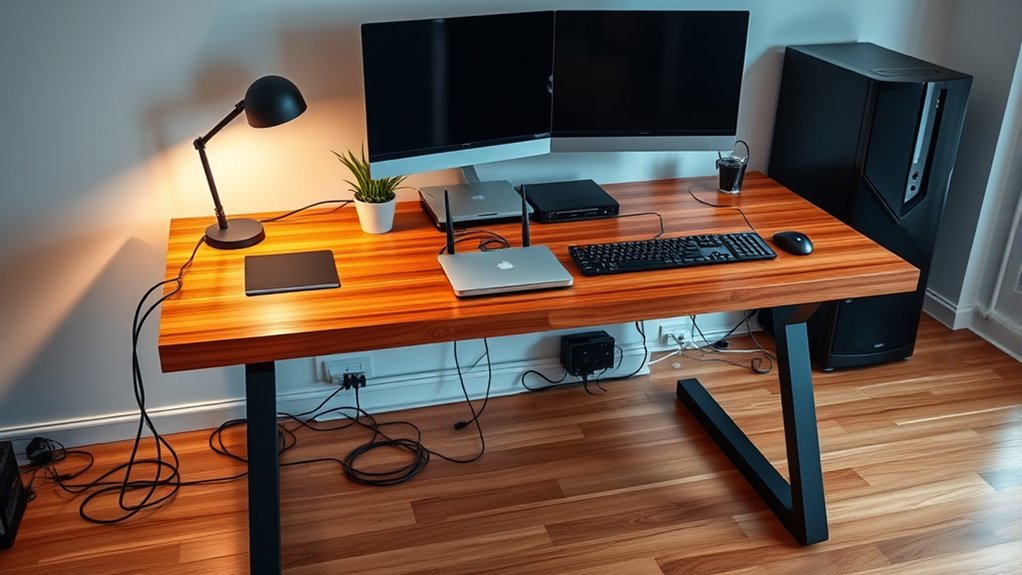
If you’re looking for a reliable connection in your home office, switching to wired connections is a smart move. Ethernet cables offer significant benefits over wireless options, including improved stability and speed. Proper air quality in your workspace can also enhance focus and productivity, making a clean and well-maintained environment essential. Additionally, microplastics in dust can negatively impact indoor air quality, so regular cleaning can help reduce their presence and improve your overall environment. Maintaining good indoor air quality can also prevent the buildup of pollutants that may originate from electronic equipment and dust. Ensuring your network components are properly organized and maintained can further optimize performance and longevity. Incorporating proper cable management practices can prevent clutter and potential damage to your setup, ensuring consistent network reliability. Let’s explore how these connections can enhance your network performance.
Wired vs. Wireless Connections
While both wired and wireless connections have their advantages, opting for a wired connection can greatly enhance your home office’s stability. Wired connections provide consistent performance, reducing interruptions during important tasks. Here are three wired advantages to evaluate:
- Reliability: Wired connections are less susceptible to interference, ensuring your connection remains strong. Network stability is crucial for seamless work sessions, especially when conducting video conferences or transferring large files. Additionally, wired setups can better support reliable data transfer for critical business activities. Implementing proper cable management can further enhance connection reliability by preventing physical damage and signal degradation.
- Speed: You’ll often experience faster speeds with wired connections, which is essential for data-heavy activities.
- Security: Wired networks offer a more secure environment, minimizing the risk of unauthorized access.
- Performance Optimization: Properly configured network settings can further improve your wired connection’s stability and speed.
Benefits Of Ethernet Cables
Choosing a wired connection means considering the right components for ideal performance, and Ethernet cables are at the forefront of that decision. One of the key Ethernet advantages is the superior speed and stability they offer compared to wireless connections. With a wired setup, you eliminate interference from other devices, ensuring a consistent and reliable connection for your home office needs. This cable reliability translates to fewer dropped connections and smoother online activities, whether you’re video conferencing or transferring large files. Additionally, Ethernet cables can handle higher bandwidths, making them perfect for multiple devices. Investing in quality Ethernet cables will certainly enhance your overall network experience, giving you the dependable connection you need to stay productive. Proper cable management is also essential to maintain optimal performance and prevent damage over time. Implementing maintenance routines for your network setup can further ensure long-term reliability and efficiency. Regularly checking your cables and connectors can help identify potential issues before they impact your connection quality. Incorporating network monitoring tools can also help you stay ahead of any performance issues proactively.
Improving Network Performance Stability
To enhance the stability of your home office network, switching to a wired connection can make all the difference. Wired connections minimize issues like network congestion and signal interference, ensuring a smoother online experience. Here are three reasons to evaluate:
- Consistent Speed: Wired connections provide faster and more reliable speeds than Wi-Fi, reducing lag during video calls and file transfers.
- Reduced Interference: Unlike wireless signals, Ethernet cables aren’t affected by physical obstacles or other electronic devices, maintaining a steady connection.
- Enhanced Security: A wired network is generally more secure, limiting unauthorized access that can occur with Wi-Fi.
- Network Reliability is improved with wired setups, providing a dependable connection essential for remote work success. Ensuring proper network setup can further optimize your connection stability. Additionally, understanding cybersecurity threats can help you protect your network from potential vulnerabilities. Implementing proper cable management can also reduce physical damage and maintain connection quality over time.
Essential Security Practices for Your Home Office Network
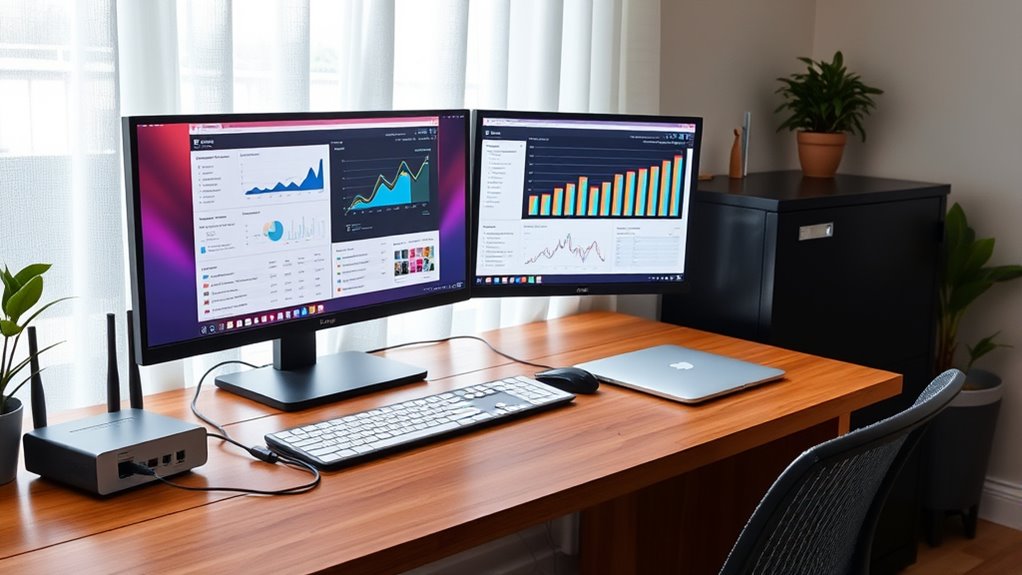
How can you guarantee your home office network is secure from potential threats? Start by implementing strong network encryption and regularly updating your firewall settings. These practices help protect your sensitive information from unauthorized access.
Here’s a quick reference table to make sure you’re covering all bases:
| Security Practice | Description |
|---|---|
| Use Strong Passwords | Create complex passwords for all devices. |
| Regular Firmware Updates | Keep router firmware up to date to patch vulnerabilities. |
| Enable Network Encryption | Use WPA3 for wireless security. |
| Configure Firewall Settings | Block unwanted traffic and monitor activity. |
How to Optimize Device Performance on Your Network?
After securing your home office network, it’s important to guarantee that all devices perform at their best. To do this effectively, focus on device prioritization and bandwidth allocation. Here are three steps you can take:
- Identify High-Priority Devices: Determine which devices are essential for your work, such as your laptop or VoIP phone, and prioritize their access to the network.
- Adjust Bandwidth Allocation: Use your router settings to allocate more bandwidth to high-priority devices, ensuring they have the necessary resources for smooth operation.
- Limit Background Usage: Reduce or schedule downloads and updates for non-essential devices during peak work hours to free up bandwidth.
Troubleshooting Your Home Office Network Issues
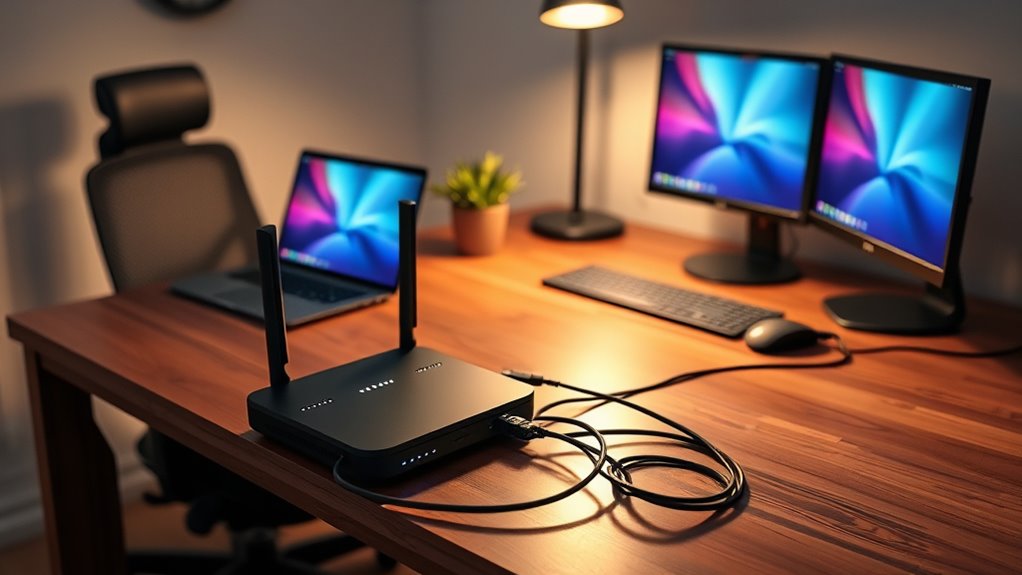
While you may have taken steps to secure and optimize your home office network, issues can still arise that disrupt your workflow. When you face connectivity problems, start with network diagnostics. Check your router and modem—sometimes, simply rebooting these devices can resolve issues. Next, run a speed test to identify any significant drops in performance. If you’re still having trouble, focus on connection troubleshooting. Verify your cables are securely connected and inspect for any visible damage. You can also check for interference from other devices or networks. Finally, if all else fails, consider contacting your internet service provider for further assistance. Staying proactive can help you minimize downtime and keep your work on track.
Setting Up Your Home Office for Network Efficiency
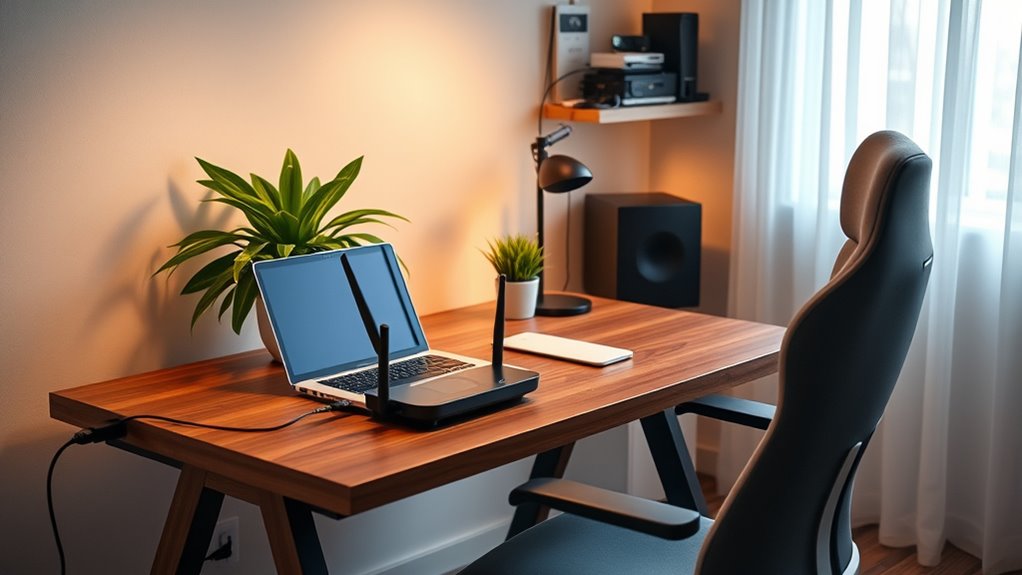
To guarantee your home office runs smoothly, it’s essential to set up your network for maximum efficiency from the start. Focus on your network layout and device placement to enhance connectivity and performance. Here are three tips to help you:
- Centralize Your Router: Position your router in a central location to minimize dead zones and guarantee a strong signal throughout your workspace.
- Limit Interference: Keep your devices away from metal objects and microwaves, which can disrupt your Wi-Fi signal.
- Prioritize Wired Connections: Whenever possible, use Ethernet cables for devices like desktops and printers. This guarantees a stable connection and frees up bandwidth for wireless devices.
Implementing these strategies will noticeably improve your home office network efficiency.
Maintain and Upgrade Your Network Setup Regularly
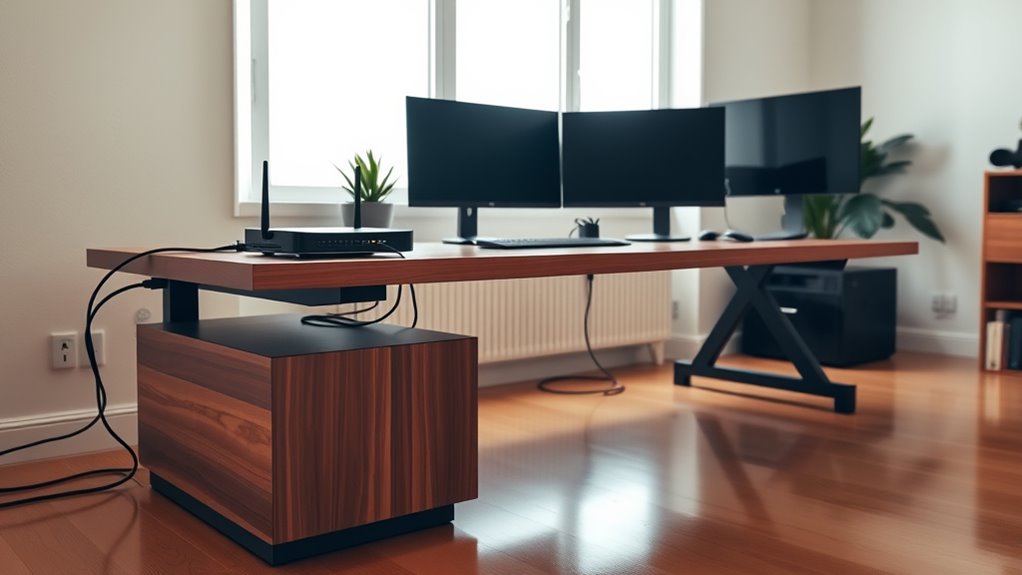
A well-structured home office network is just the beginning; maintaining and upgrading it regularly keeps everything running smoothly. To guarantee ideal performance, you should implement network monitoring tools that help you track usage and detect issues before they escalate. This proactive approach minimizes downtime and enhances productivity.
Don’t forget about firmware updates! Regularly updating your router and other network devices is essential for security and performance. These updates often fix vulnerabilities and improve functionality. Set reminders for yourself or enable automatic updates if possible.
Frequently Asked Questions
Can I Use My Smartphone as a Hotspot for Home Office Work?
Yes, you can use your smartphone as a hotspot for home office work. However, keep in mind the smartphone limitations, such as battery drain and potential data throttling. If you rely on mobile data, make sure you have a sufficient plan to avoid overage charges. It’s a convenient option, but if you’re handling heavy tasks, consider a more stable connection for better performance and reliability in your work.
What to Do if My Internet Drops During a Video Call?
If your internet drops during a video call, don’t panic! Studies show that 70% of remote workers have experienced similar issues. First, try reconnecting to your Wi-Fi or switching to your smartphone’s hotspot. If that doesn’t work, use internet troubleshooting tips like resetting your router. As a backup, consider video call alternatives like phone calls or messaging apps to keep the conversation going smoothly. Stay calm, and you’ll handle it just fine!
How Can I Prioritize Work Devices on My Network?
To prioritize work devices on your network, you can use traffic management features in your router. Access your router settings and look for device prioritization options. Assign higher priority to your work devices, ensuring they get more bandwidth during busy times. You might also consider setting up a dedicated network for your work devices, which can help reduce interference and keep your connection stable. Don’t forget to regularly check and adjust settings as needed!
Is It Safe to Use Public Wi-Fi for Work?
It’s not safe to use public Wi-Fi for work because it exposes you to significant remote work risks. Public Wi-Fi security is often weak, making it easy for hackers to intercept your sensitive data. If you must connect, use a VPN to encrypt your connection and protect your information. Always avoid accessing confidential work documents or sensitive accounts while on unsecured networks to keep your data safe from potential breaches.
How Often Should I Change My Wi-Fi Password?
How often do you think someone could crack your Wi-Fi password? To guarantee strong password security, change your Wi-Fi password every three to six months. This frequency recommendation helps protect your network from unauthorized access and potential breaches. Additionally, if you suspect someone’s gained access or after sharing your password, change it immediately. Staying proactive about your password practices can make a significant difference in keeping your home office secure and reliable.
Conclusion
As you sit back in your home office, imagine the seamless connection you’ve created. Your devices hum with efficiency, and your internet flows effortlessly, supporting every video call and download. But what if a storm brews outside, threatening your stability? With every tweak and upgrade, you fortify your network, ready for any challenge. Stay vigilant, keep your setup optimized, and watch as your workspace transforms into a fortress of productivity, shielding you from interruptions and distractions.