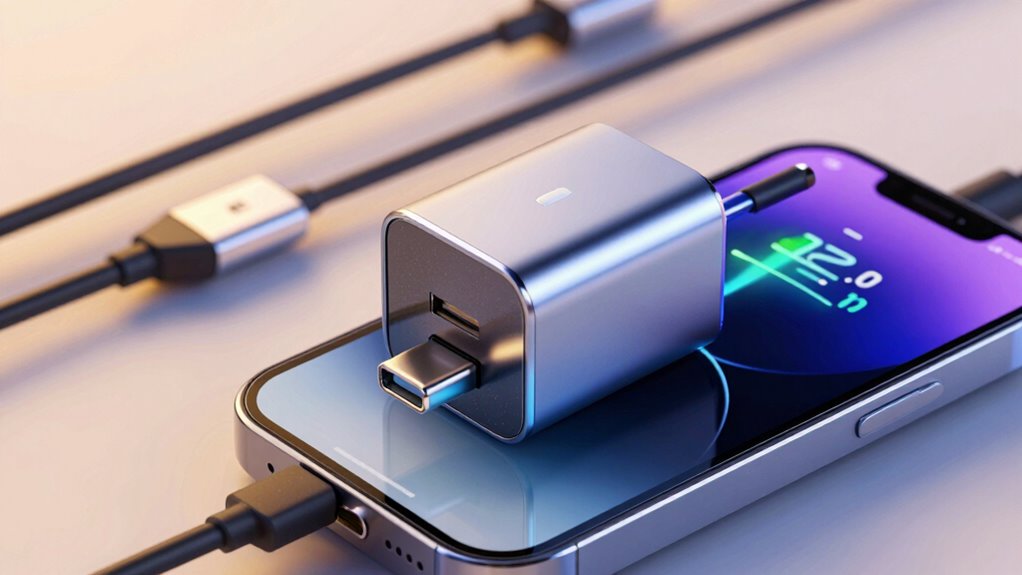
USB Power Delivery (USB PD) is a smart charging protocol that lets your devices communicate their power needs, delivering up to 100 watts of power. This means you can charge everything faster, from smartphones to laptops, all with one universal charger. It enhances efficiency by adjusting the voltage and current based on what your device requires, reducing energy waste. If you’re curious about choosing the right USB PD chargers and cables, there’s plenty more to discover.
Key Takeaways
- USB Power Delivery (PD) delivers up to 100 watts, significantly increasing charging speeds compared to traditional charging methods.
- It supports bi-directional power flow, allowing devices to communicate and adjust voltage and current for efficient charging.
- USB PD is universally compatible, reducing the number of chargers needed for various devices, simplifying the charging experience.
- The technology dynamically optimizes charging parameters, reducing energy loss and minimizing heat generation to prolong battery life.
- Devices ranging from smartphones to laptops support USB PD, enhancing user experience with faster charging options across multiple categories.
![[2-Pack] USB C Wall Charger, 40W 4-Port Fast Charging Block USB C Charger Dual USBC Power Adapter + QC Wall Plug Multiport Brick Type C Block for iPhone 17 16 15 14 13 12 11 Pro Max, iPad, Samsung](https://m.media-amazon.com/images/I/31G0fGd+rVL._SL500_.jpg)
[2-Pack] USB C Wall Charger, 40W 4-Port Fast Charging Block USB C Charger Dual USBC Power Adapter + QC Wall Plug Multiport Brick Type C Block for iPhone 17 16 15 14 13 12 11 Pro Max, iPad, Samsung
2-Pack 40W Fast Charging Block : The usb c charger supports the Power Delivery 3.0 and Quick Charge…
As an affiliate, we earn on qualifying purchases.
As an affiliate, we earn on qualifying purchases.
What Is USB Power Delivery and How Does It Work?
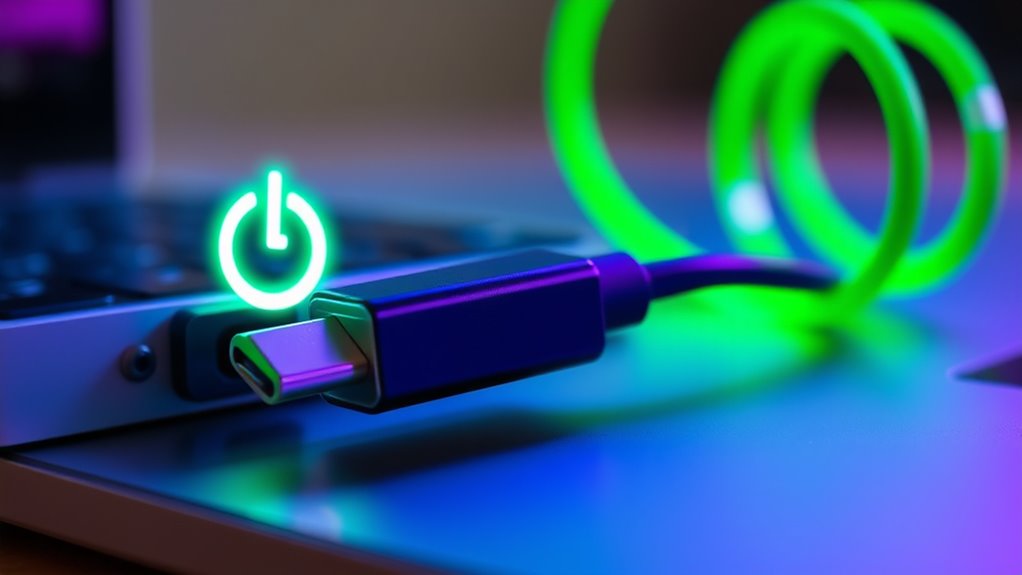
Have you ever wondered how USB Power Delivery (USB PD) enhances your charging experience? USB PD basics revolve around its ability to deliver higher power levels over USB connections. Unlike standard USB charging protocols, which usually offer limited power, USB PD can push up to 100 watts. This means faster charging for your devices, from smartphones to laptops. It works by enabling devices to communicate their power needs and adjust accordingly. When you connect a USB PD-compatible charger, it negotiates the ideal voltage and current for your device, ensuring efficient charging. So, whether you’re powering up your tablet or charging your laptop, understanding USB PD helps you maximize your charging efficiency and keep your devices ready to go.

65W USB C Laptop Charger | Fast Charging USB-C Power Adapter Compatible with Lenovo, ASUS, Samsung Galaxy Type C Fast Charger with PD Technology | Ideal Computer Charger for Home, Office & Travel
Powerful 65W Fast Charging Performance: Experience rapid power delivery with this 65w usb c charger, featuring PD fast…
As an affiliate, we earn on qualifying purchases.
As an affiliate, we earn on qualifying purchases.
The Benefits of Using USB Power Delivery for Charging
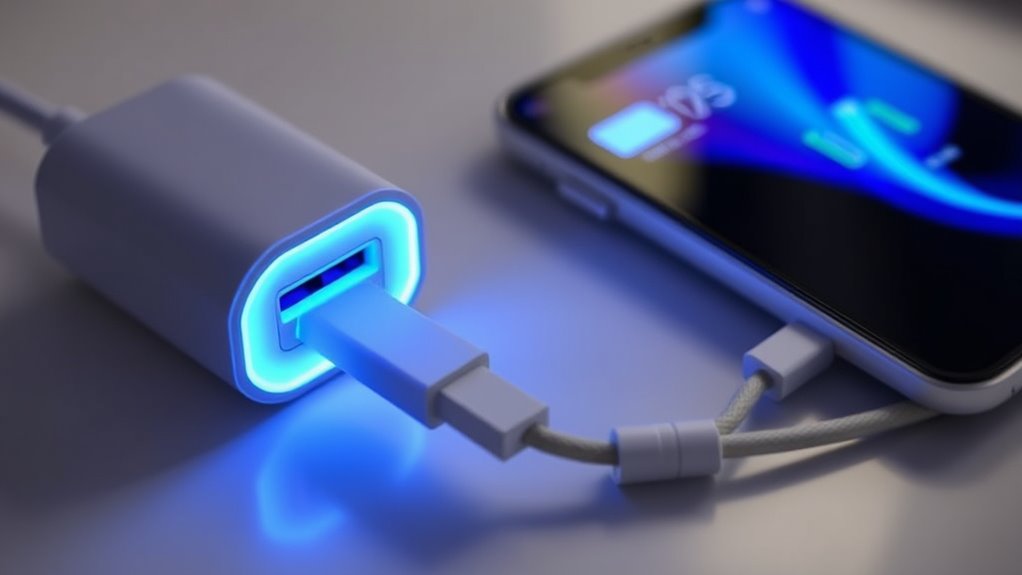
When you use USB Power Delivery for charging, you’ll enjoy faster charging speeds that can get your devices powered up in no time. Plus, its universal compatibility means you can use the same charger across multiple devices, simplifying your charging setup. With these benefits, you’ll find that USB Power Delivery truly enhances your charging experience.
Faster Charging Speeds
As you embrace the convenience of modern technology, you’ll quickly notice that USB Power Delivery (PD) offers markedly faster charging speeds compared to traditional methods. Unlike older charging standards, USB PD can deliver up to 100 watts of power, making it ideal for a variety of devices, from smartphones to laptops. This is a game changer when you consider the charging standards comparison; PD outperforms many fast charging technologies by adjusting the voltage and current dynamically. You’ll find that devices charge markedly quicker, allowing you to get back to what matters. Plus, with USB PD, you won’t have to deal with multiple chargers cluttering your space. Enjoy the efficiency and speed that USB PD brings to your charging routine.
Universal Compatibility Benefits
One of the standout features of USB Power Delivery is its universal compatibility, which simplifies your charging experience across multiple devices. With USB Power Delivery, you can use a single charger for various universal devices, from smartphones to laptops. This means you can ditch those bulky chargers and tangled cables cluttering your space. Since USB Power Delivery adheres to consistent charging standards, you won’t have to worry about compatibility issues anymore. Just grab your USB-C cable and plug it into any compatible device. Plus, this versatility not only saves you money on extra chargers but also reduces electronic waste. Embracing USB Power Delivery means you enjoy a seamless, efficient charging experience without the hassle of multiple adapters.

USB C to C Cable, 60W 3 Pack Fast Charging Cords 6ft QC & PD 2-in-1 USB-A/C to Type C Charger Cord Compatible with Samsung Galaxy S21 S10 S9 Note20, MacBook Pro 2020/2019
60W/3.1A fast charging:This USB C to USB C cable supports output 60W/3.1A max, USB A to USB C…
As an affiliate, we earn on qualifying purchases.
As an affiliate, we earn on qualifying purchases.
How Does USB PD Enhance Charging Efficiency?
How does USB Power Delivery (PD) enhance charging efficiency? USB PD optimizes power management by dynamically adjusting the voltage and current based on your device’s needs. This means that instead of relying on fixed charging protocols, USB PD communicates with your device to determine the most efficient charging parameters. By negotiating the power level, it reduces energy loss, allowing your device to charge faster and more efficiently. This adaptability not only minimizes heat generation but also prolongs battery life. Additionally, USB PD can deliver higher power levels, enabling it to charge larger devices, like laptops, without sacrificing speed or safety. Overall, USB PD’s intelligent power management transforms your charging experience, making it faster and more efficient.

USB A + USB C Multi Charging Cable, 3 in 1 Chargers for Multiple Devices, Universal Charger with Multiple Connectors —Type C, IP, Micro USB Cable for iPhone17/16/15/14, iPad, Galaxy, Kindle(2Pack 4FT)
[Multi Charging Cable]: Tired of juggling multiple charger cords? Our 3 in 1 charger with multiple connectors combines…
As an affiliate, we earn on qualifying purchases.
As an affiliate, we earn on qualifying purchases.
Devices That Support USB Power Delivery
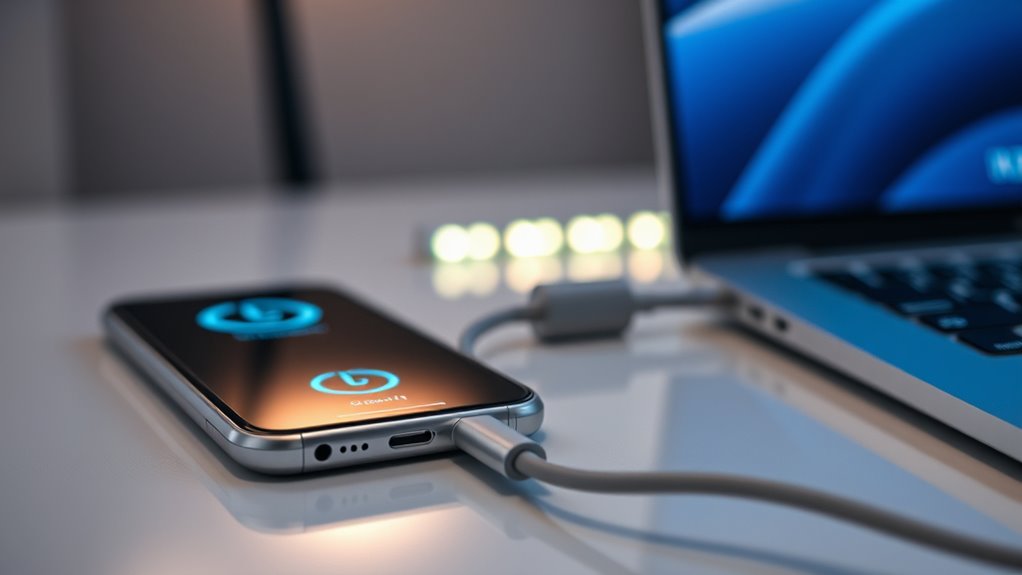
A wide range of devices now supports USB Power Delivery, making it a versatile charging solution for various gadgets. You’ll find smartphones compatibility across many major brands, ensuring faster charging when you need it most. Laptops support USB PD as well, allowing for quicker power-ups during work or play. Gaming consoles are also joining the fray, enhancing your gaming experience with fast charging options. Tablets integration means you can power up your device efficiently, while accessories adoption, like docks and hubs, maximizes functionality. Don’t forget about wearables charging—USB PD makes it easy to keep your fitness trackers and smartwatches powered. Even power banks and peripherals support USB PD, ensuring you’re always connected and ready to go.
How to Choose the Best USB PD Chargers and Cables

Choosing the right USB Power Delivery (PD) charger and cable can make a significant difference in your charging experience. When selecting a charger, consider reputable charger brands known for quality and efficiency. Look for chargers that support the power output your devices require.
For cables, think about cable lengths that suit your needs. Longer cables offer flexibility, but they may reduce charging speed. Here’s a quick reference table:
| Charger Brands | Cable Lengths |
|---|---|
| Anker | 1ft, 3ft, 6ft |
| Aukey | 2ft, 4ft, 10ft |
| Belkin | 3ft, 6ft, 10ft |
Common USB Power Delivery Issues and How to Fix Them
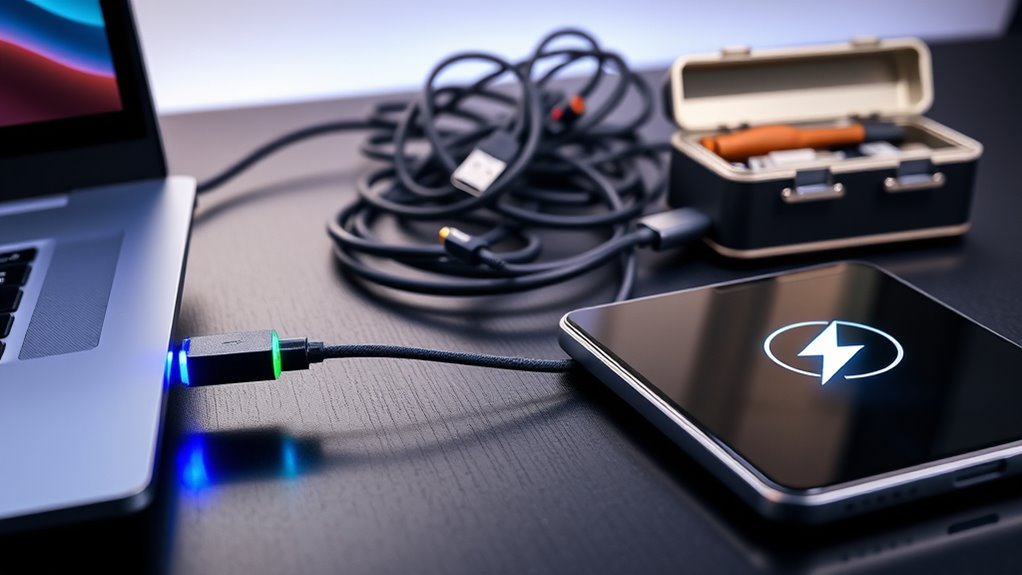
When using USB Power Delivery, you might run into a couple of common issues, like incompatible cables or insufficient power sources. These problems can hinder your device’s charging efficiency and performance. Let’s explore how to identify and fix these issues to guarantee you get the most out of your USB PD setup.
Incompatible Cable Issues
Incompatible cables can lead to frustrating charging experiences, especially with USB Power Delivery (USB PD) technology. You might find that not all cables support the power levels or connector types your devices require. Here’s a quick reference to understand common cable issues:
| Cable Quality | Connector Types | Possible Issues |
|---|---|---|
| Low-quality | USB-C | Slow charging |
| High-quality | USB-A to USB-C | Overheating |
| Moderate quality | Micro USB | Inconsistent connections |
| High-quality | USB-C to USB-C | ideal charging speeds |
To avoid these problems, always opt for high-quality cables that match the connector types of your devices. This guarantees efficient charging and enhances your overall experience.
Insufficient Power Source
Even the best USB Power Delivery setup can fall short if your power source isn’t up to par. When dealing with power limitations, you may encounter issues that can slow down or prevent charging. Here’s how to identify and fix these problems:
- Check your wall adapter: Verify it meets the required wattage for your device. A lower wattage can lead to insufficient power.
- Inspect your USB port: Some ports might not support higher power delivery, so try switching to a different one.
- Consider charging alternatives: If your current setup isn’t cutting it, look into higher-capacity chargers or power banks that can provide the necessary juice for peak charging.
What’s Next for USB Power Delivery?
As technology continues to evolve, USB Power Delivery (USB PD) is poised for significant advancements that promise to enhance charging efficiency and versatility. You can expect future developments to focus on faster charging rates and broader compatibility across devices. Industry standards are likely to adapt, allowing USB PD to support not just smartphones and laptops, but also high-demand devices like electric vehicles and home appliances. This means you’ll enjoy a seamless charging experience, where one cable can handle multiple devices efficiently. With innovations like bi-directional power flow and improved communication protocols, USB PD is set to become the universal charging solution we’ve all been waiting for. Keep an eye out for these exciting changes in the coming years!
Frequently Asked Questions
Can USB Power Delivery Charge My Laptop and Smartphone Simultaneously?
Yes, USB Power Delivery can charge your laptop and smartphone simultaneously, provided both devices support the technology. You’ll need a compatible charger and cable that can handle the combined power requirements. Make certain to check your devices’ specifications for device compatibility to guarantee efficient charging. By using the right setup, you can keep both your laptop and smartphone powered up without sacrificing charging speed. It’s a convenient solution for multi-device users!
Is USB Power Delivery Safe for Older Devices?
Yes, USB Power Delivery is generally safe for older devices, but you should watch for compatibility concerns. Most older devices have built-in protection to prevent damage from higher voltage or current. Just make certain you’re using a certified cable and charger to guarantee device protection. If you notice any unusual behavior, it’s best to stop charging immediately. Overall, with the right precautions, you can safely use USB Power Delivery with older devices.
What Cables Are Required for USB Power Delivery?
To utilize USB Power Delivery (USB PD), you’ll need USB PD cables, which are designed to handle higher wattages—up to 100 watts! This means you can charge devices like laptops and smartphones quickly. Make certain your cables are compatible with both your charger and device; not all USB-C cables support USB PD. Check the specifications to confirm you’re getting the most efficient charging experience possible with your setup.
How Does USB Power Delivery Differ From Quick Charge?
USB Power Delivery (PD) and Quick Charge (QC) differ mainly in their charging protocols comparison and efficiency differences. While PD can deliver higher power levels and adapt to various devices, QC typically focuses on specific brands and devices, offering rapid charging at lower power levels. You’ll find PD is more versatile, allowing for faster charging across a broader range of gadgets, while QC is limited to compatible devices within its ecosystem.
Can I Use USB PD With Non-Certified Accessories?
Yes, you can use USB PD with non-certified accessories, but you might run into compatibility issues. Non-certified cables or chargers may not support the full range of charging efficiency that USB PD offers, potentially leading to slower charging speeds or even overheating. It’s best to stick with certified accessories to guarantee peak performance and safety. Always check the specifications of your devices to avoid any potential risks when using non-certified gear.
Conclusion
In a world where time is money, USB Power Delivery is your trusty steed, galloping ahead to charge your devices at lightning speed. By embracing this technology, you’re not just keeping your gadgets powered; you’re stepping into the future of charging. Whether you’re at home, in the office, or on the go, USB PD guarantees you’ll never be left in the dark. So grab your USB PD chargers and watch your devices come to life before your eyes!