

Shopping for smart home security cameras in 2026 means choosing between three competing priorities: video quality, ongoing costs, and how much effort you’re willing to put into installation and hub placement. After comparing 15 of the most popular options, the Arlo Pro 6th Generation 4-Camera Kit earns my best overall pick for its 2K HDR video, flexible wireless design and polished smart platform. The eufy SoloCam S340 stands out for buyers who never want to recharge a battery again thanks to its dual-lens 3K optics and solar panel, while the Tapo C100 4-Pack is the budget-friendly choice for blanketing an entire home’s interior. The biggest tradeoff in this category is subscription-free local storage versus cloud convenience — several picks here split exactly along that line. Keep reading for the full breakdown of which camera system fits your home, your budget and your tolerance for monthly fees.

Get the little things that make your day delivered free with Prime
- Fast, free delivery on millions of items
- Prime Video, Amazon Music and more included
- Member-only deals all year
Key Takeaways
- Multi-camera kits dominate this lineup because per-camera costs drop sharply — the Blink Outdoor 4 and Arlo Pro kits cost far less per unit than buying singles, making them better for full-home coverage.
- Solar power emerged as the clearest differentiator for outdoor picks: the eufy SoloCam S340, aosu D1 Classic and Tapo SolarCam C402 all eliminate battery recharging, which is the single most common complaint about wireless outdoor cameras.
- Resolution claims don’t tell the whole story — the Anona 4K cameras deliver sharp detail on paper, but the Arlo Pro’s 2K HDR and eufy’s 3K dual-lens setup produced better usable footage in challenging lighting.
- Subscription requirements split the lineup down the middle: Blink leans on optional cloud plans, Arlo gates its best smart features behind paid tiers, while eufy, aosu and Tapo emphasize local storage with no recurring fees.
- Sync modules and hubs are the hidden decision point — Blink kits require a Sync Module Core for full functionality, while Wyze Cam v4 and Tapo cameras work standalone, which matters for renters and small apartments.
| Tapo C100 1080p Indoor Security Camera (4-Pack) |  | Best Value for Whole-Home Indoor Coverage | Resolution: 1080p Full HD | Connectivity: 2.4GHz Wi-Fi | Night vision range: Up to 40 ft | VIEW LATEST PRICE | See Our Full Breakdown |
| Blink Outdoor 4 XR Wireless Security Camera System, 4 Cameras |  | Best for Large Properties | Camera count: 4 | Wireless range: Up to 1,000 ft open air; ~400 ft typical | Battery life: Up to 2 years | VIEW LATEST PRICE | See Our Full Breakdown |
| Anona 4K UHD Indoor Security Camera, 4-Pack |  | Best Premium Indoor Setup | Resolution: 4K (8 MP) | Zoom: 8× digital | Pan / tilt: 360° pan, 110° tilt | VIEW LATEST PRICE | See Our Full Breakdown |
| Blink Mini 2K+ Indoor Security Camera, 2-Pack, Black |  | Best Plug-and-Play Starter Kit | Resolution: 2K | Zoom: Up to 4× | Quantity: 2 cameras | VIEW LATEST PRICE | See Our Full Breakdown |
| Anona 4K UHD Indoor Security Camera, 2-Pack |  | Best for Small Homes That Still Want 4K | Resolution: 4K UHD (8 MP) | Zoom: 8× | Pan / tilt: 355° pan, 110° tilt | VIEW LATEST PRICE | See Our Full Breakdown |
| Blink Outdoor 2K+ Wireless Security Camera System, 5 Cameras with Sync Module Core |  | Best Full-Property Coverage | Camera count: 5 (with Sync Module Core) | Video resolution: 2K (2560 x 1440) | Field of view: 115° x 62° x 135° | VIEW LATEST PRICE | See Our Full Breakdown |
| eufy Security SoloCam S340 Solar-Powered 3K Dual-Lens Security Camera |  | Best Premium Solo Camera | Resolution: 3K, dual-lens | Zoom: 8× | Coverage: 360° pan and tilt | VIEW LATEST PRICE | See Our Full Breakdown |
| Blink Outdoor 4 Wireless Security Camera System, 3 Cameras |  | Best Starter Kit for Alexa Homes | Camera count: 3 (with Sync Module Core) | Video resolution: 1080p HD | Night vision: Infrared | VIEW LATEST PRICE | See Our Full Breakdown |
| Tapo SolarCam C402 Kit 1080p Outdoor Security Camera with Solar Panel |  | Best Budget Solar Pick | Resolution: 1080p | Power: Solar panel with built-in battery | Battery life: Up to 180 days per charge | VIEW LATEST PRICE | See Our Full Breakdown |
| 2K Solar Wireless Outdoor Security Camera System, 4-Pack |  | Best Multi-Camera Solar Value | Camera count: 4 | Resolution: 2K | Field of view: 360° pan-tilt | VIEW LATEST PRICE | See Our Full Breakdown |
| Wyze Cam v4 2.5K Indoor/Outdoor Security Camera |  | Best Budget Single Camera | Resolution: 2560 × 1440 (2.5K QHD) | Field of view: 120° | Weather resistance: IP65 | VIEW LATEST PRICE | See Our Full Breakdown |
| Blink Outdoor 4 Wireless Smart Security Camera System, 2-Camera Kit with Sync Module Core | | Best Starter Wireless Kit | Camera count: 2 | Video resolution: 1080p HD | Night vision: Infrared | VIEW LATEST PRICE | See Our Full Breakdown |
| Arlo Pro Wireless Security Camera, 2K HDR, 6th Generation, 4-Camera Kit |  | Best Premium Multi-Camera System | Camera count: 4 | Video resolution: 2K HDR | Field of view: 160° | VIEW LATEST PRICE | See Our Full Breakdown |
| Blink Outdoor 4 Wireless Smart Security Camera System, 5 Cameras | | Best for Full-Property Coverage on a Budget | Camera count: 5 | Video resolution: 1080p HD | Field of view: 143° diagonal | VIEW LATEST PRICE | See Our Full Breakdown |
| aosu D1 Classic 4-Camera Wireless Outdoor Security Camera Kit with Solar Power | 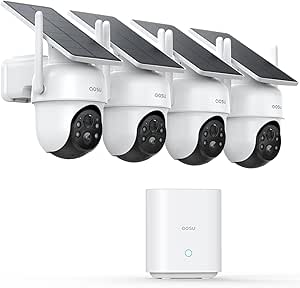 | Best Set-and-Forget Solar Kit | Camera count: 4 | Resolution: 2K / 3MP | Field of view: 360° pan, 105° viewing angle | VIEW LATEST PRICE | See Our Full Breakdown |
| smart home security camera | Resolution | Camera count | Night vision |
|---|---|---|---|
| Tapo C100 1080p Indoor Securit | 1080p Full HD | — | — |
| Blink Outdoor 4 XR Wireless Se | — | 4 | — |
| Anona 4K UHD Indoor Security C | 4K (8 MP) | — | — |
| Blink Mini 2K+ Indoor Security | 2K | — | Yes |
| Anona 4K UHD Indoor Security C | 4K UHD (8 MP) | — | — |
| Blink Outdoor 2K+ Wireless Sec | — | 5 (with Sync Module Core) | — |
| eufy Security SoloCam S340 Sol | 3K, dual-lens | — | — |
| Blink Outdoor 4 Wireless Secur | — | 3 (with Sync Module Core) | Infrared |
| Tapo SolarCam C402 Kit 1080p O | 1080p | — | Full-color, up to 30 ft |
| 2K Solar Wireless Outdoor Secu | 2K | 4 | Color, up to 328 ft |
| Wyze Cam v4 2.5K Indoor/Outdoo | 2560 × 1440 (2.5K QHD) | — | Color |
| Blink Outdoor 4 Wireless Smart | — | 2 | Infrared |
| Arlo Pro Wireless Security Cam | — | 4 | Color |
| Blink Outdoor 4 Wireless Smart | — | 5 | — |
| aosu D1 Classic 4-Camera Wirel | 2K / 3MP | 4 | Color |
More Details on Our Top Picks
Tapo C100 1080p Indoor Security Camera (4-Pack)
Four cameras at this price point make the Tapo C100 the easiest way to blanket an entire home interior with coverage, and the local microSD recording without a subscription is what sets it apart from Blink’s ecosystem, where meaningful features sit behind paid plans. Detection here covers motion, people, and even baby crying, which is a capability usually reserved for pricier nursery-focused cams. The tradeoff is resolution: at 1080p, it captures noticeably less detail than the Anona 4K models, so faces and license-plate-level detail suffer if you zoom in. Compared with the Blink Mini 2K+, the Tapo avoids subscription pressure but demands you buy microSD cards separately and live on a 2.4GHz-only network. For coverage-per-dollar, this pick makes the most sense for multi-room monitoring on a budget.
Pros:- Local microSD recording with no subscription required
- Motion, person, and baby-crying detection included free
- Two-way audio plus a built-in siren deterrent
- Four cameras for covering multiple rooms at once
Cons:- 1080p resolution is the lowest in this lineup
- 2.4GHz-only Wi-Fi limits placement on modern mesh networks
- MicroSD cards must be purchased separately for each camera
Best for: Renters and parents who want subscription-free monitoring across multiple rooms, including a nursery
Not ideal for: Anyone needing fine detail like faces at a distance — 1080p falls short of the 2K and 4K options here
- Resolution:1080p Full HD
- Connectivity:2.4GHz Wi-Fi
- Night vision range:Up to 40 ft
- Storage:MicroSD up to 512GB (sold separately) or optional cloud
- Audio:Two-way audio with built-in siren
- Detection:Motion, person, baby crying
- Voice assistants:Alexa and Google Assistant
- Pack size:4 cameras
Our verdict“Buy this if you want maximum room coverage with zero ongoing costs and can accept 1080p detail.”
Blink Outdoor 4 XR Wireless Security Camera System, 4 Cameras
Range is the story here. The Sync Module XR communicates over 900 MHz, reaching cameras up to 400 feet in typical conditions — far beyond what Wi-Fi-dependent cameras like the Tapo SolarCam C402 or Wyze Cam v4 can manage, which makes this the strongest option for long driveways, detached garages, and sprawling backyards. Battery life of up to two years on the included lithium AAs removes the solar-panel dependency of the eufy SoloCam S340 or aosu kits, so placement isn’t dictated by sunlight. The compromises: cloud storage is the default path and local storage needs a separately purchased microSD, and the open-air range figure shrinks once walls and interference enter the picture. Compared with the standard Blink Outdoor 4 3-camera kit, the XR buys you reach rather than camera count.
Pros:- Extended 900 MHz range reaches distant outbuildings
- Up to 2 years of battery life with included lithium AAs
- Fully wireless mounting without wiring or solar placement constraints
- Alexa integration and app control included
Cons:- Local storage requires a separately sold microSD card
- Advertised 1,000 ft range only applies to open-air conditions
- Deeper smart features push you toward a cloud subscription
Best for: Homeowners with large lots, outbuildings, or camera positions far from the router
Not ideal for: Small urban homes or apartments where standard Wi-Fi range would suffice and a cheaper kit would do
- Camera count:4
- Wireless range:Up to 1,000 ft open air; ~400 ft typical
- Battery life:Up to 2 years
- Battery type:Energizer Lithium AA
- Connectivity:900 MHz XR
- Local storage:MicroSD up to 256GB (sold separately)
- Smart home:Alexa
- In the box:4 cameras, Sync Module XR, 8 AA batteries, mounting kits, USB-C cable, power adapter
Our verdict“This is the pick when distance from the house is your problem, not video quality or smart detection.”
Anona 4K UHD Indoor Security Camera, 4-Pack
If detail is the priority, this is the most capable indoor kit in the roundup. 4K capture with 8× zoom means you can actually identify a face across a living room, something neither the Tapo C100 at 1080p nor the Blink Mini 2K+ can reliably do. The 360° pan and 110° tilt with auto-tracking let one camera follow a subject through a room, effectively reducing how many units you need to position — useful in an open-plan home. Dual-band Wi-Fi 6 also makes it more future-proof than the Tapo’s 2.4GHz-only radio. The meaningful catch is the 15 fps frame rate: fast motion looks choppy, which matters if you’re monitoring kids or pets who sprint rather than stroll. Like most kits here, the microSD cards cost extra. This option stands out for buyers who prioritize clarity over smooth motion.
Pros:- 4K resolution with 8× zoom captures identifying detail
- 360° pan, 110° tilt, and auto-tracking follow subjects
- Person, pet, and baby-cry detection with app alerts
- Dual-band Wi-Fi 6 works on modern mesh networks
Cons:- 15 fps frame rate makes fast motion look choppy
- No microSD cards included in a four-camera kit
- Corded power limits placement to outlet-adjacent spots
Best for: Detail-focused homeowners who want crisp, zoomable 4K footage and room-tracking coverage in several rooms
Not ideal for: Anyone monitoring fast-moving kids or pets — 15 fps playback will look choppy
- Resolution:4K (8 MP)
- Zoom:8× digital
- Pan / tilt:360° pan, 110° tilt
- Frame rate:15 fps
- Wi-Fi:Dual-band 2.4/5 GHz, Wi-Fi 6
- Detection:Person, pet, baby crying
- Storage:MicroSD up to 512GB (not included) or encrypted cloud
- Audio:Two-way audio
- Power:Corded electric
Our verdict“Choose this four-pack when maximum indoor image quality across multiple rooms matters more than smooth motion.”
Blink Mini 2K+ Indoor Security Camera, 2-Pack, Black
This two-pack is the low-friction entry point of the lineup. Everything needed is in the box — mounts, stands, USB cables, and power adapters — so setup is a matter of plugging in and pairing, with no batteries, microSD shopping, or solar panels to think about. The 2K resolution and 4× zoom put it a clear step above the Tapo C100’s 1080p while costing you less complexity than the Anona 4K kits. The noise-cancelling two-way talk is genuinely useful for pet commands or checking in on kids, and the bonus ability to double as a Blink Video Doorbell chime adds value if you’re already in that ecosystem. The tradeoffs are real, though: person and vehicle detection live behind an optional subscription, unlike the Tapo where detection is free, and taking it outdoors requires a separately sold weather-resistant adapter.
Pros:- 2K video with up to 4× zoom outclasses budget 1080p cams
- Noise-cancelling two-way talk for clear conversations
- Complete mounting and power accessories included
- Doubles as a Blink Video Doorbell chime
Cons:- Person and vehicle detection require an optional subscription
- Outdoor use needs a separately sold weather-resistant adapter
- Plug-in design means both cameras need outlet access
Best for: First-time camera buyers and Alexa households wanting a simple two-room starter setup
Not ideal for: Subscription-averse buyers — core smart detection features sit behind a paid plan
- Resolution:2K
- Zoom:Up to 4×
- Quantity:2 cameras
- Audio:Two-way talk with noise cancellation
- Detection:Motion included; person/vehicle via optional subscription
- Night vision:Yes
- Smart home:Alexa compatible
- Power:Plug-in
Our verdict“This is the simplest way to start monitoring two indoor spaces, provided you accept subscription-gated smart alerts.”
Anona 4K UHD Indoor Security Camera, 2-Pack
Think of this as the Anona 4K four-pack scaled for smaller footprints: same 4K sensor, 8× zoom, auto-tracking, and dual-band Wi-Fi 6, but with two cameras instead of four, which keeps things manageable for an apartment or a two-bedroom home. The 355° pan and 110° tilt coverage means each unit sweeps nearly a full room, so two cameras often cover what a fixed-lens set of three or four would — a sharp contrast with the stationary Blink Mini 2K+, which can’t reorient after mounting. It also works with both Alexa and Google Assistant, while Blink locks you into Amazon’s ecosystem. The shared weaknesses remain: 15 fps video chokes on quick movement, and you’ll be buying microSD cards on top of the kit. This model is better suited to buyers who want flagship image quality without paying for cameras they don’t need.
Pros:- 4K UHD resolution with 8× zoom for identifying detail
- 355° pan and 110° tilt with automatic motion tracking
- Works with both Alexa and Google Assistant
- Dual-band Wi-Fi 6 support for modern networks
Cons:- 15 fps frame rate struggles with fast motion
- No microSD card included, so recording costs extra
- Corded power restricts where cameras can be mounted
Best for: Apartment dwellers or small-home owners who want 4K detail and tracking coverage in just one or two rooms
Not ideal for: Larger homes wanting whole-house coverage — the 4-pack version delivers better per-camera value
- Resolution:4K UHD (8 MP)
- Zoom:8×
- Pan / tilt:355° pan, 110° tilt
- Wi-Fi:Dual-band 2.4/5 GHz, Wi-Fi 6
- Detection:Person, pet, baby crying
- Storage:Encrypted cloud or microSD up to 512GB (not included)
- Audio:Two-way audio
- Assistants:Alexa and Google Assistant
- Power:Corded electric
Our verdict“Pick this two-pack over the four-pack if your space is compact but you still refuse to compromise on image sharpness.”
Blink Outdoor 2K+ Wireless Security Camera System, 5 Cameras with Sync Module Core
Whole-home coverage gets expensive fast, and this five-camera 2K+ kit from Blink undercuts multi-camera rivals like the Arlo Pro 6th Gen 4-camera kit while adding a fifth unit. Sharpness is the story here: compared with the Blink Outdoor 4 3-camera kit, the resolution bump makes license plates and faces far more identifiable, and low-light color vision beats plain infrared. The tradeoff is familiar Blink friction — person and vehicle detection plus cloud clips require a subscription, and the AA lithium batteries aren’t rechargeable, so replacements become a long-term cost. Compared with solar-powered options like the eufy SoloCam S340, you trade set-and-forget charging for flexibility in shaded mounting spots.
Pros:- Five-camera coverage with sharp 2K resolution in one kit
- Color low-light vision instead of grainy infrared
- Two-way audio with noise cancellation
- IP-65 weather resistance with up to two years of battery life
Cons:- Person and vehicle detection requires a paid subscription
- Non-rechargeable AA batteries mean replacement costs over time
Best for: Homeowners covering a large perimeter — driveway, backyard, and side entrances — in one purchase
Not ideal for: Buyers who refuse monthly fees, since smart detection and saved clips sit behind a subscription
- Camera count:5 (with Sync Module Core)
- Video resolution:2K (2560 x 1440)
- Field of view:115° x 62° x 135°
- Zoom:Up to 4x
- Weather resistance:IP-65
- Battery life:Up to 2 years
- Wi-Fi:2.4 GHz 802.11b/g/n
- Included accessories:Sync Module Core, 10 AA lithium batteries, 5 mounting kits
Our verdict“This kit makes the most sense for anyone blanketing a full property in 2K detail without paying Arlo-level prices up front.”
eufy Security SoloCam S340 Solar-Powered 3K Dual-Lens Security Camera
If one well-placed camera can do the work of three, the math changes — and that’s the SoloCam S340‘s whole pitch. Its 360° pan and tilt lets a single unit sweep an entire yard, while the dual-lens 3K sensor with 8× zoom out-resolves both the Tapo SolarCam C402 and the 2K solar 4-pack in this lineup. The bigger differentiator is economics: local storage means no monthly fee, unlike Blink’s subscription-gated detection and clips. The catch is installation geometry — full coverage demands vertical mounting, which doesn’t suit every eave or fence line, and one camera is still one point of failure compared with a multi-camera kit like the Blink 2K+ 5-pack.
Pros:- Solar power eliminates battery swaps entirely
- 360° pan and tilt replaces multiple fixed cameras
- 3K resolution with 8× zoom for identifiable detail
- Local storage with no monthly fee
Cons:- Full 360° coverage requires vertical installation that not every mounting spot allows
- Higher single-unit cost than budget multi-camera kits
Best for: Buyers who want to cover a wide open yard or driveway with a single camera and zero subscription fees
Not ideal for: Homes with multiple blind spots around back — one panning camera can’t watch two sides at once
- Resolution:3K, dual-lens
- Zoom:8×
- Coverage:360° pan and tilt
- Power:Solar with removable panel
- Storage:Local storage, no monthly fee
- Detection range:Up to 40 ft (12 m)
- Installation:Wire-free
Our verdict“This model is better suited to buyers who’d rather buy one excellent pan-and-tilt camera than manage a fleet of fixed ones.”
Blink Outdoor 4 Wireless Security Camera System, 3 Cameras
For a first foray into outdoor security, this three-camera kit keeps things simple: mount, pair with Alexa, and go. The 1080p output is the honest compromise — step up to the Blink Outdoor 2K+ 5-pack and detail improves noticeably, but so does the price. Where this kit earns its place is enhanced dual-zone motion detection and up to two years of battery life, matching Blink’s bigger kits at a lower entry point. The sting is storage: the included Sync Module Core doesn’t support local storage at all, so saved clips and person detection both live behind a Blink Subscription Plan — a real cost Blink doesn’t shout about. Compared with the Tapo SolarCam C402, you give up solar charging and microSD slots for a lower, more familiar entry price.
Pros:- Three cameras plus Sync Module Core in one affordable package
- Up to two years of battery life per camera
- Enhanced dual-zone motion detection
- Deep Alexa integration for routines and live view
Cons:- No local storage support with the included Sync Module Core
- Person detection and cloud clips require a subscription
- 1080p resolution trails the 2K and 3K options in this guide
Best for: Alexa households wanting a plug-and-play first outdoor system across three entry points
Not ideal for: Anyone allergic to subscriptions — there’s no local storage path with the included module
- Camera count:3 (with Sync Module Core)
- Video resolution:1080p HD
- Night vision:Infrared
- Battery life:Up to 2 years
- Motion detection:Dual-zone enhanced
- Storage:Cloud via subscription only
- Smart home compatibility:Alexa
Our verdict“This pick makes the most sense for Alexa-first buyers who value easy setup over maximum detail and don’t mind a monthly bill later.”
Tapo SolarCam C402 Kit 1080p Outdoor Security Camera with Solar Panel
Solar charging usually commands a premium, but the SolarCam C402 brings it to a budget price point — something even Blink’s kits can’t claim, since every Blink here runs on disposable or replaceable cells. A 13-foot panel cable means the camera can sit in shade while the panel chases sun, and just 45 minutes of sunlight buys a full day of recording. Unlike the Blink Outdoor 4 kit, this camera offers free local storage via microSD up to 512GB, so clips don’t demand a subscription — though Tapo’s cloud does. The compromises: 1080p resolution trails the eufy SoloCam S340’s 3K badly when you need to zoom, and solar charging stops below 32°F, leaving winter reliance on the 180-day battery alone.
Pros:- Solar panel with 13-foot cable for flexible sun placement
- Free local storage on microSD up to 512GB
- Full-color night vision with spotlights out to 30 ft
- Person detection with activity zones at no extra cost
Cons:- Solar charging requires temperatures above 32°F
- 1080p resolution is the weakest detail in this lineup
- Cloud features require a Tapo Care subscription
Best for: Budget-conscious buyers who want wire-free solar power and subscription-free local storage in one camera
Not ideal for: Cold-climate homeowners — solar charging shuts off below freezing, and 1080p limits identification at distance
- Resolution:1080p
- Power:Solar panel with built-in battery
- Battery life:Up to 180 days per charge
- Solar charging:45 min of direct sunlight per day of use
- Weather resistance:IP65
- Local storage:microSD card up to 512GB
- Night vision:Full-color, up to 30 ft
- Voice assistants:Alexa and Google Assistant
Our verdict“This option stands out for anyone wanting solar power and local storage without paying premium-camera prices.”
2K Solar Wireless Outdoor Security Camera System, 4-Pack
Four solar cameras with pan-tilt at a 2K resolution is a combination nothing else in this lineup matches at the same camera count — the Blink 2K+ 5-pack has fixed cameras and disposable batteries, while the eufy SoloCam S340 gives you better resolution but only one unit. Here, every camera rotates 360°, charges by sun, and falls back to a built-in battery, making this the lowest-maintenance multi-camera option in the guide. Dual-band Wi-Fi (2.4GHz and 5GHz) is a genuinely useful touch the Blink kits lack, improving connectivity on congested networks. The honest caveats: microSD cards aren’t included, so budget for four of them, and the unspecified cloud terms make the free local-storage path the only transparent option — less polished than Tapo’s clearly documented storage tiers.
Pros:- Four cameras, each with 360° pan-tilt and solar charging
- 2K video with color night vision and spotlights
- AI human detection with real-time alerts at no subscription cost
- Dual-band 2.4GHz/5GHz Wi-Fi for reliable connectivity
Cons:- MicroSD cards not included — add four to your budget
- Cloud storage terms are unspecified compared with documented rivals
Best for: Owners of larger properties who want four self-charging, pan-tilt cameras without ongoing fees
Not ideal for: Buyers wanting a polished, established app ecosystem — cloud terms are vague and support is thinner than Blink or Tapo
- Camera count:4
- Resolution:2K
- Field of view:360° pan-tilt
- Power:Solar panel with built-in backup battery
- Night vision:Color, up to 328 ft
- Detection:PIR and AI human detection
- Wi-Fi:2.4GHz and 5GHz
- Storage:Optional microSD (not included) or cloud
Our verdict“This kit makes the most sense for coverage-hungry buyers who want solar independence across multiple cameras and don’t need a brand-name app experience.”
Wyze Cam v4 2.5K Indoor/Outdoor Security Camera
Among single-camera picks, Wyze Cam v4 punches above its weight with 2.5K resolution — sharper than the Blink Outdoor 4’s 1080p — plus color night vision, a spotlight, and a siren in one compact body. What makes this model stand out is that local microSD recording works without a subscription, while the Blink kits push you toward paid cloud plans or separately sold storage hardware. The tradeoff is single-camera coverage: buyers securing a whole property will need to buy several units, and the 2.4 GHz-only Wi-Fi requirement can frustrate households running mesh networks on 5 GHz. Compared with the aosu D1 kit, you also lose pan-and-tilt coverage, so placement has to be chosen carefully.
Pros:- 2.5K resolution with color night vision outclasses typical 1080p budget cameras
- Local microSD recording with no required subscription
- IP65 weather resistance for flexible indoor or outdoor placement
- Built-in spotlight, siren, and two-way audio
Cons:- microSD card sold separately, so storage isn’t usable out of the box
- 2.4 GHz Wi-Fi only, which can be limiting on modern dual-band routers
Best for: Renters and first-time buyers who want sharp, subscription-free video from one or two well-placed cameras
Not ideal for: Homeowners covering multiple entry points on a tight per-camera budget, since buying several units adds up quickly
- Resolution:2560 × 1440 (2.5K QHD)
- Field of view:120°
- Weather resistance:IP65
- Night vision:Color
- Local storage:microSD card up to 512 GB (sold separately)
- Audio:Two-way audio
- Smart home compatibility:Alexa, Google Assistant, IFTTT
Our verdict“A sharp, subscription-free single camera for buyers who’d rather own their footage than rent it from the cloud.”
Blink Outdoor 4 Wireless Smart Security Camera System, 2-Camera Kit with Sync Module Core
This two-camera Blink Outdoor 4 kit is the gentlest entry point into wire-free outdoor security. Batteries rated for up to two years mean no wiring, no charging routine, and no solar panel placement decisions — a simpler ownership experience than the aosu D1, whose solar performance depends on sun exposure. The catches are real, though: the included Sync Module Core lacks local storage, and both person detection and cloud recording sit behind a subscription. Compared with the Wyze Cam v4, video quality is softer at 1080p with infrared-only night vision, so expect less detail in low light. Alexa-only integration also narrows smart home options versus Arlo’s multi-platform support.
Pros:- Up to two-year battery life with included lithium batteries
- Truly wire-free installation with included Sync Module Core
- Two-way audio and dual-zone enhanced motion detection
- Straightforward Alexa integration
Cons:- Person detection and cloud storage require a paid subscription
- Sync Module Core has no local storage, and the version that does is sold separately
- 1080p infrared night vision lags behind color night vision rivals
Best for: Alexa households adding basic wire-free coverage to a front and back door
Not ideal for: Buyers who refuse recurring subscriptions, since meaningful smart features and storage require a paid plan
- Camera count:2
- Video resolution:1080p HD
- Night vision:Infrared
- Battery life:Up to two years
- Included module:Sync Module Core
- Audio:Two-way talk
- Compatibility:Alexa
Our verdict“A low-effort two-camera starter kit for Alexa users willing to pay monthly for the features that make it smart.”
Arlo Pro Wireless Security Camera, 2K HDR, 6th Generation, 4-Camera Kit
The Arlo Pro 6th Gen sits at the premium end of this lineup, and it shows: 2K HDR video, an expansive 160° field of view, color night vision, and 12x zoom put it a clear step above both Blink Outdoor 4 kits in image quality. The swappable rechargeable battery is a smarter power design than Blink’s disposable AAs — you rotate batteries instead of replacing them — and compatibility with Alexa, Apple Home, Google Home, and SmartThings makes it the most platform-flexible option here. The tradeoff is the subscription treadmill: after the one-month Arlo Secure trial, premium features like 60-day history and emergency response require a paid plan, unlike the subscription-free aosu D1.
Pros:- 2K HDR video with 160° field of view and 12x zoom
- Color night vision with an integrated spotlight and motion tracking
- Swappable rechargeable batteries eliminate disposable-cell waste
- Works with Alexa, Apple Home, Google Home, SmartThings, and IFTTT
Cons:- Premium features require a paid Arlo Secure plan after the trial
- Some functionality is limited outside the U.S.
Best for: Tech-forward homeowners who want the best image quality and cross-platform support across a large property
Not ideal for: Subscription-averse buyers, since the system’s smartest features expire after the trial month
- Camera count:4
- Video resolution:2K HDR
- Field of view:160°
- Night vision:Color
- Power:Rechargeable, swappable battery
- Zoom:12x
- Smart home compatibility:Alexa, Apple Home, Google Home, SmartThings, IFTTT
Our verdict“The strongest all-around four-camera system here — as long as you accept a monthly bill to unlock its full potential.”
Blink Outdoor 4 Wireless Smart Security Camera System, 5 Cameras
When the goal is blanketing a home without premium pricing, this five-camera Blink Outdoor 4 kit delivers the most coverage per dollar in this batch. You get two-year-rated batteries in every unit, a 143° diagonal field of view, and enough cameras to watch doors, driveway, and yard simultaneously — something the two-camera kit can’t approach. The same compromises apply, though: the Sync Module Core has no local storage, person detection and cloud clips need a subscription, and the non-rechargeable AA batteries will eventually need replacing across all five cameras. Image quality is 1080p with infrared night vision, noticeably behind the Arlo Pro’s 2K HDR — but at five cameras versus four, coverage beats clarity here.
Pros:- Five cameras cover an entire property from one kit
- Up to two-year battery life per camera
- 143° diagonal field of view with enhanced motion detection
- Includes mounting kits, batteries, and Sync Module Core
Cons:- Local storage not supported on the included module; cloud and person detection require a subscription
- Non-rechargeable AA batteries add long-term replacement cost
- 1080p infrared night vision is the weakest image quality among multi-camera kits here
Best for: Homeowners prioritizing whole-property coverage over image quality
Not ideal for: Detail-obsessed buyers who want to read license plates or faces at night — the 1080p infrared footage won’t do it
- Camera count:5
- Video resolution:1080p HD
- Field of view:143° diagonal
- Battery:2 AA lithium batteries per camera (non-rechargeable)
- Battery life:Up to 2 years depending on settings and use
- Audio:Two-way audio
- Operating temperature:-4 to 113°F
Our verdict“Coverage-first buyers get five wire-free cameras for less than premium four-camera systems cost — if they accept softer footage and subscription pressure.”
aosu D1 Classic 4-Camera Wireless Outdoor Security Camera Kit with Solar Power
The aosu D1 Classic solves the two annoyances that define most kits in this roundup: charging and subscriptions. Solar panels keep the cameras running indefinitely in decent light — unlike the five-camera Blink kit’s disposable batteries — and the base station includes 32 GB of local storage with no subscription required, a direct answer to Arlo’s paywall approach. The 360° pan-and-tilt with automatic motion tracking means each camera can follow movement instead of relying on a fixed lens, letting four cameras cover what might take five or six fixed units. The honest tradeoff: solar charging depends heavily on placement and sunlight, and shaded mounting spots will leave you manually charging anyway. Resolution is 2K/3MP — good, but shy of Arlo’s HDR pipeline.
Pros:- Solar charging eliminates routine battery swaps
- 32 GB local storage built in with no subscription required
- 360° pan and tilt with automatic motion tracking
- Color night vision and IP65 weather resistance
Cons:- Solar performance varies with sunlight exposure at each mounting location
- 2K/3MP resolution trails the Arlo Pro’s 2K HDR image quality
Best for: Buyers who want permanent outdoor coverage with zero subscription costs and minimal maintenance
Not ideal for: Properties with heavily shaded yards or north-facing walls where solar panels can’t reliably recharge
- Camera count:4
- Resolution:2K / 3MP
- Field of view:360° pan, 105° viewing angle
- Storage:32 GB local storage (base included)
- Power source:Solar powered
- Weather resistance:IP65
- Night vision:Color
- Compatibility:Alexa, Google Assistant, SmartThings
Our verdict“The most self-sustaining kit here for sunny properties — set it up once and skip both the ladder and the monthly bill.”

How We Picked
I ranked these 15 smart home security camera systems on five buyer-facing criteria: video quality in real conditions (not just stated resolution, but HDR handling, night vision and wide-angle coverage), power flexibility (battery, wired, or solar — and how often you’d realistically be recharging), storage and subscription economics (whether full functionality requires a monthly plan or if local storage is genuinely usable), ecosystem and smart home integration (Alexa, Google Home and Apple Home compatibility, app quality, and hub requirements), and value per camera when comparing multi-camera kits against standalone units.
The ranking logic favors systems that solve the most common pain points in this category: dead batteries, blurry night footage, and surprise subscription costs. That’s why solar-powered outdoor kits and subscription-free options cluster near the top, while basic indoor models are positioned as budget and beginner picks rather than all-rounders. Each product was assigned a distinct role — overall, value, premium, compact, beginner — so no two recommendations serve the same buyer, and every pick carries real tradeoffs I call out honestly.
| smart home security camera | Night vision |
|---|---|
| Tapo C100 1080p Indoor Securit | — |
| Blink Outdoor 4 XR Wireless Se | — |
| Anona 4K UHD Indoor Security C | — |
| Blink Mini 2K+ Indoor Security | Yes |
| Anona 4K UHD Indoor Security C | — |
| Blink Outdoor 2K+ Wireless Sec | — |
| eufy Security SoloCam S340 Sol | — |
| Blink Outdoor 4 Wireless Secur | Infrared |
| Tapo SolarCam C402 Kit 1080p O | Full-color, up to 30 ft |
| 2K Solar Wireless Outdoor Secu | Color, up to 328 ft |
| Wyze Cam v4 2.5K Indoor/Outdoo | Color |
| Blink Outdoor 4 Wireless Smart | Infrared |
| Arlo Pro Wireless Security Cam | Color |
| Blink Outdoor 4 Wireless Smart | — |
| aosu D1 Classic 4-Camera Wirel | Color |
Factors to Consider When Choosing Smart Home Security Cameras
Before settling on a specific kit, it helps to understand the bigger decisions that shape long-term satisfaction with smart home security cameras. These are the factors that separate a system you’ll love from one you’ll quietly stop checking after three months.Indoor, Outdoor, or Both — Match the Camera to the Location
The most common mistake I see is buying one camera type and expecting it to work everywhere. Indoor cameras like the Tapo C100 and Blink Mini 2K+ are small, plug-in devices with no weather sealing — placing one outside will kill it in the first rainstorm. Outdoor models carry IP ratings for rain and dust but are often bulkier and battery-dependent. Hybrid options like the Wyze Cam v4 blur the line, working indoors with a plug and outdoors with weather resistance, which makes them a smart single purchase for renters who move often. My advice: map your blind spots first — entry doors, driveway, living room, nursery — and only then decide how many of each type you actually need, rather than defaulting to the biggest kit.
Subscription or Local Storage — Do the Math Over Three Years
Subscription economics are where camera budgets quietly balloon. Some ecosystems store clips free for a short trial window, then push you toward monthly plans to unlock recorded history, person detection and rich notifications — and those fees often exceed the hardware cost within two to three years. Subscription-free brands like eufy, aosu and Tapo store footage on local storage or base stations you own outright. The honest tradeoff: local storage means you manage it yourself, and if a thief steals the camera or base station, the evidence goes with it. Cloud storage survives theft and makes sharing clips with police or insurers easier. If you’re covering a primary residence long-term, local storage usually wins on cost; for a rental property or vacation home, cloud’s remote reliability can justify the fee.
Power Source — The Hidden Maintenance Burden
Battery-powered cameras promise wire-free installation, and they deliver — until you’re climbing a ladder every two or three months to recharge them. This is the single most common reason outdoor cameras fall into disuse. Solar-equipped models like the SoloCam S340, aosu D1 and Tapo SolarCam C402 largely solve this, but only if mounted somewhere with genuine sun exposure; a north-facing eave under shade will still leave you on a ladder. Wired cameras never need attention but require drilling, cable routing and a nearby outlet, which makes them better for new construction or major renovations. Before buying, walk your property and honestly assess sunlight and outlet access at each mounting point — that assessment should drive your power choice more than any spec sheet.
Resolution, HDR and Night Vision — What Actually Matters
Resolution gets the marketing headlines, but resolution without good dynamic range produces washed-out footage when a bright doorway sits behind a dark hallway. HDR matters more than a bump from 2K to 4K for identifying faces at a door, because the person arriving almost always stands against bright backlight. Night vision splits into infrared (grayscale, longer range) and color night vision (uses spotlight or sensor, better detail for identifying clothing and cars). Dual-lens designs like the SoloCam S340 combine a telephoto lens for distant detail with a wide lens for coverage — genuinely useful for long driveways but overkill for a small porch. Match the optics to the distance you need to see clearly, not the biggest number on the box.
Hubs, Sync Modules and Ecosystem Lock-In
Several systems in this roundup — Blink’s kits chief among them — require a Sync Module or base station for full features like local storage, extended battery life and rapid arming. That’s not a flaw, but it does mean more devices to place, power and troubleshoot, and it anchors you to that brand’s ecosystem. Standalone cameras like the Wyze Cam v4 connect straight to Wi-Fi, which is simpler but concentrates everything on your router’s coverage — a weak signal at the far end of the garden means laggy or dropped footage. If you already live in an Alexa-heavy home, Blink and Ring integrate seamlessly; Google Home users get better results elsewhere. Buy into the ecosystem you already use, because switching later means replacing every camera at once.
Kit Size and Scalability — Buy for the Coverage You Need
Multi-camera kits offer the best per-camera value in this lineup, but only if you’ll actually use every unit. A five-camera Blink kit covering a small townhouse leaves two cameras in a drawer, which erases the savings. A better approach: start with the entry points that account for most break-ins — front door, back door, ground-floor windows — and choose a kit size that matches, leaving room to add singles later. Check whether the system supports expandability; most of the kits here allow adding compatible cameras to the same hub, which is far cheaper than starting a second ecosystem. And confirm simultaneous-stream limits: some apps restrict how many cameras you can view live at once, which matters if you plan to monitor a whole property on one screen.
Frequently Asked Questions
Do I need a subscription for these smart home security cameras to work?
No camera in this lineup stops recording entirely without a subscription, but what you lose varies a lot by brand. Blink and Arlo both allow live viewing and motion alerts for free, while recorded clip history and advanced features like person detection sit behind optional paid plans — though Arlo includes local storage via its base station, which restores most functionality without fees. Eufy, aosu, Tapo and the generic 2K solar kit store footage locally on device, base station or SD card with no recurring cost at all. The practical difference: with local storage you own your footage but must manage it yourself, while cloud plans survive camera theft and make retrieving old clips simpler. If avoiding subscriptions is a hard requirement, filter your shortlist to the solar-powered local-storage options first.
Are solar-powered security cameras reliable in cloudy or winter climates?
Solar cameras work in cloudy climates, but with reduced charging speed — expect a top-up trickle rather than a full charge on overcast days, which is usually fine because these cameras sip power between motion events. The bigger risk is placement: a camera mounted under an eave, behind a gutter, or on a shaded north-facing wall may get almost no direct sun regardless of climate, and the battery will slowly drain over weeks. In practice, a well-placed solar camera in a cloudy region still only needs manual charging once or twice a year at most, while a badly placed one behaves like a regular battery camera. If your property has genuinely poor sun exposure at all mounting points, a wired camera like the Wyze Cam v4 or a plug-in indoor model will cause less frustration than fighting solar physics.
How many cameras do I actually need for a typical home?
For most single-family homes, three to five cameras cover the essential blind spots: front door, back door, driveway, and one or two ground-floor side entries. That’s exactly why four- and five-camera kits dominate this roundup — they match the typical suburban footprint at a lower per-camera cost than buying singles. Apartment dwellers and renters usually need just one or two cameras, making compact picks like the Blink Mini 2K+ two-pack or a single Wyze Cam v4 the smarter spend. Where people overspend is covering areas no intruder would realistically use, like second-floor windows reachable only by ladder. Walk your property from the street and ask where you’d break in — that exercise usually trims the wish list quickly.
Is 4K worth it, or is 2K enough for security footage?
For most homes, 2K is the practical sweet spot, and the difference from 4K only becomes meaningful when you need to zoom into footage — reading a license plate at the end of a long driveway, for example. A 4K camera like the Anona models earns its keep on large properties or anywhere identification at distance matters, and it also crops better if you use digital zoom during live viewing. What matters more than raw resolution is HDR and sensor quality: a 2K camera with good HDR will produce a clearer face at your door than a 4K camera that blows out the backlight. 4K files are also roughly double the size, which fills local storage faster and strains weaker Wi-Fi connections. Choose 4K for distance-critical coverage and 2K everywhere else.
Can these cameras work together if I mix brands, or should I stick to one ecosystem?
Mixing brands works for basic monitoring — each camera’s app shows its own footage — but you lose the unified experience: one app, one notification stream, one arming schedule. If you live in an Alexa home, cameras from Blink, Tapo and Wyze can surface live feeds on Echo Shows, which partially papers over the fragmentation, and Google Home similarly aggregates several brands. The cleaner approach is picking one ecosystem for outdoor coverage and allowing a separate brand indoors where features differ — many people pair a subscription-free solar system outside with cheap plug-in cameras inside. What to avoid is three or more apps for the same job; checking cameras becomes a chore, and chores get abandoned. Two apps is workable, one is ideal, four is where systems go to die.
Conclusion
The right smart home security camera depends less on specs and more on how you live. For the best overall pick, the Arlo Pro 6th Gen 4-Camera Kit balances 2K HDR video, wireless flexibility and a mature app better than anything else here — just budget for the subscription if you want its smartest features. The best value goes to the Tapo C100 4-Pack for whole-home indoor coverage at a fraction of what comparable kits cost, while the Wyze Cam v4 is the top single-camera bargain for anyone starting small. Best for beginners is the Blink Outdoor 4 2-camera kit: genuinely simple setup, forgiving app design and room to expand later. At the premium end, the eufy SoloCam S340 justifies its price with 3K dual-lens optics, solar power and no monthly fees — the same qualities that make the aosu D1 Classic 4-camera kit the best pick for subscription-free whole-property coverage. If your priority is maximum detail indoors, the Anona 4K cameras deliver resolution the others can’t match. Whatever you choose, match the power source to your mounting spots and the storage model to your patience for subscriptions — those two decisions predict satisfaction far better than any resolution number.
Fall Picks
fall essentials
As an affiliate, we earn on qualifying purchases.