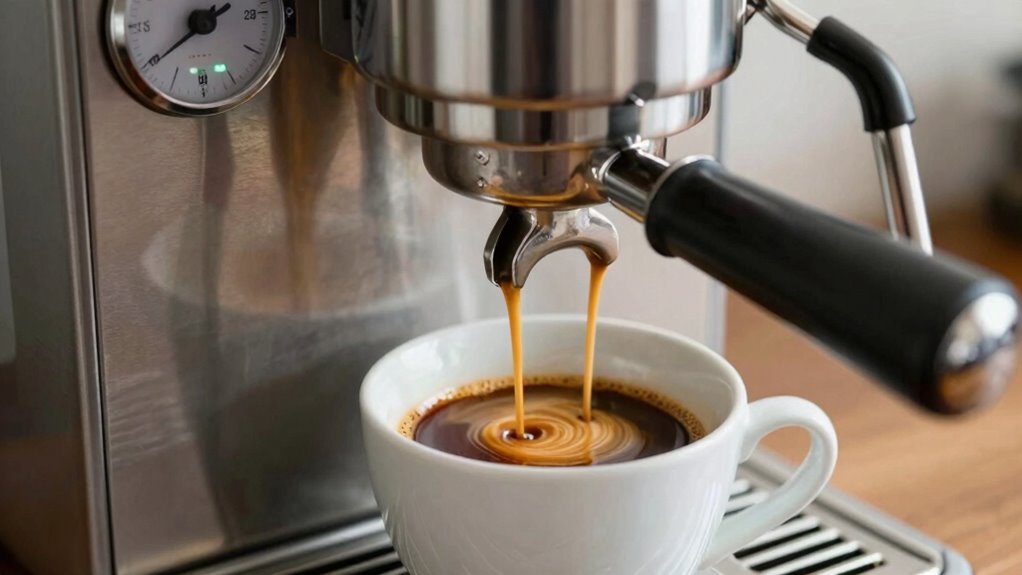

The ideal extraction time for an espresso shot is between 25 to 30 seconds. If it’s shorter, the shot may taste sour; longer times can lead to bitterness. Your grind size, water temperature, and tamping pressure can all impact timing, so you’ll want to keep them consistent. Achieving the perfect balance of flavors requires attention to these details. Stick around, and you’ll uncover more tips to refine your espresso-making techniques!
Key Takeaways
- The ideal extraction time for espresso is between 25 to 30 seconds for a balanced shot.
- Shorter extraction times can result in sour flavors, while longer times may lead to bitterness.
- Factors like grind size, dose, and water temperature significantly influence shot timing and flavor.
- Maintaining consistent water pressure at 9 bars is crucial for achieving rich crema and optimal extraction.
- Regularly record adjustments and results to refine your espresso brewing technique for consistency.

Maestri House S2 Espresso Coffee Scale with Timer 0.1g Precision Shot Scale
- Compact and Portable Design: Fits in your palm, lightweight for travel
- High Precision Measurement: 0.1g accuracy for perfect brewing
- Multiple Units & Timer Modes: Switch between g/oz/ml and dual timing
As an affiliate, we earn on qualifying purchases.
As an affiliate, we earn on qualifying purchases.
What Is the Ideal Standard Extraction Time for Espresso?

When you brew an espresso, the ideal extraction time generally falls between 25 to 30 seconds. This timeframe aligns with espresso standards, guaranteeing you achieve a well-balanced shot. During this period, water flows through the coffee grounds, extracting the rich flavors and aromas you crave. If your extraction time is too short, you risk ending up with a sour taste, while an overly long extraction can lead to bitterness. By aiming for that 25 to 30-second window, you’re more likely to enjoy a harmonious blend of sweetness, acidity, and body in your espresso. Monitoring your timing is vital, so invest in a timer to make certain you consistently hit that ideal extraction for the best espresso experience.

SHARDOR Electric Coffee Grinder, 70g Large Capacity Spice Grinder with Visual Timing Knob for Precise Grind, Quiet Coffee Bean Grinder for Espresso, French Press, Herbs and Grains, Black
- Precise Grinding Control: Visual timing knob for consistent grounds
- Large Capacity & Versatile Use: 70g capacity for coffee, spices, herbs, grains
- Quiet Operation: Operates at only 63 dB for silent grinding
As an affiliate, we earn on qualifying purchases.
As an affiliate, we earn on qualifying purchases.
Key Factors Influencing Espresso Shot Timing

Although many enthusiasts focus solely on extraction time, several key factors influence your espresso shot timing. First, consider espresso variables like dose, which affects how much coffee you use. A higher dose can lead to a longer shot time, while a lower dose might speed things up. Next, look at extraction variables such as water temperature and pressure. These elements play a critical role in how quickly water extracts flavors from the coffee grounds. If your water temperature is too low, you might extend the shot time, whereas higher pressure can shorten it. By adjusting these factors, you’ll gain better control over your espresso shot timing, ensuring a delicious and balanced cup every time.

AMZCHEF Espresso Machine With Grinder, Temp Control, 44 Grind Settings
- Temperature Control: 190℉–201℉ adjustable brewing temperature
- Grind Settings: 44 adjustable grind levels for precision
- Cold Brew Mode: One-touch cold brew with large water tank
As an affiliate, we earn on qualifying purchases.
As an affiliate, we earn on qualifying purchases.
How Does Grind Size Impact Your Espresso Shot Timing?
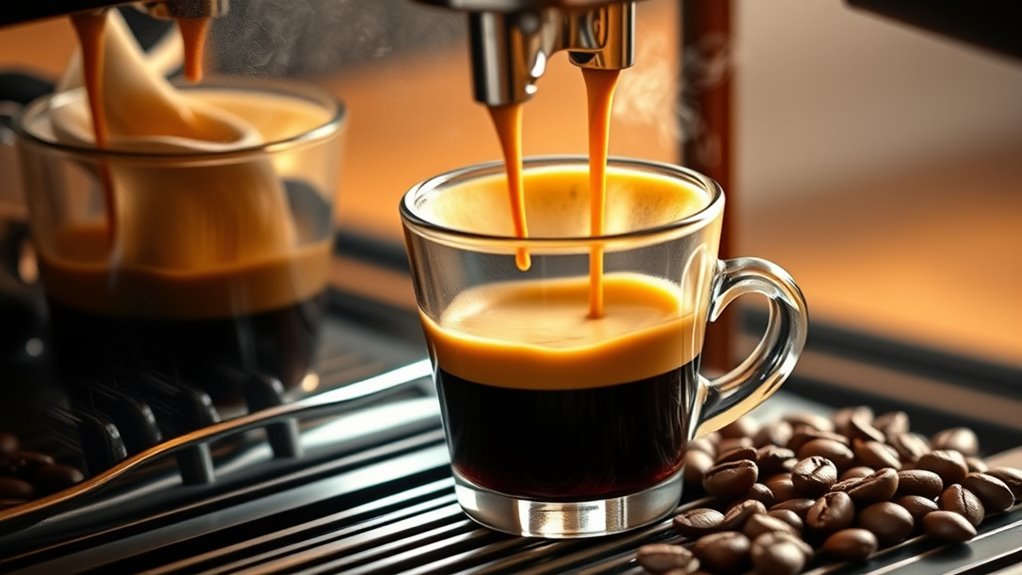
Grind size plays a vital role in your espresso shot timing. A fine grind can enhance extraction, leading to a rich flavor, while a coarse grind might result in under-extraction and a weak shot. Finding the ideal grind size is key to achieving that perfect balance in your brew.
Fine Grind Benefits
Since the size of your coffee grounds plays an essential role in espresso extraction, using a fine grind can greatly enhance your shot timing. Fine grind advantages include a larger surface area, which promotes quicker extraction of flavors and aromas from the coffee. This helps you achieve a rich, full-bodied espresso with a velvety crema. With a fine grind, you’ll notice a significant espresso flavor enhancement, as the water flows through the grounds more evenly and efficiently. The result? A balanced shot with the perfect level of bitterness and sweetness. So, if you’re aiming for ideal espresso, don’t underestimate the power of a fine grind—it’s a game-changer for your brewing experience!
Coarse Grind Drawbacks
While a coarse grind may seem appealing for its ease of use, it can seriously hinder your espresso shot timing. One of the main coarse grind disadvantages is that it slows down the extraction process. When the grind is too coarse, water flows through the coffee too quickly, leading to under-extraction. This means you’re not getting the full flavor profile from your beans, resulting in a weak and sour shot. Additionally, the uneven particle size can cause inconsistent extraction, further compromising your espresso. You might find that your shots are lacking the rich, complex flavors you desire. To achieve that perfect balance, you need to pay attention to grind size and verify it aligns with ideal espresso brewing techniques.
Optimal Grind Size
Achieving the right balance in your espresso shot requires an ideal grind size that complements the brewing process. The grind size directly influences shot timing, affecting flavor extraction and overall quality. Here’s how grind consistency and distribution matter:
- Grind Consistency: A uniform grind guarantees even extraction, preventing bitter or sour notes.
- Grind Distribution: Properly distributing the grind in the portafilter prevents channeling, which can lead to uneven flow and inconsistent shots.
- Time Control: A finer grind usually results in a shorter extraction time, while a coarser grind may prolong it.
- Taste Profile: Adjusting grind size can help you achieve your desired flavor profile, enhancing your espresso experience.

OENKKC E120 Semi-automatic Espresso Machine 2800W, 9 Bar Pump Pressure, PID Temperature Control, Double Pump System, 58mm Group Head, Stainless Steel Coffee Maker for Home Baristas
- Voltage: 220V semi-automatic espresso machine
- Boiler System: Triple boiler for simultaneous brewing and frothing
- Temperature Control: PID control for precise temperature
As an affiliate, we earn on qualifying purchases.
As an affiliate, we earn on qualifying purchases.
How Do Different Coffee Beans Affect Shot Timing?
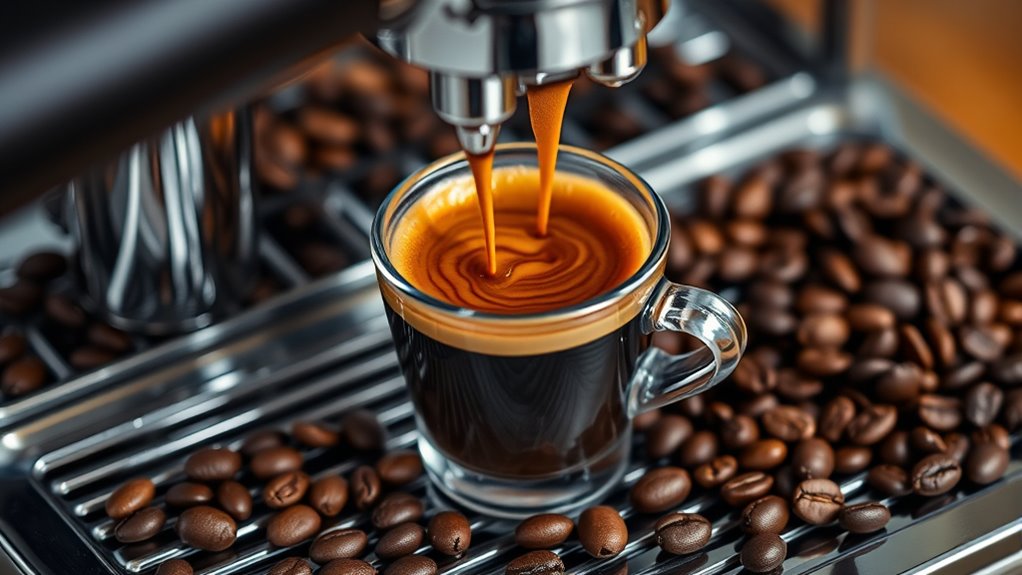
When you choose coffee beans, their origin and roast level can greatly impact your espresso shot timing. Different regions produce beans with unique flavors and characteristics, affecting how they extract during brewing. Similarly, the roast level can change the solubility and density of the beans, altering your shot’s duration and taste.
Bean Origin Influence
The origin of your coffee beans greatly impacts shot timing, as different varieties possess unique characteristics that affect extraction rates. When you understand how these bean characteristics influence your brew, you can better control your espresso’s flavor profiles. Here are some key factors to take into account:
- Altitude: Higher elevations often produce beans with denser structures, leading to slower extraction.
- Climate: Beans grown in diverse climates may have varying levels of acidity, influencing shot timing.
- Processing Methods: Different methods, such as washed or natural, affect the solubility of compounds, altering extraction speed.
- Varietal Differences: Each coffee varietal has distinct flavors and extraction properties, impacting how quickly your espresso pulls.
Understanding these elements helps you craft the perfect shot every time.
Roast Level Impact
As you explore the various factors that influence espresso extraction, roast level plays a significant role. Dark roast beans tend to have lower acidity and more oil, which can lead to shorter shot times. The oils can create a quicker extraction, producing a bold flavor profile, but you might also find that over-extraction can happen if you’re not careful. On the other hand, light roast beans generally have higher acidity and denser structures, often resulting in longer shot times. You’ll need to adjust your grind size and brew time to achieve the ideal balance. Ultimately, understanding how roast level impacts extraction helps you fine-tune your espresso technique for the best results. Additionally, experimenting with brewing methods can further optimize shot timing for different roast levels.
Equipment Matters: Choosing the Right Espresso Machine
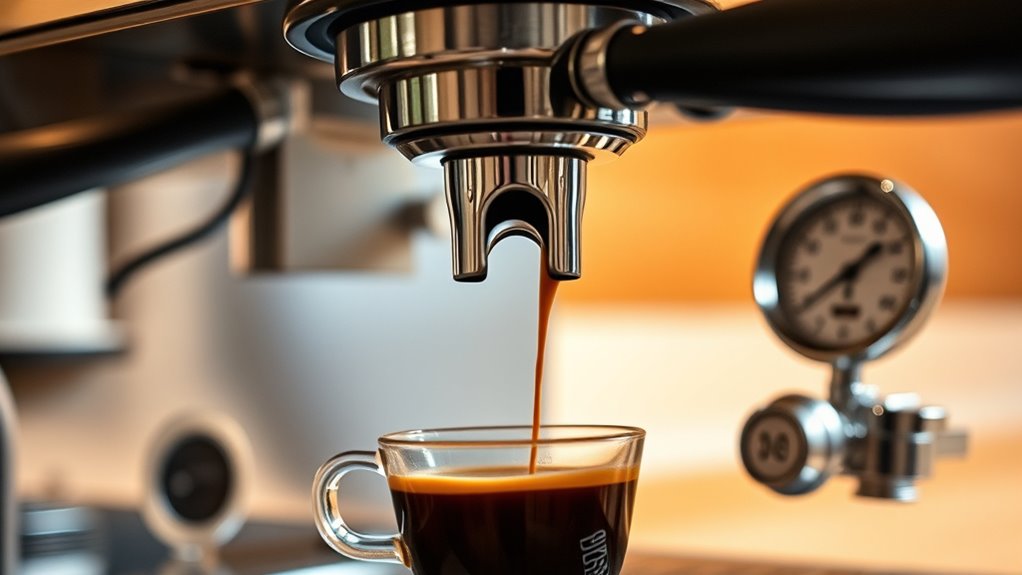
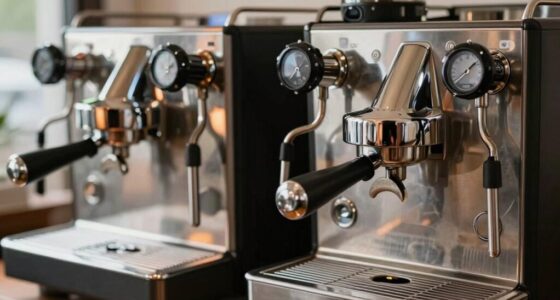
Choosing the right espresso machine can profoundly impact your brewing experience, especially if you’re aiming for that perfect shot. With various espresso machine types available, it’s crucial to take into account the features that suit your needs. Here are four key aspects to look for:
- Type of Machine: Decide between manual, semi-automatic, or fully automatic options.
- Temperature Control: Look for machines with consistent temperature stability for peak extraction.
- Pressure Regulation: Verify the machine can maintain 9 bars of pressure for a rich crema.
- Ease of Use: Think about user-friendly interfaces and maintenance requirements.
Adjusting Your Brewing Technique for Perfect Timing
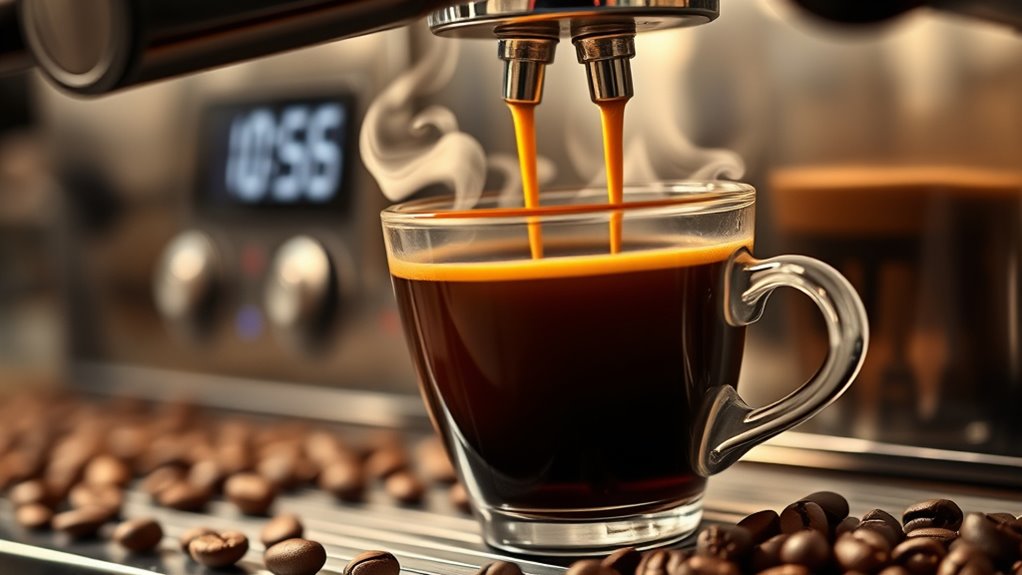
Getting the timing right during the brewing process is vital for extracting the best flavors from your espresso. To achieve perfect timing, you’ll need to adjust your brewing techniques based on the specific brewing methods you’re using. Start by measuring your coffee dose accurately and guarantee your grind size matches your method. Experiment with different brew times to find that sweet spot where the flavors shine. Timing consistency is important, so keep a timer handy to monitor your shots. If you notice variations, tweak your technique—whether it’s adjusting the tamp pressure or the water temperature. Paying attention to brew ratio can also help optimize extraction and flavor balance. By honing in on these details, you’ll be well on your way to brewing exceptional espresso every time.
Troubleshoot Common Espresso Shot Timing Issues
When you’re brewing espresso, timing issues can often lead to disappointing results, so it’s crucial to identify and troubleshoot them promptly. Here are some common problems and their solutions to improve your espresso extraction and brewing consistency:
- Grind Size: If your shot’s too fast or slow, adjust the grind size. Finer grinds generally increase extraction time, while coarser grinds do the opposite.
- Tamping Pressure: Inconsistent tamping can affect water flow. Aim for a uniform pressure when tamping.
- Dose Amount: An incorrect dose can lead to poor extraction. Weigh your coffee for accuracy.
- Water Temperature: Verify your machine’s temperature is within the ideal range (195°F to 205°F) for maximum extraction.
Expert Tips for Perfecting Your Espresso Shot Timing
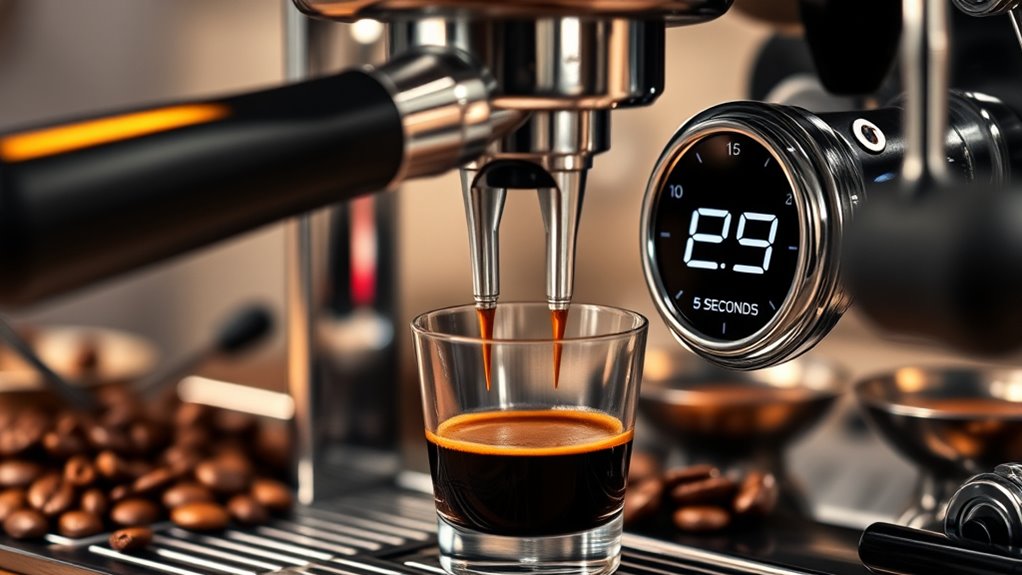
To achieve the perfect espresso shot, mastering your timing is essential, as it directly influences flavor and consistency. Start by experimenting with different espresso techniques, focusing on your grind size and tamping pressure. A finer grind usually requires a shorter extraction time, while a coarser grind may need more time to extract those rich flavors. Aim for an extraction precision of 25-30 seconds for a balanced shot. Use a timer to track your brewing time, making adjustments as needed based on taste. Don’t forget to monitor your water temperature, as it can affect extraction rates. Finally, take notes on each shot, helping you refine your process and achieve that ideal espresso shot every time.
Frequently Asked Questions
How Can I Tell if My Espresso Shot Is Over-Extracted?
You can tell if your espresso shot is over-extracted by tasting for bitter flavors in the brew. If it tastes harsh or excessively bitter, that’s a clear sign. Also, pay attention to the crema quality; if it’s thin and lacks richness, your shot might be over-extracted. Ideally, you want a balanced flavor profile with a velvety crema. Adjust your grind size or extraction time to improve your results.
What Is the Effect of Water Temperature on Shot Timing?
Water temperature acts like a key to your espresso’s flavor lock. Higher temperatures generally increase extraction efficiency, pulling more oils and flavors from your coffee grounds, and can speed up shot timing. But if it’s too hot, you risk bitterness and over-extraction. Conversely, lower temperatures slow down the process, potentially leading to under-extraction. So, finding that sweet spot in temperature is essential for crafting the perfect shot!
Can Espresso Shot Timing Affect Caffeine Content?
Yes, espresso shot timing can affect caffeine content. When you adjust the shot duration, you influence caffeine extraction. A longer extraction often results in more caffeine being pulled from the coffee grounds, while a shorter shot may yield less. If you’re aiming for a stronger kick, you might want to experiment with extended shot times. Just be mindful, as over-extraction can lead to bitter flavors, impacting your overall espresso experience.
Should I Adjust Timing for Different Brewing Methods?
Sure, you should adjust timing for different brewing methods! If you think you can use the same approach for all techniques, you’re in for a rude awakening. Each brewing method reveals unique flavor profiles that require their own timing. For instance, a French press may need a bit longer, while an AeroPress thrives on speed. Embrace the nuances, or you might end up with a bland cup that tastes like disappointment!
How Often Should I Clean My Espresso Machine for Optimal Timing?
You should clean your espresso machine regularly to maintain peak performance. A good cleaning schedule includes daily rinsing of the portafilter and weekly backflushing. Monthly, give your machine a thorough deep clean, including descaling and cleaning the steam wand. Following these maintenance tips will help you avoid clogs and guarantee consistent shot quality. Remember, a well-maintained machine not only makes better coffee but also extends its lifespan.
Conclusion
In the world of espresso, timing’s like a dance; every step counts. By understanding the ideal extraction time and adjusting factors like grind size and coffee bean choice, you can perfect your brew. Your equipment plays an essential role, so invest wisely and refine your technique. When you troubleshoot common timing issues, you’ll find that each shot becomes a masterpiece. With practice and attention, you’ll consistently create espresso that’s not just good, but truly exceptional.