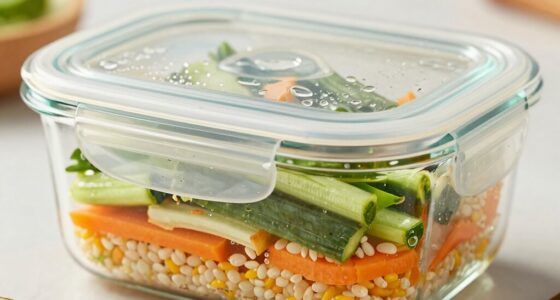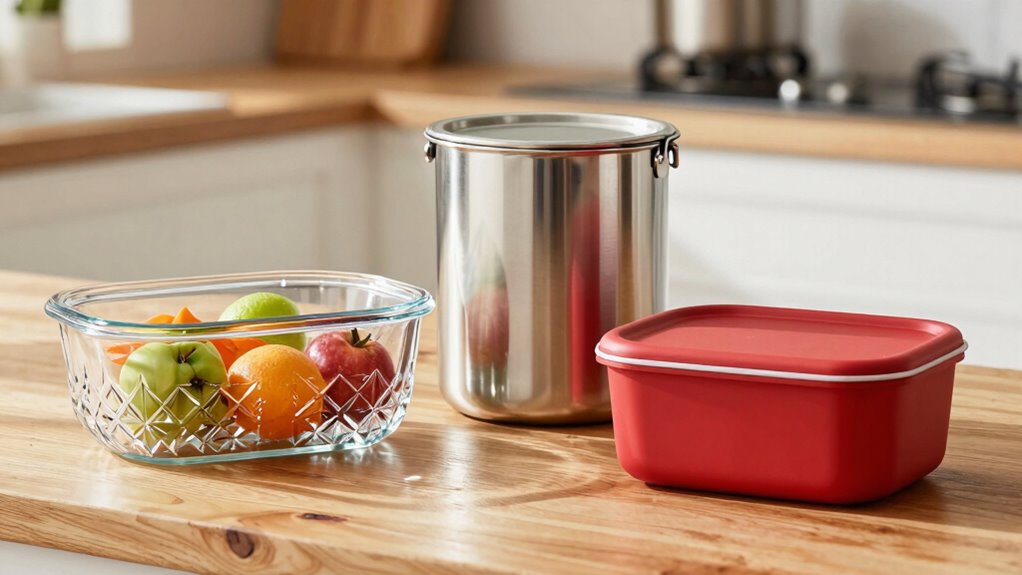

When choosing food storage containers, you’ve got three popular materials: glass, plastic, and steel. Glass is non-toxic, eco-friendly, and great for visibility but can be heavier. Plastic is lightweight and cost-effective but may warp and leach chemicals. Steel is durable and stylish, handling temperature extremes well. Each material has its pros and cons, so consider your needs and lifestyle carefully. If you want to know more about these options, stick around!

Get the little things that make your day delivered free with Prime
- Fast, free delivery on millions of items
- Prime Video, Amazon Music and more included
- Member-only deals all year
Key Takeaways
- Glass containers are non-toxic, eco-friendly, and do not leach harmful substances, making them a safer choice for food storage.
- Plastic containers are lightweight and cost-effective but may warp, stain, or retain odors over time, raising durability concerns.
- Steel containers are highly durable, temperature-resistant, and non-reactive, providing a long-lasting and stylish storage option.
- Glass is easy to clean and dishwasher-safe, while some plastics may not be microwave safe, requiring careful label checking.
- Choosing reusable materials like glass or steel supports a healthier lifestyle and reduces environmental impact compared to single-use plastics.
glass food storage containers with airtight lids
As an affiliate, we earn on qualifying purchases.
As an affiliate, we earn on qualifying purchases.
How to Choose the Best Food Storage Container
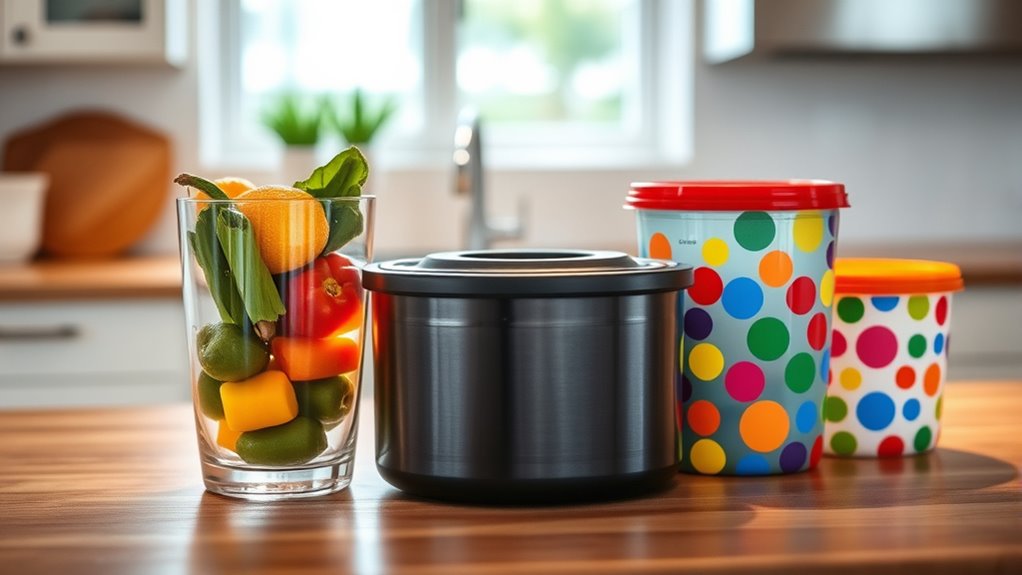
How can you guarantee you choose the best food storage container for your needs? Start by evaluating size considerations. Think about what you’ll be storing—whether it’s leftovers, meal prep, or bulk items. You want containers that fit well in your fridge or pantry without wasting space.
Next, consider lid types. Some containers come with airtight lids, while others might have snap-on or screw-top designs. Choose lids that create a secure seal to keep your food fresh longer. Additionally, look for containers that are easy to open and close. By focusing on these two factors, you’ll find containers that not only meet your storage needs but also enhance your kitchen organization. Happy organizing!
stainless steel food storage containers
As an affiliate, we earn on qualifying purchases.
As an affiliate, we earn on qualifying purchases.
Benefits of Glass Food Storage
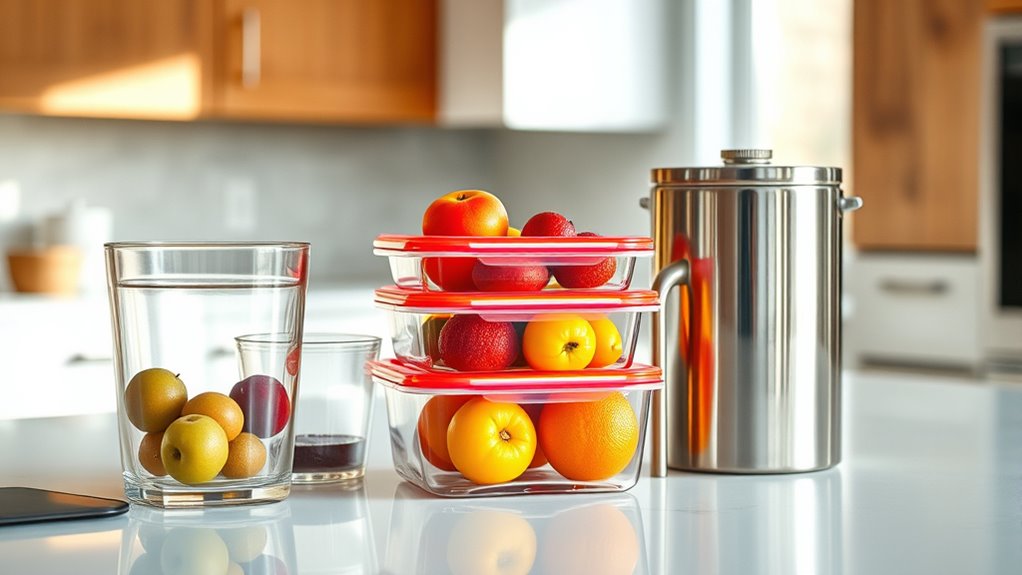
Glass food storage containers offer numerous advantages that make them a top choice for many home cooks. Their safety features, like being free from harmful chemicals, guarantee that your food stays healthy. Plus, they’re incredibly durable and can withstand temperature changes, making them versatile for both the fridge and oven. Additionally, appliance maintenance plans can help ensure your kitchen tools—including containers—stay in optimal condition for long-term use. Proper container care can also extend their lifespan and maintain their appearance. Using safe materials is essential for health-conscious households seeking reliable storage solutions. When selecting storage options, considering material safety can further ensure your family’s well-being. Incorporating non-porous surfaces can prevent bacteria buildup and promote better hygiene in food storage. Here are some benefits you’ll appreciate:
Glass food storage containers are a safe, durable, and versatile choice for healthy meal prep and organization.
- Non-toxic materials: No leaching of harmful substances.
- Easy to clean: Dishwasher-safe and stain-resistant.
- Aesthetic appeal: Clear design lets you see contents easily.
- Odor-free: They don’t absorb food odors.
- Eco-friendly: Reusable, reducing plastic waste.
With these benefits, glass containers can elevate your food storage game while keeping your kitchen stylish and safe.
plastic food storage containers microwave safe
As an affiliate, we earn on qualifying purchases.
As an affiliate, we earn on qualifying purchases.
Pros and Cons of Plastic Food Storage Containers
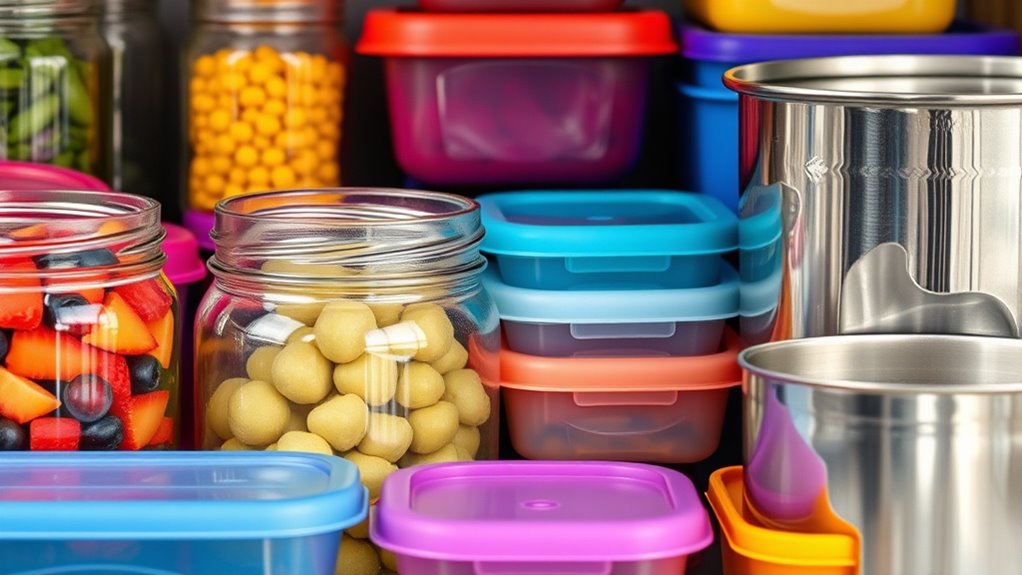
While plastic food storage containers are convenient and lightweight, they come with their own set of pros and cons. On the plus side, they’re cost-effective and easy to find in various sizes. However, durability concerns arise since they can warp or crack over time. Let’s break it down:
| Pros | Cons | Notes |
|---|---|---|
| Lightweight | Durability concerns | May not last as long as glass |
| Cost-effective | Can retain odors | Some plastics can stain |
| Variety of sizes | Not microwave safe | Check labels for safety |
| BPA-free options | Limited temperature range | Avoid extreme heat |
| Easy to stack | Environmental impact | Less eco-friendly than glass |
Additionally, some plastics may degrade when exposed to heat or sunlight, which can compromise food safety and container integrity. Ultimately, weigh these factors based on your storage needs.
eco-friendly glass food containers
As an affiliate, we earn on qualifying purchases.
As an affiliate, we earn on qualifying purchases.
The Advantages of Using Steel for Food Storage
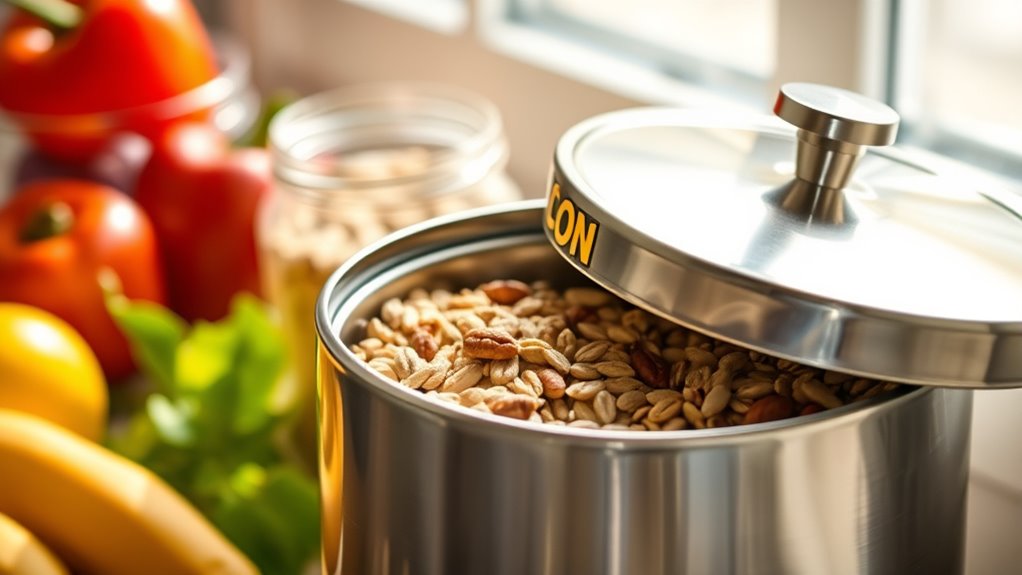
When you choose steel for food storage, you’re opting for durability and safety that can enhance your kitchen experience. Steel containers offer several advantages that make them a smart choice for preserving your food:
- Durability benefits: Steel withstands wear and tear, ensuring long-lasting use.
- Temperature resistance: It can handle extreme temperatures, whether hot or cold, without warping.
- Non-reactive material: Steel doesn’t leach chemicals into your food, keeping it safe and healthy.
- Eco-friendly: Steel is recyclable, making it a sustainable option for your kitchen.
- Stylish design: Steel containers often have a sleek, modern look that can elevate your kitchen decor.
With these benefits, steel is a reliable option for anyone serious about food storage.
Which Material Lasts Longer: Glass, Plastic, or Steel?
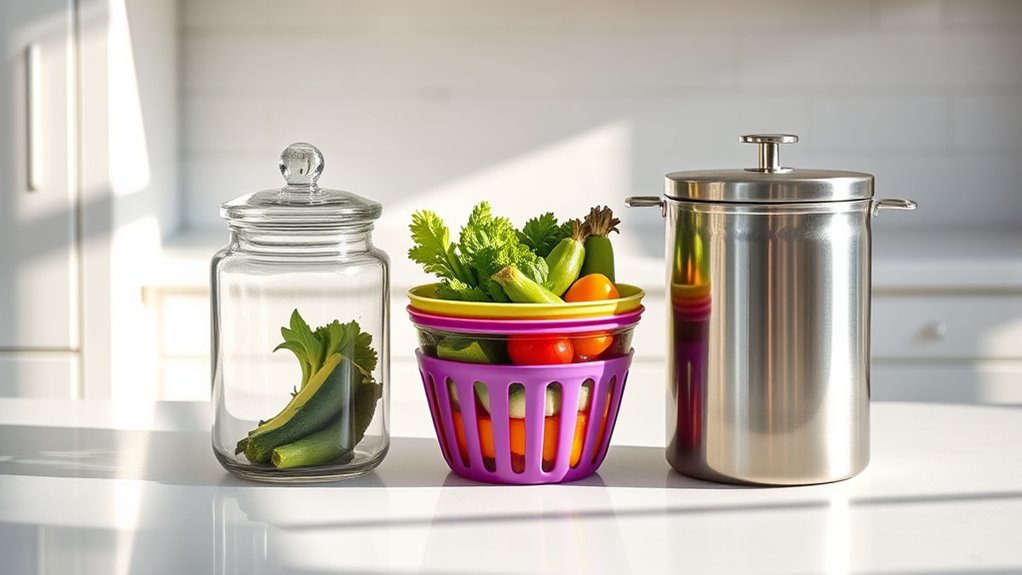
How do you decide which food storage material will stand the test of time: glass, plastic, or steel? When you look at the durability comparison, glass often wins for longevity, resisting scratches and stains. It doesn’t retain odors or flavors, ensuring fresh storage. Steel, while also durable and resistant to rust, can dent or scratch over time. Plastic, on the other hand, is lightweight and affordable but tends to degrade quicker, especially with frequent use or exposure to heat. Lifespan factors like temperature changes and material quality play a significant role in each option’s durability. Ultimately, if long-lasting storage is your goal, glass or high-quality steel may be your best bet. Material durability is a key consideration when choosing the right food storage containers for your home.
Health and Environmental Impact of Food Storage Materials
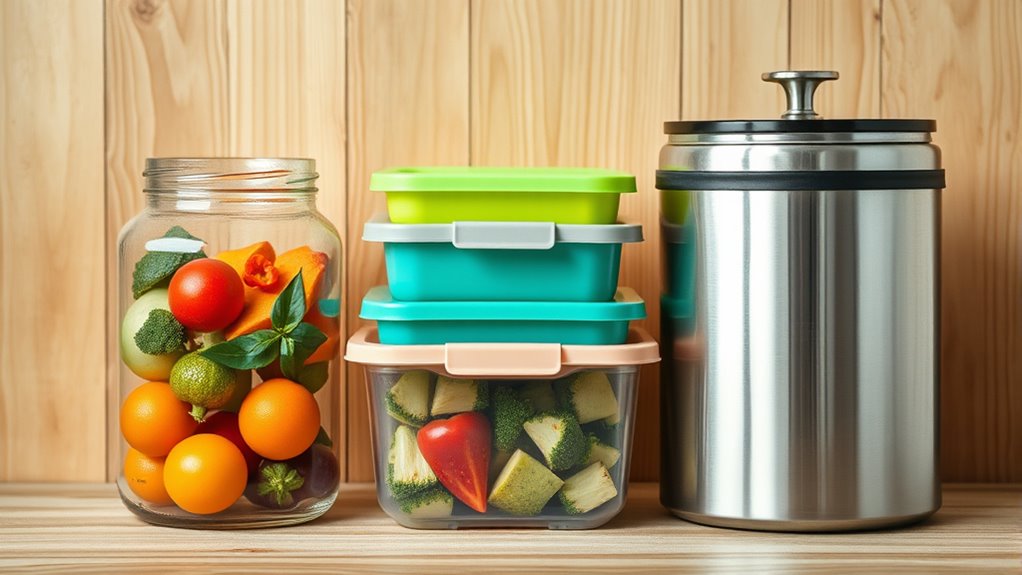
Choosing the right food storage material isn’t just about durability; it also affects your health and the environment. Plastics, while convenient, can pose significant health risks due to chemicals leaching into your food. These chemicals can disrupt hormones and lead to various health issues. Additionally, plastic waste contributes to environmental pollution, harming wildlife and ecosystems. Microplastics in dust can also enter your food chain, further impacting health. Consider these points when selecting your storage containers: – Glass is non-toxic and recyclable. – Plastic may contain BPA and other harmful chemicals. – Steel is durable and eco-friendly but can be heavy. – Reusable materials reduce waste and environmental impact. – Choosing the right material supports a healthier lifestyle.
Frequently Asked Questions
Can Food Storage Containers Be Recycled After Use?
Yes, food storage containers can often be recycled after use, but it depends on the material and local recycling guidelines. Check with your local facility to see what’s accepted. Eco-friendly materials like glass and certain plastics are generally easier to recycle, making them better options for the environment. Just make sure they’re clean and free of food residue before tossing them in the recycling bin. It’s a simple way to help reduce waste!
How Should I Clean My Food Storage Containers?
To clean your food storage containers, start by rinsing them with warm water. For glass containers, use a mild dish soap and a soft sponge; avoid harsh abrasives. If you’ve got plastic containers, check for stains—baking soda can help. For stainless steel, a mix of vinegar and water works wonders. Always air dry to prevent moisture buildup, and make certain you’re using the right cleaning techniques based on the container materials to maintain their longevity.
Are There Microwave-Safe Options for All Materials?
Yes, there are microwave-safe options for all materials, but you need to check the labels. Glass containers are usually durable and safe for microwave use, as long as they’re labeled accordingly. Some plastics are microwave-safe too, but avoid using those that aren’t, as they can warp or leach chemicals. Steel, however, isn’t microwave-safe at all. Always prioritize microwave safety and material durability when choosing your containers for heating food.
What Sizes Do Food Storage Containers Typically Come In?
You might think food storage containers only come in one size, right? Well, surprise! They actually range from small sizes perfect for snacks to large sizes that can hold a whole meal. You’ll find options like pint-sized containers for leftovers and gallon-sized ones for batch cooking. So, whether you’re packing a lunch or prepping for a feast, there’s a container that fits your needs perfectly. It’s all about finding the right one!
How Do I Prevent Odors in Food Storage Containers?
To prevent odors in your food storage containers, make certain you’re using effective sealing methods. Choose containers with tight-fitting lids to minimize air exposure, which can lead to odor absorption. Before storing food, confirm it’s cooled and dry. You can also clean your containers regularly with vinegar or baking soda, as they help neutralize odors. Finally, avoid storing strong-smelling foods in the same container to keep your meals fresh and odor-free.
Conclusion
When it comes to food storage, choosing the right container can feel like a coincidence of convenience and health. You might find that glass offers safety and durability, while plastic presents affordability and versatility. Steel, on the other hand, captures a unique blend of longevity and environmental friendliness. Just think about it: your choice today could coincidentally lead to a healthier lifestyle tomorrow. So, pick wisely and enjoy the benefits of your chosen storage solution!
Evergreen bestsellers Picks
bestsellers
As an affiliate, we earn on qualifying purchases.